Starmer's NHS Plan Faces Funding Scrutiny
Labour pledges reforms amid ongoing healthcare crisis

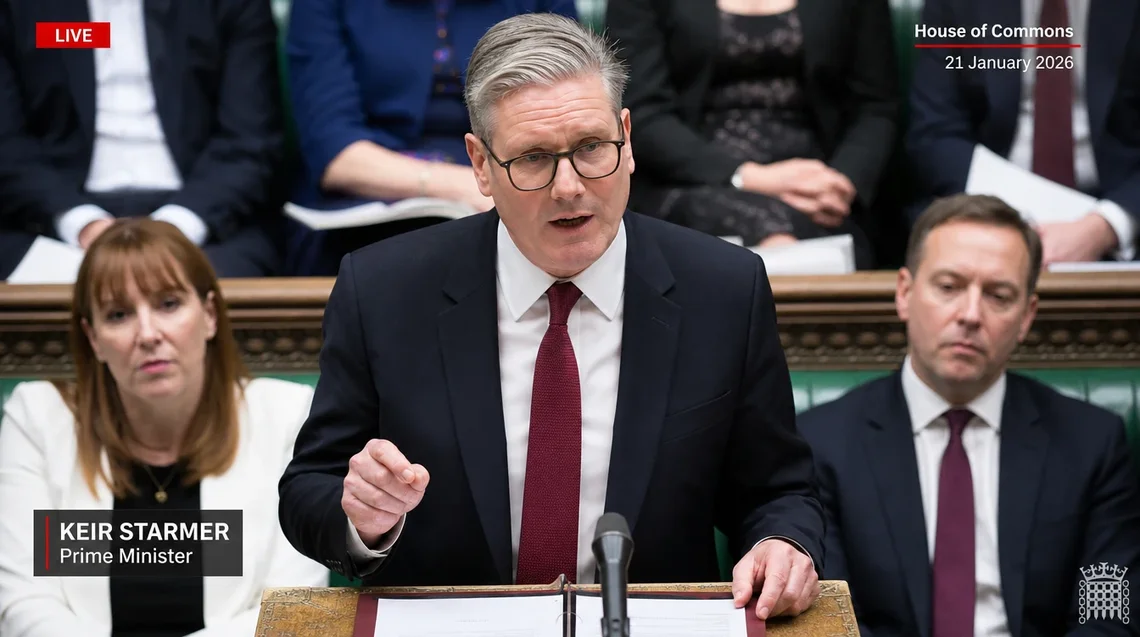
Prime Minister Keir Starmer's ambitions to overhaul the National Health Service are under intensifying scrutiny this week, as Treasury officials and opposition parties demand a credible funding roadmap to support what the government describes as the most significant restructuring of the NHS in a generation. With waiting lists still exceeding seven million in England, according to the Office for National Statistics, the stakes for Labour's flagship domestic policy could hardly be higher.
Party Positions: Labour has pledged to cut NHS waiting times through targeted investment, workforce reform, and a shift toward community-based care, insisting the plan is fully costed within existing fiscal commitments. Conservatives argue the proposals are underfunded and rely on recycled announcements rather than new money, calling for an independent Office for Budget Responsibility audit of all NHS spending commitments. Lib Dems broadly support investment in primary and mental health care but are pressing the government to publish a detailed ten-year capital plan and restore NHS dentistry access, which they describe as a "hidden crisis" affecting millions of working families.
The Scale of the Challenge
When Starmer took office, his team inherited an NHS operating under conditions that senior clinicians described to parliamentary committees as "unsustainable." Ambulance response times, cancer treatment delays, and mental health referral backlogs had all worsened significantly in the post-pandemic period. The government's initial response — detailed in documents reviewed by the BBC and Guardian — centred on a so-called "elective recovery" programme, prioritising surgical backlogs and diagnostic capacity.
Waiting Lists: The Core Political Problem
The waiting list figure — currently above seven million patients in England — remains the single most politically damaging statistic facing the government. Internal modelling, cited by NHS England officials, suggested that without substantial new investment in theatre capacity and workforce, the list would not return to pre-pandemic levels within this parliamentary term. Opposition parties have seized on this, with shadow health secretary arguing in the Commons that Labour's timeline is "arithmetically impossible" without a significant injection of capital funding beyond what has been announced.
Related Articles
A breakdown of current waiting times, drawn from NHS England performance data and Office for National Statistics figures, shows the distribution of patients by waiting duration:
| Waiting Duration | Number of Patients (England) | Change vs. Previous Year |
|---|---|---|
| Under 18 weeks | Approx. 4.1 million | -3.2% |
| 18–52 weeks | Approx. 2.4 million | +1.1% |
| Over 52 weeks | Approx. 612,000 | +4.7% |
| Over 78 weeks | Approx. 68,000 | -8.9% |
| Total (all pathways) | Approx. 7.2 million | +0.6% |
(Source: NHS England, Office for National Statistics)
Labour's Funding Commitments Under the Microscope
The government's plan, as outlined in Treasury documents and ministerial statements to the Health Select Committee, allocates an additional £3.1 billion to elective recovery over the current spending review period. A further £1.4 billion has been ring-fenced for primary care infrastructure, including GP surgery upgrades and community diagnostic centres. Health Secretary Wes Streeting has argued these figures represent a genuine real-terms increase and have been signed off by the OBR. However, independent health economists at the King's Fund and the Nuffield Trust have questioned whether the sums are sufficient given workforce cost pressures and inflation within the NHS supply chain.
The Productivity Question
Central to the debate is NHS productivity, which official data show remains below pre-pandemic levels despite nominal increases in activity. The government's reform programme leans heavily on digitisation, data sharing, and shifting routine procedures out of hospitals and into community settings — policies that ministers say will unlock efficiency gains over the medium term. Critics, including several Labour backbenchers, have privately expressed concern that the productivity assumptions underpinning the plan are optimistic. For more on the parliamentary tensions surrounding these proposals, see our coverage of how Starmer's NHS overhaul faces growing backbench revolt.
Public Opinion and Political Pressure
Polling data consistently show that the NHS remains the single most important issue for British voters, and Labour's electoral fortunes are widely understood to be closely tied to its performance on health. A YouGov survey conducted recently found that 64 percent of respondents said they were "not confident" the government would reduce NHS waiting times within its current term, while 71 percent rated the NHS as either the first or second most important issue facing the country. A separate Ipsos poll found satisfaction with the NHS at its lowest recorded level, with only 24 percent of adults describing themselves as satisfied with the service overall.
Cross-Party Polling on NHS Trust
| Party Supporters | Trust Labour on NHS (%) | Trust Conservatives on NHS (%) | No Party Trusted (%) |
|---|---|---|---|
| All voters | 38% | 14% | 41% |
| Labour 2024 voters | 61% | 6% | 27% |
| Conservative 2024 voters | 12% | 31% | 49% |
| Lib Dem 2024 voters | 29% | 9% | 54% |
(Source: YouGov, Ipsos)
These figures present a dual challenge for Downing Street. Labour retains an advantage over the Conservatives on NHS trust, but that advantage is far from commanding, and a large plurality of voters trusts no party on the issue. Political analysts cited by the Guardian have noted that this creates a dangerous vacuum that could be exploited by smaller parties, particularly in constituencies where NHS performance is a visceral local issue.
The Opposition's Counterarguments
Conservative health spokespeople have focused their attacks on what they describe as the gap between Labour's rhetoric and its deliverable programme. In Commons debates, shadow ministers have cited analysis suggesting that even the government's own published trajectory for waiting list reduction requires an increase in consultant-led procedures of approximately 15 percent per annum — a pace that NHS trusts say they cannot currently sustain given staffing constraints.
Private Sector Involvement: A Dividing Line
One of the sharpest internal tensions within Labour's NHS policy concerns the role of independent sector providers. Wes Streeting has publicly stated that the government will use private hospitals and clinics to help clear the backlog, framing this as a pragmatic measure rather than an ideological one. This position has drawn criticism from trade unions, including Unite, and from a bloc of Labour MPs who view any expansion of private sector involvement as incompatible with Labour's founding commitments to the NHS. The BBC reported that at least thirty Labour backbenchers have signed a letter to the Health Secretary expressing concern about the direction of travel, though the government has moved to contain the revolt. Further detail on the parliamentary dynamics can be found in our earlier report on how Starmer pledges major NHS overhaul amid funding row.
Workforce: The Long-Term Constraint
Funding alone, health economists argue, will not resolve the NHS crisis if the workforce to deliver care is not in place. The government's workforce plan, inherited and revised from the previous administration, projects a need for tens of thousands of additional nurses, GPs, and allied health professionals over the next decade. NHS England officials said that training pipelines have been expanded and that international recruitment continues, but union representatives and royal colleges have warned that retention — not just recruitment — is the critical variable. Pay disputes, working conditions, and morale remain unresolved tensions beneath the surface of the government's reform narrative.
GP Access: A Flashpoint Issue
Access to general practice has emerged as a specific flashpoint. Ipsos data show that a significant proportion of patients report difficulty booking a GP appointment within a timeframe they consider acceptable, and this experience colours overall public perception of the NHS more broadly. The government has pledged to increase the number of GP appointments delivered and to expand the role of pharmacists and paramedics in primary care settings. The British Medical Association, while broadly welcoming investment, has cautioned that diluting the GP role carries clinical risks that ministers should not dismiss.
What Comes Next
The government is expected to publish an updated NHS delivery plan in the coming weeks, which officials say will include granular milestones against which progress can be measured. Ministers have privately acknowledged that the political window to demonstrate momentum is narrow — public patience, polling suggests, is finite, and the next set of local election results will serve as an early barometer of whether voters believe Labour is delivering.
For background on how this plan was first presented to Parliament, readers can refer to the original announcement covered in our article on how the Starmer government unveils NHS funding plan, as well as the more detailed policy breakdown in our report on how the Starmer Government Unveils Major NHS Funding Plan.
The political calculus is straightforward, if the execution is not: the NHS was central to Labour's election victory, and it will be central to whether Labour secures a second term. Officials in No. 10 are said to be under no illusions about that reality. Whether the funding now committed, the reforms now under way, and the workforce plans now in motion add up to a credible answer to seven million waiting patients remains, for the moment, an open question — and one that Westminster will not stop asking until the numbers move decisively in the right direction.