NATO eyes expanded eastern presence amid Ukraine stalemate
Alliance considers permanent deployments as war drags into fourth year
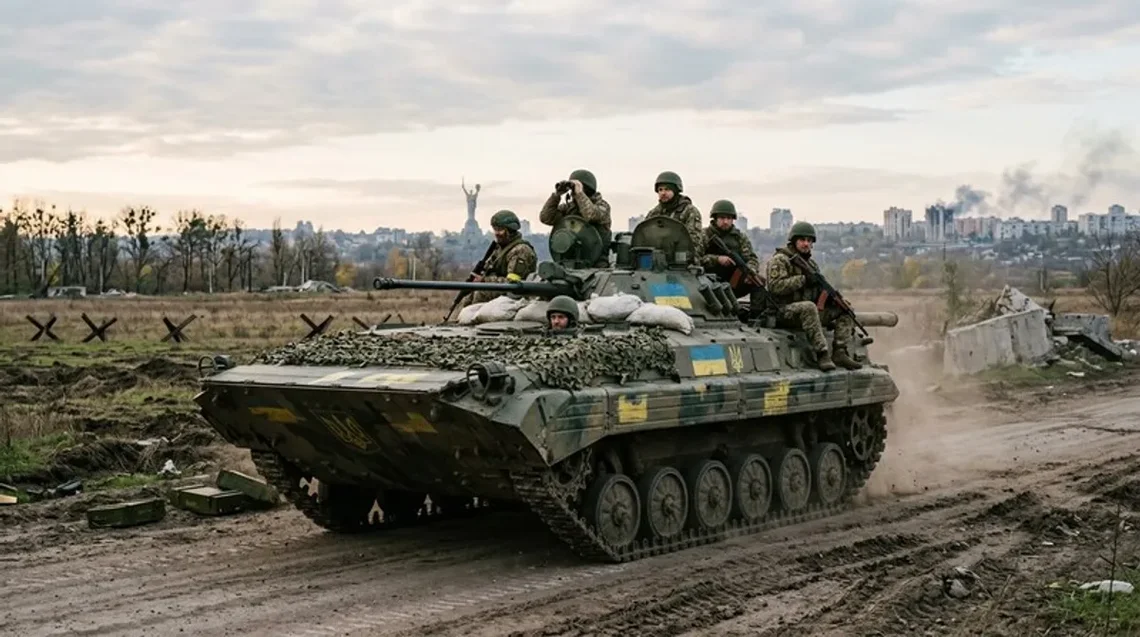
NATO member states are actively discussing the possibility of making eastern flank deployments permanent, as the war in Ukraine enters its fourth year with no credible ceasefire in sight, according to alliance officials and diplomatic sources cited by Reuters and the Associated Press. The shift in posture would mark one of the most significant structural changes to NATO's European force composition since the Cold War, with far-reaching consequences for British, German, and Baltic defence budgets alike.
Key Context: NATO currently maintains eight multinational battlegroups across its eastern flank — in Estonia, Latvia, Lithuania, Poland, Slovakia, Hungary, Romania, and Bulgaria — under a framework established following Russia's annexation of Crimea. These were originally conceived as a "tripwire" deterrence force, not a permanent warfighting garrison. Alliance planners are now reassessing that posture in light of sustained Russian aggression against Ukraine and signals from Moscow that it does not consider the current front line to be a final settlement. The number of allied troops stationed east of the Oder River has more than doubled since the full-scale invasion began, according to NATO's own published figures.
Alliance at a Crossroads
The internal debate within NATO's Brussels headquarters has intensified in recent months, driven by what senior officials describe as a fundamental reassessment of Russia's long-term strategic intent. According to reporting by Foreign Policy, the conversation has moved beyond the question of whether to reinforce the east and toward how to institutionalise that reinforcement so that it cannot be quickly reversed by any single member government.
Alliance defence ministers met recently to discuss the framework for what officials are calling "graduated permanence" — a model in which multinational battlegroups would be expanded to brigade-level formations and legally anchored through bilateral host-nation agreements rather than rotational mandates that require periodic renewal. The approach is designed to outlast electoral cycles in member states, officials said.
Related Articles
The Rotational Model Under Scrutiny
The current system of rotating allied troops through forward positions was a deliberate compromise, agreed in part to avoid formally violating the spirit of the 1997 NATO-Russia Founding Act, which contained a political commitment against substantial permanent stationing of combat forces in new member states. With that framework now widely considered defunct — Russia suspended its participation in related consultative mechanisms following the Ukraine invasion — alliance legal and political advisers are examining whether the rotational constraint still serves any practical purpose, according to diplomatic sources cited by the Associated Press.
For related context on how the alliance has been recalibrating its eastern posture over successive summits, see our earlier reporting on NATO bolsters eastern defenses amid Ukraine stalemate.
What Permanent Deployment Would Actually Mean
The distinction between a rotational and a permanent deployment is not merely semantic. Permanently stationed forces require different infrastructure investment — family housing, schools, long-term logistics depots, and hardened command facilities — and carry distinct political weight in both host nations and in Moscow's strategic calculus. Several Baltic and Polish officials have publicly welcomed the idea, framing permanence as the only credible deterrence signal given what they describe as Russia's demonstrated willingness to test red lines.
Infrastructure and Cost Implications
NATO's own internal cost modelling, portions of which have been reported by Reuters, suggests that transitioning current forward presence to full brigade-level permanent garrisons across the eastern flank would require tens of billions of euros in infrastructure investment over the coming decade. The burden-sharing formula for that investment remains deeply contested. Poland has already committed significant domestic funding to expand its military footprint, while Baltic states — each with comparatively small economies — are pressing for a higher proportion of collective NATO financing rather than bilateral cost-sharing with larger allies.
Germany, which leads the battlegroup in Lithuania and recently announced it would station a permanent brigade there for the first time since reunification, has become the template case study that other allies are watching. Berlin's commitment, if fully executed, would represent the largest forward deployment of German troops abroad since the Second World War, officials said.
Escalation Risk and Diplomatic Guardrails
Not all alliance members are unconditionally enthusiastic. Several southern European governments, along with elements of the alliance's civilian bureaucracy, have raised concerns that a formal shift to permanent eastern basing — coupled with ongoing deliveries of advanced weaponry to Ukraine — could narrow the diplomatic space for any eventual negotiated settlement. The tension between deterrence credibility and escalation management is one the alliance has navigated uneasily since the invasion began, according to analysis published by Foreign Policy.
UN reports on the humanitarian and displacement consequences of the conflict have added a separate layer of urgency to the diplomatic calculus, underscoring that the war's continuation carries compounding civilian costs that a military stalemate does not neutralise.
Ukraine's Strategic Position and NATO's Calculus
The alliance's eastern posture is inseparable from the broader question of Ukraine's trajectory. Despite sustained Western military assistance, the front line in eastern and southern Ukraine has remained largely static, with neither side able to achieve the kind of decisive territorial breakthrough that might reorder the political dynamics of the conflict. That stalemate has itself become a strategic variable, officials said — one that affects NATO planning timelines, weapons procurement cycles, and political will among member publics.
Ukraine has continued to press for a path toward NATO membership, and while the alliance has repeatedly reaffirmed that membership is Ukraine's future, no formal accession timeline has been offered. The gap between that rhetorical commitment and its practical implementation remains one of the most sensitive fault lines within the alliance, with the United States, Germany, and Hungary occupying notably different positions, according to reporting by Reuters and the Associated Press.
Arms Supply and Industrial Capacity
One underreported dimension of the stalemate is its effect on NATO members' own defence industrial capacity. Sustained munitions deliveries to Ukraine have drawn down stockpiles across several European allies to levels that alliance military planners consider strategically uncomfortable. The push to expand eastern deployments is therefore proceeding in parallel with a NATO-wide effort to accelerate domestic defence production — a process that is running well behind schedule in most member states, according to data cited by the Associated Press.
For a broader examination of how the alliance is extending its strategic reach in response to sustained Russian pressure, see our coverage of NATO eyes further eastern expansion amid Russia tensions.
| Country | Framework Nation | Current Force Level | Proposed Status | Host-Nation Position |
|---|---|---|---|---|
| Estonia | United Kingdom | ~1,700 troops (battlegroup) | Brigade-level expansion under review | Strongly in favour |
| Latvia | Canada | ~2,000 troops (battlegroup) | Brigade upgrade discussions ongoing | Strongly in favour |
| Lithuania | Germany | ~1,600 troops (battlegroup) | Permanent German brigade committed | Strongly in favour |
| Poland | United States | ~10,000 troops (divisional HQ) | Permanent forward HQ established | Strongly in favour |
| Slovakia | Czech Republic | ~1,100 troops (battlegroup) | Status under review | Supportive |
| Romania | France | ~3,000 troops (battlegroup+) | Expansion discussions ongoing | Supportive |
| Bulgaria | Italy | ~1,000 troops (battlegroup) | Limited expansion mooted | Cautiously supportive |
| Hungary | Hungary (national) | ~800 troops (reduced) | Uncertain — political friction | Ambiguous |
What This Means for the UK and Europe
For the United Kingdom, the stakes of NATO's eastern posture are immediate and concrete. Britain serves as the framework nation for the Estonia battlegroup and has consistently ranked among the alliance's most forward-leaning members on both the Ukraine weapons supply question and the broader eastern reinforcement debate. Any transition to permanent brigade-level deployments in Estonia would place significantly greater demands on British Army manpower — a resource that defence planners in London acknowledge is already stretched, given concurrent commitments in the Falklands, Cyprus, and elsewhere.
The financial dimension is equally pressing. The UK government has committed to raising defence spending toward three percent of GDP over the longer term, but the path to that figure remains contested within the Treasury. Permanent forward deployment generates recurring operational costs that one-off equipment procurement does not, and the Ministry of Defence has yet to publicly quantify what a brigade-scale Estonia commitment would cost on an annualised basis, officials said.
For continental Europe, the implications extend beyond budget lines. The eastern reinforcement debate is reshaping the politics of European strategic autonomy — the long-running project to develop more independent European defence capacity outside the NATO command structure. Several European Union member states that are also NATO allies are pressing to align EU defence investment mechanisms more closely with NATO's eastern requirements, a process that has gained momentum but remains hampered by institutional complexity and member state disagreements, according to reporting by the Associated Press.
The parallel EU sanctions architecture targeting Russia's economy — an instrument intended to compound military pressure with economic attrition — remains in place and has been periodically tightened. For more on that dimension of Western strategy, see our reporting on EU Tightens Russia Sanctions Over Ukraine Stalemate.
Russia's Response and the Deterrence Equation
Moscow has consistently characterised NATO's eastern expansion as a hostile act and has threatened unspecified countermeasures in response to any formalisation of permanent allied presence in frontline states. Russian officials cited by Reuters have framed the proposed changes as evidence of what they describe as a Western strategy of deliberate escalation. Independent analysts, however, note that Russia's military has been substantially degraded by the Ukraine campaign, limiting its practical capacity to respond to NATO's western flank in the short term.
The deterrence logic underpinning NATO's posture rests on the assumption that a credible and visible allied presence reduces the probability of miscalculation — the risk that Moscow might judge a limited incursion into a small Baltic state to be below the threshold that would trigger collective defence under Article 5. Permanent, brigade-scale deployments are intended to eliminate ambiguity about that threshold, officials said.
For further analysis of how NATO has been reinforcing its position along the entire eastern perimeter in response to sustained Russian pressure, see our coverage of NATO bolsters Eastern Europe presence amid Russia tensions.
The Diplomatic Road Ahead
No formal decision on permanent basing has been announced, and alliance officials are careful to present the discussions as a planning process rather than a concluded policy. The next major NATO summit will provide the most significant opportunity to crystallise commitments, and preparatory working groups are already circulating draft language on host-nation agreements and cost-sharing frameworks, diplomatic sources said.
What is clear is that the alliance's political posture has shifted significantly from the hesitancy that characterised early responses to Russia's military build-up. The debate is no longer about whether to be present in the east in strength, but about how to make that presence durable enough to function as genuine strategic insurance — regardless of what happens on the Ukrainian battlefield or in the diplomatic channels that remain, for now, largely dormant.
Whether that insurance premium is one that alliance governments — and their electorates — are prepared to pay in full over the long term remains the defining question for NATO's eastern strategy, and one that no summit communiqué has yet answered. (Source: Reuters, Associated Press, Foreign Policy, United Nations)