Starmer Charts Course on NHS Waiting Lists
Labour government unveils fresh reform strategy

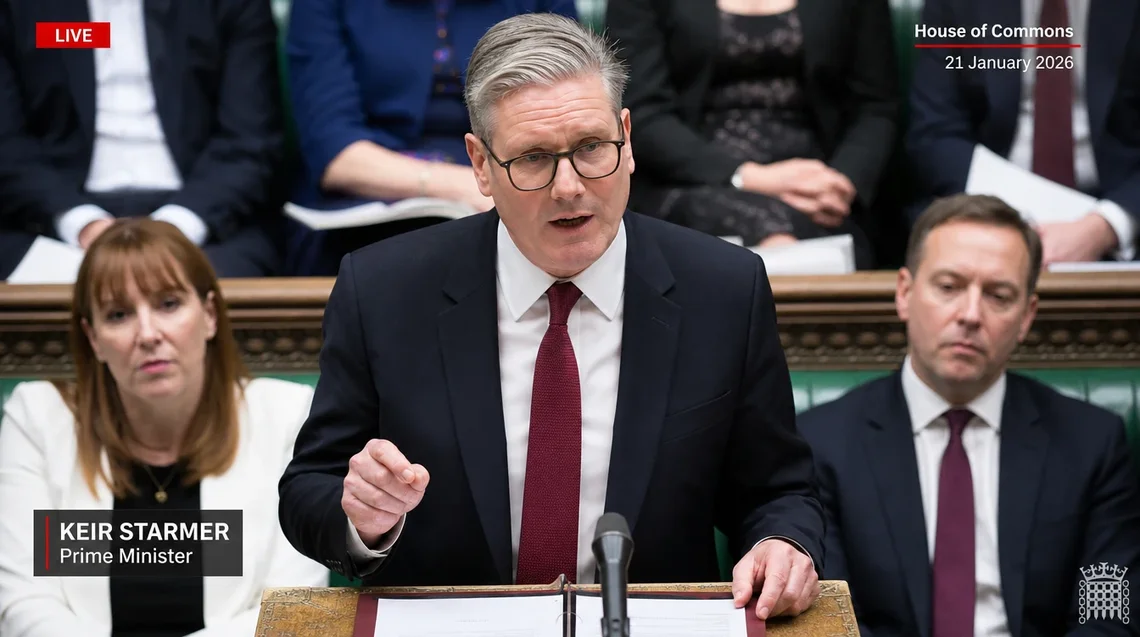
Sir Keir Starmer's government has unveiled a sweeping new strategy to tackle NHS waiting lists that currently stand at over seven million patients in England, setting out a combination of expanded evening and weekend appointments, greater use of independent sector capacity, and a renewed push on prevention as central pillars of its reform agenda. The announcement, which builds on commitments made in Labour's general election manifesto, represents the most detailed operational blueprint the government has produced since taking office, and will face intense scrutiny from opposition parties, health economists, and patient groups alike.
The Scale of the Challenge
Any serious analysis of the government's new strategy must begin with the raw data, which leaves little room for political optimism without matching ambition. According to figures published by NHS England and corroborated by the Office for National Statistics, the elective care waiting list in England contains more than seven million entries, with hundreds of thousands of patients waiting beyond the 18-week constitutional standard. The median waiting time for elective treatment has risen sharply over the past several years, driven first by the pandemic backlog and subsequently by sustained workforce pressures and rising demand from an ageing population.
What the Numbers Show
Health economists have noted that raw waiting list figures can mask significant variation across specialties and regions. Orthopaedic services, ophthalmology, and mental health pathways consistently record among the longest average waits, while pressures in accident and emergency departments continue to affect the broader flow of patients through the system. The Guardian has reported that some patients in certain parts of England are waiting in excess of two years for procedures that were previously delivered within months, a situation the government has described as "unacceptable" in internal briefing documents seen by health correspondents.
Inherited Pressures and New Commitments
Ministers have been careful to contextualise the current situation within what they characterise as a legacy of underfunding and structural neglect. Health Secretary Wes Streeting has repeatedly argued that the NHS requires not merely additional investment but a fundamental transformation of how care is delivered, a position that has informed the broader shape of the strategy announced this week. Officials said the government remains committed to hitting its self-imposed target of clearing the longest waits within the current parliamentary term, though they acknowledged that achieving this will require sustained effort across multiple fronts simultaneously.
Related Articles
Party Positions: Labour says expanding NHS capacity through independent sector partnerships and boosting the clinical workforce are essential to clearing the backlog, and has tied its reform agenda to a broader mission of economic growth through a healthier working-age population. Conservatives have questioned whether the government's plans represent genuine reform or a repackaging of existing NHS England programmes, arguing that the focus on structural reorganisation risks distracting clinical leaders from the immediate operational task of treating patients. Lib Dems have broadly welcomed the emphasis on prevention and primary care investment, but have called for faster action on dental waiting lists and mental health services, areas they argue have been systematically underfunded for well over a decade.
The Reform Strategy in Detail
The government's published framework sets out several distinct workstreams that officials say will operate in parallel rather than in sequence. The approach draws heavily on recommendations from the independent review led by Lord Darzi, which concluded that the NHS had become too centralised, too reactive, and insufficiently focused on outcomes rather than process. Officials said the new strategy attempts to operationalise those findings at both national and integrated care system level.
Expanding Appointment Capacity
A core component of the plan involves a significant uplift in the number of appointments delivered outside of standard Monday to Friday working hours. NHS England has been tasked with ensuring that every trust offers meaningful evening and weekend elective capacity by a defined deadline, with performance against this target to be tracked centrally and published in quarterly reports. The BBC has reported that some trusts have already piloted extended-hours models with encouraging early results, though unions representing nursing and allied health professionals have raised concerns about the workforce implications of expanding activity without corresponding increases in staffing and appropriate pay frameworks.
The independent sector element of the strategy has attracted particular attention and some controversy. The government intends to use existing NHS contracts with private hospitals and diagnostic centres more aggressively, directing patients to independent providers where NHS capacity is insufficient to meet demand within constitutional timeframes. Critics from within the Labour movement have warned that this approach risks accelerating a two-tier dynamic within the health system, though ministers have pushed back firmly, arguing that what matters to patients is timely treatment rather than the institutional identity of the provider delivering it.
Public Opinion and Political Context
Understanding the political dynamics surrounding NHS reform requires close attention to what voters themselves actually think about the health service and the government's handling of it. Polling conducted by YouGov and Ipsos consistently places the NHS among the top three issues of concern for British adults, and satisfaction with the health service has remained at historically low levels for several consecutive years. However, the same polling data also suggests that public trust in the government's ability to deliver meaningful improvement remains fragile, with many respondents expressing scepticism that political announcements will translate into tangible changes to their personal experience of waiting for care.
Parliamentary Arithmetic and Opposition Scrutiny
With a commanding majority in the House of Commons, the government faces little immediate legislative risk on NHS policy. However, ministers are acutely aware that public perception of NHS performance will be a defining test of Labour's fitness to govern, and that failure to demonstrate measurable progress could hand significant political ammunition to the Conservatives ahead of the next general election. Shadow Health Secretary Edward Argar has argued in the Commons chamber that the government is long on ambition and short on operational delivery, a line of attack that ministers have sought to counter by pointing to early increases in the number of appointments delivered and a renewed focus on diagnostic capacity.
| Metric | Current Position | Target | Source |
|---|---|---|---|
| Total elective waiting list (England) | 7.5 million entries | Reduction to below 5 million | NHS England / ONS |
| Patients waiting over 18 weeks | Approx. 3.2 million | Elimination of longest waits | NHS England |
| Public satisfaction with NHS (net) | -29% (net dissatisfied) | Positive net satisfaction by end of term | Ipsos / British Social Attitudes |
| Voters citing NHS as top issue | 61% | — | YouGov tracker |
| Additional appointments pledged annually | 2 million (target) | Ongoing | DHSC / Government announcement |
The Prevention Agenda
One of the more distinctive elements of the government's approach is its emphasis on prevention as a structural solution to demand pressure, rather than treating it as a peripheral public health aspiration. Officials said the strategy reflects a judgment that sustainable reduction in waiting lists cannot be achieved through supply-side expansion alone if underlying demand continues to grow unchecked. This means investment in primary care, expanded screening programmes, and a broader cross-departmental commitment to addressing the social determinants of ill health, including housing, employment, and nutritional poverty.
Primary Care as the Foundation
General practice sits at the heart of the prevention model, and the government has signalled an intention to reverse what it characterises as years of underinvestment in the family doctor service. Increased numbers of GP training places, incentives to attract newly qualified doctors to under-served areas, and expanded roles for pharmacists and community nurses are all cited in the strategy document. Health think tanks have broadly welcomed this direction of travel, though several have cautioned that the benefits of prevention investment are realised over a longer time horizon than the political cycle, creating a structural tension between the immediate imperative to clear backlogs and the longer-term logic of demand management.
For readers following the evolution of the government's NHS thinking, earlier reporting provides essential context. Coverage tracking how Starmer pledges NHS overhaul as waiting lists grow established the initial framework of commitments made before office. Subsequent analysis of how Starmer signals NHS overhaul as waiting lists hit record documented the sharpening urgency of the policy position as data worsened. The most recent contextual reporting on how Starmer pledges NHS reform as waiting lists persist captures the persistence of the challenge despite early interventions.
Workforce and Funding Questions
No reform strategy is credible without a workforce plan to support it, and this is where several independent analysts have raised the most substantive questions about the government's programme. The NHS currently faces significant vacancy rates across nursing, allied health professions, and certain medical specialties, and the government's own projections acknowledge that training pipelines operate on multi-year timescales that cannot be compressed without compromising quality or safety. Officials said the workforce strategy, developed jointly by NHS England and Health Education England's successor body, will be published in full alongside the next spending review, though critics have argued that sequencing workforce planning behind fiscal decisions risks subordinating clinical need to Treasury constraint.
The Spending Review Context
The upcoming spending review represents a critical moment for NHS reform credibility. Chancellor Rachel Reeves has signalled that public finances remain under pressure and that all departments will need to demonstrate rigorous value-for-money disciplines in their spending proposals. For the Department of Health and Social Care, this creates a difficult balancing act: making the case for the investment necessary to deliver the reform agenda while operating within a fiscal framework that leaves limited room for expansive new commitments. Ipsos polling suggests a majority of voters believe the NHS needs more funding, but the same research shows declining confidence that additional money alone will resolve structural problems without accompanying reform.
International Comparisons and Structural Questions
The government's strategy has prompted renewed debate about whether the NHS model itself requires more fundamental reconsideration. Comparative data published by the OECD and cited in coverage by the Guardian and the BBC shows that several comparable European health systems deliver shorter waiting times at similar or lower cost per capita, though analysts caution that direct comparisons are complicated by differences in how systems are structured, how data is collected, and what services are included within national definitions of universal coverage. Ministers have so far resisted calls to revisit the fundamental architecture of the NHS, arguing that the challenge is one of management, investment, and reform within the existing model rather than structural replacement.
Additional background on the trajectory of this policy debate can be found in earlier coverage examining how Starmer pledges NHS overhaul as waiting lists surge and how Starmer pledges NHS overhaul as waiting lists persist, both of which document the accumulating political pressure that has shaped the current strategy.
The government's reform agenda will ultimately be judged not by the comprehensiveness of its published strategy documents but by whether patients experience meaningfully shorter waits for care. With parliamentary scrutiny intensifying, fiscal constraints bearing down from the Treasury, and public patience with political promises about the NHS running historically thin, ministers have set themselves a test that will define the character and competence of this administration. Whether the strategy announced this week represents the decisive turning point that officials claim, or another iteration of ambitions that have consistently proved harder to deliver than to announce, will become clear only as the months and years of this parliament unfold. (Sources: Office for National Statistics, NHS England, YouGov, Ipsos, BBC, Guardian, DHSC)