Starmer faces NHS crisis as waiting lists hit new peak
Health service funding falls short of Labour pledges
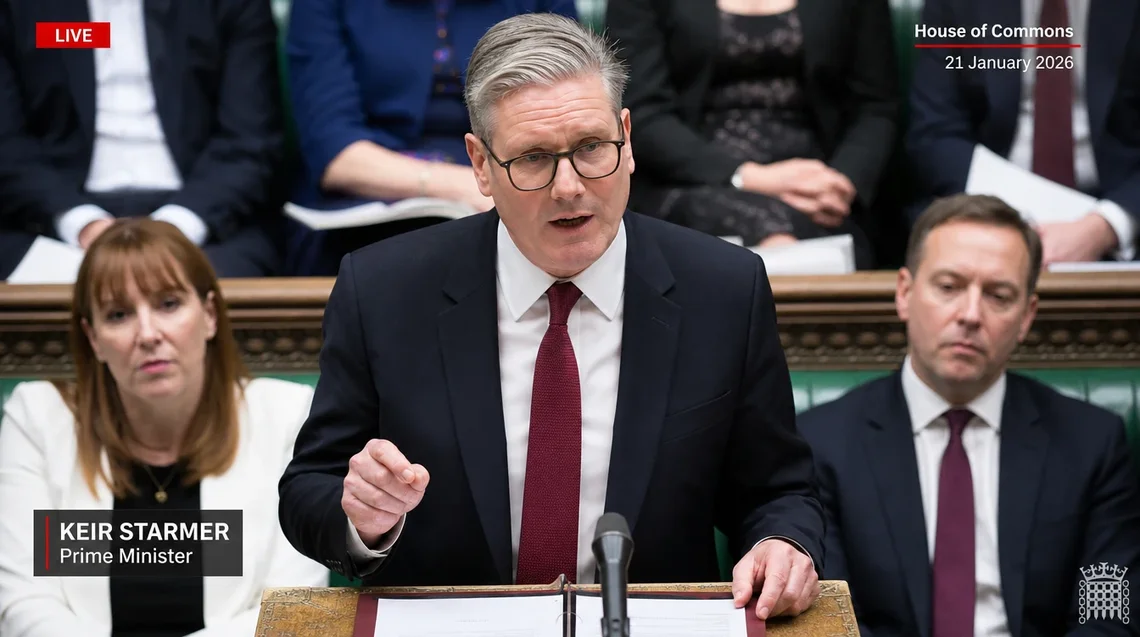
NHS waiting lists in England have reached a record high, with more than 7.6 million people currently on the books for treatment, placing Sir Keir Starmer's government under acute pressure as critics argue that Labour's funding commitments have fallen materially short of what the health service requires. The figures, published by NHS England, represent the starkest test yet of a prime minister who made reducing waiting times a central plank of his general election campaign.
The scale of the crisis has reignited a fierce parliamentary debate over health spending priorities, the pace of reform, and whether the structural changes being pursued by Health Secretary Wes Streeting can deliver meaningful results before the next electoral cycle. Polling conducted by YouGov shows public satisfaction with the NHS has fallen to its lowest recorded level, with fewer than one in three respondents describing themselves as satisfied with the health service overall.
Party Positions: Labour maintains that inherited Conservative underfunding is the primary cause of the waiting list crisis and points to additional capital investment announced in the autumn Budget as evidence of its commitment, while insisting structural reform alongside new money is the only sustainable path forward. Conservatives argue that Labour's funding package is inadequate given the scale of demand, contend that productivity within the NHS has not recovered to pre-pandemic levels, and accuse the government of managing decline rather than delivering transformation. Lib Dems have called for a fully independent review of NHS finances, advocate a significant uplift in capital spending for diagnostic infrastructure, and argue that neither of the two largest parties has been honest with the public about the true cost of restoring the health service to acceptable performance standards.
The Scale of the Waiting List Problem
Official NHS England data show that the total waiting list figure — formally described as the Referral to Treatment pathway — has climbed consistently despite government pledges to bring numbers down. Patients waiting more than 18 weeks for treatment, the standard the NHS is legally required to meet, now account for a substantial majority of those on the list, according to NHS England statistics. The 18-week target has not been met at a national level for several years, a reality that persisted under the previous Conservative administration and has continued under Labour.
Related Articles
Longest-Wait Patients
Among the most acute concerns are patients waiting more than 52 weeks for treatment. While headline numbers in this category had been falling incrementally in preceding months, campaigners and NHS leaders have warned that progress has stalled. Charities working with patients in orthopaedics, ophthalmology, and gastroenterology have told parliamentary committees that some individuals have now been waiting in excess of two years for procedures that clinical guidance describes as time-sensitive. The Office for National Statistics has separately recorded an increase in working-age adults reporting long-term sickness as a primary economic inactivity reason, a figure officials acknowledge is in part connected to delayed NHS treatment.
Regional Disparities
Data from NHS England also reveal significant geographic divergence in waiting times, with trusts in the Midlands and parts of the North West recording substantially worse performance against the 18-week standard than those in London and the South East. Health economists cited by the Guardian have argued this regional imbalance reflects decades of uneven capital investment and workforce distribution, problems that cannot be resolved within a single parliamentary term regardless of the funding envelope made available.
Labour's Funding Pledge Under Scrutiny
The government announced additional NHS funding as part of the autumn Budget settlement, framed by Treasury officials as the largest cash injection into the health service in recent memory. However, health economists and NHS trust leaders have questioned whether the real-terms increase, once inflation, workforce pay deals, and structural deficits already embedded in trust finances are accounted for, represents the transformative investment the government has described. The King's Fund and the Nuffield Trust, two of the most respected health policy research bodies, have both published analyses suggesting the settlement leaves a significant funding gap relative to what would be required to return the NHS to consistent performance against its core constitutional targets.
Capital vs Revenue Spending
A central point of contention among health policy analysts concerns the balance between capital and revenue spending within the settlement. NHS leaders have argued for years that chronic underinvestment in diagnostic equipment, hospital infrastructure, and digital systems has created a productivity ceiling that cannot be overcome through workforce spending alone. According to the BBC, several NHS trust chief executives have privately communicated to the Department of Health and Social Care that the capital allocations in the current settlement are insufficient to fund the diagnostic expansion that the government's own elective recovery plan requires.
Related coverage: Starmer pledges NHS overhaul as waiting lists grow examines the specific commitments made during the election campaign and the metrics against which the government has chosen to measure progress.
Streeting's Reform Agenda
Health Secretary Wes Streeting has consistently argued that additional funding without fundamental reform of how the NHS operates would represent a repetition of historical mistakes. His reform programme centres on shifting more care from acute hospital settings into primary and community provision, expanding the use of independent sector capacity to clear elective backlogs, and overhauling the NHS workforce planning framework through the newly constituted NHS England leadership structure.
Independent Sector Controversy
The decision to accelerate the use of independent sector providers for NHS-funded elective procedures has drawn criticism from trade unions, some Labour backbenchers, and patient advocacy groups, who argue it risks deepening a two-tier system and diverting clinical staff from NHS trust rosters. Streeting has rejected this characterisation, officials said, arguing that the priority is reducing waiting times for patients regardless of the provider delivering their care. The political tension within the Labour parliamentary party over this question is significant, with a number of MPs who represent constituencies with strong trade union traditions having tabled critical early day motions on the subject.
For context on how pressure on waiting times has evolved since Labour took office, see: Starmer's NHS Overhaul Faces New Pressure on Waiting Times.
Parliamentary and Political Pressure
The Conservative opposition has intensified its attacks on the government's NHS record at Prime Minister's Questions and in health select committee hearings. Shadow Health Secretary Kemi Badenoch and her successor in the brief have pressed ministers repeatedly on specific waiting time metrics, productivity data, and the timeline on which the government expects to demonstrate measurable progress. Officials in Downing Street have deflected the most specific timeline questions, maintaining that the scale of the challenge inherited from the previous administration makes precise commitments on individual targets inadvisable.
Backbench Labour Concerns
The political pressure on Starmer is not exclusively external. A number of Labour MPs representing constituencies with high proportions of NHS workers and high waiting list burdens have raised concerns in private meetings with whips and in correspondence with the Health Secretary. According to reporting by the Guardian, at least two parliamentary private secretaries attached to health-related ministerial briefs have expressed reservations about the pace of visible improvement. Party managers have worked to contain this dissent, but the waiting list figures make the task increasingly difficult as each monthly data release receives prominent media coverage.
| Metric | Current Figure | 18-Week Target | Source |
|---|---|---|---|
| Total Referral to Treatment (RTT) waiting list | 7.6 million+ | N/A (tracking metric) | NHS England |
| Patients waiting over 18 weeks | ~58% of total list | Below 8% of list | NHS England |
| Patients waiting over 52 weeks | Approximately 300,000+ | Zero (aspirational) | NHS England |
| Public satisfaction with NHS (overall) | Under 33% | N/A (polling metric) | YouGov / Ipsos |
| A&E four-hour performance (Type 1 units) | Approximately 60–65% | 95% within four hours | NHS England |
(Source: NHS England, YouGov, Ipsos, Office for National Statistics)
Public Opinion and the Electoral Calculus
The political stakes attached to NHS performance are well established in British electoral history. Polling by both YouGov and Ipsos consistently places health as one of the top three issues determining voting intention among the British public, and Labour's traditional association with founding and defending the NHS has historically functioned as one of its most durable electoral assets. The risk for Starmer's government, as advisers are understood to be acutely conscious, is that sustained deterioration in NHS performance — or the absence of visible improvement — could erode the one area of policy credibility on which Labour has relied most heavily with its core voter coalition.
Mid-Term Polling Implications
Current mid-term polling, aggregated across multiple firms and reported by the BBC, shows Labour's lead over the Conservatives has narrowed considerably since the general election. While health policy is rarely the sole driver of such movements, analysts at several polling organisations have noted that dissatisfaction with NHS performance is among the most frequently cited reasons given by respondents who indicate their vote intention has shifted since the election. The Lib Dems, who made significant gains in suburban and rural constituencies partly on health-related concerns in areas with long GP waiting times, are also positioned to benefit electorally if the government cannot demonstrate progress.
Earlier reporting from this outlet tracked the trajectory of commitments made before and after the election: Starmer Pledges NHS Overhaul as Waiting Lists Surge and Starmer faces pressure over NHS waiting list targets both provide essential background to the current crisis and the specific benchmarks ministers have previously cited.
What Comes Next
The Department of Health and Social Care is expected to publish a ten-year NHS plan in the coming months, a document that officials have described as the most comprehensive strategic blueprint for the health service since the NHS Plan of the early 2000s. The plan is understood to set out milestones for waiting list reduction, a reformed primary care offer, and a new approach to prevention that draws heavily on recommendations made by former Labour health minister Lord Ara Darzi in his independent review of NHS performance published earlier in the parliamentary term.
Whether the plan will be accompanied by a materially enhanced funding commitment, or will instead repackage existing allocations within a new strategic framework, remains the central unresolved question in Westminster health policy circles. NHS trust leaders, royal colleges, and patient groups have all indicated they will scrutinise the document closely for evidence that the government is prepared to match its reform ambitions with the financial resources that system leaders argue are necessary.
For the latest developments on how the government's overhaul programme is being implemented on the ground, see: Starmer pledges NHS overhaul as waiting lists persist.
With the waiting list at a record high, satisfaction at a record low, and a major strategic document imminent, the next several months will represent a defining period for Starmer's domestic legacy. The prime minister has staked considerable political capital on his personal commitment to NHS recovery. The data, as it stands, have yet to reflect a trajectory that matches that commitment — and within Westminster, few expect the political pressure to ease before they do.