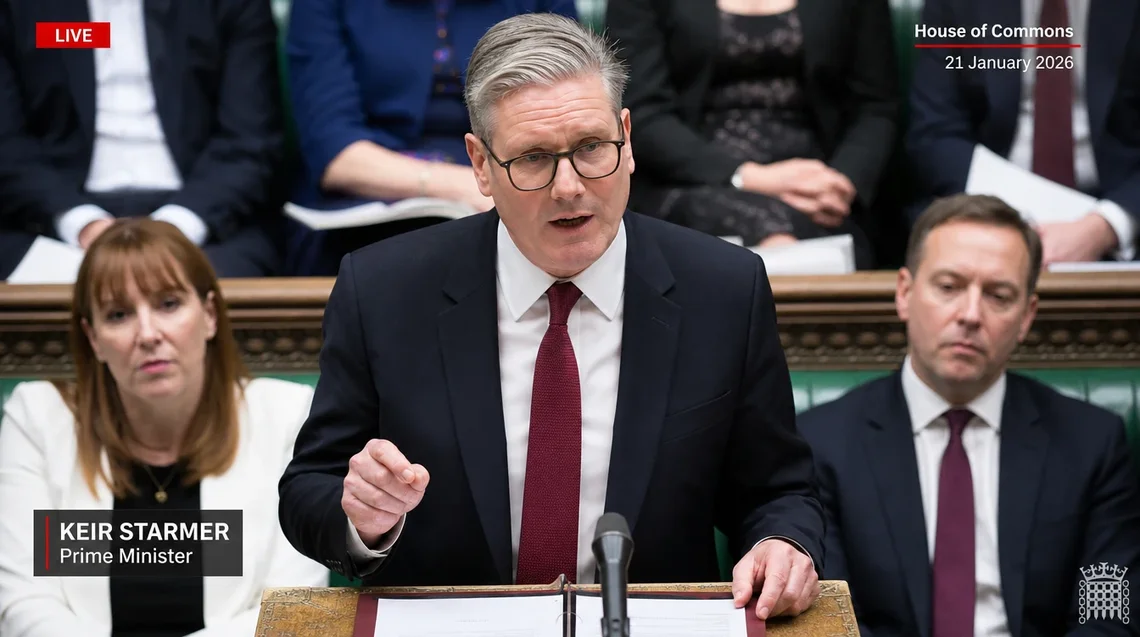
Starmer faces pressure over NHS waiting list crisis
Labour government defends healthcare reform strategy

NHS waiting lists in England remain at historically elevated levels, with more than 7.5 million people on the treatment backlog, placing Sir Keir Starmer's government under sustained political pressure to demonstrate that its healthcare reform agenda is producing measurable results. The Prime Minister and Health Secretary Wes Streeting have staked significant political capital on reducing waiting times, but critics across the opposition benches argue the pace of progress falls dangerously short of the scale of the crisis.
The waiting list figure, drawn from NHS England data and reported widely including by the BBC and Guardian, represents one of the defining domestic policy challenges of this Parliament. With the government's own pledge to return to the 18-week referral-to-treatment standard — a target that has not been consistently met for nearly a decade — the pressure on Labour's reform strategy is intensifying by the week.
Party Positions: Labour maintains that its NHS reform programme, backed by additional capital investment and a new elective care plan, is the correct approach to tackling the backlog and will deliver results within this Parliament. Conservatives argue the government has failed to produce a credible delivery timeline and accuse Labour of inheriting a difficult situation while lacking the urgency required to fix it. Lib Dems have called for an independent NHS recovery commission and more immediate targeted investment in community diagnostic centres, warning that patients in rural and semi-rural constituencies are being disproportionately affected by waiting time failures.
The Scale of the Backlog
What the Numbers Show
The NHS referral-to-treatment waiting list, which tracks patients awaiting consultant-led elective care, remains at a level that health policy analysts describe as structurally embedded rather than a short-term pandemic hangover. According to NHS England figures, the total waiting list currently stands above 7.5 million pathways, though the number of unique patients is somewhat lower due to individuals awaiting more than one treatment. The Office for National Statistics has separately tracked related pressures including GP appointment availability and mental health referral delays, painting a broader picture of a system under sustained strain.
Related Articles
Of particular political sensitivity is the number of patients waiting more than 52 weeks for treatment. While that figure has fallen from its peak, it remains at levels that health campaigners and opposition MPs argue are unacceptable for a system with a long-standing 18-week standard. The Guardian has reported that certain specialties, including orthopaedics and ophthalmology, face some of the longest average waits, affecting quality of life for hundreds of thousands of patients.
Regional Disparities
Performance is not uniform across England. Integrated Care Boards in some areas of the North West and East of England have reported more severe backlogs relative to population, according to NHS England data, while a small number of trusts in other regions have approached or briefly met the 18-week standard. The Liberal Democrats have been particularly vocal about rural constituencies where patients face longer travel times to diagnostic and treatment facilities, compounding the impact of extended waiting periods.
| Indicator | Current Position | Target / Benchmark | Source |
|---|---|---|---|
| Total RTT waiting list (pathways) | c. 7.5 million | Trend reduction required | NHS England |
| Patients waiting over 52 weeks | c. 300,000+ | Near elimination (govt pledge) | NHS England |
| Share of patients treated within 18 weeks | c. 58% | 92% (national standard) | NHS England |
| Public satisfaction with NHS (net) | Record low (29% satisfied) | — | British Social Attitudes / Nuffield Trust |
| Government approval on NHS handling | Net negative | — | YouGov / Ipsos tracking |
Labour's Reform Strategy Under Scrutiny
The Government's Stated Approach
Health Secretary Wes Streeting has repeatedly told the Commons that the government's approach rests on three pillars: increased elective activity through NHS weekend and evening sessions, a shift of appropriate care out of hospitals and into community and primary care settings, and longer-term workforce reform. The government has pointed to an uptick in elective activity data as early evidence that its approach is gaining traction, officials said, though independent health analysts have cautioned that increased activity alone is unlikely to dent a backlog of this magnitude within a single parliamentary term without structural changes to capacity.
Labour's elective recovery plan, unveiled by Streeting earlier this Parliament, set out ambitions to deliver an additional two million appointments and procedures through NHS and independent sector providers. The independent sector element has drawn criticism from some Labour backbenchers uncomfortable with the expansion of private sector involvement in NHS delivery, creating a secondary political tension that Streeting has had to manage carefully alongside the headline waiting time figures.
For further analysis of how the government's reform targets have evolved, see our earlier coverage: Starmer's NHS Overhaul Faces New Pressure on Waiting Times.
Parliamentary Pressure Points
Prime Minister's Questions and Health Oral Questions have become consistent flashpoints over the issue. Conservative health spokespeople have pressed the government on specific trust-level failures, while the Liberal Democrats have deployed their enhanced parliamentary presence following their strong general election performance to raise constituency-level cases. According to Hansard records, the NHS backlog has been raised in parliamentary questions on more than forty occasions in recent months, reflecting the political salience of the issue across all parties.
A recent opposition day debate called by the Conservatives focused specifically on the 18-week target, forcing Labour MPs to defend the government's timeline for restoration. Ministers declined during that debate to commit to a specific year by which the standard would be consistently met, a position that drew sharp criticism and media coverage including from the BBC and Guardian.
Opposition Arguments and Political Framing
Conservative Critique
The Conservatives face an uncomfortable dynamic in attacking the government on the NHS, given that the backlog reached its peak during the final years of the last administration and that public polling consistently shows low trust in the party on health matters. Nevertheless, shadow health secretary Edward Argar has argued that Labour has failed to produce a credible, costed and timed delivery plan, and that the government's reliance on additional investment without structural reform is insufficient. The Conservative position, according to party communications, is that productivity and efficiency reforms within the NHS must accompany any funding increase.
Liberal Democrat Demands
The Liberal Democrats, drawing on their base in suburban and rural England where GP access and hospital travel times are particular concerns, have called for the establishment of an independent NHS recovery commission to provide non-partisan oversight of the backlog reduction effort. The party has also pushed for accelerated investment in community diagnostic centres, arguing that bringing diagnostic capacity closer to patients is both clinically and economically efficient. Polling by YouGov and Ipsos has consistently shown NHS performance as a top-three concern among voters in the seats the Liberal Democrats gained at the last election.
Related reading on how parliamentary pressure has developed over recent months: Starmer faces pressure over NHS waiting list targets and Starmer faces pressure as NHS waiting lists swell.
Workforce and Structural Challenges
Staffing Pressures
Underlying the waiting list crisis is a workforce picture that health economists describe as the most acute constraint on the system's ability to increase throughput. NHS England's own data indicate significant vacancy rates across nursing, allied health professions and consultant grades, though recruitment from international sources and expanded domestic training pipelines have been cited by the government as longer-term correctives. The challenge, officials acknowledge, is that training timelines mean workforce expansion will not produce meaningful capacity increases within the near term.
Industrial relations within the NHS, which disrupted elective activity significantly in recent years through a series of strikes by junior doctors and consultants, have stabilised following the pay settlements negotiated by the incoming Labour government. However, analysts cited in BBC coverage have noted that the activity lost to industrial action represented a significant set-back that is still being absorbed by the system.
Capital Investment and Infrastructure
The government has committed to a programme of capital investment in NHS infrastructure, including the continuation of the new hospitals programme, though that programme has itself been subject to review and revision of timelines. Community diagnostic centres, of which more than 150 are now operational according to NHS England, have been presented by ministers as a key tool in bringing down waits for diagnostic tests such as MRI scans, endoscopies and CT procedures. Independent health think-tanks including the Health Foundation and Nuffield Trust have welcomed the diagnostic centre roll-out but cautioned that the centres need sufficient clinical staffing to operate at full capacity.
Public Opinion and Political Salience
Public dissatisfaction with NHS performance has reached levels not recorded in decades. The British Social Attitudes survey, conducted annually and widely cited including by the Guardian, recorded satisfaction with the NHS at its lowest point since the survey began tracking the metric, with fewer than one in three respondents expressing satisfaction. Separate polling by YouGov and Ipsos has shown that while voters continue to trust Labour more than the Conservatives on health, that advantage has narrowed as the government has moved from opposition to power and is now judged on delivery rather than rhetoric.
The political implications are significant. Labour won a substantial parliamentary majority on a platform that placed NHS recovery at its centre, and senior party strategists are acutely aware that failure to demonstrate measurable progress risks handing the opposition a powerful narrative ahead of local elections and, eventually, the next general election. For that reason, Downing Street has maintained close oversight of the NHS brief, with the Prime Minister personally engaged on the issue in a way that underlines its importance to the government's domestic political standing.
For a broader perspective on how the waiting list crisis has developed and the trajectory of political pressure on the government, see: Starmer faces NHS crisis as waiting lists hit new peak.
The Road Ahead
Ministers have indicated that the next set of NHS performance data will be watched closely both within Whitehall and across the opposition benches. The government faces a structural dilemma: the reforms it believes will make a long-term difference — workforce expansion, community care shifts, productivity improvements — operate on timelines that extend beyond the political cycle, while the pressure to show short-term reductions in the headline waiting list figure is immediate and unrelenting.
Health policy analysts warn that any meaningful restoration of the 18-week standard will require not only sustained investment and workforce growth but also a degree of public and political patience that has historically been difficult to sustain in the Westminster environment. Whether the Starmer government can hold that political space while simultaneously demonstrating enough near-term progress to maintain public confidence represents one of the most consequential domestic policy tests of this Parliament. The coming months of NHS data releases will be among the most scrutinised statistical publications in Whitehall, with the political consequences of each set of figures felt directly in the offices of ministers, shadow spokespeople and party strategists alike.
Further Reading: Our ongoing coverage of NHS policy and the waiting list debate includes Starmer Faces Pressure Over NHS Waiting Lists, examining how the political dynamics around health reform have developed since the general election.