Labour pushes NHS funding bill through Commons
Starmer government seeks to break deadlock on healthcare spending
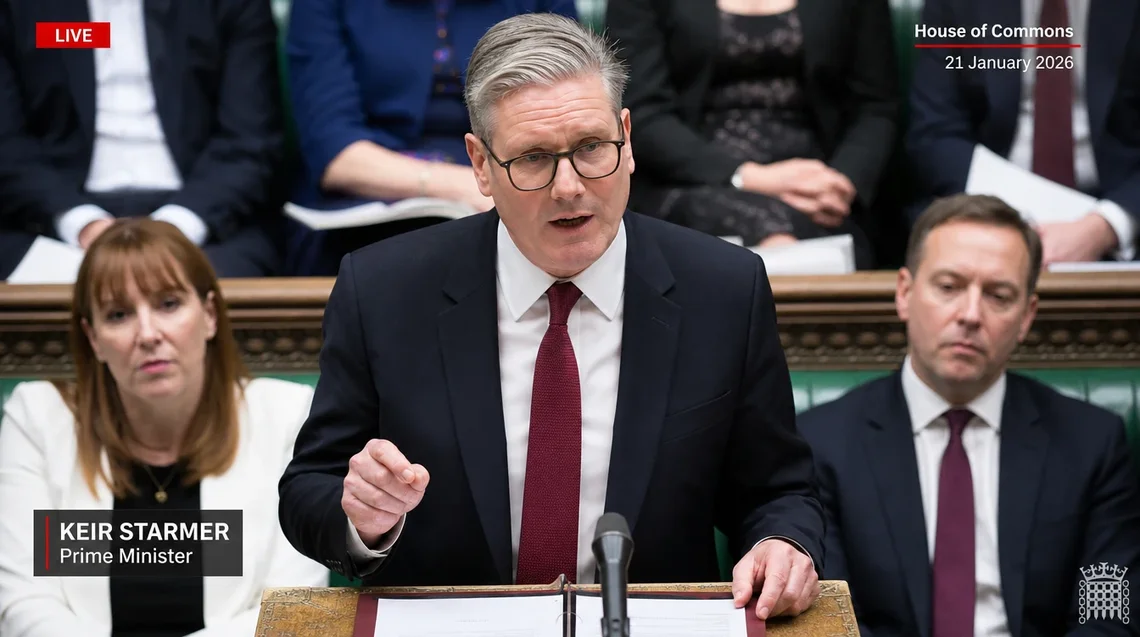
The House of Commons has passed a landmark NHS funding bill backed by the Starmer government, clearing a major legislative hurdle in one of the most contentious parliamentary battles over healthcare spending in recent memory. Ministers secured the vote after weeks of intense cross-party negotiation, with the legislation now set to advance to the House of Lords for scrutiny.
The bill, which proposes a substantial uplift in ring-fenced NHS expenditure alongside structural reforms to how health funding is allocated across England, passed by a majority of 47, according to figures released by the House of Commons Vote Office. The result marks a significant moment for a government that came to power promising to place the National Health Service at the centre of its domestic agenda.
Party Positions: Labour supports the bill as a necessary investment to cut waiting lists and stabilise NHS finances, describing the legislation as the most significant health funding commitment in over a decade. Conservatives have opposed the bill's spending provisions, arguing the proposed increases are fiscally irresponsible and insufficiently tied to reform conditions. Lib Dems have expressed qualified support, backing the funding uplift in principle while calling for stronger accountability mechanisms and independent oversight of how new money is spent.
What the Bill Contains
The NHS Funding (Sustainability and Reform) Bill sets out a multi-year financial framework intended to provide NHS England with greater budget certainty while requiring health boards to meet measurable performance thresholds. Health Secretary Wes Streeting, in remarks to the Commons chamber, described the legislation as a "turning point" for a service that has faced sustained pressure on staffing, waiting times and capital infrastructure.
Related Articles
Ring-Fenced Spending Provisions
A central element of the legislation is the ring-fencing of a significant proportion of the funding uplift for frontline clinical services, preventing its use on administrative costs without Treasury sign-off. Officials said this provision was introduced following internal government concerns that previous NHS budget increases had been absorbed by management overheads rather than patient care. The bill also introduces new obligations on NHS trusts to publish annual spending breakdowns disaggregated by service category (Source: Department of Health and Social Care).
Waiting List Reduction Targets
Alongside funding commitments, the legislation enshrines statutory targets for reducing the elective care backlog. According to figures published by NHS England, the waiting list for elective treatment currently stands at approximately 7.5 million people, a figure that has become a political flashpoint for the government. Ministers said the statutory targets create enforceable accountability where previous voluntary commitments had failed to deliver sustained improvement.
For further background on the government's approach to the backlog, see earlier reporting on how Labour pledges new NHS funding as waiting lists persist.
The Parliamentary Battle
The passage of the bill through its final Commons stage was not straightforward. The government faced a series of rebel amendments during the report stage, including one tabled by a group of Labour MPs representing constituencies in the north of England who argued the current funding formula disadvantages deprived areas. That amendment was narrowly defeated, but it exposed tensions within the parliamentary Labour Party over how additional NHS money would be distributed regionally.
Conservative Opposition
Shadow Health Secretary Edward Argar led the Conservative case against the bill, arguing that Labour was "writing blank cheques for a system that has not yet demonstrated the capacity to spend money wisely." The Conservative benches argued that any funding increase must be conditional on workforce reform, procurement efficiency and a reduction in agency staffing costs, positions that the government characterised as a mechanism for indefinitely delaying new investment. Analysis published by the Institute for Fiscal Studies, cited by several MPs during the debate, suggested the funding levels proposed would require sustained economic growth to remain fiscally neutral over a five-year horizon (Source: Institute for Fiscal Studies).
Liberal Democrat Amendments
The Liberal Democrats, whose support has become increasingly significant in a Commons where the government's majority can be tested, tabled amendments calling for an independent NHS spending watchdog with statutory powers to audit value for money. Health spokesperson Helen Morgan argued that without robust external scrutiny, there was no guarantee that new funding would translate into measurable outcomes for patients. The government rejected the amendment on procedural grounds but indicated it would consider similar proposals during Lords scrutiny.
For a broader picture of the political dynamics surrounding NHS reform under the current administration, readers can follow ongoing coverage of how Starmer pushes NHS reform bill amid funding pressure.
Public Opinion and Polling
Public attitudes toward NHS funding present a complicated picture for ministers. Polling consistently shows strong support for increased NHS spending in the abstract, but that support becomes more conditional when respondents are asked whether they trust government to allocate new money effectively.
| Polling Organisation | Question | Support (%) | Oppose (%) | Don't Know (%) |
|---|---|---|---|---|
| YouGov | Do you support increased NHS funding? | 71 | 12 | 17 |
| Ipsos | Do you trust government to spend NHS funds well? | 34 | 49 | 17 |
| YouGov | Is NHS reform more important than new funding? | 44 | 38 | 18 |
| Ipsos | Is the NHS Labour's strongest policy area? | 39 | 41 | 20 |
(Sources: YouGov, Ipsos)
The figures indicate that while the public broadly welcomes additional NHS investment, the government faces a trust deficit on delivery. This dynamic has shaped Labour's communications strategy around the bill, with ministers emphasising accountability mechanisms and the statutory nature of waiting list targets rather than leading with the headline spending figures.
Economic and Fiscal Context
The bill arrives at a moment of significant fiscal constraint. Office for National Statistics data show that public sector net debt currently stands at a level not seen in decades, placing pressure on every major departmental spending decision (Source: Office for National Statistics). The Treasury has insisted that the NHS funding commitments in the bill are fully costed within the existing spending review envelope, a claim contested by independent economists who argue the government has not accounted for the full cost of the workforce expansion necessary to meet the bill's targets.
Workforce Implications
A recurring theme in Commons debate was whether increased funding, without a parallel plan for expanding the clinical workforce, could realistically reduce waiting times at the scale ministers have promised. NHS Confederation figures cited during the debate suggested England currently faces a shortage of tens of thousands of clinical staff across nursing, general practice and secondary care. Officials said the bill would be accompanied by a refreshed workforce strategy to be published in the coming months, though critics noted that previous workforce plans had failed to meet their own recruitment projections.
The staffing dimension of this debate has been extensively covered in earlier analysis of Labour pledges new NHS funding push amid staff shortages.
Reaction from Health Sector
Initial reaction from NHS leaders and health sector bodies was broadly positive, though tempered by familiar cautions about implementation. The NHS Confederation welcomed the multi-year funding framework as providing the forward planning stability that trusts have long requested. The British Medical Association, while not opposing the bill outright, expressed concern that the statutory performance targets could place unrealistic obligations on clinicians without commensurate investment in diagnostic capacity and community-based services.
Patient Groups and Advocacy Organisations
Patient advocacy organisations offered a more enthusiastic reception. Healthwatch England said the legislation represented an overdue acknowledgement that the status quo was unsustainable. Cancer Research UK noted that the elective waiting list targets, if met, would have a significant impact on cancer diagnosis timescales, where delays have been linked to worse patient outcomes. Charities representing patients with chronic conditions echoed that view, arguing that faster elective care would ease the burden on emergency services by addressing conditions before they become acute.
The BBC and the Guardian have both reported extensively on the political and clinical stakes of the legislation, with analysis pieces examining the gap between the government's stated ambitions and the structural barriers facing NHS delivery (Source: BBC; Source: Guardian).
Next Steps: Lords Scrutiny
The bill now passes to the House of Lords, where it is expected to face robust scrutiny. Peers with medical and public health expertise are likely to probe the bill's accountability provisions closely, while crossbench peers may press for the independent oversight mechanisms the Liberal Democrats failed to secure in the Commons. Government whips are understood to be preparing for a protracted Lords stage, with officials acknowledging that amendments are likely before the legislation returns to the Commons for consideration.
For context on how the NHS funding debate has developed over successive months of parliamentary activity, earlier reporting tracked the origins of this legislative effort in the coverage of Labour pushes NHS reform bill amid funding row and the evolving government position documented in analysis of Labour pushes NHS reform bill amid funding debate.
Whether the legislation ultimately delivers on its headline promises will depend on factors that extend well beyond the bill itself: the pace of workforce expansion, the capacity of NHS trusts to absorb and deploy new resources effectively, and the willingness of a fiscally constrained Treasury to maintain its commitments through successive spending cycles. For a government that has staked considerable political capital on NHS recovery, the passage through the Commons is a necessary but far from sufficient condition for success.