Starmer faces pressure over NHS waiting list targets
Labour government midway through second year of health reforms

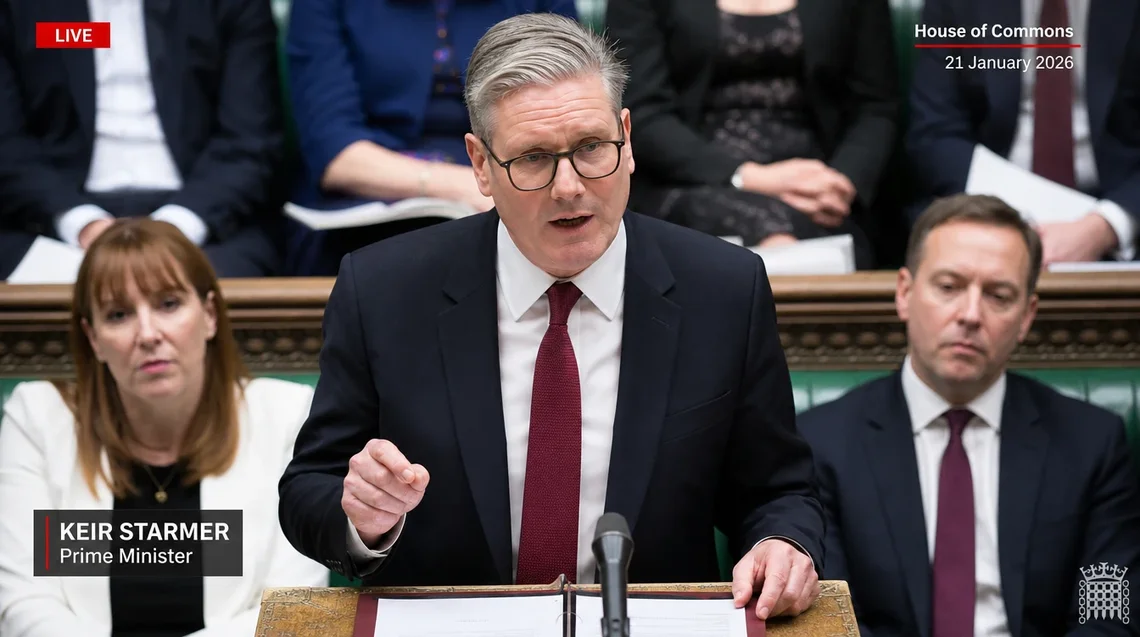
Sir Keir Starmer is facing mounting pressure over the government's failure to meet its own NHS waiting list reduction targets, with official figures showing the number of patients waiting more than 18 weeks for elective treatment remaining stubbornly high despite pledges made before and after the last general election. The health reforms — now midway through their second year of implementation — have become a flashpoint between Labour and opposition parties, and increasingly a source of tension within the parliamentary Labour Party itself.
According to NHS England data cited by the Office for National Statistics, more than 7.5 million people remain on waiting lists for elective care, a figure that ministers had promised to bring down substantially by this point in the parliamentary cycle. Health Secretary Wes Streeting has maintained that progress is being made, but critics argue the pace of reform is far too slow and that structural changes within the health service are not yet translating into measurable improvements for patients.
Party Positions: Labour insists its NHS reforms are on track, pointing to increased capital investment and the creation of new surgical hubs as evidence of systemic change, while arguing that the waiting list crisis was inherited from fourteen years of Conservative government. Conservatives, under leader Kemi Badenoch, have accused the government of overpromising and underdelivering, calling for an independent audit of NHS performance targets and demanding that ministers be held accountable for missed benchmarks. Lib Dems, led by Sir Ed Davey, have pushed for a cross-party health commission and have been particularly vocal on primary care access and mental health waiting times, arguing that the government's focus on elective backlogs has come at the expense of community-based services.
The Scale of the Waiting List Challenge
The 18-week referral-to-treatment standard — a legal commitment introduced under the Blair government — has not been met nationally since the aftermath of the Covid-19 pandemic. The current administration pledged before taking office that it would restore this target within a defined timeframe, a promise now under intense scrutiny from across the political spectrum.
Related Articles
What the Numbers Show
NHS England's most recently published referral-to-treatment data show that only approximately 58 percent of patients are being seen within 18 weeks of GP referral, compared to the 92 percent standard set in law. The figure represents marginal improvement over recent months but remains far short of the government's stated ambitions. The Office for National Statistics has noted that the distribution of waiting times is uneven, with patients in certain specialties — including orthopaedics, ophthalmology, and urology — experiencing disproportionately long delays (Source: Office for National Statistics).
For context on the scale of the political challenge the government has faced since entering office, readers can refer to earlier coverage of Starmer pledges NHS overhaul as waiting lists grow, which detailed the commitments made in the early weeks of the administration.
| Indicator | Current Figure | Government Target | Source |
|---|---|---|---|
| Patients on elective waiting list | 7.5 million+ | Reduction to pre-pandemic levels | NHS England / ONS |
| 18-week standard compliance | ~58% | 92% (legal standard) | NHS England |
| Public satisfaction with NHS (net) | -24% | Positive net score by mid-parliament | Ipsos / King's Fund |
| Government approval on health (YouGov) | 32% approve | N/A | YouGov |
| A&E four-hour target compliance | ~73% | 76% interim / 95% full target | NHS England |
Political Pressure from Both Flanks
The political dynamics around NHS reform are unusually complex for this administration. Labour entered government with an explicit mandate on health, having made the NHS central to its general election campaign. That mandate now creates a double burden: any shortfall in delivery is both a policy failure and a political liability of the government's own making.
Conservative Opposition Strategy
The Conservative opposition has adopted an increasingly aggressive posture on health, sensing an opportunity to neutralise one of Labour's traditional electoral advantages. Shadow Health Secretary Edward Argar has repeatedly demanded that ministers publish a detailed delivery plan with quarterly milestones, accusing the government of relying on announcements rather than outcomes. Speaking in the Commons recently, Argar argued that the creation of surgical hubs and the expansion of community diagnostic centres — flagship Labour commitments — were "proceeding too slowly to make any difference to patients currently waiting in pain," according to parliamentary records.
Lib Dem Pressure on Community Care
The Liberal Democrats have carved out a distinct position, focusing less on the headline elective backlog figures and more on what they describe as a crisis in primary care access. Sir Ed Davey has repeatedly raised in Prime Minister's Questions the issue of patients unable to secure timely GP appointments, arguing that without functional primary care, emergency departments and secondary care services will continue to face unsustainable demand. The party's health spokesperson has called for ring-fenced funding for mental health waiting times, which according to NHS data remain at record levels in many trusts (Source: NHS England).
Backbench Labour Discontent
Perhaps more damaging for the Prime Minister is the nature of discontent emerging from within his own parliamentary party. A number of Labour MPs representing constituencies with some of the longest waiting times have raised concerns privately — and in some cases publicly — about the pace of reform and the government's willingness to confront what they describe as structural inefficiencies within NHS England itself.
The Streeting Reform Agenda Under Scrutiny
Health Secretary Wes Streeting has positioned himself as a reforming minister willing to challenge NHS orthodoxies, including on the role of independent and private sector providers in delivering NHS-funded care. This stance has generated friction with trade unions and some Labour backbenchers who regard greater private sector involvement as ideologically unacceptable. The Guardian has reported on several instances of Labour MPs raising concerns at private party meetings about the direction of Streeting's reform programme, though the Health Secretary has maintained public support from the Prime Minister's office (Source: The Guardian).
Details of the parliamentary dynamics around this internal tension have been documented in earlier reporting on Starmer's NHS overhaul faces growing backbench revolt, which outlined the fault lines beginning to emerge within the parliamentary Labour Party over the pace and direction of health policy.
A separate strand of backbench concern relates to the government's NHS productivity agenda. Ministers have made increasing productivity a central pillar of the reform strategy, arguing that the health service must do more with existing resources before additional funding commitments can be justified. Critics within the party argue this framing is politically toxic and risks sounding indistinguishable from Conservative-era messaging about efficiency savings (Source: BBC).
Public Opinion and the Electoral Calculus
Polling data present a sobering picture for the government. YouGov tracking surveys conducted recently show that only 32 percent of voters approve of the government's handling of the NHS, with 51 percent disapproving — figures that represent a deterioration from the immediate post-election honeymoon period when Labour enjoyed a brief uplift on health ratings (Source: YouGov). Ipsos research published by the King's Fund shows public satisfaction with the NHS at historically low levels, with net satisfaction recorded at minus 24 percentage points, the lowest figure recorded since the survey's inception (Source: Ipsos).
Demographic Vulnerabilities
The polling breakdown reveals particular vulnerabilities in demographic groups Labour needs to retain. Among over-55 voters — who are both the highest users of NHS services and among the most electorally consistent demographic groups — dissatisfaction with government health policy is particularly acute. Ipsos data show this age group is the most likely to cite NHS waiting times as their primary concern when asked about government performance, ahead of cost of living and economic management (Source: Ipsos).
The Government's Defence
Ministers have consistently pushed back against what they characterise as premature criticism of a long-term reform programme. Officials at the Department of Health and Social Care have pointed to the creation of new surgical hubs, expanded community diagnostic centre capacity, and increased investment in NHS capital budgets as evidence that the structural foundations for waiting list reduction are being put in place. Streeting has argued publicly that the scale of the problem inherited from the previous administration means that no government could reasonably be expected to resolve a multi-year crisis within eighteen months.
The Eldarkar Review and Structural Reform
The government has also pointed to the ongoing review of NHS England's structure and governance as evidence of a seriousness of purpose that goes beyond headline announcements. Officials said the review, led by senior health administrators, is expected to produce recommendations on the relationship between NHS England, integrated care boards, and the Department of Health — a bureaucratic architecture that many health economists argue is itself a source of inefficiency and delay. Whether the review's findings will produce tangible improvements quickly enough to satisfy political critics remains an open question (Source: BBC).
For a fuller account of the pressures that have built around the overhaul programme in recent months, see Starmer's NHS Overhaul Faces New Pressure on Waiting Times, which examined the convergence of political and operational challenges facing the Health Secretary.
What Comes Next
The government faces a series of near-term political tests on health policy. The forthcoming NHS performance data releases will be closely scrutinised for signs of the improvement ministers have promised. Any further deterioration — or even a failure to show clear directional progress — is likely to intensify pressure both from the opposition benches and from within the parliamentary Labour Party.
The Spending Review settlement for health will also come under renewed scrutiny as pressure groups, royal colleges, and health charities argue that current funding levels are insufficient to drive the transformation required. NHS Confederation officials have said publicly that workforce capacity, not structural reform alone, is the binding constraint on waiting list reduction — a position that implies significant additional resource commitments.
Previous coverage of the scale of the commitments Starmer made prior to the current reform phase can be found in reporting on Starmer Pledges NHS Overhaul as Waiting Lists Surge, which set out the ambition against which the government's performance is now being measured.
With the next general election likely no earlier than three years away, the government retains time to demonstrate meaningful progress. However, the NHS has an unusual capacity to dominate political weather across extended periods, and the combination of stubbornly high waiting times, deteriorating public satisfaction data, and growing internal party discontent means that health policy will remain one of the defining tests of Starmer's premiership. How ministers respond to the current pressure — whether through accelerated reform, revised targets, or a recalibration of public expectations — will shape both the policy trajectory and the political narrative heading into the second half of this parliamentary term.