Starmer's NHS Overhaul Faces New Pressure on Waiting Times
Labour confronts healthcare crisis amid funding constraints

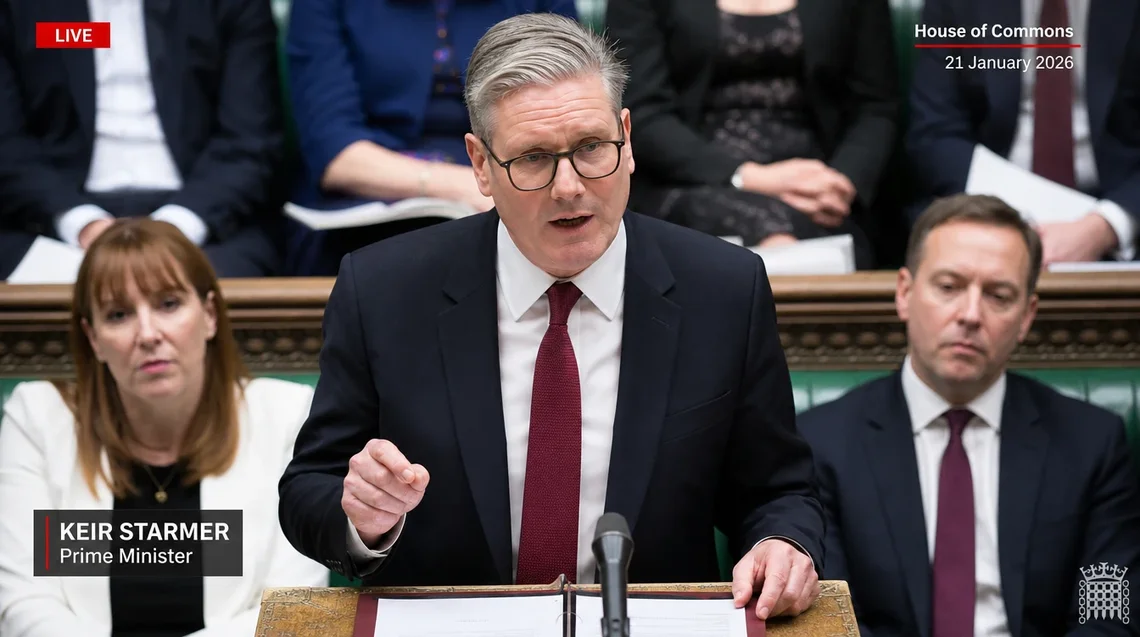
More than 7.5 million people are currently waiting for NHS treatment in England, the highest figure recorded since modern data collection began, placing Sir Keir Starmer's government under mounting pressure to deliver on its central promise to reform the health service. With funding constraints tightening and backbench Labour MPs growing restless, the Prime Minister's flagship domestic agenda faces its most serious test yet.
Party Positions: Labour has committed to reducing waiting times through a combination of new surgical hubs, expanded evening and weekend appointments, and a reformed NHS productivity drive, while maintaining the service remains publicly funded and free at the point of use. Conservatives argue Labour has failed to produce a credible funding plan and accuse ministers of inheriting a difficult situation yet making it worse through indecision and delayed reform. Lib Dems are calling for an immediate cross-party commission on NHS funding, warning that short-term political fixes will not address structural capacity problems and demanding ring-fenced investment for mental health and community care.
The Scale of the Crisis
NHS England data show the elective care waiting list remains stubbornly elevated, with patients in some specialties facing waits of more than two years for procedures that were, not long ago, routinely completed within eighteen weeks. The eighteen-week referral-to-treatment standard — a legal commitment introduced under Tony Blair's government — is currently being met for fewer than six in ten patients, the worst performance against that benchmark since it was introduced. (Source: NHS England)
Regional Disparities Deepen Concern
The situation is not uniform across the country. Analysis by the Office for National Statistics indicates that patients in parts of the Midlands and North of England face significantly longer average waits than those in London and the South East, a disparity that cuts directly against Labour's levelling-up rhetoric and its stated commitment to health equity. Integrated Care Boards in several regions have privately warned NHS England that without additional capital investment, they cannot expand surgical capacity at the pace ministers are demanding, according to reporting by the Guardian.
Related Articles
The numbers have prompted renewed criticism from opposition benches, with Conservative health spokespeople arguing that the government's reform agenda amounts to reorganisation for its own sake rather than a concrete plan to treat more patients. For context on how the government initially framed its ambitions, read our earlier coverage: Starmer pledges NHS overhaul as waiting lists grow.
Funding Constraints and the Treasury Standoff
At the heart of Labour's difficulties lies an unresolved tension between the Department of Health and Social Care and the Treasury. Ministers have repeatedly signalled that substantial new money is required to drive down waiting lists at the pace the Prime Minister has pledged publicly, yet Chancellor Rachel Reeves is understood to have resisted committing to figures beyond what was announced in the autumn fiscal statement, senior Whitehall officials said.
What the Numbers Show
| Metric | Current Figure | Target / Benchmark | Source |
|---|---|---|---|
| NHS England elective waiting list | 7.5 million | Reduce to pre-pandemic levels | NHS England |
| Patients waiting over 18 weeks | ~42% of list | 0% (statutory standard) | NHS England |
| Public satisfaction with NHS (overall) | 24% | Historical average: ~60% | British Social Attitudes / Ipsos |
| Labour approval on NHS handling | 34% approve | — | YouGov |
| A&E four-hour standard performance | ~70% | 95% (national standard) | NHS England |
| NHS productivity vs pre-pandemic | Approx. 10–12% below | Return to 2019 levels | Office for National Statistics |
The productivity figure is particularly sensitive inside government. The Office for National Statistics calculates that NHS output per unit of input remains significantly below pre-pandemic levels, a finding that has given ammunition to critics who argue that simply pouring more money into the system without structural reform will not move the dial on waiting times. Health Secretary Wes Streeting has cited this figure repeatedly in defence of his reform programme, arguing that the NHS must "reform to receive" the additional investment the government intends to provide.
Backbench Pressure and Internal Labour Tensions
The reform agenda is not only being contested from the opposition benches. A growing number of Labour MPs, particularly those representing seats with heavily unionised NHS workforces, have privately raised concerns about the pace and nature of the proposed changes, according to multiple accounts from within the parliamentary Labour Party. The concerns centre on workforce restructuring, the potential closure or consolidation of smaller district general hospitals, and the role of the independent sector in providing NHS-funded elective care.
The Revolt Takes Shape
Tensions came into sharper relief during recent Commons debates on NHS reform, with several Labour MPs using contributions to signal discomfort with aspects of the Streeting agenda. The dynamic is explored in detail in our related coverage: Starmer's NHS overhaul faces growing backbench revolt. A separate earlier report also documented the initial signs of parliamentary friction: Starmer's NHS Overhaul Faces Backbench Revolt.
The left of the party remains instinctively hostile to any expansion of independent sector treatment centres, viewing it as privatisation by stealth — a charge ministers have repeatedly and firmly rejected. Streeting has argued that using spare capacity in the independent sector to treat NHS patients on the NHS waiting list is a pragmatic, not ideological, decision. However, polling conducted by YouGov suggests the public itself is divided on the question, with roughly half of respondents expressing concern about private providers playing a greater role in delivering NHS care, even when the care remains free at the point of use. (Source: YouGov)
The Reform Blueprint Under Scrutiny
The government's ten-year NHS plan, currently in development, is intended to shift care out of hospitals and into community settings, invest heavily in technology and early diagnosis, and restructure the workforce around a smaller number of specialist hubs. It is an approach widely endorsed by health economists and independent analysts, including those at the King's Fund and the Nuffield Trust, who have long argued that the existing hospital-centric model is neither clinically optimal nor financially sustainable.
Implementation Gaps Remain
Yet the gap between the plan's ambitions and current operational reality is considerable. Community diagnostic centres, which the government has promoted as a key vehicle for reducing waiting times through faster testing and scanning, are operational in a number of locations but rollout has been slower than originally projected in several regions, officials acknowledged. The BBC has reported that some centres are running below capacity due to staffing shortages, undermining the argument that capital investment alone can unlock faster treatment pathways. (Source: BBC)
Workforce planning remains perhaps the most intractable problem. NHS England's own long-term workforce plan acknowledges a structural shortfall of tens of thousands of nurses, doctors, and allied health professionals, a gap that cannot be filled quickly regardless of funding commitments. Training pipelines are measured in years, not months, and international recruitment — historically a significant lever — faces both ethical constraints around poaching from lower-income health systems and practical limitations following changes to immigration rules.
Opposition Strategies and the Political Arithmetic
For Kemi Badenoch's Conservative Party, the NHS represents both an opportunity and a risk. Polling conducted by Ipsos shows health remains the single most important issue for British voters, and dissatisfaction with NHS performance has historically punished incumbent governments regardless of party. (Source: Ipsos) The Conservatives, however, carry their own record in government — eighteen months after leaving office, memory of the waiting list growth during their tenure remains politically present and limits the credibility of the most aggressive attacks.
The Liberal Democrats, under Ed Davey, are pursuing a different strategy: positioning themselves as the constructive cross-party voice on NHS reform, particularly on mental health, GP access, and social care — areas where their target seats in suburban England tend to have high salience. Davey has repeatedly called for a formal cross-party commission, an idea the government has so far declined to adopt, arguing it would amount to delaying action rather than delivering it.
What Comes Next
Ministers are expected to publish further detail on the ten-year plan in the coming months, with Streeting under pressure to demonstrate tangible progress before the next set of NHS performance statistics are released. The government has staked considerable political capital on the health brief — it featured prominently in Labour's general election campaign material and in the King's Speech — meaning poor numbers carry outsized reputational risk.
For a broader account of how the government's funding commitments have evolved, see our reporting: Starmer pledges major NHS overhaul amid funding row, as well as the earlier overview of the political context: Starmer Pledges NHS Overhaul as Waiting Lists Surge.
The fundamental challenge for Starmer's government is one of political time versus operational reality. Structural reform of an institution as large and complex as the NHS cannot deliver visible results within a single parliamentary cycle, yet the electoral pressure to show progress is immediate and unrelenting. Whether the Prime Minister can hold together his parliamentary coalition, manage Treasury expectations, and maintain public confidence while the machinery of reform turns slowly is the defining domestic question of this Parliament. The waiting list figures that will emerge in the months ahead will go a long way to providing the answer.