Starmer pledges NHS overhaul as waiting lists persist
Labour targets structural reform amid budget constraints

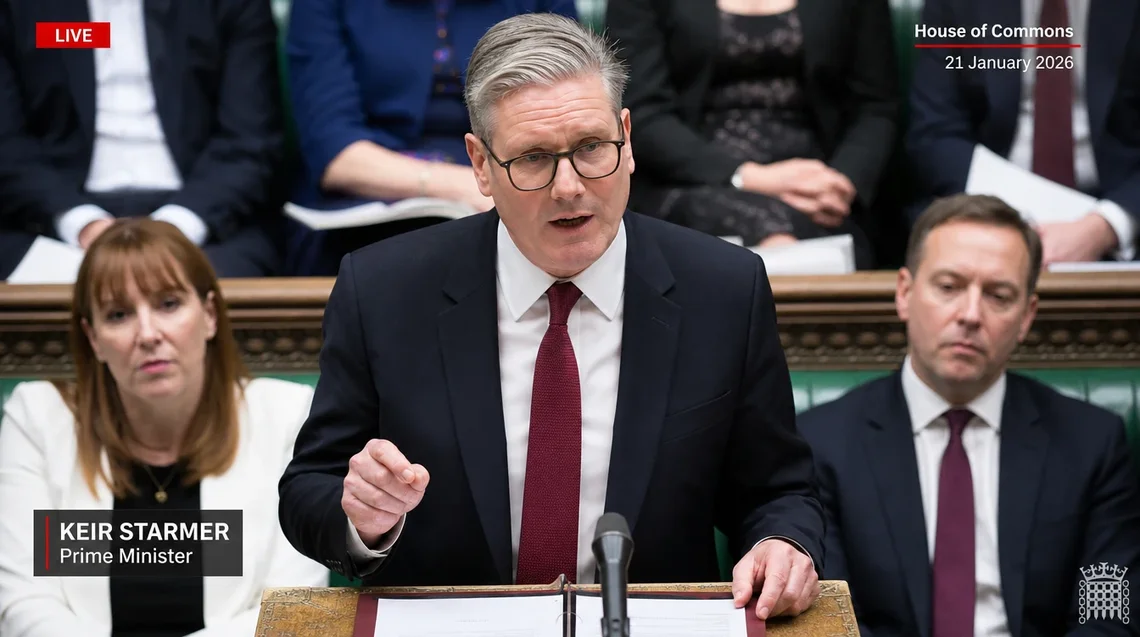
Prime Minister Keir Starmer has set out an ambitious programme of structural reform for the National Health Service, vowing to cut record waiting lists that have left millions of patients in England waiting longer than clinically recommended for treatment. With NHS waiting lists currently standing at approximately 7.5 million cases, according to NHS England figures, the government faces intense pressure to deliver measurable improvements within a single parliamentary term — all while operating under strict self-imposed fiscal rules that limit additional day-to-day spending.
Party Positions: Labour supports structural NHS reform centred on shifting care from hospitals to community settings, expanding the use of independent sector capacity, and reforming the GP contract to improve access — while maintaining commitments not to raise income tax, VAT, or National Insurance for working people. Conservatives argue Labour has inherited a funding settlement they put in place and warn that further centralisation of NHS management will reduce local accountability and slow reform. Lib Dems back increased NHS capital investment as an immediate priority, calling for ring-fenced funding for mental health services and greater transparency on waiting list targets, and have urged the government to go further and faster on social care reform to relieve pressure on acute hospital beds.
The Scale of the Challenge
When Labour took office following the general election, NHS waiting lists in England represented one of the most politically visible measures of public service failure. Data published by NHS England show that tens of thousands of patients have been waiting more than 18 months for elective procedures, a figure that would have been considered extraordinary before the disruption caused by recent years of successive pressures on the health service. The 18-week referral-to-treatment target, a benchmark that requires 92 percent of patients to begin treatment within 18 weeks of referral, has not been consistently met on a national basis for several years. (Source: NHS England)
Regional Disparities
The waiting list crisis is not evenly distributed. Analysis of NHS England performance data shows that trusts in the Midlands and the North of England are disproportionately represented among the worst performers on referral-to-treatment times, while several London trusts have made more recent progress in reducing their longest waits. The Office for National Statistics has separately tracked the health impacts of delayed treatment, finding correlations between extended waits and worsening patient outcomes in orthopaedic, cardiovascular, and ophthalmological pathways. (Source: Office for National Statistics)
Related Articles
Health economists have warned that tackling regional variation requires not just additional capacity but a wholesale reorganisation of how diagnostic and treatment pathways are managed across integrated care systems. The government has indicated it will publish a formal NHS ten-year plan, which is expected to address these disparities directly.
Starmer's Reform Blueprint
At the heart of the government's approach is a commitment to move the NHS away from what officials describe as a model overly reliant on acute hospital settings, toward a system where more care is delivered in the community, in GP surgeries, and through a redesigned primary care infrastructure. The Prime Minister has repeatedly framed the reform agenda in terms of prevention and early intervention, arguing that reducing demand on emergency and elective hospital services over the medium term depends on catching conditions earlier and managing long-term illness more effectively outside hospital. For broader context on how this reform agenda has evolved, see our earlier reporting on Starmer pledging a major NHS overhaul amid a funding row.
The Role of Independent Sector Capacity
One of the more contentious elements of the government's strategy is its willingness to use independent sector providers — private hospitals and diagnostic clinics — to increase the overall volume of NHS-funded activity. Government officials have confirmed that the NHS will continue and expand existing arrangements under which patients on NHS waiting lists can be treated in independent facilities at NHS cost. Critics on Labour's left flank have argued this represents an acceleration of privatisation by stealth, though health ministers have insisted the defining principle is that treatment remains free at the point of use and NHS-funded, regardless of the provider. The growing internal pressure on this question has been documented in our coverage of Starmer's NHS overhaul facing a growing backbench revolt.
Elective Reform Targets
The government has set an operational target of eliminating waits of more than 18 months by a specific programme milestone, with subsequent targets aimed at reducing the overall waiting list volume and eventually restoring compliance with the 18-week standard. NHS England has been directed to increase elective activity above pre-pandemic baseline levels, with productivity metrics now formally incorporated into integrated care board accountability frameworks. Officials acknowledge the ambition is significant given current capital constraints and persistent workforce shortfalls in key surgical and anaesthetic specialties.
| Metric | Figure | Source |
|---|---|---|
| Total patients on elective waiting list (England) | Approx. 7.5 million | NHS England |
| Patients waiting over 52 weeks | Approx. 300,000+ | NHS England |
| 18-week target compliance (national) | Below 92% threshold | NHS England |
| Public satisfaction with NHS (most recent annual survey) | 24% — historic low | British Social Attitudes / The King's Fund |
| Share of voters citing NHS as top priority | Approx. 55% | YouGov / Ipsos (combined tracker average) |
| Labour poll lead on NHS management | +12 points over Conservatives | YouGov (Source: YouGov) |
Budget Constraints and the Fiscal Backdrop
The NHS reform agenda does not exist in a vacuum. Chancellor Rachel Reeves has set firm fiscal rules requiring day-to-day government spending to be covered by tax revenues and limiting borrowing to capital investment. The overall health settlement announced at the autumn Budget provided a real-terms increase for the NHS, but health economists at the Institute for Fiscal Studies and independent analysts have noted that the uplift is unlikely to be sufficient to both clear the backlog and fund the structural transformation the government is simultaneously pursuing. (Source: Institute for Fiscal Studies)
Capital Investment Pressures
A particular pinch point is NHS capital spending, which covers buildings, equipment, and digital infrastructure. The health service has accumulated a significant maintenance backlog — estimated in the billions — across its estate. Hospitals operating in ageing facilities face constant trade-offs between day-to-day repair costs and investment in the technology required to improve efficiency. The government's new hospital programme, inherited from the previous administration, has been subject to repeated revision, with several schemes delayed while funding and contractor arrangements are reassessed. Reporting on the financial dimensions of this standoff is available in our earlier analysis of Starmer's pledges on NHS overhaul as waiting lists grow.
Political Dynamics at Westminster
For Labour, the NHS carries unique political weight. It was a founding mission of the postwar Attlee government, and the party's emotional and electoral connection to the health service remains central to its identity. Polling conducted by YouGov and Ipsos consistently shows that NHS performance is ranked among the top two or three issues determining voting intention, and Labour currently maintains a double-digit lead over the Conservatives on which party is most trusted to run the health service. (Source: YouGov; Source: Ipsos)
However, the political risk runs in both directions. If waiting lists fail to fall materially before the next general election, the government's reform narrative becomes difficult to sustain regardless of structural progress. Senior government figures are acutely aware that voters tend to judge NHS performance on personal and local experience rather than system-wide metrics. The BBC has reported extensively on patient testimony from constituencies across England that illustrates the gap between policy ambition and lived experience on the ground. (Source: BBC)
Opposition Lines of Attack
The Conservatives, now under Kemi Badenoch's leadership, have sought to frame the NHS debate around Labour's handling of industrial relations with NHS trade unions and the cost of pay settlements agreed shortly after the change of government. Shadow health spokespeople argue that above-inflation wage awards, while necessary to restore workforce morale, have consumed a disproportionate share of the additional health funding, leaving less available for direct patient care and waiting list reduction. The Liberal Democrats have focused their pressure on mental health provision and the state of NHS dentistry, areas where the government's reform proposals to date have been less developed. For the latest on how waiting time pressures are reshaping the political debate, see our recent coverage of Starmer's NHS overhaul facing new pressure on waiting times.
Workforce: The Underlying Variable
Any assessment of the NHS reform programme must ultimately reckon with the workforce. The health service in England faces shortfalls across nursing, general practice, diagnostic radiology, and a range of allied health professions. A long-term workforce plan published under the previous government set out projections for training expansion, but analysts and Royal College representatives have consistently argued that the plan lacked sufficient funding certainty to be fully credible. The current government has committed to honouring the workforce plan's training expansion commitments, while reviewing the assumptions underpinning it.
International Recruitment and Retention
The NHS continues to rely heavily on internationally trained staff, particularly in nursing and medicine. The Guardian has reported on concerns raised by health unions and professional bodies that an over-reliance on overseas recruitment risks creating ethical dilemmas around drawing skilled health workers from countries with their own pressing healthcare needs. (Source: Guardian) The government has said it remains committed to a more balanced approach combining domestic training expansion with responsible international recruitment, though the pace of domestic pipeline growth means international recruitment will remain significant for the foreseeable future.
What Comes Next
The government's forthcoming NHS ten-year plan is expected to be the defining policy document of this parliament on health. Officials have indicated it will set out the shift to community-based care in structural terms, with specific commitments on GP access, mental health, and the reconfiguration of acute hospital services. Whether the plan can square the circle of ambitious structural reform, immediate waiting list reduction, and fiscal discipline within a single parliamentary term remains the central question facing health ministers.
As pressure on the waiting list continues, the political and human stakes of the reform agenda grow simultaneously. Earlier reporting captured the trajectory of this debate across successive policy announcements, including our analysis of Starmer's pledges on NHS overhaul as waiting lists surged. With millions of patients still waiting and the next general election approaching on a fixed timetable, the government's window to demonstrate meaningful, measurable progress is narrowing. Officials insist the structural changes being put in place will compound over time, but the political calendar is unforgiving — and for patients on waiting lists across England, the human cost of delay remains immediate and concrete.