Starmer Government Unveils Major NHS Funding Overhaul
Labour pledges £15bn investment in hospital infrastructure

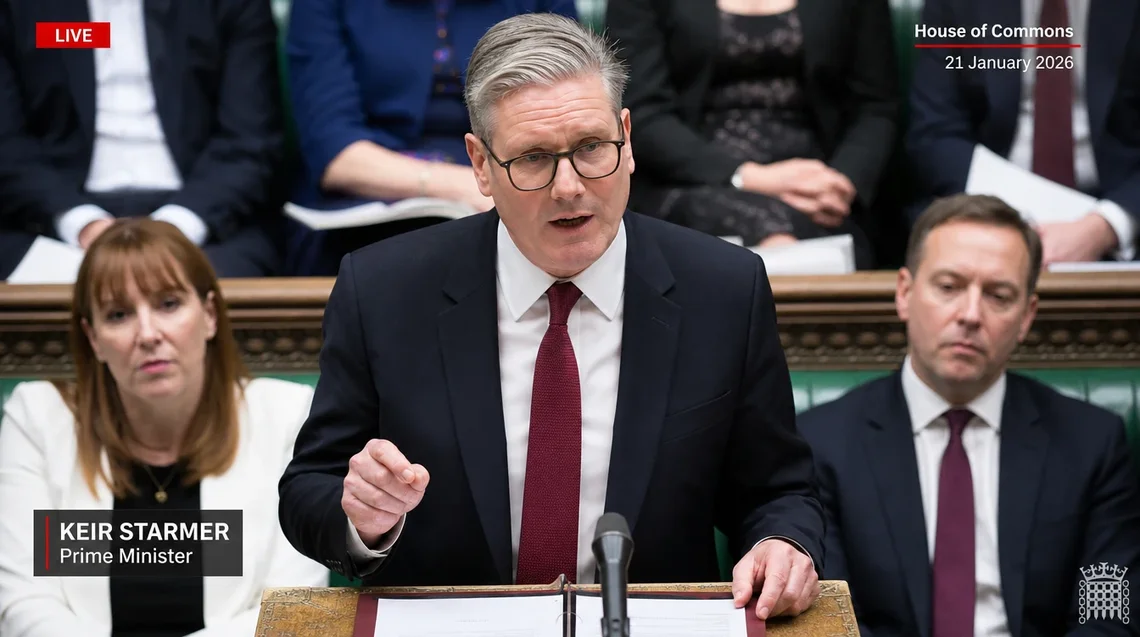
The Starmer government has announced a £15 billion investment package targeting hospital infrastructure across England, marking the most significant single injection of NHS capital funding in over a decade. Health Secretary Wes Streeting unveiled the package in the Commons, framing it as a direct response to what officials described as years of chronic underinvestment that had left the health service structurally ill-equipped to meet rising patient demand.
The announcement lands at a politically charged moment, with NHS waiting lists remaining near record highs and public confidence in health service delivery under sustained pressure. According to data published by the Office for National Statistics, the proportion of adults rating NHS performance as "good" or "very good" has fallen sharply over the past four years, providing Labour with both a political mandate and an urgent policy imperative to act.
Party Positions: Labour argues the £15bn infrastructure commitment represents a generational reset for the NHS, prioritising new hospital builds, modernised diagnostic facilities and upgraded estate management. Conservatives have cautioned that the funding package relies on borrowing projections that independent analysts have yet to fully validate, calling for greater fiscal transparency before commitments are locked in. Lib Dems broadly welcome increased NHS capital investment but have pressed the government to publish a detailed, region-by-region breakdown of how funds will be allocated, warning that rural and coastal communities must not be overlooked in favour of urban centres.
What the £15 Billion Package Covers
Government officials confirmed the investment will be distributed across three primary spending streams over the course of this parliament. The largest portion — approximately £7.2 billion — is earmarked for the completion and acceleration of the New Hospital Programme, a commitment originally made by the previous Conservative administration but which independent reviews found to be significantly underfunded relative to its stated ambitions.
Related Articles
New Hospital Builds and Upgrades
A further £4.8 billion will be directed toward the renovation of existing hospital estate, addressing what NHS England's own internal assessments have described as a maintenance backlog running into the tens of billions. Officials said the most acute structural deficiencies — including outdated electrical systems, crumbling reinforced autoclaved aerated concrete (RAAC) structures, and failing ventilation — will be prioritised in the first phase of spending. The remaining £3 billion has been allocated to diagnostic infrastructure, including new MRI and CT scanner capacity and the expansion of community diagnostic centres introduced under the previous government and now being absorbed into Labour's broader health reform architecture.
Community and Primary Care Integration
Alongside the capital announcement, officials indicated that a portion of the diagnostic investment will be channelled through integrated care boards, with a specific mandate to bring diagnostic capacity closer to primary care settings. Health department sources said the rationale was to reduce unnecessary secondary care referrals and relieve pressure on acute hospital sites, a structural reform that health economists have long advocated. The Guardian has previously reported that delays in diagnostic access remain one of the primary drivers of waiting list growth, a dynamic the government says the new investment is explicitly designed to address.
The Political Context
The announcement arrives as Labour attempts to consolidate its position as the party of public service renewal after inheriting what senior ministers have repeatedly characterised as a "broken" NHS. Polling conducted by YouGov and published earlier this month showed that NHS performance remains the single most important issue for voters when evaluating government competence, with 68 percent of respondents saying they believe the health service needs "significant reform" rather than simply more money. The government's package attempts to offer both.
Opposition Response
Shadow Health Secretary Edward Argar responded from the despatch box with measured scepticism, acknowledging the scale of the funding commitment but questioning whether the Treasury's capital accounting methods fully reflected the true cost to public finances. Conservative frontbenchers have pointed to the Office for Budget Responsibility's most recent fiscal assessment, which flagged risks around the government's debt servicing trajectory, as grounds for caution. Argar told MPs the Conservatives would scrutinise the detailed spending plans "line by line" when they are published in full.
The Liberal Democrats' health spokesperson, Helen Morgan, welcomed the announcement in principle but raised concerns during an opposition day debate about the absence of a rural health equity clause in the preliminary documentation. Morgan argued that without ring-fenced allocation for rural trusts, metropolitan hospital systems with stronger administrative capacity would disproportionately benefit from the capital programme.
For further background on the evolution of Labour's NHS policy heading into this announcement, readers can follow the coverage in Starmer pledges NHS overhaul amid funding crisis, which tracks the policy development through the earlier stages of the parliament.
Polling and Public Opinion
| Polling Question | Agree / Positive (%) | Disagree / Negative (%) | Don't Know (%) | Source |
|---|---|---|---|---|
| NHS needs significant reform, not just funding | 68 | 19 | 13 | YouGov |
| Approve of increased NHS capital investment | 74 | 14 | 12 | Ipsos |
| Trust Labour to manage NHS better than Conservatives | 44 | 31 | 25 | YouGov |
| Confident new funding will reduce waiting times | 37 | 48 | 15 | Ipsos |
| Rate current NHS performance as good or very good | 29 | 58 | 13 | Office for National Statistics |
The Ipsos data is particularly instructive for the government: while a large majority of the public supports the principle of increased NHS capital investment in the abstract, fewer than four in ten believe the new funding will translate into tangible reductions in waiting times within this parliament. Officials acknowledged in briefings that managing public expectations would be as important a communications task as delivering the policy itself.
Implementation Timeline and Governance
The Department of Health and Social Care confirmed that an NHS Infrastructure Delivery Board will be established to oversee the rollout, with quarterly reporting requirements to Parliament. Officials said the board would include representation from NHS England, NHS Providers, patient advocacy groups and independent finance specialists. Accountability mechanisms have been a persistent weakness in previous capital programmes, and the government appears acutely conscious of avoiding the criticism that dogged the original New Hospital Programme under its Conservative predecessors.
Procurement and Delivery Risks
Construction industry analysts have already raised questions about the procurement pipeline's capacity to absorb £15 billion at pace. The BBC has reported that the UK construction sector is currently operating near full capacity across several major public infrastructure programmes simultaneously, raising the prospect of cost inflation and schedule delays. Government officials said procurement frameworks had been reviewed with Treasury input to mitigate inflationary risk, though no specific contractual mechanisms were disclosed at the time of the Commons statement.
The challenges around delivery are not new to observers tracking this policy area. Earlier reporting captured in Starmer pledges NHS overhaul as waiting lists grow documented the structural pressures that have made bold NHS investment commitments simultaneously necessary and difficult to execute at scale.
Waiting List Context
NHS England data cited by the Health Secretary in his Commons statement showed that the elective care waiting list, while having edged down fractionally in recent months, remains at a level that would have been considered a national crisis by historical standards. According to figures corroborated by the Office for National Statistics, the median wait time for elective treatment currently sits above twelve weeks in several specialties, with certain diagnostic pathways considerably longer.
Officials said the new diagnostic infrastructure investment was projected to bring the median diagnostic wait below six weeks across all major modalities within three years, a target that independent analysts described as ambitious but technically achievable if procurement and workforce capacity constraints are resolved in parallel. The workforce dimension — widely regarded as the deeper structural constraint on NHS performance — was not directly addressed in this funding announcement, with the government indicating that a separate workforce plan update would follow in the coming weeks.
This announcement builds on the legislative and fiscal groundwork laid out in detail in earlier ZenNewsUK coverage. Readers seeking to understand the full arc of Labour's approach can review Starmer government unveils NHS funding plan for the foundational policy commitments made at the start of this parliament, and Starmer pledges major NHS overhaul amid funding row for the parliamentary context in which those commitments were contested.
What Comes Next
The government has indicated that full spending allocations by trust and region will be published within thirty days, accompanied by a statement to the Commons from the Chief Secretary to the Treasury setting out the capital accounting treatment of the package. Parliamentary scrutiny of the Infrastructure Delivery Board's terms of reference is expected to follow through the Health and Social Care Select Committee, whose chair has already written to the Health Secretary requesting an early evidence session.
Whether the £15 billion commitment proves to be a defining moment for the Starmer government's domestic agenda or becomes mired in the delivery difficulties that have historically plagued large-scale NHS capital programmes will depend in large part on governance decisions made in the coming months rather than the political theatre of the Commons announcement itself. Public opinion data, as the Ipsos and YouGov figures above make clear, reflects a citizenry that supports the investment but retains deep scepticism about the government's capacity to convert spending commitments into measurable improvements at the point of care. That gap between ambition and public confidence is the central political challenge Labour must now close. (Source: Office for National Statistics; YouGov; Ipsos; BBC; The Guardian)