Starmer government unveils NHS funding plan
Labour targets waiting lists with £15bn investment
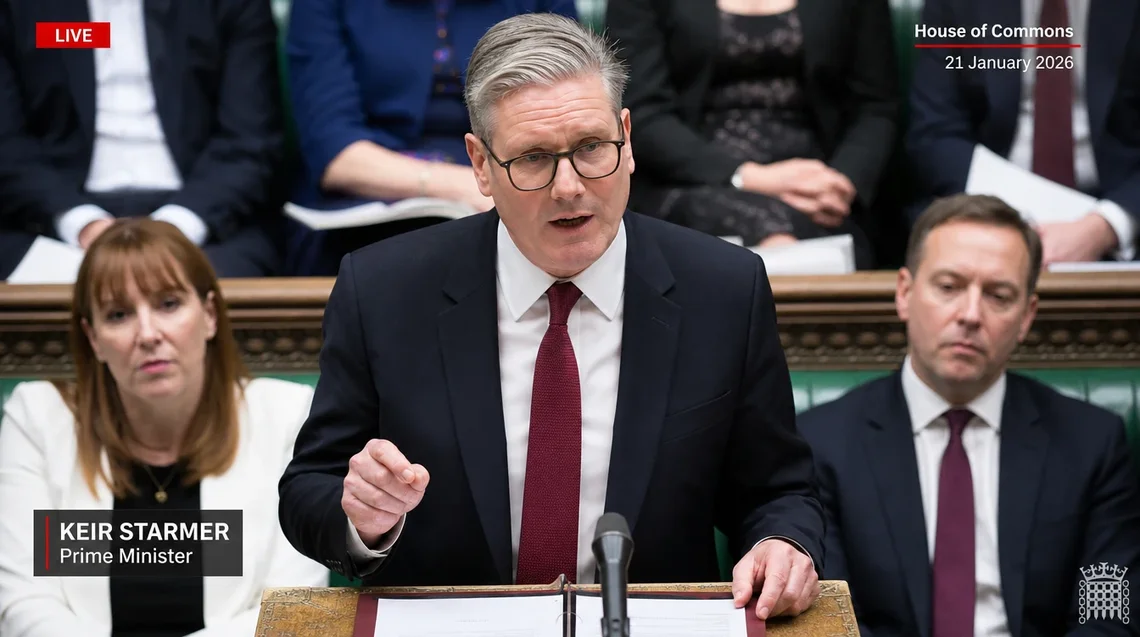
The government has announced a £15 billion investment package aimed at tackling England's NHS waiting lists, with Prime Minister Sir Keir Starmer describing the commitment as the most significant injection of health funding since the foundation of the National Health Service. The plan, unveiled in a Commons statement, sets a target of eliminating waiting lists exceeding 18 weeks within the current parliament, officials said.
Health Secretary Wes Streeting outlined the details to MPs, describing a multi-year spending settlement designed to recruit additional clinical staff, expand community diagnostic centres, and modernise ageing hospital infrastructure across England. The announcement follows months of mounting pressure on the government over NHS performance figures that show record numbers of patients waiting for elective treatment. According to NHS England data, more than 7.6 million people are currently on waiting lists — a figure that has placed the health service at the centre of every major political debate since the general election.
Party Positions: Labour says the £15bn investment represents a generational commitment to the NHS and will eliminate 18-week waits within this parliament, funded through a combination of existing departmental budgets and borrowing. Conservatives argue the spending plan lacks credible fiscal underpinning and accuse the government of repackaging previously announced sums rather than delivering new money, calling for an independent Office for Budget Responsibility assessment of the full costings. Lib Dems broadly welcome increased NHS investment but say the plan fails to address the social care crisis adequately, warning that without parallel reform of adult social care, hospital bed-blocking will continue to undermine any waiting list reduction strategy.
What the £15 Billion Package Contains
Treasury and Department of Health officials confirmed the £15bn figure spans a multi-year settlement, with the first tranche of approximately £4.2bn allocated to the current financial year. The bulk of the initial spending is directed at staffing — specifically, the recruitment of an additional 8,500 nurses, 3,000 GPs, and the expansion of community-based mental health teams, officials said.
Related Articles
Diagnostic Expansion and Capital Investment
A substantial portion of the package — reportedly in the region of £2.8bn over two years — is earmarked for capital expenditure, including the construction of 40 new community diagnostic centres designed to take pressure off acute hospitals. Officials said the centres would offer MRI, CT, and ultrasound services without the need for overnight hospital stays, a model piloted under the previous government but scaled back following budgetary constraints. The investment in diagnostics is regarded by health economists as a critical upstream intervention; early identification of conditions reduces both the severity of eventual treatment required and its associated cost to the wider system.
Workforce Planning and Long-Term Strategy
The government also committed to publishing a refreshed NHS Workforce Plan within ninety days, having previously been criticised — including by its own backbenchers — for delayed delivery on staffing pledges made during the general election campaign. According to the British Medical Association, workforce shortages remain the single greatest constraint on NHS capacity, with vacancy rates for consultants in some specialties exceeding fifteen percent. The Workforce Plan is expected to incorporate new projections for nursing training places and revised targets for international recruitment, alongside measures to reduce the rate of experienced staff leaving the profession. Those interested in earlier government commitments on health reform can read more on how Starmer pledges major NHS overhaul amid funding row shaped the legislative backdrop to this announcement.
The Political Context
The announcement arrives at a politically delicate moment for the government. Internal Labour party tensions over public spending prioritisation have been well documented, and the scale of the NHS commitment has not entirely quieted dissent on the backbenches. A number of Labour MPs representing constituencies with high unemployment have argued privately that an equivalent investment in economic regeneration would deliver broader social returns. The dynamics of that internal pressure were examined in detail when reporting on how Starmer's NHS overhaul faces growing backbench revolt shaped the government's communications strategy ahead of this week's statement.
Opposition Response
Conservative health spokesperson Dr Caroline Johnson accused the government of "creative accounting" in presenting the £15bn figure, telling the Commons that a significant proportion of the sum had been announced in prior budget documents. Shadow Chancellor Mel Stride called on the Office for Budget Responsibility to independently assess the full fiscal impact of the multi-year spending commitment before parliament voted on any enabling legislation.
The Liberal Democrats, through health spokesperson Daisy Cooper, acknowledged the scale of the stated ambition but pressed ministers on social care, arguing that a failure to address the discharge crisis — whereby medically fit patients remain in hospital beds because no appropriate care package is available — would blunt the impact of any waiting list reduction strategy. "You cannot drain the bath while the tap is still running," Cooper told the House.
Public Opinion and Polling Data
Polling conducted by YouGov indicates that NHS performance remains the single most important issue for British voters, with 68 percent of respondents identifying health service waiting times as either "important" or "very important" to their voting intention. A separate Ipsos survey found that 54 percent of adults believe the NHS requires "fundamental reform" rather than additional funding alone — a figure that has increased by eleven percentage points since the previous general election (Source: Ipsos). The divergence in those two data sets — strong public support for NHS investment alongside scepticism about funding as a standalone solution — presents a communications challenge for Downing Street as it seeks to sell the package to a public fatigued by successive governments' health pledges.
| Metric | Current Position | Government Target | Source |
|---|---|---|---|
| Total patients on waiting list | 7.6 million | Reduce to pre-pandemic baseline | NHS England |
| Waiting over 18 weeks | Approx. 3.2 million | Eliminate within this parliament | NHS England / DHSC |
| Total investment announced | — | £15 billion (multi-year) | HM Treasury |
| Year one allocation | — | £4.2 billion | DHSC officials |
| Additional nurses to be recruited | — | 8,500 | Department of Health |
| Additional GPs to be recruited | — | 3,000 | Department of Health |
| Public identifying NHS as top issue | 68% | — | YouGov |
| Adults favouring reform over funding alone | 54% | — | Ipsos |
NHS Reform: The Legislative Track
Separate to the funding announcement, ministers confirmed progress on the Health Service Reform Bill currently passing through parliament. The legislation, which would restructure commissioning arrangements and grant NHS England greater operational autonomy, has been the subject of intense cross-party scrutiny. The bill's trajectory through the Commons was examined at length in earlier coverage of how Labour pushes NHS reform bill amid funding row, and analysts note that the funding settlement is designed in part to provide political momentum to the reform agenda ahead of the bill's report stage.
Structural Changes to NHS England
Among the structural proposals embedded in the reform bill is a rationalisation of NHS England's regional tier, reducing the number of integrated care boards and consolidating commissioning functions. Officials acknowledged in background briefings that the reorganisation carries short-term transition costs and risks, but maintained that administrative savings of approximately £350 million annually would be achievable within three years. Independent health analysts at the Nuffield Trust and the King's Fund have expressed cautious support for the direction of travel while warning against reorganisation fatigue — a phenomenon documented across multiple previous NHS structural changes that diverted management attention from frontline service delivery during transition periods.
Regional Disparities and Distribution
Office for National Statistics data show persistent regional variation in NHS waiting times, with patients in some parts of the North West and South West of England facing median waits for elective procedures significantly above the national average (Source: Office for National Statistics). Critics of the funding plan argue that a nationally aggregated investment figure obscures whether money will flow proportionately to areas with the greatest need. The government has indicated that allocation formulae will weight deprivation and existing waiting time data, but the full distribution methodology has not yet been published.
Rural and Coastal Communities
Particular concern has been raised by MPs representing rural and coastal constituencies, where recruitment of clinical staff presents structural challenges independent of funding levels. The Royal College of GPs has noted that financial incentives alone have historically proven insufficient to attract practitioners to remote areas, and that housing costs, professional isolation, and limited training infrastructure compound the recruitment challenge in ways that a centrally administered investment package may not fully address.
Media Coverage and Expert Reaction
The BBC and the Guardian both reported the announcement as one of the most significant domestic policy moments of the parliamentary term, though analysis pieces in both outlets noted the distinction between the total stated investment figure and the proportion attributable to genuinely new spending. Health economists cited by the Guardian cautioned that the real-terms value of the settlement would depend heavily on inflation trajectories in NHS pay and construction costs — both of which have run above general inflation in recent years (Source: Guardian). The BBC's health correspondent observed that previous governments have announced comparable headline figures without achieving commensurate reductions in waiting times, raising questions about implementation rather than intent (Source: BBC).
For a deeper understanding of the policy evolution that preceded this announcement, readers can follow the thread from the government's earlier health agenda outlined in coverage of Starmer pledges NHS overhaul as waiting lists grow, which charted the political pressure that ultimately produced the scale of this week's commitment.
The government faces a significant test of credibility in translating a substantial funding announcement into measurable reductions in patient waiting times — and doing so within a parliamentary timetable that gives ministers limited room for the implementation delays that have frustrated previous NHS investment programmes. Whether £15bn proves sufficient, or whether structural reform proves as important as capital, will determine whether this week's statement is remembered as a turning point or another missed opportunity.