Starmer Pledges Fresh NHS Funding Push Amid Reform Delays
Labour seeks to accelerate healthcare overhaul as waiting lists remain critical

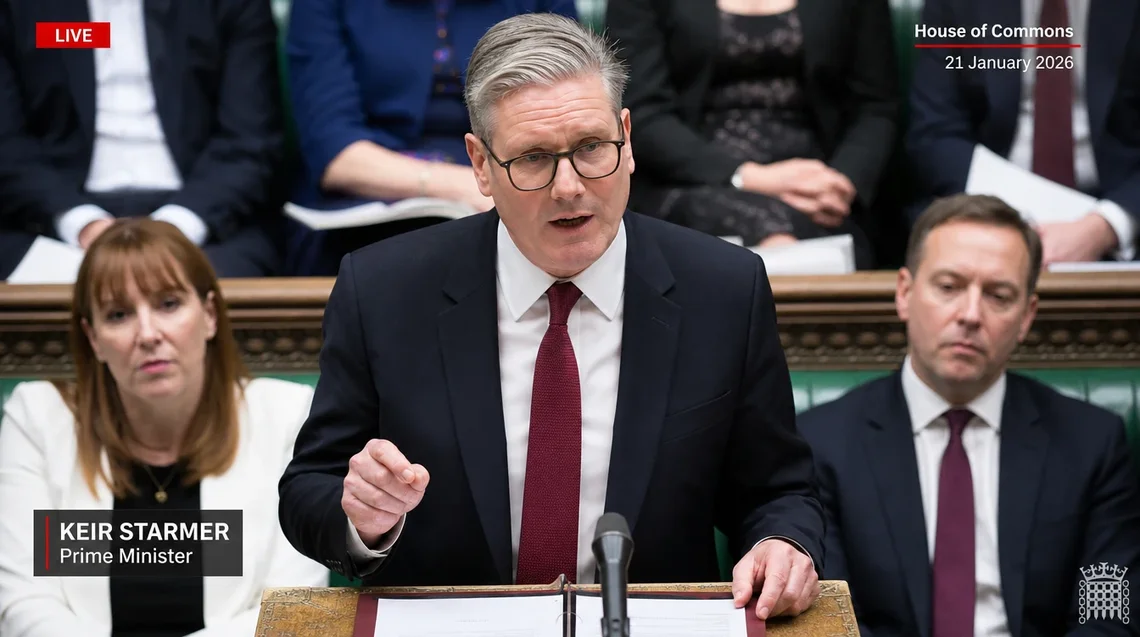
Prime Minister Keir Starmer has announced a renewed commitment to NHS funding, pledging additional investment to tackle England's persistent waiting list crisis as officials acknowledge that structural reform timelines have slipped behind schedule. With NHS waiting lists still numbering in the millions, Downing Street faces mounting pressure from both the public and its own backbenchers to demonstrate tangible progress on what Labour defined as its central domestic mission ahead of the general election.
Party Positions: Labour supports increased capital and revenue NHS investment tied to productivity reforms and workforce expansion, arguing systemic change requires long-term funding commitments. Conservatives contend the government is failing to deliver reform alongside spending, pointing to continued waiting list figures as evidence that funding alone cannot fix structural problems. Lib Dems are calling for an immediate emergency package targeting mental health and primary care, warning that GP access shortfalls are placing unsustainable downstream pressure on hospital services.
The Scale of the Crisis
NHS England data, cited by the Department of Health and Social Care, show that the total elective care waiting list remains among the longest on record, with millions of patients awaiting treatment. Polling conducted by Ipsos indicates that the NHS consistently ranks as the top domestic concern for British voters, placing the government under sustained political pressure to show measurable results rather than structural announcements. Officials in Whitehall have acknowledged that delivery against Labour's headline waiting list targets has been slower than the party projected during its election campaign.
Waiting Lists and Political Pressure
According to figures published by NHS England and cross-referenced by the Office for National Statistics, waiting times for elective procedures have not returned to pre-pandemic baselines, and in certain specialisms — including orthopaedics and ophthalmology — lists have lengthened rather than contracted over recent months. The Office for National Statistics data show that the burden of waiting disproportionately affects lower-income households, which are less able to access private treatment as an alternative, compounding the political sensitivity of the issue for a Labour government dependent on its working-class coalition.
Related Articles
For more background on how the government has sought to balance spending commitments against reform timelines, see our earlier coverage of how Starmer pushes NHS reform bill amid funding pressure.
What the Government Is Proposing
Downing Street officials confirmed that the fresh funding push will be directed at expanding surgical capacity through extended operating theatre hours and increasing the use of independent sector providers to absorb elective demand. The government said the investment package is intended to complement, rather than replace, the broader 10-Year NHS Plan currently being developed under the auspices of Health Secretary Wes Streeting. Ministers have framed the latest commitment as a bridging measure designed to bring waiting figures down while longer-term structural reforms — including workforce planning and digital integration — are completed.
The Role of Independent Sector Capacity
A significant proportion of the new funding is expected to flow through contracts with independent sector treatment centres, a mechanism also used by previous Conservative administrations. Critics on Labour's left flank have expressed discomfort at the model, arguing it risks embedding private sector dependency within what they regard as a public service. However, health economists cited by the BBC and the Guardian have argued that given current NHS estate and staffing constraints, independent sector partnerships represent the fastest available route to additional surgical throughput without multi-year capital investment cycles.
Workforce Planning Concerns
Separate from the immediate funding announcement, health officials are contending with a workforce pipeline that analysts describe as structurally constrained. According to NHS England's own workforce statistics, vacancy rates in nursing and several clinical specialisms remain elevated, and the long lead time for training clinical professionals means that any workforce expansion announced today will not affect service capacity for several years. The Guardian has reported that NHS trust leaders are privately warning ministers that funding increases cannot be fully converted into additional activity without a parallel acceleration of recruitment, particularly in areas where international hiring has become more complex in the post-Brexit environment.
Earlier reporting on Labour's staffing challenges is covered in our article examining how Starmer pledges NHS reform push amid staffing crisis.
Parliamentary and Political Context
The announcement arrives as Labour's internal discipline on NHS policy faces its first serious strains. A small number of Labour backbenchers have tabled early day motions calling for faster implementation of social care reform, which ministers have repeatedly deferred. Meanwhile, the Conservatives have sought to frame the delay between reform announcements and measurable delivery as evidence of governmental incompetence, with Shadow Health Secretary Edward Argar arguing in the House of Commons that the government is substituting press releases for policy.
| Indicator | Figure | Source | Period |
|---|---|---|---|
| Total elective care waiting list (England) | Approximately 7.5 million pathways | NHS England | Latest available data |
| NHS rated as top voter concern | 47% of respondents | Ipsos Issues Index | Recent polling |
| Public satisfaction with NHS (net) | Lowest recorded level | British Social Attitudes / Nuffield Trust | Most recent survey |
| Labour approval on NHS handling | 38% approve / 41% disapprove | YouGov tracker | Recent polling |
| GP appointment satisfaction | 54% report difficulty accessing timely appointment | Office for National Statistics | Latest population survey |
Opposition Responses
Liberal Democrat health spokesperson Helen Morgan argued at Westminster that the government's repeated funding pledges mask an absence of genuine structural change, and called specifically for ring-fenced mental health investment and a binding GP access guarantee. The Conservatives, for their part, have pointed to NHS capital spending projections and argued that Labour inherited an improving trajectory on waiting lists, an assertion disputed by NHS Confederation officials who described the position at the time of the election as dire. The political divergence between the parties on NHS strategy is sharply drawn, with no consensus evident on the pace or architecture of reform.
The 10-Year Plan and Reform Delays
Central to the government's long-term strategy is the 10-Year NHS Plan, which officials say will address the structural deficiencies that successive administrations have failed to resolve — including the fragmentation between primary and secondary care, inadequate mental health provision, and the absence of a coherent prevention strategy. However, the plan's publication has been delayed from its originally anticipated date, a slippage that critics have attributed to disagreements within government over the appropriate role of private providers and the pace of NHS management restructuring.
Health Secretary Wes Streeting has publicly committed to a shift toward community-based and preventive care, arguing that the current model — which heavily weights acute hospital treatment — is both clinically sub-optimal and financially unsustainable. According to the BBC, internal modelling from the Department of Health and Social Care projects significant long-term savings from reducing avoidable hospital admissions, but officials concede that the transition period will require continued high levels of acute investment before structural benefits materialise.
NICE Guidance and Commissioning
A secondary strand of the reform programme concerns how treatments are commissioned and approved through the National Institute for Health and Care Excellence. According to the Guardian, there are ongoing discussions within government about streamlining NICE approval processes to allow faster patient access to clinically proven therapies, particularly in oncology and rare diseases. Patient advocacy groups have long argued that the United Kingdom's approval timelines lag behind those of comparable European health systems, contributing to preventable mortality and driving health tourism among those who can afford it.
Funding Sources and Fiscal Constraints
Any additional NHS funding must be accommodated within the constraints established by Chancellor Rachel Reeves at the most recent Autumn Statement. Officials have indicated that the fresh investment is being drawn from existing health capital budgets reprioritised within the Department of Health and Social Care, rather than representing new money secured from the Treasury. Independent health economists cited by the Guardian have urged caution about this characterisation, noting that reprioritisation within departmental budgets frequently involves deferring maintenance or technology investment, with consequences that emerge over a longer cycle.
(Source: Office for National Statistics, YouGov, Ipsos, BBC, Guardian)
The fiscal backdrop is one of genuine constraint. The Office for National Statistics data on public sector net debt show that borrowing costs remain elevated relative to historical norms, limiting the Chancellor's room for manoeuvre ahead of the next fiscal event. Labour's manifesto committed to meeting NHS funding requirements without raising income tax, National Insurance, or VAT, a combination of pledges that narrows the available policy space considerably.
For a wider view of how Labour's funding commitments have evolved since entering government, readers can follow the development of this story in our coverage of Labour pledges major NHS funding boost amid reform push and the related analysis of how Starmer pledges NHS funding boost amid reform debate.
Outlook and Political Stakes
The NHS remains the single most electorally consequential domestic policy area for the Starmer government. YouGov's tracker data consistently show that voters who cite the NHS as a primary concern lean toward Labour, but that the margin of trust over the Conservatives on health management has narrowed since the election as waiting lists have failed to decline at the projected pace. For Labour, the political calculus is clear: sustained deterioration in NHS performance threatens the coalition of voters, particularly in the Midlands and the North, that delivered the party its parliamentary majority.
Officials close to the Prime Minister said the renewed funding announcement is intended to signal governmental urgency ahead of a period in which the 10-Year Plan is expected to be finalised and published. Whether the investment translates into the reduced waiting times and improved patient experience that Labour promised remains the central question — and the answer, health system analysts argue, will depend as much on workforce capacity, management culture, and technological adoption as on the headline funding figures now being placed before the public.
Further coverage of the evolving legislative and policy backdrop can be found in our report on how Starmer pledges NHS funding boost amid reform push continues to develop through Westminster's committee and legislative structures.