Starmer pledges NHS reform as waiting lists remain high
Labour government outlines new funding strategy amid staffing pressures

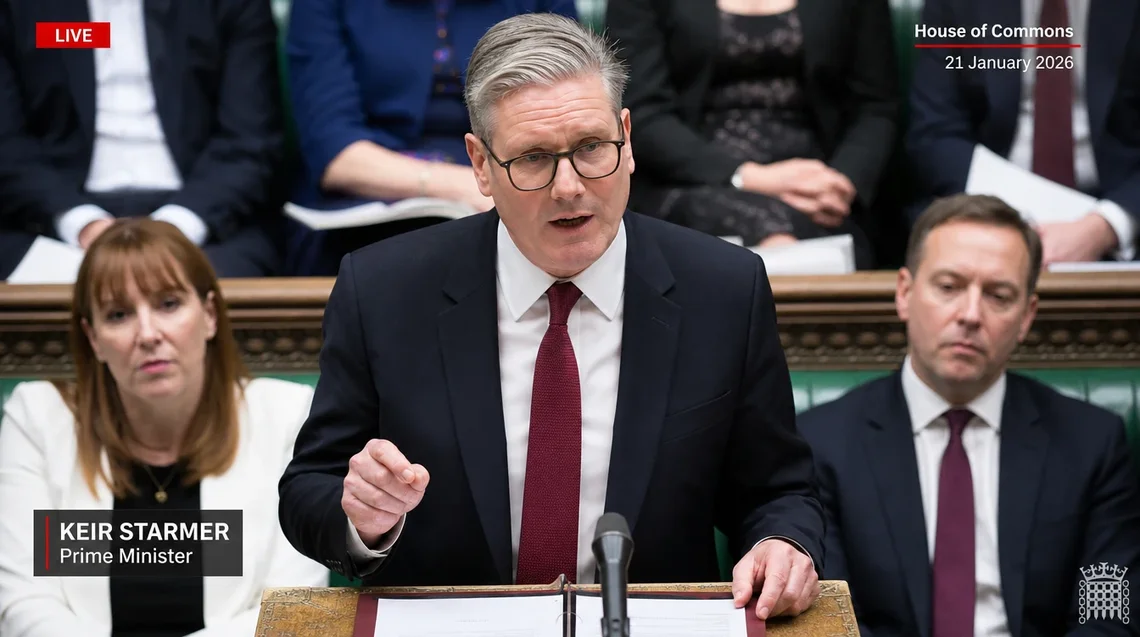
Sir Keir Starmer has set out a sweeping package of NHS reforms, promising to reduce England's stubbornly high waiting lists through a combination of new funding commitments, expanded community care, and a restructured approach to workforce planning. With more than 7.5 million people currently on NHS waiting lists in England, according to NHS England data, the government faces mounting pressure to demonstrate that its health agenda can deliver tangible results within this Parliament.
The announcement, made by Starmer alongside Health Secretary Wes Streeting, frames the NHS as a central battleground for the Labour government's broader economic credibility. Officials said the strategy involves directing additional resources toward primary care and diagnostic hubs, with the goal of cutting the longest waits first — a shift in approach from previous administrations that critics have long demanded.
Party Positions: Labour has pledged to cut NHS waiting lists by delivering 40,000 extra appointments per week, backed by increased capital investment and reformed workforce contracts. Conservatives argue that Labour's funding plans lack specificity and warn that structural reforms without workforce solutions will fail to address the root causes of the backlog. Lib Dems are calling for a dedicated NHS recovery fund and greater investment in mental health services, arguing that the government's proposals do not go far enough on parity of esteem between mental and physical health care.
The Scale of the Crisis
The NHS waiting list challenge is, by almost any measure, one of the most significant domestic policy problems currently facing the government. NHS England figures show that millions of patients are waiting longer than the 18-week referral-to-treatment standard that has been the benchmark for NHS performance for years. A significant proportion of those patients have been waiting well beyond a year for treatment, with elective procedures — including orthopaedic surgery and ophthalmology — accounting for a substantial share of the backlog.
Related Articles
What the Data Shows
According to analysis published by the Nuffield Trust and referenced by the Guardian, the NHS in England is treating more patients than at any point in its recent history, yet demand continues to outstrip capacity. Demographic pressures, including an ageing population and rising rates of complex, multi-condition illness, mean that even significant increases in throughput may not be sufficient to bring waiting times down to pre-pandemic levels without structural change. Office for National Statistics data show that the share of working-age adults citing long-term illness as a barrier to employment has risen sharply in recent years, placing further indirect pressure on NHS services.
A YouGov survey conducted recently found that the NHS remains the single most important issue for British voters when asked to rank domestic policy priorities, with a majority of respondents expressing dissatisfaction with current waiting times. Separately, Ipsos polling indicated that public confidence in the government's ability to fix the NHS has declined since the general election, despite Labour's landslide victory being partly attributed to its health service pledges (Source: Ipsos).
Labour's Reform Package in Detail
The government's reform blueprint is built around several interconnected pillars. Officials said these include an expansion of neighbourhood health centres designed to manage more conditions in the community, a new contract framework intended to incentivise GPs to take on a broader range of case types, and an accelerated programme of investment in diagnostic imaging — particularly MRI and CT scanning capacity — which officials described as a persistent bottleneck in the patient pathway.
Funding Mechanisms and Treasury Tensions
The funding strategy represents one of the more contested elements of the package. The government has pointed to settlements agreed during the Budget as evidence of serious financial commitment, but health economists and parliamentary analysts have noted that the real-terms increase available to NHS England over the coming years falls short of the uplift many NHS leaders have publicly said is necessary. Health think-tanks, including the King's Fund and the Health Foundation, have previously estimated that the NHS requires a sustained annual real-terms funding increase of several percentage points simply to maintain current service levels, let alone reduce waiting times.
Treasury officials, according to reporting by the BBC, have been engaged in ongoing discussions with the Department of Health about the allocation of capital versus revenue spending — a distinction that matters enormously in practice, since new diagnostic equipment and buildings require capital, while staff wages and day-to-day operations consume revenue budgets. The government has so far declined to publish a detailed multi-year capital plan, which NHS trust chief executives have said makes long-term workforce and infrastructure planning extremely difficult.
Workforce: The Persistent Pressure Point
Staffing shortfalls remain arguably the most intractable challenge facing NHS reform efforts. NHS England figures show that the health service in England currently has tens of thousands of vacancies, with nursing, radiology, and general practice among the most severely affected specialties. The government's plan includes commitments to expand medical school places and accelerate the return of international recruitment, though ministers have acknowledged that training new clinicians takes years and will not address immediate capacity problems.
Wes Streeting has indicated that the government intends to negotiate new productivity arrangements with NHS consultants and junior doctors, following the prolonged industrial disputes that contributed significantly to the growth of the waiting list. Officials said those negotiations are at an advanced stage, though no final agreement has been announced. The BMA has publicly welcomed the government's tone while stopping short of endorsing specific proposals.
Parliamentary and Political Reaction
The announcement drew immediate responses from across the House of Commons. Shadow Health Secretary Edward Argar challenged ministers at the despatch box to provide specific, measurable milestones for waiting list reduction, arguing that without clear targets, the reform package amounted to a restatement of existing commitments rather than new policy. He pointed to the government's decision to scrap the previous administration's elective recovery targets as evidence of inconsistency.
Lib Dem and SNP Positions
Liberal Democrat health spokesperson Helen Morgan welcomed aspects of the community care expansion but argued that the package failed to adequately address the crisis in mental health services, noting that waiting times for psychological therapy and child and adolescent mental health services have lengthened considerably. The SNP's Westminster health spokesperson pointed out that health is a devolved matter and questioned whether the funding settlements announced would translate into consequential funding for Scotland, Wales, and Northern Ireland at an adequate level.
| Metric | Figure | Source |
|---|---|---|
| NHS England waiting list (approx.) | 7.5 million patients | NHS England |
| Public satisfaction with NHS waiting times (dissatisfied) | Majority of respondents | YouGov |
| Government approval on NHS (declined since election) | Net negative rating | Ipsos |
| NHS England current staff vacancies | Tens of thousands | NHS England |
| Working-age adults citing long-term illness | Sharply risen (recent years) | Office for National Statistics |
| Weekly extra appointments pledged | 40,000 | Labour Party / DHSC |
Community Care and the Shift from Hospital to Home
One of the more philosophically significant elements of the government's reform agenda is its stated intention to rebalance care away from acute hospital settings toward community and primary care. Officials described this as a generational shift in the NHS's operating model, one that health policy experts have long advocated but which successive governments have struggled to implement given the political and logistical complexity involved.
The neighbourhood health centre model, which draws on international examples including aspects of the Danish and Dutch primary care systems, would see multidisciplinary teams — including GPs, nurses, pharmacists, physiotherapists, and social care workers — co-located and providing joined-up care for patients with chronic conditions. Proponents argue this reduces unnecessary A&E attendances and emergency admissions, which are among the most expensive and disruptive forms of NHS activity. Critics, including some NHS trust leaders cited by the Guardian, have warned that the community infrastructure required to make this model work at scale does not currently exist in most parts of England and would require years of sustained investment to build.
Social Care: The Missing Piece
Health policy analysts have consistently argued that NHS reform cannot be disentangled from the parallel crisis in social care. A shortage of social care capacity — particularly residential and domiciliary care — contributes directly to delayed hospital discharges, which in turn reduce the number of NHS beds available for planned and emergency admissions. The government's reform package makes reference to social care integration but stops short of committing to the comprehensive social care funding settlement that cross-party campaigns and sector bodies have demanded. Officials confirmed that a fuller social care review is ongoing, but declined to provide a timetable for its conclusions.
For further coverage of the government's evolving health policy position, see our earlier reporting on how Starmer pledges NHS reform as waiting lists persist, as well as analysis of how Labour pledges NHS reform as waiting lists remain critical. This story should also be read alongside our detailed policy breakdown of how Labour pledges NHS overhaul as waiting lists remain high, which examines the structural pressures underpinning the current crisis.
Prospects and Political Stakes
The political stakes for Labour could scarcely be higher. The party fought the last general election on a platform that placed NHS recovery at its centre, and polling consistently shows that voters will hold the government directly accountable for any failure to reduce waiting lists over the course of this Parliament. Streeting has acknowledged as much in media appearances, telling the BBC that he would consider it a personal failure if waiting lists were not significantly lower by the next election.
Yet the combination of fiscal constraints, workforce shortages, demographic pressures, and the structural inertia of a health system employing more than one million people in England alone means that delivering on those promises will require not only political will but sustained, detailed implementation work that goes well beyond the headlines generated by any single policy announcement. Independent health economists, cited across multiple briefings covered by the BBC and the Guardian, have consistently urged the government to publish granular delivery plans with clear accountability mechanisms — something officials have promised but not yet provided.
The coming months will be a critical test of whether the government's reform rhetoric can translate into measurable progress on waiting times — and whether the public, whose patience with NHS performance has been stretched considerably, will give ministers the time required to demonstrate results. As previous administrations have discovered, the gap between announcing NHS reform and delivering it is where political reputations are made or broken. For further context on the trajectory of this policy debate, see our reporting on how Starmer pledges NHS overhaul as waiting lists grow and the broader political ramifications examined in our coverage of how Starmer pledges NHS overhaul as waiting lists surge.