Starmer Pledges NHS Investment Amid Staff Shortage Crisis
Labour government announces £8bn funding plan for healthcare

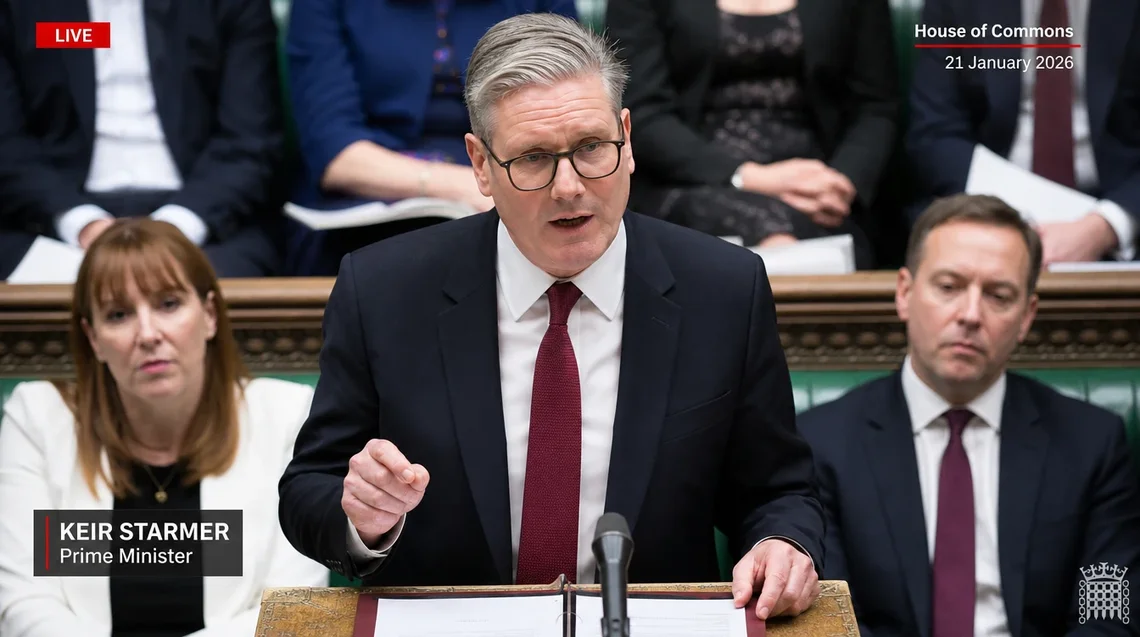
Prime Minister Keir Starmer has announced an £8 billion investment package for the National Health Service, framing the funding commitment as an emergency response to what officials describe as the most severe staff shortage crisis in the health service's history. The announcement, made in a Downing Street statement, comes as NHS England data show more than 112,000 vacancies across clinical and administrative roles, with waiting lists continuing to pressure an already strained system.
The pledge represents the Labour government's most substantial single healthcare funding commitment since taking office, though opposition parties and independent health economists have already raised questions about the timeline for delivery and the specific mechanisms through which the money will reach frontline services. Analysts at the Health Foundation noted the figure aligns broadly with estimates of the annual shortfall required to stabilise workforce numbers and begin reducing the backlog of elective procedures.
Party Positions: Labour says the £8bn investment is essential to rebuild NHS capacity after years of Conservative underfunding, with the government pledging to prioritise workforce recruitment and retention. Conservatives argue the announcement lacks structural reform detail and warn the funding will be absorbed by pay demands without meaningful productivity gains. Lib Dems welcome additional NHS investment but insist the government must produce a credible long-term workforce strategy, with their health spokesman calling the package "a down payment, not a solution."
The Scale of the Staffing Crisis
Official data from NHS England show that vacancy rates in nursing, midwifery, and allied health professions remain at levels that health economists describe as systemically dangerous. According to the Office for National Statistics, healthcare worker absences attributed to burnout and stress-related conditions have risen sharply over the past three years, compounding the raw vacancy figures with effective capacity losses that do not appear in headline statistics.
Related Articles
Vacancy Rates Across Key Specialisms
The shortfall is not evenly distributed. Mental health services carry some of the highest vacancy rates in the service, with community mental health teams in several NHS trusts operating at below 70 percent of recommended staffing levels, according to NHS England workforce data. Accident and emergency departments in urban teaching hospitals have reported consultant and senior nursing shortages that force repeated reliance on agency staff, adding significant cost pressure to already stretched trust budgets.
General practice has become a focal point for both the government and its critics. The number of fully qualified, full-time equivalent GPs per 100,000 patients has declined over recent years, according to NHS Digital figures, even as appointment demand has increased. Ministers have said a portion of the £8 billion will target primary care recruitment, though the British Medical Association has indicated it is waiting for specific workforce plan details before endorsing the package.
Retention as a Structural Problem
Health policy researchers have consistently argued that the NHS faces not only a recruitment gap but a retention crisis. A report published earlier this year by the King's Fund found that a significant proportion of nurses who leave the register within five years of qualification cite workload, pay dissatisfaction, and management culture as primary reasons. Officials at the Department of Health and Social Care said the investment package includes a ring-fenced element for workforce development and flexible working infrastructure, though precise allocations had not been published at the time of the announcement.
What the £8 Billion Will Fund
Government officials said the funding is structured across three principal areas: frontline staffing and training bursaries, capital investment in NHS facilities and diagnostic equipment, and a renewed push on social care integration designed to reduce delayed discharge from hospital beds. The social care element has attracted particular scrutiny, with local government bodies warning that without parallel investment in council-commissioned care services, hospital-side spending will fail to translate into meaningful capacity gains.
Training and Recruitment Commitments
The training element of the package is said to include an expansion of medical school places and an increase in nursing degree apprenticeship funding. Health Education England, which was absorbed into NHS England as part of a previous organisational restructure, will oversee the distribution of training bursaries, officials confirmed. The government also pointed to existing commitments on international recruitment, though NHS trust leaders have cautioned that over-reliance on overseas staff carries ethical considerations and long-term sustainability risks.
For broader context on how this announcement fits into the government's evolving health reform agenda, see earlier coverage of how Starmer pledges NHS overhaul as waiting lists grow, which detailed the initial strategic framework the Prime Minister outlined in the weeks following the general election.
Political Reception and Opposition Response
The announcement generated an immediate and sharply divided political response. Shadow Health Secretary Edward Argar described the pledge as "a headline figure in search of a plan," arguing that previous large-scale NHS funding commitments had failed to translate into patient outcomes because they were not accompanied by structural reform of how care is delivered and commissioned. The Conservative frontbench pointed to productivity data published by NHS England showing that the cost per patient treated has risen substantially since the pandemic, suggesting that additional investment must be paired with efficiency improvements.
The Liberal Democrats adopted a more nuanced position, welcoming the scale of investment while pressing the government on its workforce strategy. The party has consistently argued for a independently verified NHS staffing plan with statutory force — a demand that predates the current administration. Lib Dem health spokesperson Helen Morgan said her party would scrutinise the legislation closely once it came before Parliament.
Backbench Labour Sentiment
Within Labour's own parliamentary group, the reception was broadly positive but not uncritical. Several backbench MPs from constituencies with high healthcare deprivation have pressed ministers to ensure that funding distribution takes account of regional inequality rather than flowing disproportionately to better-resourced trusts. This internal pressure has been a recurring theme in the government's health policy discussions, as reported in coverage of how Starmer's NHS overhaul faces growing backbench revolt, which documented the concerns of Labour MPs in the Midlands and North of England about equitable resource allocation.
The Treasury's role in shaping the announcement has also drawn commentary. Senior Labour figures insisted the funding is fully costed within the existing spending review framework, but the Institute for Fiscal Studies noted that the government will face difficult decisions in the autumn fiscal statement if tax receipts continue to underperform initial projections.
Public and Professional Opinion
Polling data published by YouGov in recent months consistently show that the NHS remains the single issue most likely to determine voting intention among Labour-leaning swing voters. A separate Ipsos survey found that public satisfaction with NHS services has reached a historically low point, with waiting times and GP access cited as the dominant concerns. The political salience of the issue gives the government both an incentive to act and a heightened risk if the investment is seen to produce insufficient results within an electoral timescale.
Professional bodies have responded cautiously. The Royal College of Nursing said the announcement was "a step in the right direction" but reiterated its call for multi-year pay certainty as a prerequisite for meaningful retention improvement. The British Medical Association said it was studying the detail before making a formal assessment.
| Indicator | Current Figure | Source |
|---|---|---|
| Total NHS vacancies (England) | Approx. 112,000 | NHS England Workforce Data |
| Patients on NHS waiting list | Over 7.5 million | NHS England Statistics |
| Public satisfied with NHS (net) | Lowest recorded level | Ipsos / King's Fund Survey |
| NHS as top voter concern (Labour swing voters) | First-ranked issue | YouGov Polling |
| Government funding commitment announced | £8 billion | Department of Health and Social Care |
| Estimated annual workforce funding gap | £6.4–9.2 billion range | Health Foundation Analysis |
Legislative and Reform Pathway
Officials indicated that some elements of the funding package will require secondary legislation, while others can be allocated through existing NHS England commissioning arrangements without a parliamentary vote. The government's broader NHS reform agenda — including proposals to restructure integrated care boards and streamline accountability between NHS England and the Department of Health — is expected to feature in forthcoming legislation. The Guardian has reported that internal Whitehall discussions about the scope of that reform bill have been ongoing since the summer, with health ministers seeking to balance ambition against the risk of legislative delay.
The relationship between this funding announcement and the broader structural reform debate has been a persistent source of tension. For a detailed account of how that tension has played out in recent months, the coverage of Starmer pledges major NHS overhaul amid funding row sets out the competing priorities within the government's health policy team. Additionally, the ongoing parliamentary dimension is examined in the reporting on how Labour pushes NHS reform bill amid funding row, which documents the Commons timetable and the challenges of securing cross-party consensus on the most contested structural provisions.
Integrated Care and Social Care Linkage
The announcement's social care component has been described by officials as central to the government's theory of change: that hospital-focused investment alone cannot reduce waiting lists if patients cannot be discharged into adequate community care. NHS trust chief executives have made this argument repeatedly in evidence to parliamentary committees, noting that delayed discharges — often caused by insufficient social care provision — block acute beds and reduce effective hospital capacity regardless of staffing levels.
Critics, including former NHS chief executive Sir David Nicholson in comments reported by the BBC, have argued that structural integration of health and social care requires not merely funding but a governance overhaul that successive governments have promised and consistently failed to deliver. Whether the current administration has the political will and legislative bandwidth to advance that agenda alongside its workforce commitments remains the central question facing the Department of Health and Social Care as it moves toward implementation. (Source: Office for National Statistics; YouGov; Ipsos; BBC; The Guardian)
The government has set a series of internal milestones for the funding rollout, with the first tranche of training bursaries expected to be operational within the current financial year. Ministers have said they will report to Parliament quarterly on progress against workforce targets, a commitment that opposition parties described as welcome but insufficient without independent verification mechanisms. The NHS Long Term Workforce Plan, which the previous administration published but critics argued was underfunded, is expected to be updated to reflect the new investment commitments — a process officials said would begin immediately following formal spending review confirmation.