Starmer Pledges NHS Overhaul as Waiting Lists Surge
Labour government unveils reform plan amid pressure from health crisis

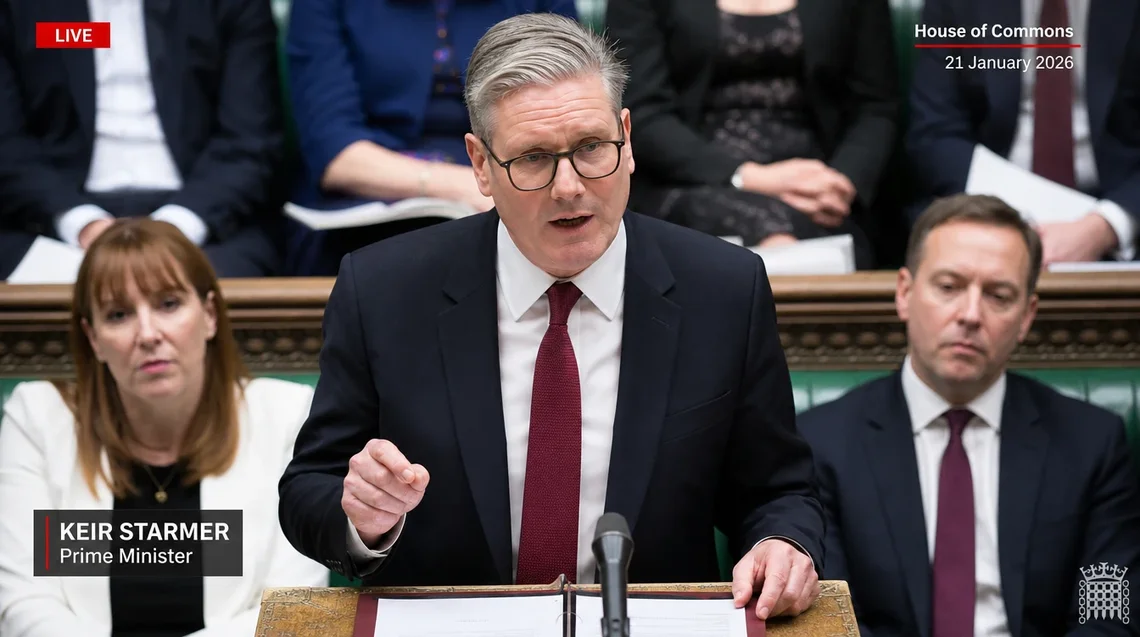
Prime Minister Keir Starmer has announced a sweeping overhaul of the National Health Service as official figures show NHS waiting lists in England remain at historically elevated levels, with millions of patients still awaiting treatment and public confidence in health services under sustained pressure. The reform package, described by Downing Street as the most ambitious restructuring of the NHS since its founding, places productivity, digital investment, and community care at its centre.
The announcement comes as the government faces mounting criticism from opposition parties, patient advocacy groups, and a growing number of Labour's own backbenchers over the pace and direction of health policy. According to data published by NHS England, the total waiting list for elective treatment stands at approximately 7.5 million cases, a figure that has placed the health brief at the top of Westminster's political agenda. For ongoing coverage, see Starmer pledges NHS overhaul as waiting lists grow.
Party Positions: Labour has committed to reducing elective waiting times through a combination of increased weekend clinics, expanded community diagnostic centres, and a new productivity framework for NHS trusts. Conservatives argue the plan lacks a credible funding mechanism and represents a rebranding of failed targets from previous administrations. Lib Dems have called for a cross-party health commission and accused the government of avoiding structural reform in favour of headline announcements.
The Scale of the Crisis
The political urgency behind Starmer's announcement is rooted in data that officials and health economists describe as a system under existential strain. NHS England statistics show that a significant proportion of patients waiting for treatment have been in the queue for more than eighteen weeks — the standard target threshold — with a substantial subset waiting over a year for procedures including orthopaedic surgery, cardiology assessments, and cancer diagnostics.
Related Articles
What the Numbers Say
Office for National Statistics analysis of NHS performance metrics indicates that the health service is operating under compounding pressures: an ageing population, a workforce that has seen chronic understaffing in key specialisms, and a capital estate described by NHS Confederation officials as severely underfunded. According to the BBC's health unit, emergency department performance has also deteriorated, with targets for four-hour wait times consistently missed across major trusts in England. (Source: Office for National Statistics)
Public sentiment has tracked these figures closely. YouGov polling conducted recently found that NHS performance ranks as the top concern for British voters, ahead of the cost of living and immigration — a shift from patterns recorded in earlier years when economic anxiety dominated. A separate Ipsos survey indicated that satisfaction with the NHS has fallen to levels not recorded since the 1990s, with particular dissatisfaction among older voters in traditional Labour heartlands. (Source: YouGov; Source: Ipsos)
| Metric | Current Figure | Target / Benchmark | Source |
|---|---|---|---|
| Total elective waiting list (England) | ~7.5 million cases | Pre-pandemic: ~4.4 million | NHS England |
| Waiting over 18 weeks | ~60% of listed patients | Government target: below 50% | NHS England |
| NHS satisfaction (public polling) | 24% satisfied | Historical average: ~57% | Ipsos / King's Fund |
| Labour NHS approval rating | 31% approve of handling | Inherited position: 28% | YouGov |
| A&E 4-hour target performance | ~70% of patients seen | Official target: 95% | NHS England / BBC |
What the Reform Plan Contains
The government's overhaul document, released alongside Starmer's Commons statement, sets out a series of structural and operational changes intended to accelerate the reduction of waiting lists and shift care provision closer to patients' homes. Ministers have described the plan as a move away from the hospital-centric model that has defined the NHS for decades, toward a system where primary care, community health centres, and digital consultation play a significantly expanded role.
Community Diagnostic Centres and Digital Investment
Central to the plan is a commitment to expand the network of community diagnostic centres — facilities designed to perform tests and scans outside major hospital sites, reducing demand on acute trusts. Health Secretary Wes Streeting told Parliament that the government intends to open additional centres across England, prioritising areas with the longest waiting times and the greatest health inequality. The government has also pledged a multi-year investment in NHS digital infrastructure, citing the persistent use of outdated IT systems — including fax machines still in operation at some trusts — as a structural brake on productivity.
Related coverage of the financial dimensions of this commitment can be found in earlier reporting: Starmer pledges major NHS overhaul amid funding row and the workforce context explored in Labour's NHS investment plans amid staff shortage crisis.
Workforce and Retention Measures
Officials said the reform package also includes a new workforce retention framework aimed at reducing the rate at which trained clinical staff leave the NHS for the private sector or emigrate to other English-speaking countries. According to the Guardian's health correspondent, the government is understood to be in ongoing negotiations with NHS trade unions over pay supplementation for roles in hardest-to-fill specialisms, though no final agreement has been announced. (Source: The Guardian)
The British Medical Association has welcomed elements of the plan while warning that without a credible multi-year funding commitment, structural reform risks becoming a reorganisation exercise that consumes management bandwidth without delivering patient benefit, officials at the organisation said.
Political Pressure from Multiple Directions
The announcement has landed in a politically charged environment. Starmer is navigating pressure not only from the Conservatives and Liberal Democrats but from within his own parliamentary party, where a section of Labour MPs has expressed frustration at what they describe as insufficient ambition on NHS spending and an over-reliance on private sector involvement in delivering care.
Backbench Concerns
According to Westminster sources cited by the BBC, at least thirty Labour MPs have privately raised concerns with party whips about the direction of NHS reform, with a particular focus on the role of independent sector providers in delivering NHS-funded procedures. The tension reflects a long-standing divide within Labour between those who regard any private sector involvement in NHS delivery as a matter of principle and those who take a more pragmatic position focused on outcomes and capacity. Full analysis of this internal pressure is available at Starmer's NHS overhaul faces growing backbench revolt. (Source: BBC)
Downing Street has moved to contain the dissent, with Number Ten officials insisting the plan is consistent with Labour's manifesto commitment to a publicly funded and publicly delivered health service while preserving flexibility on how capacity is sourced in the short term.
Opposition Response
The Conservative Party's response has centred on challenging the government's costings. Shadow Health Secretary Edward Argar argued in the Commons that the reform plan does not adequately account for the capital expenditure required to build and equip new diagnostic facilities, and that the digital investment commitments are not materially different from programmes announced but incompletely delivered by previous administrations. Argar told the chamber that patients needed action rather than "another framework document", according to parliamentary reporting.
The Liberal Democrats, who hold a significant number of seats in areas with above-average NHS waiting times, have called for a dedicated royal commission or cross-party commission on health and care, arguing that the scale of the NHS challenge requires political consensus rather than partisan management. Lib Dem health spokesperson Helen Morgan told journalists the government's plan did not adequately address the interface between NHS and social care — a pressure point that health economists say is a primary driver of delayed hospital discharges and bed occupancy.
Historical and Structural Context
The political debate around NHS waiting lists is not new. Previous governments — both Conservative and Labour — have set and missed waiting time targets repeatedly over the past two decades. The NHS Confederation and the Health Foundation have both published analysis noting that demand for health services has grown faster than funded capacity across multiple parliamentary cycles, creating a structural gap that no single reform package has yet closed. (Source: Health Foundation)
Reform Attempts in Historical Perspective
The Blair government's NHS Plan, introduced in the early 2000s, achieved significant waiting list reductions through a combination of ring-fenced capital investment, workforce expansion, and the introduction of targets backed by management consequences. Health economists who have studied that period note that the reductions were real but came at substantial fiscal cost and were partly sustained by independent sector treatment centre contracts — the same model that now generates internal Labour controversy. The Cameron-era Health and Social Care Act restructured commissioning arrangements in ways that are now broadly acknowledged to have added administrative complexity without commensurate patient benefit, according to analysis by the King's Fund. For further background on current legislative dimensions, see Labour pushes NHS reform bill amid funding row.
What Comes Next
The government has indicated that legislation to underpin elements of the reform plan will be introduced in the current parliamentary session, with secondary legislation and NHS England implementation guidance to follow. A formal spending review settlement for the Department of Health and Social Care is expected to determine whether the investment commitments contained in the overhaul document are funded in full or subject to revision based on wider fiscal constraints.
Health correspondents across national outlets, including the BBC and the Guardian, have noted that the political test for the government will not be the announcement itself but the trajectory of waiting lists over the next twelve to eighteen months. Polling conducted by YouGov and Ipsos consistently shows that voters are prepared to give the government time to deliver on NHS commitments, but that patience is contingent on visible progress — a dynamic that makes the health brief both Labour's greatest political vulnerability and its most significant potential asset ahead of the next electoral cycle. Officials said the Prime Minister is personally invested in the NHS reform agenda and intends to chair regular cross-departmental meetings on implementation progress, signalling that Downing Street regards health as a defining issue of the current Parliament. (Source: YouGov; Source: Ipsos)