Labour pushes NHS reform bill amid funding debate
Starmer government faces pressure from health unions
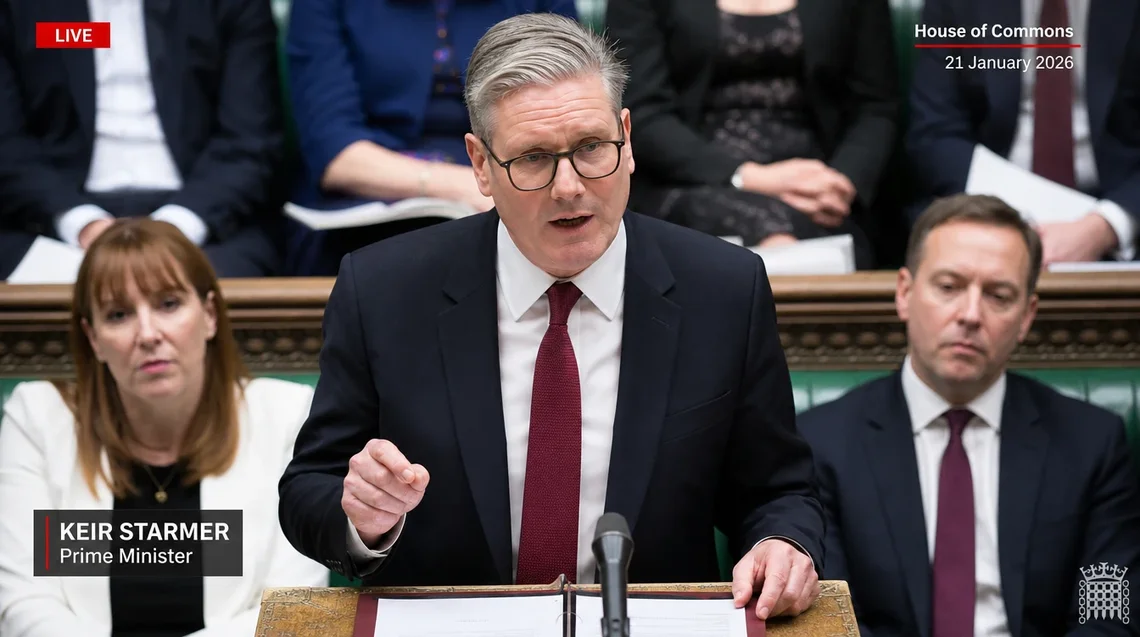
The Starmer government is pushing ahead with sweeping NHS reform legislation at Westminster, even as health unions intensify pressure over what they describe as inadequate funding commitments accompanying the structural overhaul. With NHS waiting lists still affecting millions of patients across England, ministers insist the Health Reform Bill represents the most significant reorganisation of the health service in over a decade — but opponents within Labour's own ranks and across the trade union movement warn that restructuring without sufficient investment risks deepening the very crisis it claims to solve.
Party Positions: Labour supports the Health Reform Bill as a necessary modernisation of NHS structures, emphasising integrated care and prevention, while pledging additional capital investment over the current spending review period. Conservatives oppose the pace and scale of the reforms, arguing the government is prioritising reorganisation over frontline staffing and accusing ministers of repeating the costly structural upheavals of previous administrations. Lib Dems broadly back increased NHS investment but have called for greater parliamentary scrutiny of the bill's provisions on integrated care board powers and NHS England's relationship with central government.
The Bill at a Glance: What Ministers Are Proposing
Health Secretary Wes Streeting has positioned the Health Reform Bill as a cornerstone of Labour's domestic agenda, outlining proposals to streamline NHS England's bureaucratic structure, expand community health provision, and shift resources toward preventive care. Speaking during the bill's second reading in the Commons, Streeting argued that the current configuration of the health service — shaped significantly by the Health and Social Care Act introduced under the coalition government — had produced duplication, inefficiency, and a fragmented patient experience that was no longer fit for purpose, officials said.
The legislation would, if passed in its current form, consolidate several NHS England functions back under closer ministerial oversight, a move that has drawn immediate criticism from health policy experts who warn it risks politicising clinical decision-making. It would also create new statutory duties around mental health parity, require integrated care boards to publish workforce strategies annually, and establish a new regulatory framework for digital health services.
Related Articles
Integrated Care Boards and Central Control
A central and contested element of the bill concerns the future of integrated care boards — the bodies created relatively recently to oversee health and care spending across regional footprints in England. Under the proposed legislation, these boards would retain their planning functions but face tightened accountability mechanisms to NHS England and, by extension, to the Secretary of State. Critics across the political spectrum argue this represents a partial reversal of the devolved model only recently established, adding uncertainty for local health economies still adjusting to the previous round of reforms. According to health policy analysts cited by the Guardian, the shift could undermine the ability of integrated care boards to tailor services to local population needs.
Prevention and Community Health Provisions
The government has also placed significant rhetorical emphasis on what ministers describe as a "prevention-first" approach embedded throughout the bill. New duties would require NHS bodies to demonstrate measurable progress toward population health targets covering obesity, cardiovascular disease, and mental health outcomes. Public health officials and some union representatives have cautiously welcomed this direction, though the NHS Confederation and the British Medical Association have both indicated that prevention ambitions require sustained multi-year funding guarantees that the current bill does not fully provide, according to statements published by both organisations.
Union Pressure and the Funding Dispute
The most immediate political flashpoint surrounding the bill is not its structural content but its financial underpinning. Unions representing NHS workers — including Unison, Unite, and the Royal College of Nursing — have issued coordinated statements arguing that structural reform without a meaningful pay review settlement and capital investment commitment amounts to reorganising a service already under severe operational strain.
Unison's head of health has publicly described the government's position as "reform on the cheap," a characterisation ministers have rejected. The Treasury's position, as relayed by Number Ten officials, is that the spending review process will address investment levels and that pre-committing specific funding envelopes within primary legislation is not standard practice. Health unions, however, argue that previous rounds of NHS reorganisation in England — most notably that of the early part of this decade — consumed billions in transition costs that ultimately came from frontline budgets, a pattern they say must not be repeated.
Nursing Workforce Concerns
The Royal College of Nursing has specifically highlighted what it describes as unresolved nursing workforce shortfalls that the bill does not adequately address. According to data published by NHS England and referenced in parliamentary debate, there remain tens of thousands of nursing vacancies across the health service in England, a figure that union officials argue makes any structural reorganisation premature without a binding workforce plan backed by ring-fenced resource. The government has pointed to existing workforce strategy commitments, but critics note these predate the current reform proposals and were developed under different assumptions about NHS capacity.
Parliamentary Arithmetic and Backbench Dissent
Labour's large Commons majority means the bill is expected to pass its key parliamentary hurdles, but the government faces a more complicated picture in terms of managing its own parliamentary party. A number of Labour backbenchers, including several former health professionals, have tabled amendments seeking to strengthen the bill's workforce provisions and to introduce greater financial transparency requirements around NHS restructuring costs.
For more background on the internal tensions this reform drive has generated, see Starmer's NHS overhaul faces growing backbench revolt, which details the fault lines emerging within the parliamentary Labour Party over the pace and ambition of the changes being proposed.
Ministers have indicated a willingness to engage with some amendments at committee stage, though Downing Street sources have made clear that the core architecture of the bill is not open to fundamental revision. The Lords are expected to pose a more significant challenge, with former health ministers and medical peers likely to scrutinise the provisions around ministerial oversight of NHS England with particular intensity.
Opposition Attacks and Conservative Strategy
The Conservatives have sought to frame the bill as evidence of Labour's instinct to reorganise rather than deliver, drawing explicit comparisons to the Andrew Lansley reforms of the early part of the last decade, which consumed significant management capacity and financial resource. Shadow Health Secretary Edward Argar has argued at the despatch box that the government should pause the legislative process and focus resource on cutting waiting lists and stabilising emergency department performance before embarking on structural change. The Liberal Democrats, while supportive of increased investment, have tabled their own amendments seeking enhanced select committee oversight of any NHS England restructuring process.
Public Opinion and the Polling Picture
Public attitudes toward the NHS and the government's management of health policy provide important political context for the reform push. Recent polling data from YouGov and Ipsos indicates that the NHS remains the public's top priority issue by a substantial margin, while satisfaction with health service performance remains well below historical norms. (Source: YouGov, Ipsos)
| Polling Measure | Figure | Source |
|---|---|---|
| NHS as top public priority (% naming it most important issue) | 54% | YouGov / Ipsos tracker |
| Net public satisfaction with NHS performance | -29 (net) | Ipsos Issues Index |
| Support for increased NHS funding even if taxes rise | 62% | YouGov survey |
| Labour lead on NHS management (vs Conservatives) | +18 points | YouGov Westminster tracker |
| NHS England waiting list (patients, approx.) | 7.5 million | NHS England / ONS |
| Commons second reading vote majority (approx.) | +128 | Parliamentary record |
The polling data underscores both the political opportunity and the risk for the government. Labour retains a significant public trust advantage on health policy over the Conservatives, according to YouGov's Westminster tracker, but that advantage is contingent on perceptions of delivery rather than intent. Officials within the Department of Health and Social Care are acutely aware, sources told journalists, that public patience with structural reform is limited if waiting times do not visibly improve within the parliamentary term. (Source: Office for National Statistics, YouGov)
The Wider Policy Landscape
The Health Reform Bill does not exist in isolation. It sits alongside a broader set of commitments the Starmer administration has made on health, including pledges on GP appointment access, mental health provision, and the ten-year NHS plan being developed under the independent review led by Lord Darzi's successor process. For a detailed account of how the current legislation relates to those wider ambitions, readers can consult our earlier reporting: Labour targets 'broken' NHS with radical reform plan sets out the ideological and policy foundations underpinning the government's health agenda since taking office.
Similarly, the funding dispute now dominating headlines did not emerge suddenly. As documented in Starmer pledges major NHS overhaul amid funding row, tensions between structural ambition and financial constraint have been a consistent feature of Labour's health policy positioning since well before the general election. The government has argued throughout that reform and investment are complementary, not competing, priorities — a position that unions and a growing number of independent health economists continue to contest.
International Comparisons and NHS Spending Context
According to data published by the Office for National Statistics and referenced in recent BBC and Guardian reporting, UK health spending as a proportion of GDP has historically trailed several comparable European systems, a structural gap that advocates argue underpins many of the performance challenges the reform bill is designed to address. The government has cited its capital investment commitments as evidence of a different approach to its predecessors, but the Institute for Fiscal Studies and the Health Foundation have both noted — in analysis referenced by the BBC — that day-to-day NHS funding growth in real terms remains constrained by the broader fiscal envelope inherited from the previous administration. (Source: Office for National Statistics, BBC, Guardian)
What Comes Next
The Health Reform Bill is currently in committee stage in the House of Commons, with report stage expected before the summer recess. Lords consideration will follow in the autumn, where the government anticipates a more forensic examination of the bill's constitutional implications for NHS England's operational independence.
For the latest parliamentary developments as the bill progresses, see Starmer pledges NHS overhaul as waiting lists grow, which tracks the relationship between the legislative timetable and NHS performance data.
The government's ability to hold together its parliamentary coalition, manage union relations without industrial escalation, and maintain public confidence in its health stewardship will define much of the political terrain between now and the next electoral test. Ministers insist the bill will be passed, implemented, and — ultimately — vindicated by improved patient outcomes. Health unions and a restive backbench remain, for now, unconvinced that the funding framework underpinning it is equal to that ambition. The coming months of parliamentary scrutiny will test both sides of that argument in detail.