Starmer Pledges NHS Overhaul Amid Growing Funding Crisis
Labour government unveils comprehensive reform plan for health service

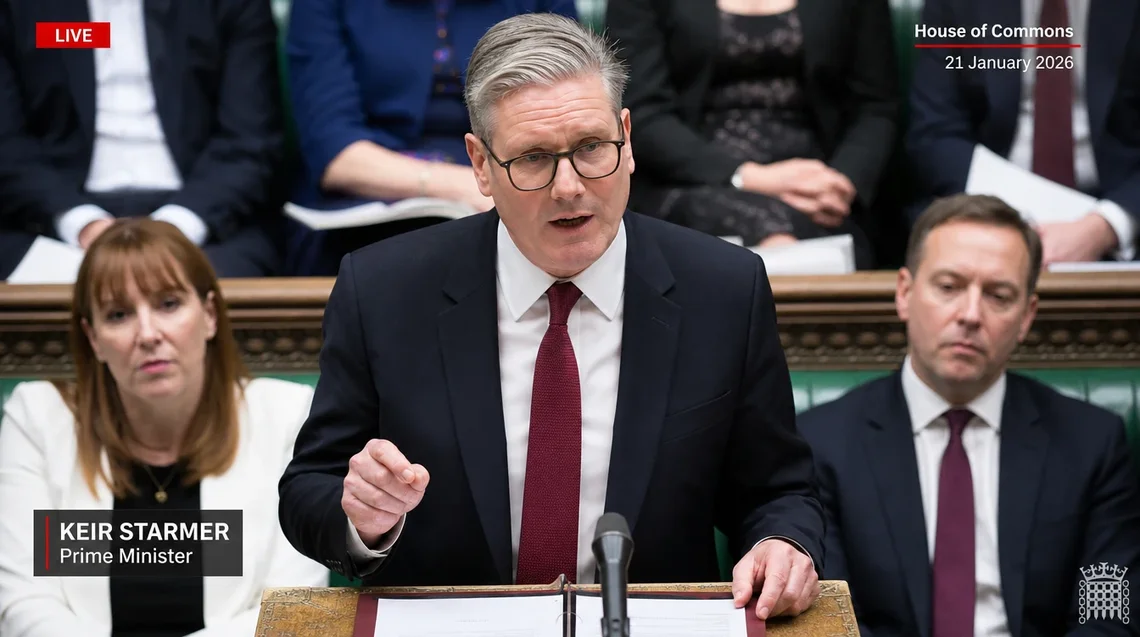
Sir Keir Starmer has unveiled what his government describes as the most sweeping reform of the National Health Service in a generation, pledging billions in additional investment alongside structural changes intended to reduce waiting times, modernise NHS infrastructure, and address a deepening funding crisis that officials warn could destabilise the service within years. The announcement, made from Downing Street, positions the NHS as the defining domestic battleground of this parliament.
The reform package, confirmed by senior government officials and reported extensively by the BBC and the Guardian, combines immediate capital expenditure with longer-term legislative change. Ministers argue the plan addresses years of what they characterise as systemic underfunding and workforce mismanagement under the previous Conservative administration. Critics, however, have already questioned whether the proposed financial commitments are sufficient to meet the scale of the challenge.
Party Positions: Labour says its NHS overhaul represents a structural reset for the health service, combining new capital investment with workforce reform and a shift toward community-based care, and insists it inherited a health system in acute crisis. Conservatives argue the government is recycling previously announced spending, accusing ministers of presentation over substance and warning that structural reforms risk creating costly bureaucratic upheaval. Lib Dems broadly welcome the investment focus but have called for faster action on mental health waiting lists and rural healthcare provision, urging the government to adopt a cross-party approach to long-term NHS funding.
The Scale of the Crisis
NHS waiting lists in England have remained at historically elevated levels, with millions of patients currently awaiting consultant-led treatment. Data published by NHS England show the backlog, while showing modest improvement in recent months, remains far above pre-pandemic benchmarks. Health economists and think tanks including the Nuffield Trust and the King's Fund have repeatedly warned that without sustained investment and structural reform, performance standards will continue to deteriorate.
Related Articles
What the Data Show
According to figures compiled by the Office for National Statistics, health-related economic inactivity — individuals out of work partly or entirely due to long-term illness — has risen sharply in recent years, placing additional fiscal pressure on both the NHS and the wider welfare system. The ONS data indicate this trend has become one of the most significant structural challenges facing the British economy, with knock-on consequences for productivity and public finances (Source: Office for National Statistics).
Polling conducted by Ipsos consistently places the NHS among the top three concerns for British voters, with large majorities across party lines expressing dissatisfaction with current waiting times while simultaneously expressing strong support for the institution itself (Source: Ipsos). A separate YouGov survey found that more than two-thirds of respondents believed the government should prioritise NHS reform above most other domestic policy areas, a figure that has remained broadly stable over recent months (Source: YouGov).
| Indicator | Current Position | Target / Benchmark | Source |
|---|---|---|---|
| Patients on NHS waiting list (England) | Approx. 7.5 million | Pre-pandemic baseline ~4 million | NHS England |
| Public satisfied with NHS overall | 24% (lowest recorded) | Historic average ~60% | Ipsos / British Social Attitudes |
| Voters naming NHS as top concern | 67% | — | YouGov |
| Health-related economic inactivity | 2.8 million (approx.) | Pre-2020 level ~2.1 million | Office for National Statistics |
| NHS capital investment gap (estimated) | £37 billion backlog | Government pledge: additional £3.1bn | NHS Confederation |
What the Government Is Proposing
The government's reform package spans several interconnected policy areas. Officials outlined a plan that would redirect resources toward primary and community care, expand the use of diagnostic technology including AI-assisted scanning, and accelerate the construction of new surgical hubs designed to increase elective procedure capacity outside of traditional hospital settings.
Workforce and Training Commitments
Central to the announcement is a commitment to expand NHS workforce capacity, including additional training places for doctors, nurses, and allied health professionals. Ministers acknowledged that staffing shortfalls, which the Guardian has reported have left some NHS trusts operating at critical levels, cannot be resolved through recruitment alone and that retention incentives form a core part of the package (Source: the Guardian). The government has also signalled it will revisit the terms under which internationally trained healthcare staff are recruited, amid ongoing debate about the ethics and sustainability of drawing workers from lower-income countries.
Digital Infrastructure and Technology
A significant portion of the announced investment is earmarked for digital infrastructure, including the replacement of outdated IT systems that officials described as a persistent operational liability. The government pointed to successful pilot schemes in which AI-assisted diagnostics reduced waiting times for certain cancer and cardiac investigations. Ministers indicated that expanding these programmes nationally is a legislative and budgetary priority for the coming parliamentary session.
For further context on how this initiative fits within the broader framework of Labour's domestic agenda, see our coverage of Starmer pledges major NHS overhaul amid funding crisis, which tracks the evolution of the government's position on health spending since taking office.
Opposition Response and Parliamentary Dynamics
The Conservative opposition moved quickly to challenge the substance of the announcement. Shadow health ministers accused the government of repackaging previously committed spending and presenting it as new money, a charge ministers denied. The row over NHS funding figures has become a recurring parliamentary flashpoint, with the Conservatives arguing that Labour's inheritance narrative — central to the government's political messaging — is being used to obscure difficult choices about prioritisation and efficiency.
Parliamentary Arithmetic
With Labour holding a substantial Commons majority, the government is unlikely to face legislative defeat on its core NHS proposals. However, internal party dynamics may prove more consequential. A number of Labour backbenchers have privately expressed concern, according to BBC political reporting, that the reform timetable is insufficiently ambitious and that the government risks repeating the mistakes of previous administrations by announcing structural change without adequate implementation resource (Source: BBC).
The Liberal Democrats, holding a notably strengthened parliamentary position following the most recent general election, have staked out ground as constructive critics on health policy. Their position — supportive of investment but demanding faster progress on mental health and rural services — gives them leverage in select committee scrutiny and public debate, even without the numbers to force government defeats.
Readers seeking a detailed examination of how parliamentary pressure has shaped Labour's health policy commitments may find value in our earlier analysis of Starmer pledges NHS overhaul amid growing funding row, which covers the internal and external political pressures the government faced in the months leading up to this announcement.
The Funding Question
At the heart of political and expert debate is a straightforward but contested question: is the money sufficient? The NHS Confederation, which represents NHS organisations across England, Wales, and Northern Ireland, has cautiously welcomed the government's commitments while warning that the scale of the capital backlog — estimated at tens of billions of pounds — means announced funding, while significant, falls substantially short of what is required to fully modernise the estate.
Health economists interviewed by the BBC and the Guardian have pointed to the structural tension between short-term political imperatives and the long-cycle nature of healthcare investment, noting that the benefits of capital expenditure on diagnostic equipment or hospital buildings typically take years to translate into measurable patient outcomes (Source: BBC; Source: the Guardian). This dynamic makes NHS funding politically treacherous territory: governments invest heavily but may not receive electoral credit before the next election.
Comparative International Spending
The United Kingdom currently spends a lower proportion of GDP on health than several comparable European nations, according to OECD data cited by the Office for National Statistics (Source: Office for National Statistics). This structural gap has been highlighted by health policy analysts as a root cause of the NHS's chronic capacity constraints, independent of management decisions or operational efficiency. Ministers have not committed to matching European average healthcare spending as a share of national income, a point that opposition parties have seized upon in parliamentary exchanges.
Regional Disparities and Equity Concerns
Beyond the headline figures, health equity campaigners and NHS commissioners have drawn attention to the uneven distribution of health outcomes and service capacity across England. Data from the ONS confirm substantial variation in life expectancy, access to specialist services, and elective waiting times between regions, with parts of the north of England, coastal communities, and rural areas consistently recording worse outcomes than London and the south-east (Source: Office for National Statistics).
The government has indicated that its reform plan includes a levelling-up dimension within health policy, with targeted investment in areas where infrastructure is most degraded. Critics, however, argue that without a transparent and binding allocation mechanism, additional NHS funding tends to flow disproportionately to areas with stronger existing institutional capacity — reinforcing rather than reducing geographic inequality.
Our reporting on the staffing dimension of these regional challenges is available in the piece covering Starmer Pledges NHS Overhaul Amid Staffing Crisis, which examines workforce distribution and the particular difficulties faced by NHS trusts in recruiting and retaining clinical staff outside major urban centres.
What Comes Next
The government has indicated that primary legislation to implement elements of the reform plan will be brought forward in the current parliamentary session. Ministers have also committed to a series of public engagement exercises, though the practical impact of such consultations on final policy has been questioned by health policy observers. Implementation will fall to NHS England, NHS trusts, and integrated care boards — the regional bodies established under the previous administration's reforms — whose relationship with the new government's agenda remains a source of ongoing negotiation.
Independent scrutiny will come from the National Audit Office, parliamentary select committees, and the Care Quality Commission, whose inspection reports provide one of the most reliable independent assessments of NHS performance at trust level. Whether the government's reform agenda translates from announcement to measurable patient outcomes will be the central test against which ministers will ultimately be judged — and on which, polling data suggest, the electorate is watching closely.
As the reform programme moves from announcement to implementation, the political and human stakes could scarcely be higher. For a service that remains the single most resonant institution in British public life, the margin for error is narrow and the expectations — shaped by decades of political promises and public attachment — are immense. Whether this government's plan proves transformative or merely the latest in a long sequence of NHS reform announcements will, in the final assessment, depend less on the ambition of the initial pledge than on the rigour of what follows.