Starmer's NHS overhaul faces growing backbench revolt
Labour MPs split over funding model for health reforms

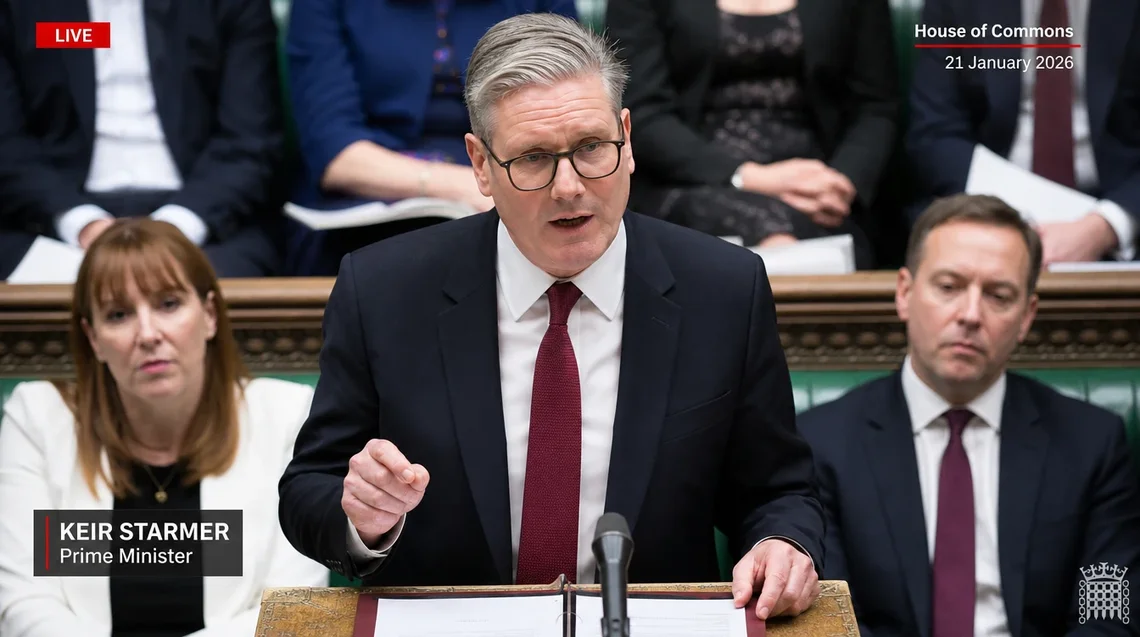
Sir Keir Starmer's flagship NHS overhaul programme is facing a significant internal rebellion, with dozens of Labour backbenchers threatening to withhold support for key elements of the government's health funding proposals unless ministers address concerns over privatisation, regional inequality, and the pace of structural change. The revolt represents one of the most serious parliamentary challenges to Starmer's domestic agenda since the general election.
According to figures compiled by parliamentary researchers and reported by the BBC, more than forty Labour MPs have signed internal correspondence raising objections to at least one component of the proposed funding model, with a smaller bloc of around fifteen considered likely to vote against specific clauses if the government proceeds without amendment. The development signals that despite the party's substantial Commons majority, Starmer's administration cannot assume smooth passage for its most ambitious public service reforms.
Party Positions: Labour — Government pressing ahead with structural NHS reforms and a revised funding settlement, though facing internal dissent over the role of private sector involvement and regional allocation formulas. Conservatives — Opposing the reforms as insufficiently costed and warn of hidden tax rises; shadow health team demanding full independent fiscal assessment before any vote. Lib Dems — Broadly supportive of increased NHS investment but calling for a cross-party health commission and greater transparency over the long-term funding envelope.
The Fault Lines Within Labour
The rebellion is not a single coordinated campaign but rather a convergence of distinct grievances that have crystallised around the government's health reform white paper. Broadly, three separate groups of Labour MPs have emerged as sources of resistance, each animated by different concerns but sharing a common view that the funding model as currently designed is flawed.
Related Articles
The Privatisation Caucus
A group of MPs drawn largely from the 2019 and earlier intakes, many representing urban constituencies with strong trade union ties, have raised persistent alarms about the extent to which independent sector providers — including private hospital groups — would be permitted to deliver NHS-commissioned services under the proposed framework. These MPs argue that the white paper's language around "provider diversity" is effectively a continuation of market-based approaches they believe have damaged the health service over successive governments. According to sources familiar with internal party discussions, several backbenchers have privately warned ministers that they will not allow the reforms to pass without statutory language explicitly limiting profit extraction from the health service.
Regional Allocation Concerns
A second cluster of dissent centres on how funding will be distributed across NHS regions. MPs representing constituencies in the North of England, the Midlands, and coastal communities argue that the proposed allocation formula fails to adequately account for higher disease burden, older demographic profiles, and historically underfunded infrastructure in their areas. Research published by the Health Foundation, cited by several MPs in correspondence with ministers, suggests that under a flat per-capita weighting model, some of the most deprived areas could receive proportionally less new investment than wealthier regions with lower health need. The government has disputed this characterisation, but the argument has gained traction on the backbenches. (Source: Health Foundation)
Scale of Parliamentary Opposition
Mapping the precise scale of the rebellion remains difficult at this stage, given that many MPs are engaged in negotiation rather than outright defiance. Nevertheless, internal whipping assessments seen by political journalists suggest the government's working majority on NHS-related votes could be compressed significantly if amendments are not forthcoming.
| Indicator | Figure | Source |
|---|---|---|
| NHS waiting list (England) | Approx. 7.5 million pathways | Office for National Statistics |
| Public satisfaction with NHS (most recent annual survey) | 24% — lowest recorded level | Ipsos / King's Fund |
| Voters backing more NHS spending even if taxes rise | 61% | YouGov |
| Labour MPs reported to have raised formal concerns | 40+ | Parliamentary sources / BBC |
| Conservative MPs supporting cross-party health commission | Approx. 12 (publicly declared) | House of Commons records |
| Lib Dem amendment votes tabled on NHS bill | 7 amendments | Parliament.uk / Guardian |
A YouGov poll conducted recently showed that while 61 per cent of the public support increased NHS spending even if it means higher taxes, satisfaction with the government's handling of health reform has declined over recent months, with only 34 per cent describing the government's approach as "clear" or "well-planned." (Source: YouGov)
Government's Response and Ministerial Strategy
Health ministers have moved to contain the rebellion through a combination of private briefings, bilateral meetings with disgruntled MPs, and a series of targeted concessions floated in internal discussions. The Secretary of State for Health has signalled willingness to revisit the language around private sector involvement, though officials stress that any changes must not undermine the operational flexibility the government says is essential to reducing waiting lists.
The Wes Streeting Position
The Health Secretary has repeatedly argued in public and parliamentary settings that ideological opposition to independent sector involvement is itself a barrier to cutting waiting lists, framing the debate as a choice between pragmatic reform and political purity. According to officials familiar with his thinking, Streeting believes that the scale of the backlog — with NHS waiting lists currently standing at approximately 7.5 million treatment pathways, according to Office for National Statistics data — leaves no realistic alternative to some degree of independent sector capacity in the short to medium term. (Source: Office for National Statistics)
This argument has not fully landed with sceptical backbenchers, several of whom have told colleagues that the framing misrepresents the nature of their concerns, which they say relate to long-term structural embedding of private provision rather than short-term capacity management.
Concessions Under Discussion
Among the measures reportedly under active consideration by the government are: a statutory cap on the proportion of NHS-funded activity that can be delivered by independent providers; a revised needs-based weighting formula for regional allocation; and a commitment to an annual parliamentary statement specifically on the role of private providers within the NHS. None of these concessions had been formally announced at the time of publication, and government sources cautioned that internal discussions remain fluid.
Conservative and Opposition Attacks
The Conservatives have sought to capitalise on the internal Labour divisions, with shadow health secretary positioning the party as offering a cleaner alternative — though critics have noted the opposition has yet to publish a fully costed counter-proposal. The Conservative frontbench has called for an independent Office for Budget Responsibility assessment of the entire NHS reform package before any legislation proceeds to a final vote, arguing that the current funding model contains uncosted assumptions about productivity gains and workforce supply. (Source: BBC)
The Liberal Democrats, meanwhile, have tabled seven amendments to the NHS reform bill, according to parliamentary records reported by the Guardian, most of which focus on transparency obligations and oversight mechanisms. Party leader Sir Ed Davey has repeatedly called for a cross-party health commission, arguing that NHS funding decisions of this scale should not be made on the basis of a single-party mandate. (Source: Guardian)
For more background on how the funding dispute developed, see our earlier coverage: Starmer pledges major NHS overhaul amid funding row.
Historical Context and Structural Pressures
The current rebellion echoes previous moments of Labour internal tension over health policy, most notably the debates around foundation trusts and the private finance initiative in earlier Labour governments. Analysts at the King's Fund and the Nuffield Trust have observed that the structural challenge facing any government attempting NHS reform is unusually acute at present, given the simultaneous pressure of a record waiting list, a workforce crisis, and a capital estate that is, by official estimates, in urgent need of billions in maintenance investment.
Workforce and Capacity Backdrop
Underpinning the political row is a set of operational realities that make inaction difficult to defend. NHS England data show significant vacancy rates across nursing, general practice, and secondary care specialisms, with workforce shortages cited by hospital trusts as the primary constraint on throughput in many areas. The government's reform white paper proposes a new workforce planning framework, but critics — including some on the Labour backbenches — argue this element lacks the binding targets and independent oversight necessary to deliver genuine accountability. (Source: Office for National Statistics)
For further reading on the waiting list pressures that have shaped the political context, see: Starmer pledges NHS overhaul as waiting lists grow and Starmer Pledges NHS Overhaul as Waiting Lists Surge.
What Happens Next
The legislative timetable for the NHS reform bill remains formally unchanged, with committee stage expected to begin in the coming weeks. However, the scale of internal dissent and the unresolved nature of the funding model negotiations mean the government faces a genuine choice: offer meaningful concessions that could cost political capital with centrist and pro-reform allies, or push ahead and risk a visible Commons defeat or a damaging abstention wave on key clauses.
Political analysts quoted by the BBC and the Guardian have suggested that the most likely outcome is a negotiated compromise, under which the government accepts amendments on regional weighting and oversight mechanisms while holding the line on independent sector involvement. Whether this is sufficient to bring the full breadth of the backbench rebellion back into line remains uncertain.
For the latest on the parliamentary progress of the legislation itself, see: Labour pushes NHS reform bill amid funding row.
The coming weeks will be a significant test of Starmer's parliamentary management — and of whether his government's commanding majority translates into effective legislative authority when the policy is as contested, both ideologically and technically, as the future shape of the National Health Service.