Starmer Pledges NHS Overhaul as Health Crisis Deepens
Labour government announces major funding plan for struggling service
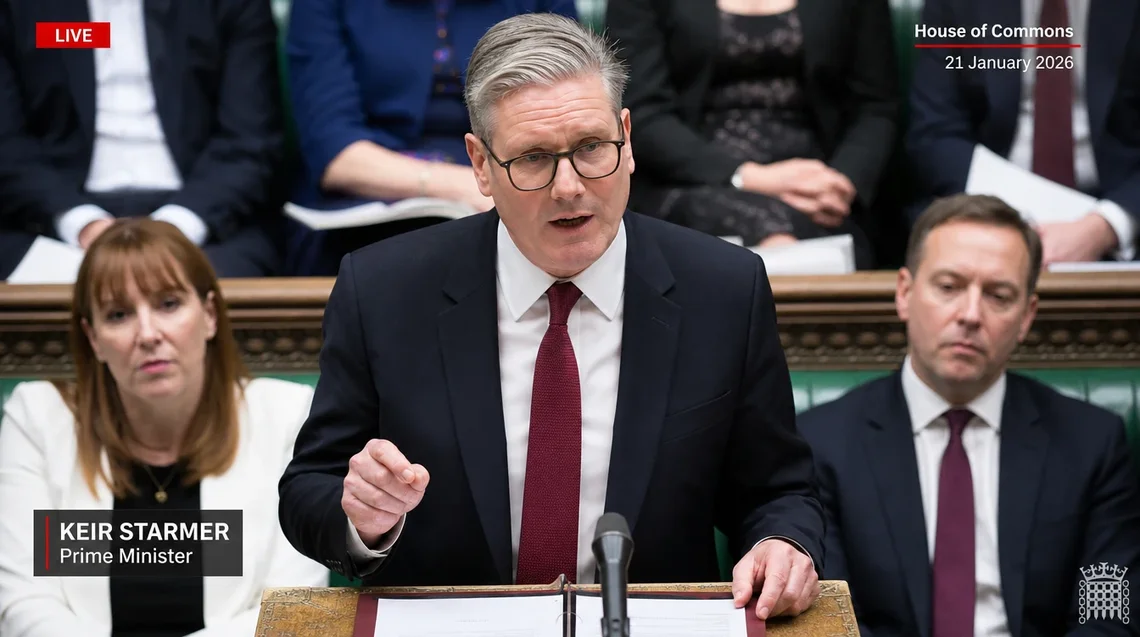
Sir Keir Starmer has unveiled what his government describes as the most significant restructuring of the National Health Service in a generation, committing to a multi-billion-pound funding injection as waiting lists remain at historically elevated levels and public confidence in the health service continues to erode. The announcement, made from Downing Street, positions the NHS as the centrepiece of Labour's domestic agenda heading into a bruising parliamentary period.
The package, which officials said would be financed through a combination of existing departmental budgets and new Treasury allocations, is designed to address chronic underfunding, a staffing shortfall running into the tens of thousands, and a backlog of elective procedures that has persisted since the pandemic years. Health Secretary Wes Streeting, speaking alongside the Prime Minister, said the status quo was "simply not sustainable" and that the reforms would be implemented over a rolling five-year period.
Party Positions: Labour has pledged a multi-billion-pound NHS funding package prioritising reduced waiting times, expanded community care, and greater investment in mental health services, framing the reforms as a break from what it calls fourteen years of Conservative neglect. Conservatives have criticised the plan as fiscally irresponsible, arguing the government has failed to produce a credible funding mechanism and that many of the pledged reforms replicate commitments already made under previous administrations. Lib Dems have broadly welcomed the investment pledge but warned it does not go far enough on social care integration, calling for a cross-party commission to establish a long-term settlement for both the NHS and the wider care system.
The Scale of the Crisis
Any honest accounting of the NHS's current condition requires confronting a set of numbers that have become familiar through repetition but no less alarming for it. Data published by NHS England show that millions of patients are currently on waiting lists for elective treatment, with a significant proportion having waited beyond the eighteen-week referral-to-treatment target that successive governments have pledged to meet and failed to honour.
Related Articles
Waiting Times and Backlogs
According to figures compiled by the Office for National Statistics, pressure on urgent and emergency care pathways has intensified considerably, with ambulance response times in several regions falling well outside published benchmarks. Accident and emergency departments are recording some of their highest-ever attendance figures, and hospital trusts in the Midlands, the North East, and parts of London have issued formal warnings about capacity constraints (Source: Office for National Statistics).
For context on the broader trajectory of public health policy, readers may wish to consult earlier reporting on Starmer pledges NHS overhaul as waiting lists grow, which documented the political environment in which these latest commitments have been made.
Staffing Shortfalls
The workforce dimension of the crisis is equally pronounced. NHS trusts are currently operating with a nursing vacancy rate that health economists describe as structurally damaging, meaning that services are being rationed not because of a lack of physical infrastructure but because of an absence of trained personnel to staff it. Consultants working in secondary care have pointed to deteriorating morale, with retention emerging as a problem that rivals recruitment in terms of operational impact. The government's plan includes a new workforce strategy, though trade unions have cautioned that headline figures on training places do not account for the years required before newly qualified staff reach clinical deployment.
What the Government Is Proposing
The funding package announced by the Prime Minister contains several distinct strands. Officials said the plan would substantially increase capital investment in ageing hospital infrastructure, fund the creation of new surgical hubs designed to tackle the elective backlog, and redirect resources toward primary and community care settings in an attempt to reduce dependency on expensive acute hospital services.
Primary Care Expansion
A central pillar of the announcement is the stated commitment to expanding GP capacity. The government has indicated it intends to increase the number of GP training places and introduce a series of neighbourhood health centres intended to bring services closer to patients. Critics, including the British Medical Association, have previously noted that similar pledges have been made without the structural changes required to make general practice an attractive career destination for newly qualified doctors (Source: BBC).
The funding row that has surrounded earlier iterations of this policy is explored in detail in reporting on Starmer pledges major NHS overhaul amid funding row, which traces the political disputes over NHS financing that have dominated Westminster debate in recent months.
Mental Health Investment
The government has also placed notable emphasis on mental health services, pledging to end what ministers characterised as a "two-tier" system in which patients experiencing mental health crises routinely face longer waits and less intensive care than those presenting with physical conditions. The commitment includes funding for additional inpatient beds, expanded talking therapies provision, and new crisis intervention teams embedded within emergency services. Mental health charities have welcomed the direction of travel while expressing caution about implementation timelines.
The Political Battleground
The NHS announcement has immediately hardened the lines of parliamentary debate. Conservative frontbenchers accused the government of recycling spending commitments without specifying how they would be funded beyond the current spending review period, pointing to what they described as a pattern of announcements built more on political optics than operational credibility. Shadow Health Secretary Kemi Badenoch said the government was "making promises the Treasury cannot keep."
Labour's Strategic Calculation
For Labour, the political logic of the announcement is transparent. Polling consistently places the NHS among the top two or three issues determining vote intention among the electorate. An Ipsos survey conducted recently found that a substantial majority of respondents rated NHS performance as "poor" or "very poor," figures that present both a vulnerability and an opportunity for the governing party (Source: Ipsos). By owning the reform agenda, Number Ten is seeking to convert a structural liability into a demonstration of governing competence.
YouGov data published in recent weeks indicate that public trust in the government's ability to improve the NHS has increased modestly since the general election, though the same data show that satisfaction with actual NHS performance has continued to deteriorate — a gap that officials acknowledge creates significant political risk if tangible improvements do not materialise within the electoral cycle (Source: YouGov).
Parliamentary Arithmetic and Legislative Path
The reforms will require a substantial legislative programme. Government sources indicated that a Health and Care (Reform) Bill would be introduced in the current parliamentary session, covering changes to NHS governance structures, integrated care board accountability, and the legal framework governing workforce planning.
| Metric | Current Position | Government Target |
|---|---|---|
| Elective waiting list (millions) | Approx. 7.5m | Below 5m within five years |
| 18-week referral-to-treatment compliance | Approx. 58% | 92% within five years |
| NHS nursing vacancy rate | Approx. 8.4% | Below 4% within five years |
| GP training places (annual) | Approx. 4,500 | 6,000+ proposed |
| Public satisfaction with NHS (Ipsos) | 24% satisfied | No formal target published |
| Mental health waiting times (IAPT, weeks) | Avg. 18 weeks | 6 weeks proposed ceiling |
The Liberal Democrats have indicated they will support the second reading of any reform bill but intend to use the committee stage to introduce amendments requiring the legislation to address social care funding alongside NHS reform — a demand the government has so far resisted on the grounds that it would complicate the parliamentary timetable.
External Pressures and Structural Constraints
Beyond the domestic political argument, the government faces structural constraints that no announcement alone can resolve. The NHS is operating within an economy characterised by persistent inflationary pressure in the healthcare sector, where the cost of drugs, medical equipment, and workforce pay has risen faster than general inflation. The Guardian has reported extensively on the financial positions of individual NHS trusts, a number of which are carrying deficits that require centrally mandated financial support to remain operational (Source: Guardian).
International Comparisons
Comparative health system data published by the Organisation for Economic Co-operation and Development place the United Kingdom's health spending as a proportion of gross domestic product below the median of comparable nations, a figure that underpins the argument made by health economists that the system has been structurally underfunded relative to demand for several years. The government has cited these international comparisons to justify the scale of the proposed investment, though opponents have noted that spending volume alone does not guarantee improved outcomes in the absence of accompanying structural reform.
Background on the staffing dimensions of these structural challenges can be found in earlier coverage of Starmer Pledges NHS Overhaul Amid Staffing Crisis and Starmer Pledges Major NHS Overhaul Amid Staff Crisis, which together trace the workforce policy debate that has shaped the current announcement.
Response from the Health Sector
Reception within the health sector has been cautious rather than celebratory. NHS Confederation chief executives, speaking in general terms through a spokesperson, acknowledged the funding commitment as a "significant step" while emphasising that resources must be accompanied by genuine operational autonomy for trusts and integrated care systems. Nursing unions said they would withhold full endorsement until workforce pay provisions were confirmed in detail. Royal College of Physicians representatives described the announcement as "promising but incomplete," pointing to the absence of a concrete timeline for reducing junior doctor workload pressures.
Social Care: The Missing Piece
Perhaps the most persistent criticism directed at the government's plan concerns what is not in it. Social care — the system of residential and domiciliary support for elderly and disabled people that operates alongside the NHS — remains without a long-term funding settlement. Hospital discharge delays, which contribute directly to the NHS's capacity problems, are substantially driven by a lack of available social care placements. Multiple health policy think tanks have argued that any NHS reform package that does not simultaneously address social care funding is treating symptoms rather than causes.
The government has said it will publish a separate social care strategy document before the end of the current parliamentary year, though no legislative vehicle for that strategy has yet been announced.
The stakes of the government's NHS reform agenda could scarcely be higher. For Starmer personally, delivery on health represents the most visible test of whether Labour in power can translate its long-standing political identity as the party of the NHS into measurable improvements for patients. For the Conservative opposition, the health brief offers an opportunity to demonstrate that the government's ambitions outpace its capacity to govern. And for the tens of millions of people who depend on the health service — as patients, carers, and workers — the gap between political announcement and clinical reality is one that no speech from Downing Street can close on its own.