Starmer pushes NHS reform bill amid funding pressure
Labour advances healthcare restructuring as costs soar

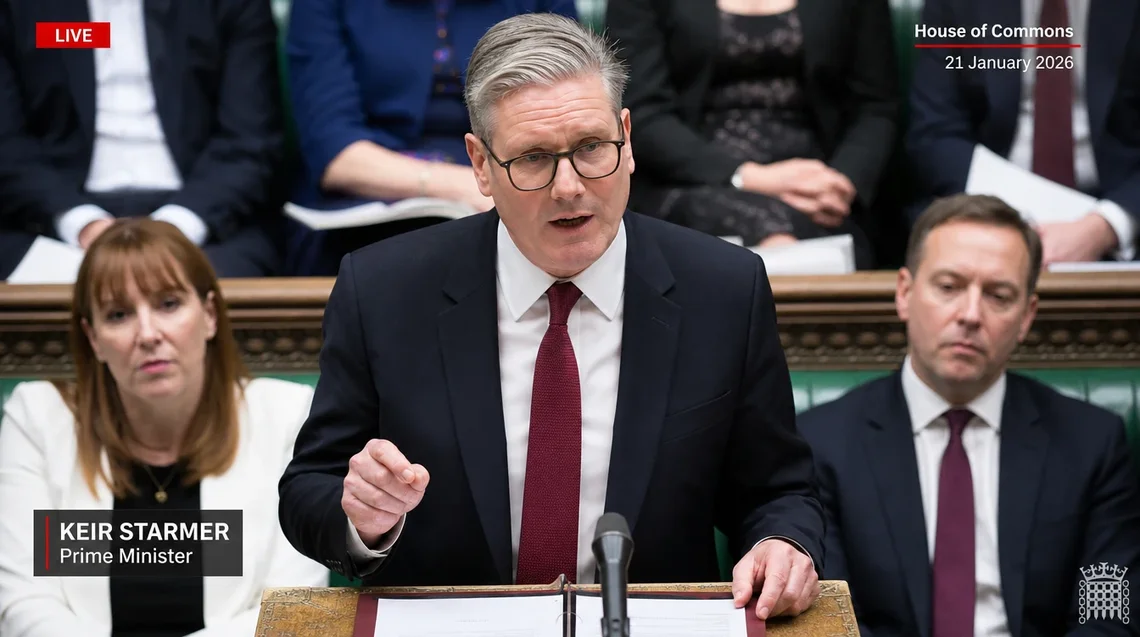
Sir Keir Starmer's government is pressing ahead with sweeping NHS reform legislation as official figures show health service spending is consuming an ever-larger share of public finances, with the restructuring bill now at the centre of an intensifying Westminster battle over the future of state healthcare in England. The proposals, billed by Downing Street as the most significant reorganisation of the health service in over a decade, have drawn both cross-party fire and cautious support from within Labour's own ranks, exposing the political complexity of governing a health system under sustained financial strain.
The Scale of the Reform Agenda
At its core, the government's NHS reform bill seeks to abolish NHS England as a separate arm's-length body, bringing it under tighter ministerial control, while simultaneously restructuring Integrated Care Boards across England to consolidate commissioning functions and reduce administrative duplication. Health Secretary Wes Streeting has described the move as essential to eliminating what he called a "two-headed" management structure that has long frustrated frontline delivery, according to statements made before parliamentary committees.
Abolition of NHS England
The proposed merger of NHS England back into the Department of Health and Social Care represents a fundamental shift in how the health service is governed. Officials said the change would remove thousands of administrative posts and redirect the associated budget toward patient-facing services. Critics, however, have warned that increasing direct ministerial control over operational NHS decisions risks politicising day-to-day healthcare management in ways that could prove counterproductive. The British Medical Association has raised procedural concerns, though it has stopped short of outright opposition to the legislative framework.
Integrated Care Board Restructuring
Alongside the structural changes at the top, the bill proposes a significant reduction in the number of Integrated Care Boards, the bodies responsible for planning and commissioning NHS services across defined geographic areas. Ministers argue that consolidation will produce efficiencies and clearer accountability. Health policy analysts have noted, however, that previous NHS reorganisations have consistently underestimated transition costs and disruption to existing service contracts, a concern reflected in evidence submitted to the Health and Social Care Select Committee (Source: House of Commons Health and Social Care Committee).
Related Articles
For further background on the development of these proposals, see our earlier coverage of how Starmer unveiled his major NHS reform plan amid the ongoing funding row.
The Funding Pressure Driving Reform
The legislative push is inseparable from a broader fiscal emergency facing the NHS. NHS England's own published figures show the service ended its most recent financial year with a provider deficit running into billions of pounds, driven by workforce costs, demand pressures in emergency and elective care, and the legacy costs of pandemic-era backlogs. The Office for National Statistics has confirmed that healthcare now accounts for a record proportion of total managed expenditure, placing it alongside debt interest as one of the fastest-growing calls on the Treasury (Source: Office for National Statistics).
Waiting Times and Elective Backlog
NHS England data show the elective care waiting list, while slightly reduced from its peak, remains at historically elevated levels, with millions of patients currently awaiting treatment. Emergency department performance against the four-hour target has deteriorated sharply relative to pre-pandemic benchmarks, according to NHS statistical releases. The government has set out a ten-year plan that includes commitments to meet waiting time standards, but Treasury officials have signalled that additional capital investment beyond current spending review settlements is not guaranteed. Our reporting on Starmer's NHS overhaul facing new pressure on waiting times provides additional context on these operational challenges.
Parliamentary Arithmetic and Political Reaction
The bill passed its second reading in the Commons with a government majority, as expected given Labour's substantial parliamentary position, but the margin of comfort was narrowed by a handful of Labour backbenchers who either abstained or voted against specific clauses. The official Opposition, under Kemi Badenoch, has opposed the restructuring on the grounds that it re-centralises power and is being pursued at the wrong moment given current NHS operational pressures. Liberal Democrat health spokespeople have taken a more nuanced line, supporting some accountability reforms while demanding greater investment guarantees as a condition of co-operation at later parliamentary stages.
Party Positions: Labour supports the bill as essential to eliminating structural inefficiency and aligning NHS governance with direct ministerial accountability, though a minority of backbenchers have registered concerns over pace and consultation. Conservatives oppose the legislation, arguing it represents dangerous centralisation of NHS management at a time of operational fragility and that abolishing NHS England risks destroying institutional knowledge built over years. Lib Dems have adopted a conditional stance, backing elements of governance reform but demanding binding commitments on capital investment and waiting time targets before supporting the bill in its current form at later readings.
Backbench Labour Concern
Several Labour MPs with health policy backgrounds have spoken publicly about unease with the speed of the reforms. A number of members representing constituencies with major teaching hospitals have sought assurances that local clinical influence over commissioning decisions will not be diluted under a more centralised model, officials confirmed in briefings to parliamentary correspondents. The government's response has been to emphasise that the bill contains provisions for statutory consultation with integrated care systems before structural changes take operational effect.
Public and Expert Opinion
Polling conducted by YouGov and Ipsos in recent months consistently shows that NHS performance ranks as the single most important issue for voters in Great Britain, ahead of the cost of living and immigration (Source: YouGov; Source: Ipsos). However, the same surveys suggest public opinion on structural reform is more divided, with a significant proportion of respondents expressing scepticism that reorganisation rather than direct additional investment is the appropriate response to NHS difficulties. The Guardian has reported internal health service analysis suggesting that the transition costs of abolishing NHS England could temporarily offset any efficiency savings in the short term (Source: Guardian).
Think Tank and Clinical Response
The King's Fund and the Nuffield Trust, two of the most closely watched health policy organisations, have each published assessments that broadly welcome the governance ambition while cautioning against underestimating implementation risk. The Royal College of Nursing has said the reform agenda will be judged entirely on whether it translates into improved staffing ratios and working conditions for nurses rather than on its structural architecture. The BBC has reported that NHS chief executives across several major trusts have privately expressed concern about the resource demands that transition management will place on systems already operating under significant operational strain (Source: BBC).
| Metric | Figure | Source |
|---|---|---|
| NHS England provider sector deficit (latest year) | Approx. £1.5bn–£2bn (reported range) | NHS England / ONS |
| Elective waiting list (England) | Approx. 7.4 million pathways | NHS England statistical release |
| Voters citing NHS as top issue | 47% (Great Britain) | YouGov / Ipsos tracking |
| Commons second reading majority | Government majority secured | Hansard, House of Commons |
| Share of managed expenditure: health | Record proportion (current cycle) | Office for National Statistics |
| Public support for structural reform over investment | Minority position in polling | YouGov |
Treasury Tensions and the Spending Review Context
The reform bill is proceeding against a backdrop of acute Treasury pressure. Chancellor Rachel Reeves has declined to commit to NHS funding increases beyond those already announced in the autumn fiscal statement, and departmental settlements across Whitehall are subject to review. Health officials said that the reform programme is partly designed to demonstrate to the Treasury that the NHS can achieve savings from within its existing envelope before making a case for further public investment. That logic has been challenged by opposition health spokespeople and a number of independent economists, who argue that structural reorganisation historically absorbs rather than generates headroom in the short term.
Efficiency Savings Target
Streeting's department has set an efficiency savings target that NHS systems are expected to meet as part of their organisational plans. Integrated care systems have been told that demonstrating credible savings programmes is a prerequisite for any capital project approvals. NHS finance directors have warned in evidence to parliamentary committees that the combination of cost pressures and a simultaneous structural reorganisation creates a risk of management capacity being absorbed by transition work rather than operational improvement (Source: House of Commons Health and Social Care Committee).
For a fuller account of earlier parliamentary debates on the financial dimensions of this legislation, see our coverage of Labour pushing the NHS reform bill amid the funding row and the subsequent analysis of Starmer's pledge for a major NHS overhaul amid the ongoing funding row.
What Comes Next
The bill is expected to move into committee stage in the coming weeks, where detailed scrutiny of individual clauses will provide the most significant test of the government's ability to manage its backbench and to negotiate with crossbench peers who will eventually consider the legislation in the House of Lords. Ministers have indicated they are open to amendments on consultation requirements and on the governance of any successor body to NHS England, though they have been clear that the core principle of re-integrating NHS England into the department is not subject to negotiation. The pace of implementation, once royal assent is secured, remains the most contested question, with clinicians, managers and patient groups each calling for transition timelines that allow services to stabilise rather than face simultaneous structural and operational upheaval.
The political stakes are substantial. Labour's electoral mandate rested in no small part on a promise to fix the NHS, and the government is acutely aware that public patience with reorganisation rhetoric in place of visible service improvement is limited. Whether the reform bill, once enacted, produces the accountability improvements and efficiency gains its architects promise — or whether it consumes political capital and management bandwidth without delivering measurable change — will be among the defining judgements on the Starmer government's first term in office.