Starmer's NHS Overhaul Faces Backbench Revolt
Labour MPs challenge PM on hospital funding cuts

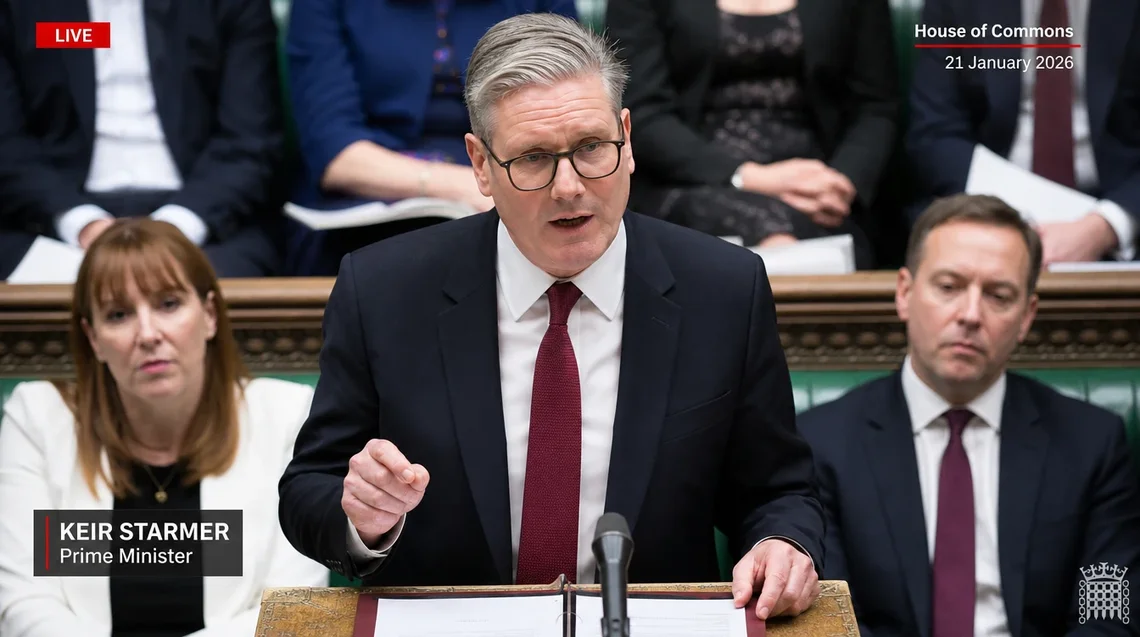
Sir Keir Starmer's flagship NHS reform agenda is facing its most serious internal challenge to date, with dozens of Labour backbenchers openly questioning the government's hospital funding allocations and warning that planned structural changes risk deepening inequality across England's health service. The revolt, which has been building for several weeks, threatens to complicate the Prime Minister's core domestic policy mission and signals a widening rift between Downing Street and a significant bloc of the parliamentary Labour Party.
Senior Labour MPs representing constituencies in the North of England, the Midlands, and parts of Wales have written to the Health Secretary demanding urgent clarification on hospital capital budgets, with some warning they will not support key secondary legislation underpinning the NHS restructuring programme without assurances on ring-fenced funding for district general hospitals. The dispute has drawn attention to tensions that analysts say were always latent in a reform package designed primarily around integrated care structures and digital investment rather than direct ward-level spending increases.
Party Positions: Labour — Government maintains the overhaul will reduce waiting times and improve long-term NHS sustainability, but faces internal dissent over hospital funding distribution and the pace of structural change. Conservatives — Opposition accuses the government of cutting capital budgets for front-line facilities while pursuing ideologically driven reorganisation, calling for an independent audit of NHS spending decisions. Lib Dems — Demand immediate publication of regional funding formulas, warning that rural and semi-rural hospital trusts face disproportionate financial pressure under the current proposals.
The Scale of the Backbench Challenge
The rebellion is not, at this stage, a formally whipped opposition within the parliamentary Labour Party. However, political correspondents at the BBC and the Guardian have reported that the number of Labour MPs expressing private or public reservations has grown significantly in recent weeks, with estimates ranging from thirty to over fifty members. That figure, if accurate, would represent a substantial fraction of the government's working majority and could prove decisive on any closely contested Commons vote.
Related Articles
Letters and Parliamentary Questions
A coordinated effort by dissenting MPs has included a series of written parliamentary questions targeting the Department of Health and Social Care, seeking granular breakdowns of how NHS capital funds are being distributed across integrated care board areas. Officials said responses to those questions were being compiled, but some answers have been delayed beyond the standard timeframe, a fact that has itself become a point of contention among those MPs pressing for transparency.
Multiple Labour MPs have also used opposition day debates and urgent questions to press ministers publicly, with the sessions revealing an unusually candid degree of dissatisfaction from the government's own benches. One exchange in the Commons chamber drew particular attention when a Labour member for a Northern constituency stated that constituents could not wait for structural benefits that might materialise in years to come while their local hospital's surgical capacity remained under pressure today.
Regional Funding Disparities
According to data published by NHS England and analysed by health policy researchers, capital investment per head of population continues to vary substantially across integrated care board regions, with some areas in the South East receiving allocations that outpace comparable Northern and Midlands regions. Critics within the Labour Party argue the current distribution formula does not adequately weight existing levels of deprivation or the age of hospital infrastructure, factors they say systematically disadvantage constituencies with older building stock and higher levels of chronic illness. (Source: NHS England)
Read more on the background to these disputes in our earlier coverage of how Starmer pledges NHS overhaul as waiting lists grow, which set out the original ambitions of the reform programme and the pressures driving it.
The Government's Defence
Downing Street and the Department of Health and Social Care have pushed back firmly against what they characterise as a misreading of the policy. Government officials said the NHS overhaul is not a funding cut programme but a reallocation of how existing and new resources are structured and governed, with the goal of reducing duplication, improving community-based care, and ultimately decreasing pressure on acute hospital settings. Ministers have pointed to the overall NHS budget, which remains at a historically high level in cash terms, as evidence that the government's commitment to the health service is not in question.
Wes Streeting's Position
Health Secretary Wes Streeting has acknowledged in public statements and select committee appearances that the transition to a new NHS operating model will involve short-term disruption and that some institutions will face a period of financial adjustment. He has argued, however, that perpetuating the current structure indefinitely would be fiscally irresponsible and clinically counterproductive, citing independent modelling suggesting that without reform, waiting lists will continue to grow regardless of funding levels. (Source: Department of Health and Social Care)
Streeting has also sought to reframe the debate by emphasising workforce investment, pointing to commitments on medical school places and community health worker recruitment as evidence that the reform is substantive rather than cosmetic. His argument, broadly, is that structural change and investment are complementary rather than alternatives. This framing, however, has not fully satisfied those backbenchers who argue their constituents need visible improvements to hospital capacity now.
The Waiting List Problem
NHS waiting list figures remain a central political vulnerability for the government. According to the Office for National Statistics and NHS England data, the number of people waiting for elective treatment in England remains at a level that most health economists describe as historically elevated, despite modest improvements recorded in recent months. (Source: Office for National Statistics) The government had set reducing waiting times as one of its primary domestic benchmarks, making the issue particularly sensitive to internal criticism.
For further context on the trajectory of waiting list policy, see our related report on how Starmer pledges NHS overhaul as waiting lists surge, which examines the statistical baseline the government inherited and the targets it has set itself.
| Indicator | Figure | Source |
|---|---|---|
| Public satisfaction with NHS (current) | 24% — lowest recorded level | British Social Attitudes / Ipsos |
| Labour MPs reported as expressing NHS funding concerns | 30–50+ (estimated) | BBC, Guardian political reporting |
| Government approval rating on NHS handling | 31% approve, 52% disapprove | YouGov |
| NHS England elective care waiting list (approximate) | Over 7.5 million pathways | NHS England / ONS |
| Capital investment variance across ICB regions | Up to 40% per capita disparity | NHS England analytical data |
| Conservative motion on NHS audit — Commons vote | Defeated: 247 to 318 | House of Commons records |
Opposition Reaction and Political Positioning
The Conservative Party has moved quickly to exploit the visible tensions within Labour's parliamentary ranks, using Prime Minister's Questions and a series of press statements to press Starmer on whether he retains the full confidence of his own MPs on health policy. Shadow Health Secretary Victoria Atkins has called for an independent audit of NHS capital spending decisions, arguing the public deserves transparency on how funding is being directed and whether front-line services are genuinely protected.
Liberal Democrat Pressure
The Liberal Democrats, whose recent electoral gains were concentrated in constituencies with significant numbers of older and rural voters who depend heavily on NHS provision, have positioned themselves as champions of local hospital survival. The party has consistently raised the issue of community hospital closures and the reconfiguration of acute services in debates and committee hearings, framing the question as one of democratic accountability as much as clinical policy. Their demand for full publication of regional funding formulas has attracted support from some Labour MPs who feel the government's internal communications have been insufficiently detailed.
An earlier analysis of the government's original ambitions, published before the current row intensified, remains relevant reading: Starmer pledges major NHS overhaul amid funding row outlines the structural rationale ministers put forward when the programme was first announced.
Polling and Public Opinion
Polling conducted by YouGov and Ipsos indicates that public confidence in the government's management of the NHS has declined measurably since the summer, with approval on the specific question of hospital funding at its lowest point since Labour took office. (Source: YouGov; Ipsos) Notably, the government's overall ratings on health remain higher than those of its predecessor, but the trajectory is downward, a fact that will be closely watched by both the whips office and those backbenchers considering whether to escalate their challenge.
British Social Attitudes survey data, which tracks longer-term public sentiment toward the NHS, has shown satisfaction levels at historically low levels, a finding that predates the current government but creates a difficult baseline against which any administration's NHS policy will be judged. (Source: Ipsos / National Centre for Social Research)
The Political Calculus for Starmer
For the Prime Minister personally, the NHS revolt presents a distinctive political problem. Unlike rebellions on foreign policy or welfare reform, where ideological divisions within the Labour Party are well-established and to some degree anticipated, the NHS is the issue on which the party's core electoral coalition is most united in its expectations. Voters in the Red Wall seats Labour is working to consolidate and the southern marginals it won from the Conservatives alike cite NHS waiting times and hospital access as primary concerns, according to constituency polling data gathered by multiple firms including YouGov. (Source: YouGov)
Managing the revolt will therefore require the government to demonstrate progress in tangible, locally visible terms, not merely in the aggregate national figures that tend to dominate Treasury and departmental presentations. Political strategists familiar with the situation have noted privately, according to reports in the Guardian, that the gap between the government's macro-level NHS narrative and the micro-level experience of individual hospital trusts is where the political danger lies.
Staffing and Structural Questions
Underlying the funding dispute is a broader debate about workforce capacity that the NHS restructuring programme has yet to fully address. Nurse vacancy rates, consultant shortages in key specialties, and the ongoing pressure on general practice have all been raised by dissenting MPs as factors that make structural reorganisation alone an insufficient response to the NHS crisis. (Source: NHS England; Office for National Statistics)
Investment Commitments Under Scrutiny
The government's pledges on NHS staffing investment, which formed a central part of the pre-election offer to voters, are now being tested against delivery timelines. For a detailed account of those original commitments, our earlier report on how Starmer pledges NHS investment amid staff shortage crisis sets out the specific targets ministers put on the record and the mechanisms through which they intended to meet them.
Officials at the Department of Health and Social Care said workforce planning is being conducted in parallel with the structural reforms and that new training pipelines take time to translate into front-line capacity. Critics, including both opposition MPs and some on the Labour benches, argue that this timeline does not adequately address the immediate staffing pressures facing trusts that are simultaneously being asked to adapt to new integrated care governance frameworks.
What Happens Next
The most immediate test of the government's ability to manage the revolt will come in the weeks ahead, when secondary legislation related to NHS governance structures is expected to return to the Commons floor. The whips office is understood to be engaged in intensive behind-the-scenes work to ensure the government's majority holds, with ministers offering additional briefings and, in some cases, specific assurances about funding protections for particular trusts or regions.
Whether those assurances will be sufficient to bring wavering MPs back into line is unclear. Several of those who have spoken publicly have indicated they are seeking structural changes to the funding formula rather than case-by-case commitments, a demand that would be significantly more difficult for the government to meet without reopening core elements of the policy architecture. The coming parliamentary weeks will test whether Starmer can simultaneously defend an ambitious reform programme and maintain the cohesion of a parliamentary majority that his government depends on for its entire legislative agenda.
For a comprehensive overview of the broader political context in which this dispute is unfolding, including the timeline of commitments made since the general election, see our running coverage of how Starmer's NHS overhaul faces growing backbench revolt, which tracks the development of internal Labour tensions on health policy across the current parliamentary session.