Labour targets 'broken' NHS with radical reform plan
Starmer government unveils funding overhaul

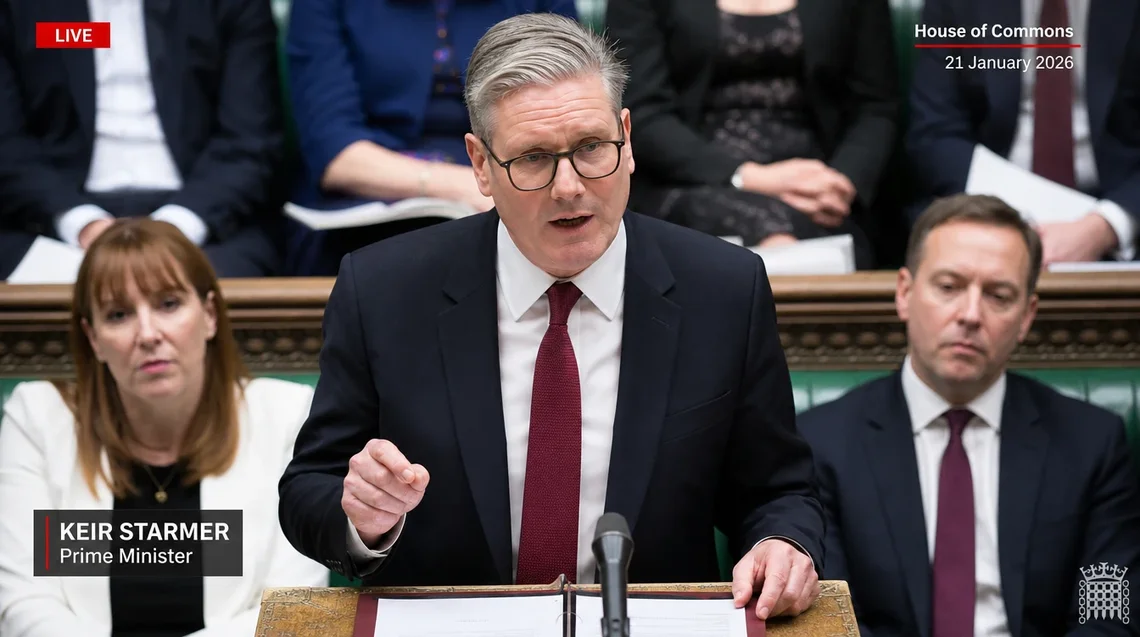
Sir Keir Starmer's government has unveiled what ministers are describing as the most ambitious restructuring of the National Health Service in a generation, promising an injection of new funding, sweeping structural reform and a fundamental shift away from hospital-centred care toward community and preventative services. The plan, announced in a Commons statement by Health Secretary Wes Streeting, sets out proposals that Labour says will address what it calls a "broken" system inherited from fourteen years of Conservative government.
The announcement comes against a backdrop of record NHS waiting lists, with Office for National Statistics data showing that more than 7.5 million patients are currently on waiting lists in England — a figure that has placed mounting pressure on ministers since Labour took office. Speaking from the despatch box, Streeting said the status quo was "not an option" and that the government intended to "rewire the NHS from top to bottom."
The Core of the Reform Package
At the heart of the government's proposals is a pledge to redirect a significant portion of NHS capital spending away from acute hospital trusts and toward primary care networks, GP surgeries and mental health services. Officials said the reform blueprint draws heavily on the recommendations of Lord Ara Darzi's independent investigation into NHS performance, which found systemic failures in patient flow, workforce planning and productivity across NHS England.
Funding Allocation and the Shift to Prevention
Under the proposals, ministers intend to ringfence new settlement funding for preventative programmes targeting cardiovascular disease, diabetes and mental health — three conditions that account for a disproportionate share of emergency hospital admissions, according to NHS England data. Officials said a new productivity framework would require trusts to demonstrate measurable improvements in patient throughput before qualifying for capital grants.
Related Articles
The government has also indicated it will consult on creating ten-year NHS workforce plans, binding future spending reviews to staffing targets rather than leaving recruitment decisions to individual trusts. Health economists have broadly welcomed the principle, though some have warned that without Treasury guarantees extending beyond a single parliament, the commitment risks being underfunded.
For further context on how the current reform agenda developed, see our earlier reporting on how Starmer pledges NHS overhaul as waiting lists grow, which traced the political origins of this programme back to Labour's general election manifesto commitments.
Political Reception at Westminster
The Commons announcement drew a predictably combative response from the opposition benches. Conservative health spokesman Edward Argar accused the government of offering "warm words and reorganisation theatre" while failing to produce concrete timelines or independently verified costings for its proposals. The shadow cabinet has consistently argued that structural reform without sustained productivity gains will not reduce waiting lists within this parliament.
Backbench Tensions Within Labour
Not all dissent has come from the opposition. A growing number of Labour backbenchers have raised concerns about the pace and scope of the reforms, particularly provisions that critics say could pave the way for a greater role for independent sector providers in delivering NHS-funded care. Those tensions have surfaced repeatedly during parliamentary scrutiny of associated legislation, as detailed in our coverage of Starmer's NHS overhaul faces growing backbench revolt.
The concerns centre primarily on clauses that would grant NHS England new commissioning flexibilities, which some on the left of the party interpret as a mechanism for expanding private sector contracting. Ministers have repeatedly denied that the reforms represent privatisation, arguing that the independent sector has been used by every government since 2000 to reduce surgical backlogs and that the proposals do not alter the fundamental principle of care free at the point of use.
Liberal Democrat Response
The Liberal Democrats have staked out a distinctive position, broadly supporting the structural direction of reform while pressing the government on social care integration. Health spokesman Helen Morgan told the BBC that her party would support any measure that meaningfully reduced waiting times but that the plan risked "ignoring the care crisis on its doorstep" by not addressing the link between delayed hospital discharges and inadequate community care capacity. (Source: BBC)
Party Positions: Labour backs the reform package as a necessary structural overhaul, framing it as the delivery of a pre-election mandate to fix a broken NHS and reduce record waiting lists through community-focused, prevention-led investment. Conservatives oppose the plan, arguing it offers reorganisation without credible productivity commitments or verified costings, and risks repeating the structural disruption of past NHS reforms. Lib Dems offer conditional support for waiting list reduction measures but have called on ministers to address social care integration and delayed hospital discharges as a prerequisite for any reform programme to succeed.
Public Opinion and the Polling Picture
Public attitudes toward NHS reform remain complex and, on some questions, internally contradictory. YouGov polling conducted recently found that around 70 percent of respondents agreed the NHS needed "major reform," yet a majority simultaneously opposed any expansion of private sector involvement in the delivery of NHS services. (Source: YouGov)
Separate Ipsos research has found that satisfaction with GP services — a key target of the government's community care pivot — has fallen to its lowest recorded level, with fewer than half of respondents describing their experience of accessing a GP as "good" or "very good." Ministers have cited that data directly in making the case for increased primary care investment. (Source: Ipsos)
| Metric | Figure | Source |
|---|---|---|
| NHS England waiting list (current) | 7.5 million patients | Office for National Statistics |
| Public support for "major NHS reform" | ~70% | YouGov |
| GP satisfaction rating ("good" or "very good") | Below 50% | Ipsos |
| Share of NHS budget spent on acute hospital care | Approx. 60% | NHS England / HM Treasury |
| Labour Commons majority (current parliament) | 174 seats | House of Commons Library |
The Legislative Pathway
Ministers are expected to introduce primary legislation later this parliamentary session to give statutory footing to the new commissioning framework, the workforce planning requirements and the proposed restructuring of NHS England's regional tier. The bill will be accompanied by secondary legislation on procurement rules and a new regulatory framework for integrated care boards.
Parliamentary Timeline and Key Votes
Government whips are reported to be confident of passing the core legislation comfortably given Labour's substantial Commons majority, but the Lords is expected to pose a stiffer challenge, particularly on clauses relating to independent sector commissioning and accountability mechanisms for integrated care boards. Crossbench peers with NHS backgrounds have already signalled they intend to table amendments seeking stronger transparency requirements.
The legislative detail builds on previous funding disputes that have shaped the current bill's drafting, and readers seeking a fuller account of that process should consult our earlier coverage of Labour pushes NHS reform bill amid funding row, which set out the Treasury negotiations that preceded the current announcement, as well as the parallel analysis in Starmer pledges major NHS overhaul amid funding row.
Expert and Sector Reaction
Reaction from NHS trusts, royal colleges and patient groups has been cautiously positive on the strategic direction but sceptical about delivery. NHS Providers, which represents hospital and ambulance trusts in England, said it welcomed the commitment to long-term workforce planning but warned that the system could not absorb further structural reorganisation while simultaneously managing the current operational pressures of a high-demand winter period.
The British Medical Association said GPs would need to see concrete capital investment in surgery infrastructure before they could take ministerial pledges about primary care expansion seriously, noting that several previous governments had made similar commitments without producing the buildings, staff or equipment required to fulfil them. The Royal College of Nursing welcomed the mental health funding ring-fence but called for explicit staffing guarantees to accompany it.
The Guardian reported that senior NHS managers have privately expressed concern that the reform timetable is politically driven and may compress implementation periods that would normally require several years of system preparation. (Source: Guardian)
Broader Context: The Darzi Legacy and Structural Debate
The government has consistently framed its reforms as the implementation of findings from Lord Darzi's review, commissioned shortly after Labour took office and published earlier this parliamentary term. That report, widely seen as providing political cover for difficult decisions about hospital consolidation and service reconfiguration, concluded that the NHS had suffered from chronic underinvestment in primary care infrastructure, a mismatch between workforce training pipelines and service demand, and a failure to embed digital infrastructure at the speed achieved by comparable health systems in Europe and Australasia.
Whether the current reform package translates the Darzi diagnosis into durable improvement will depend significantly on factors outside the government's direct control, including the pace of workforce training, the capacity of local authorities to absorb expanded public health responsibilities, and the willingness of Treasury to honour multi-year spending commitments in subsequent fiscal events. The political stakes are considerable: NHS performance is consistently ranked by polling as among the top two or three issues determining voting intention in England, and ministers are acutely aware that failure to demonstrate progress on waiting lists before the next general election would represent a significant electoral liability.
As parliamentary scrutiny of the reform legislation intensifies in the weeks ahead, the government will face sustained pressure from all sides to turn an ambitious structural blueprint into verifiable outcomes — and to do so at a pace that the NHS, stretched as it currently is, may find difficult to sustain.