Labour Pledges Major NHS Funding Boost Amid Reform Push
Starmer government outlines five-year healthcare plan

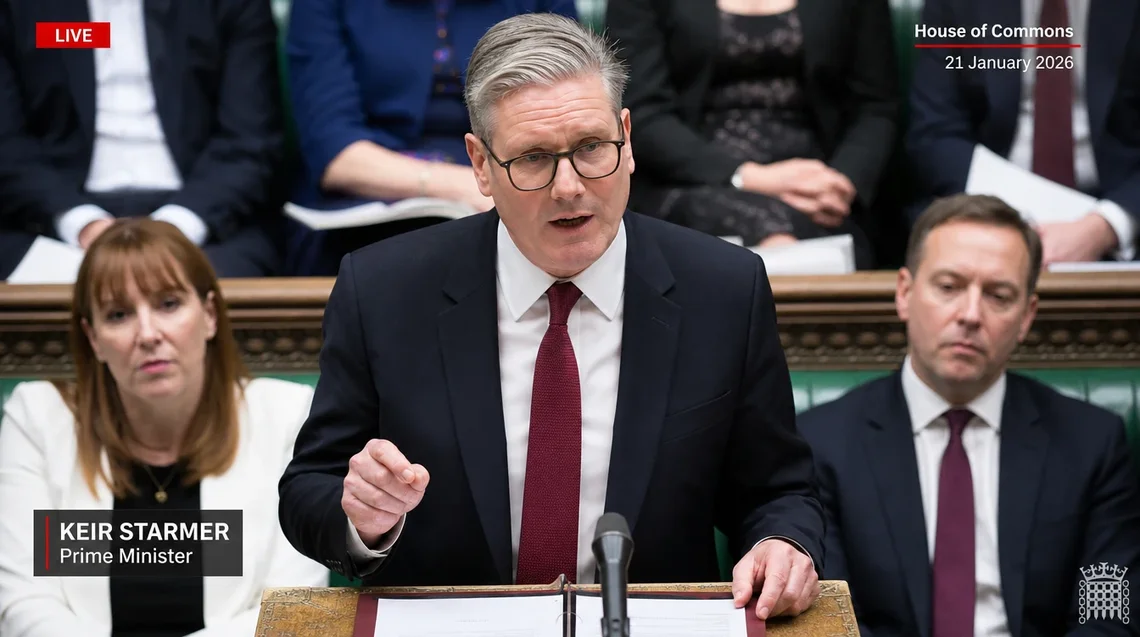
The Starmer government has announced a multi-billion-pound funding commitment for the National Health Service, outlining a sweeping five-year healthcare plan that ministers say will cut waiting times, expand workforce capacity, and restructure how primary and secondary care services are delivered across England. The announcement, made by Health Secretary Wes Streeting, represents the most significant NHS spending pledge since Labour returned to government and sets the stage for a prolonged political battle over reform priorities and fiscal responsibility.
According to officials, the plan earmarks an additional £22 billion in real-terms NHS spending over the coming five years, with a significant portion directed toward reducing the record backlog of elective procedures that has accumulated in the wake of successive crises facing the health service. The government has framed the commitment as both a moral obligation and an economic necessity, arguing that a healthier workforce underpins broader growth ambitions.
Party Positions: Labour has pledged £22 billion in additional NHS funding over five years, prioritising waiting list reduction, workforce expansion, and digital infrastructure upgrades, while pursuing structural reform through integrated care boards. Conservatives have criticised the plan as fiscally reckless, arguing that increased spending without root-and-branch reform will not fix systemic inefficiencies, and have called for greater private-sector involvement in NHS delivery. Lib Dems have broadly welcomed additional investment but have pressed the government for stronger commitments on mental health provision, rural GP access, and social care integration, warning that the NHS cannot be fixed in isolation from a crumbling care sector.
The Scale of the Funding Commitment
The five-year plan represents a structural shift in how the Treasury and Department of Health intend to approach NHS financing, moving away from year-on-year emergency top-ups toward what officials describe as a settled funding settlement designed to allow long-term workforce planning and capital investment.
Related Articles
Breaking Down the Numbers
Of the total commitment, approximately £8.1 billion is designated for tackling the elective care backlog directly, funding additional surgical capacity, extended theatre hours, and patient transport infrastructure. A further £5.3 billion has been allocated to workforce expansion, including the training of additional nurses, consultants, and paramedics, officials confirmed. Digital transformation — including the long-delayed rollout of a unified NHS patient record system — accounts for £3.7 billion of the total envelope.
| Funding Area | Allocation (£bn) | Key Objective |
|---|---|---|
| Elective Backlog Reduction | 8.1 | Cut waiting lists by 40% within five years |
| Workforce Expansion | 5.3 | Train 10,000 additional clinical staff |
| Digital Infrastructure | 3.7 | Unified patient records, AI diagnostics |
| Mental Health Services | 2.4 | Reduce CAMHS and adult therapy waiting times |
| Primary Care & GP Access | 1.9 | Guarantee same-week GP appointments |
| Capital & Estate Maintenance | 0.6 | Address maintenance backlog in NHS estate |
(Source: Department of Health and Social Care)
Reaction from NHS Leadership
NHS England's leadership has cautiously welcomed the announcement, with senior figures indicating the funding envelope is sufficient to begin meaningful structural change provided implementation is managed carefully. However, health policy analysts quoted by the BBC noted that previous large-scale NHS funding announcements have frequently been absorbed by inflationary pressures on staffing costs, agency spending, and drug procurement, warning that headline figures do not always translate into frontline improvement at the pace governments promise.
Reform Agenda: More Than Money
Ministers have been at pains to stress that the announcement is not simply a cash injection but forms part of a broader reform architecture, and health correspondents covering Westminster have noted that internal discussions within Downing Street have centred on linking funding streams to measurable productivity benchmarks — a politically sensitive proposition given trade union sensitivities within the NHS workforce.
Integrated Care and Structural Change
A central plank of the reform agenda involves strengthening Integrated Care Boards, which were established under the previous government's Health and Care Act. Labour intends to give ICBs greater commissioning autonomy while simultaneously holding them to tighter performance metrics. Critics from within the NHS have questioned whether this dual mandate — more freedom alongside stricter accountability — is coherent in practice. According to analysis cited by the Guardian, previous attempts to devolve NHS decision-making have often stalled when central government intervened during periods of financial pressure.
The government has also signalled an intention to expand the role of community pharmacies and paramedic practitioners in delivering primary care, reducing pressure on GPs and accident and emergency departments. Officials indicated that a formal consultation on expanding prescribing rights for pharmacists will be launched in the coming months.
For deeper context on how the current proposals connect to ongoing legislative debates, see the earlier analysis of how Labour pushes NHS reform bill amid funding row, which examined the parliamentary obstacles facing the government's broader health legislation agenda.
The Political Battleground
The announcement has immediately become a flashpoint in the Commons, with the Conservative opposition mounting a sustained challenge to the government's fiscal arithmetic and the credibility of its delivery timetable.
Conservative Critique
Shadow Health Secretary Victoria Atkins argued in the Commons that Labour's plan prioritises headline spending figures over the structural changes required to modernise the NHS. The Conservatives have pointed to what they describe as a failure to address what they term the "productivity gap" — the argument that NHS output per pound spent remains significantly below pre-pandemic levels. Data from the Office for National Statistics show that NHS productivity, while recovering, remains below the levels recorded before the pandemic, lending some statistical weight to opposition arguments even as the government disputes the framing. (Source: Office for National Statistics)
The debate also touches on a longer-running argument about private sector involvement in NHS delivery. Conservative frontbenchers have argued that greater use of independent sector treatment centres could accelerate backlog reduction, a position Labour has consistently rejected as ideologically driven privatisation.
Liberal Democrat Pressure
The Liberal Democrats, who made significant electoral gains in suburban and rural constituencies, have focused their response on what they describe as the government's inadequate attention to social care reform. Party leader Sir Ed Davey has argued that NHS reform without a parallel social care settlement is self-defeating, as delayed discharges — driven by a lack of available care home and domiciliary care places — continue to consume acute hospital capacity. Health spokeswoman Helen Morgan has pressed ministers in committee for specific commitments on mental health and CAMHS waiting times, areas that the five-year plan does address in funding terms but which campaigners say remain chronically underfunded relative to need.
Earlier reporting tracked the political context surrounding these pressures in detail — the piece examining how Labour targets NHS waiting lists in major reform push remains essential reading for those following the evolution of the government's healthcare position since taking office.
Public Opinion and the Political Stakes
Polling data consistently show that the NHS remains the single issue on which the public most closely judges the performance of a Labour government, and internal party strategists are acutely aware that the health service represents both their greatest political asset and their most significant vulnerability.
According to YouGov polling, currently around 68 percent of respondents identify NHS waiting times as their primary concern when evaluating government performance, ahead of cost of living at 61 percent and immigration at 47 percent. Separate Ipsos data show that while Labour retains a significant lead over the Conservatives on perceived NHS competence, that lead has narrowed compared with the immediate post-election period, suggesting the public is growing impatient for visible progress. (Source: YouGov; Source: Ipsos)
| Issue Priority | % Citing as Top Concern (YouGov) | Change vs. Six Months Prior |
|---|---|---|
| NHS Waiting Times | 68% | +4pp |
| Cost of Living | 61% | -2pp |
| Immigration | 47% | +1pp |
| Housing | 39% | +3pp |
| Climate and Energy | 28% | -1pp |
(Source: YouGov)
The Trust Deficit
Perhaps the most significant political challenge facing the government is not opposition criticism but public scepticism born of repeated disappointment. Successive administrations have announced major NHS funding pledges that have failed to produce the patient experience improvements voters were promised. Health policy researchers quoted by the BBC have warned that this accumulated trust deficit means the government must demonstrate tangible, visible change — shorter waiting times, better GP access, faster diagnostic results — within a politically relevant timeframe, not merely at the end of a five-year planning horizon. (Source: BBC)
Workforce: The Central Challenge
Analysts across the political spectrum broadly agree that the long-term sustainability of the NHS depends less on any individual funding announcement than on whether the service can recruit, train, and — critically — retain the clinical workforce it requires. The government's plan allocates £5.3 billion toward workforce expansion, but health economists have cautioned that training pipelines mean many of those investments will not bear fruit for several years.
Nursing and Allied Health Professionals
Current vacancy rates across NHS trusts in England remain elevated, with data from NHS England indicating that nursing vacancies, while declining from peak levels, continue to represent a significant operational constraint on elective capacity. The five-year plan commits to training an additional 10,000 clinical staff, a figure some union officials have described as modest relative to the scale of the workforce gap. Ministers have pushed back, arguing that retention initiatives, improved working conditions, and investment in overseas recruitment pipelines will compound the impact of the domestic training commitment.
The staffing dimension is explored extensively in coverage of Labour pledges new NHS funding push amid staff shortages, which detailed the structural workforce pressures that predate the current government and will define the limits of what any funding settlement alone can achieve.
What Comes Next
The five-year plan will require primary legislation in several areas, including measures to reform NHS procurement rules, adjust the regulatory framework for ICBs, and extend prescribing rights. That legislative programme will pass through a Commons where Labour holds a substantial majority, but the Lords remains a potential site of significant amendment. The government is also expected to face internal pressure from backbench MPs in constituencies with the longest waiting lists, who will demand evidence of local improvement rather than national aggregate progress.
The government's capacity to manage that political pressure while delivering on its reform commitments will be tested in the months ahead. As covered in detail in the reporting on how Starmer pledges major NHS overhaul amid funding row, the Prime Minister has staked significant personal credibility on the health reform agenda, making its success or failure a defining test of the government's first term.
For those tracking how the parliamentary process around NHS legislation is unfolding, the detailed examination of how Labour pushes NHS reform bill amid funding debate provides critical context on the legislative obstacles and coalition-building challenges ministers face in converting policy ambition into statute.
The coming months will determine whether the government's five-year plan marks a genuine turning point in the NHS's trajectory or becomes another entry in the long register of healthcare reform pledges that fell short of their ambitions. For patients waiting for treatment, the answer will be measured not in parliamentary statements but in letters offering appointments that, for many, have been deferred far too long.