Starmer pledges major NHS overhaul amid funding row
Labour government announces sweeping healthcare reforms

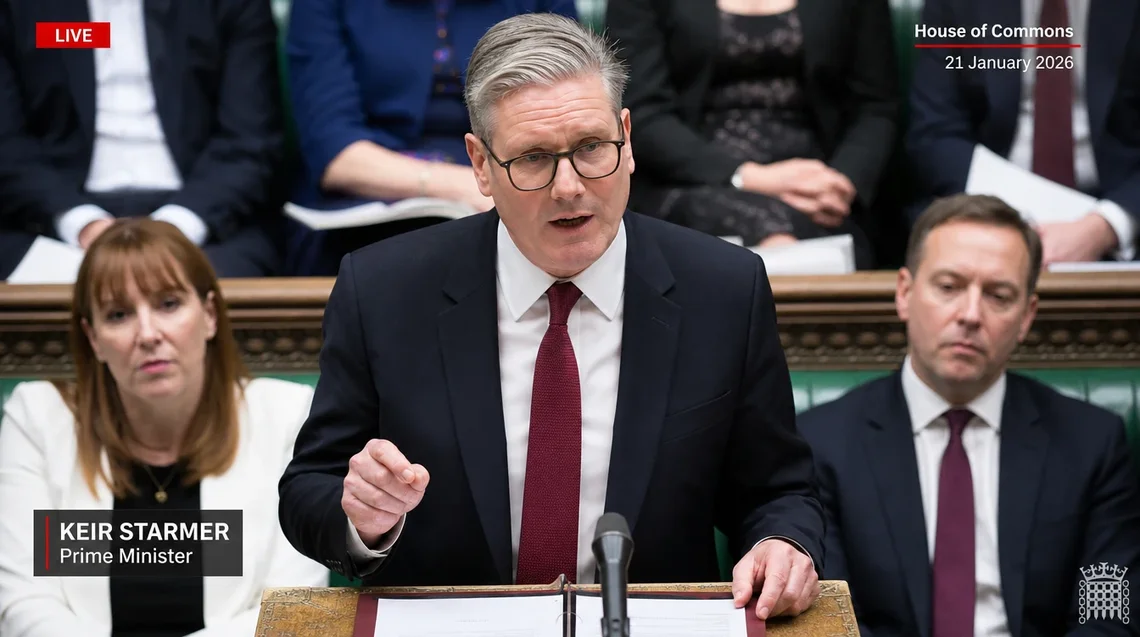
Sir Keir Starmer has announced a sweeping overhaul of the National Health Service, committing the Labour government to what ministers describe as the most significant structural reform of the health service in a generation, as a bitter dispute over NHS funding enters a critical new phase. The announcement, made in a Downing Street address, comes as official data show NHS waiting lists in England remain stubbornly high, with millions of patients awaiting treatment and hospital trusts warning that existing budgets are insufficient to meet rising demand.
Party Positions: Labour says the NHS overhaul is essential to reduce waiting times and modernise care delivery, with additional investment directed toward community and preventive health services. Conservatives argue the reforms lack credible costings and accuse the government of presiding over a funding crisis of its own making, calling for greater private sector involvement. Lib Dems broadly welcome structural reform but demand stronger commitments on rural healthcare provision and mental health services, warning that underfunding in those areas remains acute.
The Shape of the Reform Package
The government's reform blueprint, which officials said will be legislated through a forthcoming NHS Reform Bill, centres on three principal pillars: shifting care delivery from acute hospitals into community settings, a major expansion of digital health infrastructure, and a reorganisation of NHS England's administrative structure to reduce bureaucracy. Health Secretary Wes Streeting outlined the proposals in parliament, arguing that the current model was "built for the 1940s, not the 2020s," according to reports by the BBC.
Community-First Care Model
Under the proposed community-first model, a significant proportion of outpatient appointments and routine procedures currently handled in large hospital trusts would be transferred to newly resourced primary care hubs. Officials said the intent is to relieve pressure on accident and emergency departments while reducing the per-patient cost of routine care. The Department of Health and Social Care has projected that the shift could, over time, reduce unnecessary hospital admissions by several hundred thousand annually, though independent analysts have cautioned that realising those savings depends heavily on adequate staffing and sustained capital investment in community facilities.
Related Articles
Digital Infrastructure Investment
A parallel strand of the package involves a substantial injection of funding into NHS digital systems, including patient record integration, appointment booking infrastructure, and AI-assisted diagnostic tools. Officials said that fragmented and outdated IT systems have long been identified as a drag on NHS efficiency, with clinicians in some trusts still reliant on paper-based processes. The government has not yet published a full breakdown of the digital investment envelope, a detail that opposition health spokespeople were quick to highlight in immediate post-announcement scrutiny.
For further background on the trajectory of these proposals, see Labour pushes NHS Reform Bill amid funding row, which tracks the legislative process surrounding the government's healthcare agenda.
The Funding Dispute at the Centre of the Debate
Underpinning the reform announcement is an unresolved and increasingly acrimonious dispute over the level of funding required to deliver the government's stated objectives. NHS trust leaders, speaking through NHS Providers, have argued publicly that the existing settlement does not cover inflationary cost pressures, let alone the investment needed to expand community services. The government maintains that its NHS spending commitments, which include a multi-billion-pound uplift announced in the autumn budget, represent the largest sustained real-terms increase in NHS funding since the early part of the century.
Trust Finances Under Strain
Data published by NHS England show that a significant number of hospital trusts are currently operating in deficit, with some reporting gaps between income and expenditure running into tens of millions of pounds. NHS Providers has warned that without additional emergency funding, some trusts face difficult decisions around staffing and service provision before the end of the financial year. The Guardian reported that internal Treasury correspondence obtained under freedom of information legislation suggests officials privately acknowledge the funding gap is larger than publicly stated figures indicate, though the government disputes that characterisation.
The pressure on NHS finances is not confined to acute hospitals. As NHS cancer treatment delays worsen amid funding squeeze details, oncology services have been among the worst affected, with waiting times for cancer treatment breaching NHS constitutional standards across multiple trust areas.
Political Reaction and Parliamentary Arithmetic
The reform announcement has drawn sharply divergent responses across the House of Commons. Shadow Health Secretary Edward Argar accused the government of using structural reorganisation as a distraction from immediate pressures, arguing that patients waiting months for routine procedures needed funding answers, not organisational charts. He also pointed to what he described as inconsistencies between the government's stated objectives and the resource envelope allocated to achieve them.
Lib Dem health spokesperson Helen Morgan broadly welcomed the direction of reform while pressing ministers on concrete timelines and measurable outcomes, and specifically called for mental health provision to be given equal standing within the reform framework. Several Labour backbenchers, meanwhile, used Commons questions to press the Health Secretary on whether the reform package would address the specific concerns of NHS workers regarding staffing ratios and pay.
Parliamentary Votes and Legislative Timetable
| Legislative Stage | Expected Timeline | Key Figures / Votes | Status |
|---|---|---|---|
| NHS Reform Bill – First Reading | This parliamentary session | Government majority: approx. 165 seats | Pending introduction |
| NHS England Reorganisation Order | Following Second Reading | Statutory instrument required | Drafting phase |
| Digital Infrastructure Spending Approval | Supplementary estimates round | Estimated envelope: not yet published | Under Treasury review |
| Community Health Hub Rollout | Phased over three years | Pilot sites: 20 confirmed | Pilot phase active |
| Previous NHS Waiting List Vote (Commons) | Last parliamentary session | Ayes: 312 — Noes: 189 | Passed |
(Source: House of Commons Library, Department of Health and Social Care)
Public Opinion and Polling
Public confidence in the NHS, while still significant relative to other public institutions, has been tracking downward in recent months according to multiple polling organisations. YouGov survey data show that satisfaction with NHS services has fallen to its lowest recorded level in decades, with dissatisfaction particularly pronounced among respondents who have experienced long waits for treatment or have struggled to access a GP appointment. Separately, Ipsos polling indicates that the NHS remains the single issue most likely to determine voting intention among a key demographic of swing voters in English constituencies outside London.
Trust in Government Health Policy
The same Ipsos polling data show that while a plurality of respondents support the broad principle of NHS reform, a majority express scepticism about whether the government has adequate resources and a credible plan to deliver the changes it has announced. According to Office for National Statistics household survey data, approximately one in five adults in England reported experiencing difficulty accessing NHS services recently, a figure that ministers have cited as evidence of the urgency driving the reform programme. (Source: Office for National Statistics, YouGov, Ipsos)
For a detailed statistical examination of waiting list trends that informed the government's decision to act, see Starmer pledges NHS overhaul as waiting lists grow.
Wider Fiscal Context
The NHS reform announcement does not exist in fiscal isolation. The government is simultaneously managing competing demands on public expenditure across multiple departments, from education to infrastructure. The school funding settlement, already under intense scrutiny, has generated parallel political controversy, as UK school funding crisis deepens as deficits hit record documents in detail. Treasury sources have indicated that the Chancellor is resistant to emergency supplementary allocations for the NHS outside the established spending review cycle, a position that places Health Secretary Streeting in a difficult position as trust leaders continue to press for immediate relief.
Competing Spending Priorities
The government's broader capital investment agenda, which includes a major commitment to renewable energy grid infrastructure — covered in UK pledges billions for renewable energy grid overhaul — reflects a strategic choice to invest heavily in long-term economic infrastructure while managing day-to-day public service pressures within existing envelopes. Critics from across the political spectrum have questioned whether those priorities can be sustainably maintained simultaneously, particularly as interest payments on government debt continue to consume a historically elevated share of public spending.
Independent economists at the Institute for Fiscal Studies have noted that even under optimistic assumptions about efficiency savings and productivity gains within the NHS, the funding gap identified by trust leaders is unlikely to close without either additional revenue or explicit decisions to reduce the scope of services currently provided on the health service. The government has explicitly ruled out the latter option, insisting that the NHS will remain a universal, free-at-point-of-use service without a reduction in covered treatments. (Source: BBC)
What Comes Next
The NHS Reform Bill is expected to be introduced to the House of Commons within the current parliamentary session, with ministers anticipating a Committee Stage scrutiny process that is likely to prove contentious given the scale of the proposed changes. NHS trade unions, including the Royal College of Nursing and the British Medical Association, have indicated they will seek early engagement with ministers on the detail of the legislation, particularly around workforce planning provisions and the implications of community service expansion for existing staffing agreements.
Accountability for delivery is expected to rest with a newly constituted NHS Performance and Accountability Board, which officials said would include independent clinical voices alongside departmental representation. Whether that governance structure will prove sufficient to satisfy critics who argue the reform programme lacks rigorous oversight mechanisms remains an open question as the legislation moves toward its first parliamentary test.
The coming weeks are likely to prove pivotal. With NHS trust deficits accumulating, waiting lists politically toxic, and the legislative timetable now set, the government faces the challenge of demonstrating to both parliament and the public that a reform programme of this ambition can be delivered within the fiscal constraints it has chosen to accept — a test that will define a substantial portion of this parliament's domestic legacy.