Starmer's NHS plan faces funding shortfall criticism
Labour seeks to bridge £22bn gap in health service overhaul

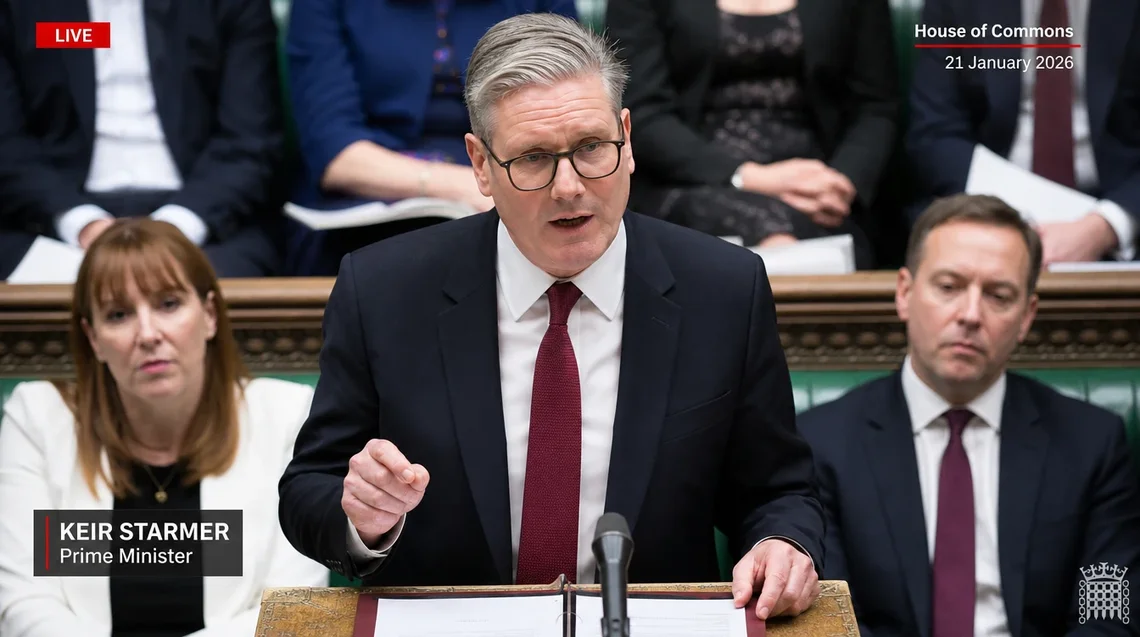
Sir Keir Starmer's government is facing mounting pressure over a reported £22 billion shortfall in its NHS reform agenda, with critics from across the political spectrum questioning whether the Treasury can realistically underwrite one of the most ambitious overhauls of the health service in a generation. The funding gap, which has emerged as the central fault line in debates over the government's health strategy, threatens to derail a programme that Downing Street has placed at the heart of its domestic policy offer.
The dispute has intensified scrutiny of Labour's broader fiscal credibility, drawing sharp responses from Conservative frontbenchers and raising uncomfortable questions among some Labour backbenchers who fear the programme's ambitions may outstrip available resources. As the government attempts to navigate the gap between its reform rhetoric and Treasury constraints, ZenNewsUK examines the political and financial dimensions of this unfolding row.
Party Positions: Labour insists the NHS overhaul is fully costed within its fiscal rules and argues that investment in preventative care and workforce reform will generate long-term savings; Conservatives contend the £22 billion funding gap represents a fundamental failure of Labour's economic planning and have called for an independent audit of NHS spending commitments; Lib Dems broadly support increased NHS investment but have demanded greater transparency over how the shortfall will be addressed and have called for a cross-party health funding commission to be established.
The Scale of the Funding Challenge
The £22 billion figure at the centre of the dispute represents the estimated gap between what independent health economists and NHS trust leaders say is required to deliver the government's stated reform ambitions and what has thus far been committed through the spending review process. Health policy analysts at the King's Fund and the Health Foundation have both indicated that the government's plans — which encompass cutting waiting lists, expanding community care, and overhauling mental health provision — carry a price tag significantly above current allocations.
Related Articles
What the Shortfall Covers
Officials within the Department of Health and Social Care have acknowledged that the current settlement does not fully fund every element of the reform programme simultaneously, but insist that a phased approach will allow priorities to be sequenced without a single upfront cash injection. According to government documents reviewed by multiple outlets including the Guardian, the shortfall encompasses capital investment in hospital infrastructure, digital transformation costs, and an expanded workforce training pipeline. Independent analysts note that workforce costs alone account for a substantial portion of the gap, given commitments to recruit additional GPs, nurses, and mental health practitioners across England.
ONS Data and Health Spending Trends
Data published by the Office for National Statistics show that NHS England's share of total public expenditure has remained under pressure in real terms, even as demand for services has risen sharply following the pandemic period. The ONS figures indicate that health spending as a proportion of gross domestic product has fluctuated, complicating the government's argument that existing commitments represent a meaningful real-terms increase. (Source: Office for National Statistics)
Political Pressure from All Directions
The funding row has created an unusual coalition of critics. While Conservative opposition is expected and formulaic at this stage of a parliament, the more politically damaging challenge for Downing Street comes from within its own ranks. A number of Labour MPs representing constituencies with significant NHS waiting list problems have privately raised concerns that the government's messaging on NHS reform has raised expectations that current funding levels cannot meet.
For more background on the internal tensions surrounding this policy, see our earlier coverage of Starmer's NHS overhaul faces growing backbench revolt, which details the fault lines emerging within the parliamentary Labour Party over the pace and funding of reform.
Conservative Offensive
Shadow Health Secretary Edward Argar has seized on the shortfall figures in a series of Commons interventions, accusing the government of making spending commitments it knew could not be honoured within its own self-imposed fiscal rules. The Conservatives have pointed to the government's decision to inherit what ministers themselves described as a £22 billion "black hole" in public finances as evidence that health reform promises were made without adequate financial grounding. This framing has proved effective in the media environment, with the BBC and Sky News both reporting extensively on the political tensions the figure has generated.
Liberal Democrat Demands for Transparency
The Liberal Democrats, who made NHS access a central plank of their recent electoral campaign and achieved significant gains in rural and suburban constituencies on the back of local health concerns, have adopted a distinctive position. Rather than opposing the government's direction of travel, their health spokespersons have focused on demanding financial transparency — specifically, a published breakdown of how the £22 billion gap will be addressed over the course of the parliament. Party officials have indicated they would consider supporting cross-party mechanisms to establish long-term health funding stability, echoing arguments that the cyclical nature of NHS funding reviews undermines effective long-term planning.
Public Opinion and Polling Evidence
Public attitudes towards NHS reform and its funding present a complex picture for the government. Recent polling data underscores both the opportunity and the risk for Labour in this policy area.
| Polling Question | Result | Source | Sample Size |
|---|---|---|---|
| Satisfied with NHS performance currently | 24% satisfied | Ipsos | 1,066 adults |
| Support for increasing NHS funding even if it requires higher taxes | 61% in favour | YouGov | 1,730 adults |
| Trust Labour most on NHS | 38% | YouGov | 1,730 adults |
| Trust Conservatives most on NHS | 17% | YouGov | 1,730 adults |
| Believe government's NHS plan is adequately funded | 19% agree | Ipsos | 1,066 adults |
(Source: YouGov, Ipsos)
The data reveal a fundamental tension in the public's position: while voters overwhelmingly retain greater trust in Labour on health matters compared to the Conservatives, confidence that the current plan is financially sound remains strikingly low. This combination — partisan advantage without credibility on delivery — is precisely the vulnerability opposition strategists are seeking to exploit.
The Government's Defence
Ministers have pushed back robustly against the characterisation of a £22 billion unfunded gap, arguing that critics are conflating the full theoretical cost of all reform elements with the practical, phased approach the government intends to implement. Health Secretary Wes Streeting has repeatedly argued that structural reform — shifting care from hospitals into communities, investing in prevention, and reducing bureaucratic duplication — will itself generate efficiencies that reduce the gross cost of the programme over time.
Phased Implementation Strategy
Officials said the Department of Health and Social Care is operating on a multi-year implementation timetable, with the most capital-intensive elements of the plan — including new diagnostic and treatment centres — scheduled for later phases once savings from earlier reforms begin to materialise. Government sources have indicated that Treasury modelling supports the view that waiting list reductions achieved in the early phase of the programme will reduce emergency and acute care demand, partially offsetting costs. However, independent health economists have cautioned that such demand-side savings are historically difficult to realise within the timescales governments typically set, and that projections of this kind carry considerable uncertainty.
For a detailed account of how the government originally framed its financial commitments, readers can consult our earlier reporting on the Starmer government unveils NHS funding plan, which set out the initial spending announcements and the response from health sector stakeholders at the time.
Structural NHS Reform: Beyond the Numbers
The funding row risks obscuring what ministers and many health professionals regard as the more substantive policy questions about the architecture of reform. The government's 10-year plan for health — still being finalised in consultation with NHS England — proposes significant structural changes to how care is organised, commissioned, and delivered. These include a stronger role for integrated care systems, greater use of technology and artificial intelligence in diagnostics, and a rebalancing of resources toward primary and community care.
Workforce as the Critical Variable
Across the health policy community, there is broad consensus that workforce capacity is the single most important variable in determining whether the government's reform agenda can be delivered, regardless of the headline funding figures. NHS England currently operates with tens of thousands of vacancies, and the pipeline for training additional clinical staff takes years to produce qualified practitioners. Officials said the workforce expansion plan, which involves partnerships with universities and expanded overseas recruitment, is a central element of the reform programme — but critics note that it too requires sustained funding commitments that have not been fully secured beyond the current spending period.
The Guardian has reported that NHS trust chief executives are privately concerned that the gap between the government's ambitions and available resources will force difficult local decisions about which services can realistically be expanded and which will have to be scaled back or deferred. (Source: Guardian)
Parliamentary Arithmetic and the Road Ahead
With a substantial Commons majority, the government faces no immediate legislative threat from opposition parties on its NHS agenda. The more pressing constraints are fiscal and operational rather than parliamentary. Nonetheless, the political management of NHS expectations will remain a central challenge throughout this parliament, given the extent to which Labour's electoral coalition was built on a promise to restore health service performance.
For readers seeking a broader view of how the funding row fits into the government's wider political challenges, our coverage of Starmer pledges major NHS overhaul amid funding row provides important context on the political dynamics at play since the reform programme was first announced. Additionally, the detailed policy and spending questions explored in Starmer's NHS Plan Faces Funding Scrutiny remain relevant to understanding the trajectory of this debate.
The coming months are likely to prove definitive for the government's health agenda. A comprehensive spending review settlement will either provide the financial foundation the reform programme requires or force ministers into a frank public reckoning about what can realistically be delivered within fiscal constraints. For Sir Keir Starmer, whose government staked significant political capital on the NHS as a symbol of Labour's renewed purpose in office, the resolution of the £22 billion question carries consequences that extend well beyond health policy alone.