Starmer's NHS Reform Bill Faces Commons Rebellion
Labour backbenchers threaten vote against funding overhaul
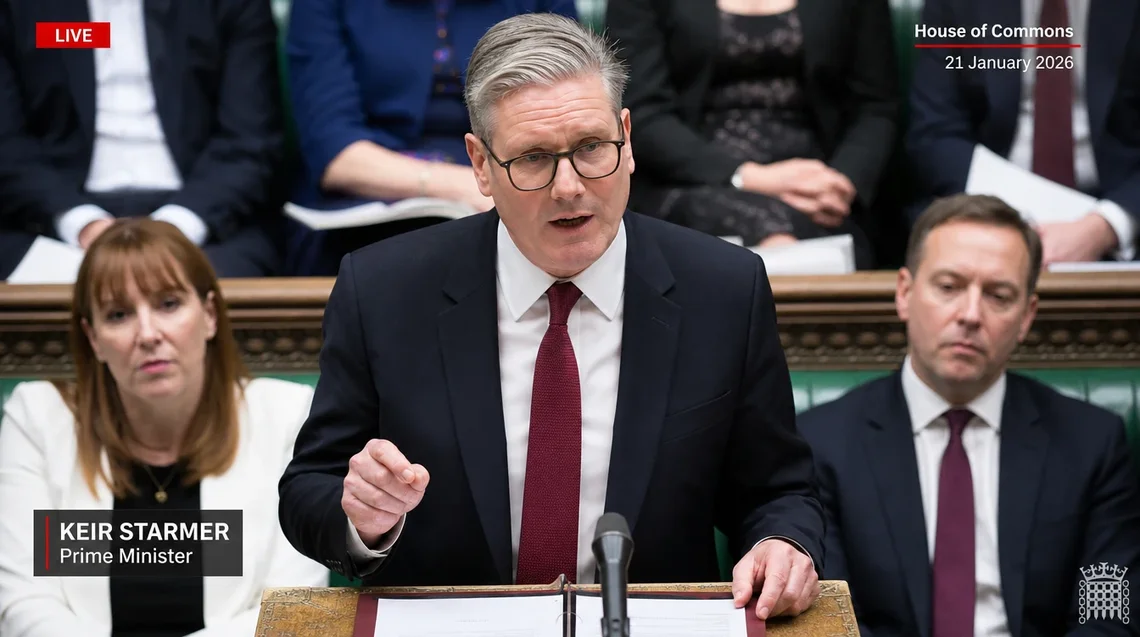
More than forty Labour MPs have signalled they may vote against the government's flagship NHS Reform Bill at its second reading, in what would represent the most significant parliamentary rebellion of Sir Keir Starmer's premiership. The threatened revolt centres on disputes over proposed changes to NHS funding allocation, independent oversight structures, and the pace of privatisation safeguards — exposing deep fault lines within a party that has long claimed ownership of the health service.
Party Positions: Labour — government officially backs the NHS Reform Bill as essential to reducing waiting lists and modernising service delivery, though a substantial backbench minority opposes elements of the funding overhaul and wants stronger anti-privatisation guarantees. Conservatives — the official opposition has accused the government of using the bill as cover for stealth cuts, vowing to vote against key clauses while calling for an independent fiscal review of NHS spending commitments. Lib Dems — broadly supportive of increased NHS investment but tabling amendments to strengthen mental health provisions and rural healthcare access, with leader Ed Davey warning the bill "lacks the structural courage the crisis demands."
The Scale of the Rebellion
The rebellion, which has been building for several weeks according to officials familiar with internal Labour whipping operations, now encompasses MPs from across the party's ideological spectrum. Backbenchers from traditional northern and Midlands constituencies, many of whom were elected on explicit pledges to protect NHS services, have written to Chief Whip Sir Alan Campbell expressing reservations about specific clauses that would restructure how Integrated Care Boards distribute funding.
Which MPs Are Involved
According to sources within the parliamentary Labour Party, the dissenters include MPs from at least a dozen different regional groupings, with the largest concentration drawn from constituencies where NHS waiting lists remain significantly above the national average. Some of those involved sit on the Health Select Committee and have argued their objections are grounded in evidence rather than political positioning. The BBC has reported that a letter signed by more than thirty backbenchers is circulating within Westminster, though the precise number of confirmed signatories has not been formally disclosed by the whips' office.
Related Articles
The Trigger Points
The most contentious elements of the bill involve a proposed revision to the Barnett Formula's application to NHS capital spending, changes to the governance structure of NHS England, and new provisions that critics say could open the door to further outsourcing of diagnostic services. Officials said the government views these as technical reforms necessary to eliminate duplication and improve efficiency. Opponents argue the drafting leaves too much discretionary power in the hands of future secretaries of state, a concern amplified by the institutional memory of repeated NHS reorganisations since the Health and Social Care Act. You can read more background on this evolving dispute in our earlier coverage of how Starmer pushes NHS reform bill amid funding pressure.
Polling Context and Public Opinion
The rebellion arrives at a politically sensitive moment. Public confidence in the government's handling of the NHS has shown signs of softening in recent weeks, according to multiple polling organisations. A YouGov survey conducted among a nationally representative sample of adults found that a majority believed the health service required "major structural reform," but an almost equal proportion expressed scepticism about whether the current government had a credible plan to deliver it (Source: YouGov). Separately, Ipsos data tracking NHS satisfaction indicate that the proportion of adults describing themselves as "very dissatisfied" with NHS waiting times remains near historically elevated levels, providing political ammunition to both the government and its critics (Source: Ipsos).
Voter Concern by Region
The Office for National Statistics has published waiting time data showing that elective care backlogs remain disproportionately concentrated in specific NHS regions, a fact that backbench rebels have cited repeatedly in their objections (Source: Office for National Statistics). These geographic disparities are central to the argument made by dissenting MPs that the funding formula changes in the bill, as currently drafted, could deepen rather than reduce regional health inequalities.
| Metric | Figure | Source |
|---|---|---|
| Labour MPs publicly signalling opposition | 40+ | Parliamentary sources / BBC |
| Adults saying NHS needs major reform | 54% | YouGov |
| Adults "very dissatisfied" with NHS waiting times | 41% | Ipsos |
| Government majority (current working estimate) | ~170 seats | House of Commons Library |
| Elective care patients waiting over 18 weeks | Over 7 million | Office for National Statistics |
| Projected NHS capital investment under bill | £8.1 billion over Parliament | HM Treasury figures |
The Government's Defence of the Bill
Downing Street and the Department of Health and Social Care have mounted a robust defence of the legislation, insisting that the reforms are both necessary and fiscally responsible. Ministers have pointed to the government's overall majority as evidence that the bill will pass regardless of backbench noise, and officials close to the Health Secretary have briefed journalists that talks with wavering MPs are "constructive and ongoing."
Wes Streeting's Position
Health Secretary Wes Streeting has taken a notably assertive public stance, telling Westminster journalists that delaying structural NHS reform would itself constitute a political failure. He has argued that the current allocation model rewards institutional inertia and that without changes to governance, investment alone cannot shift waiting list trajectories. The Guardian has reported that Streeting is personally engaged in one-to-one conversations with the most vocal rebel MPs in an attempt to secure their support before the bill reaches the Commons floor (Source: The Guardian). Our earlier analysis covering Labour pushes NHS reform bill amid funding row provides additional context on the minister's strategy.
Opposition Tactics at Westminster
The Conservative Party has sought to capitalise on Labour's internal difficulties, tabling a series of reasoned amendments designed to force further parliamentary scrutiny of the bill's financial projections. Shadow Health Secretary Victoria Atkins has accused the government of refusing to publish full impact assessments for the proposed Integrated Care Board funding changes, a charge that Number Ten has rejected. The Liberal Democrats, meanwhile, have adopted a more constructive opposition posture, indicating they will support the bill's general principles at second reading while pressing hard for committee-stage amendments on mental health parity and rural GP provision.
Procedural Considerations
Parliamentary procedural experts have noted that even if the rebellion holds at forty MPs, the government's arithmetic remains comfortable enough to pass the second reading vote. The more significant risk, officials said, lies in committee stage and report stage, where determined backbenchers with specialist knowledge can materially alter the bill's operative clauses. The government is understood to be particularly anxious to prevent amendments that would create new legal duties around NHS outsourcing thresholds, which ministers privately acknowledge could constrain future operational flexibility.
Historical Parallels and Institutional Stakes
Analysts have drawn comparisons to previous Labour governments that faced internal revolts over NHS structural changes, most notably the debates surrounding foundation trusts and market mechanisms in the early years of the Blair administration. Those precedents are instructive, observers suggest, because they illustrate how quickly NHS reform debates can shift from technical disputes about governance into broader ideological conflicts about the NHS's fundamental character. For a deeper look at how this tension has developed, see our ongoing coverage of Starmer's NHS overhaul faces backbench rebellion and the wider context explored in Starmer's NHS overhaul faces growing backbench revolt.
Long-Term Political Consequences
The political consequences of the rebellion extend beyond the immediate parliamentary arithmetic. For a prime minister who has consistently positioned himself as a disciplinarian committed to strong government, any perception that backbenchers can successfully reshape flagship legislation carries strategic risk. Senior Labour figures outside government have privately warned that if the rebels extract significant concessions, it could embolden dissent on other politically difficult measures, including welfare reform and housing policy, scheduled for later in the parliamentary session. Equally, a failure to accommodate backbench concerns risks an acrimonious public split that the Conservatives would exploit aggressively ahead of local elections.
What Happens Next
The bill's second reading is currently scheduled to take place within the coming weeks, with committee stage expected to follow shortly after. Officials said the government intends to table its own technical amendments ahead of that stage to address the most specific drafting concerns raised by wavering MPs, a common parliamentary mechanism for defusing rebellions without conceding their underlying premise. The whips' operation is understood to have identified a group of approximately fifteen to twenty genuinely undecided MPs whose votes could be secured through a combination of clarifying amendments and direct ministerial assurances. Whether that proves sufficient will depend significantly on whether the rebel leadership concludes that partial concessions represent a meaningful victory or a superficial accommodation. Further detail on the political calculations at play is available in our coverage of Labour pushes NHS reform bill amid funding debate.
The coming parliamentary fortnight will serve as an early and significant test of Sir Keir Starmer's authority as a governing prime minister. His ability to bring a restive parliamentary party into line on legislation it regards as both an electoral promise and a moral commitment will shape both the passage of this bill and the government's broader credibility on domestic policy for the remainder of this Parliament. With public patience on NHS waiting times running thin and opposition parties alert to any sign of weakness, the margin for political error remains narrow on all sides.