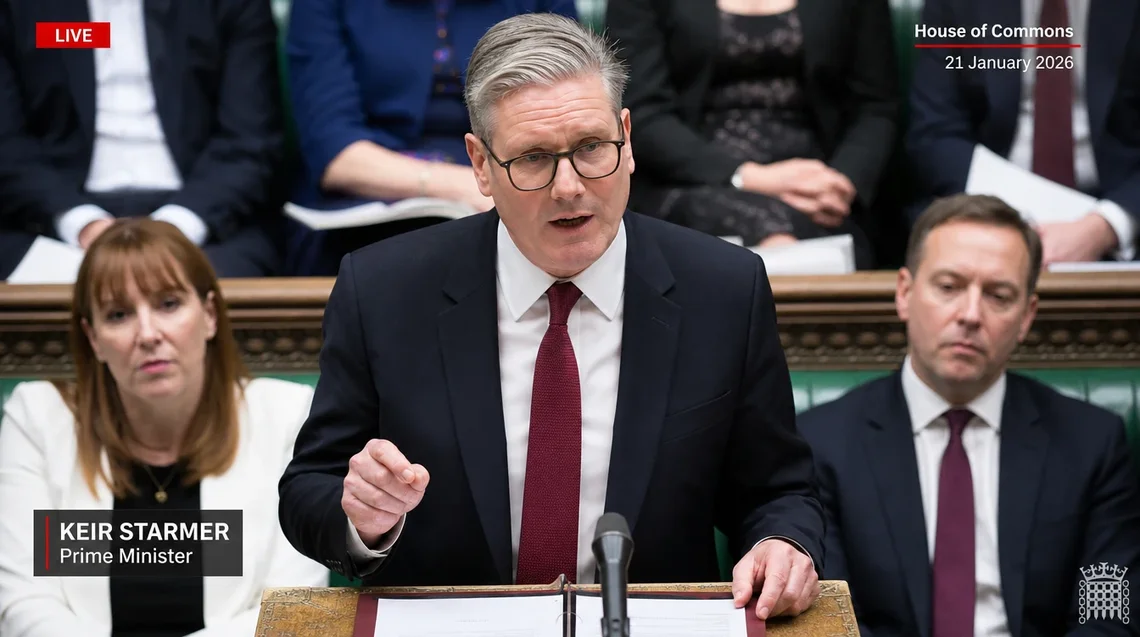
Labour pledges NHS investment ahead of spending review
Starmer government signals healthcare funding priority

The Starmer government has signalled that the National Health Service will be a central beneficiary of the forthcoming spending review, with ministers indicating billions of pounds in additional funding could be directed toward reducing waiting lists, expanding workforce capacity, and modernising NHS infrastructure. With NHS waiting lists currently affecting more than seven million patients in England, the political stakes surrounding this announcement are considerable.
Senior government officials have confirmed that NHS investment will form a cornerstone of Labour's spending review strategy, framing the commitment as a fulfilment of the party's central election mandate. The move comes as public satisfaction with the health service has reached historic lows, according to data published by the British Social Attitudes survey. (Source: Office for National Statistics)
Party Positions: Labour has pledged to prioritise NHS investment in the spending review, committing to reducing waiting times and expanding the clinical workforce as its primary domestic policy objective. Conservatives have criticised the government's approach as insufficiently detailed, arguing that additional funding without structural reform will fail to address systemic inefficiencies within NHS England. Lib Dems have broadly welcomed increased NHS spending but have called for specific ringfenced commitments to mental health services and rural healthcare provision, warning that general funding pledges without accountability mechanisms risk repeating past failures.
The Scale of the NHS Funding Commitment
Government sources have indicated that the spending review, due to be delivered by Chancellor Rachel Reeves, will include a multi-year NHS settlement designed to provide greater financial certainty to health trusts and integrated care systems. Officials have stopped short of confirming a precise headline figure ahead of the formal announcement, but briefings to journalists at the BBC and the Guardian suggest the settlement will exceed the rate of general public spending growth.
Related Articles
Waiting List Reduction Targets
Central to the Labour pledge is a commitment to reduce the NHS England elective care backlog, which has remained stubbornly elevated following the disruptions of recent years. The government has previously committed to delivering an additional two million appointments, operations, and procedures as part of its first-term agenda. According to NHS England performance data cited by the BBC, the median waiting time for elective treatment currently stands at approximately fourteen weeks, though the figure varies significantly by region and clinical specialty. (Source: BBC)
Ministers have indicated that the spending review funding will be used in part to expand surgical hubs operating at weekends and evenings, building on existing capacity without requiring new hospital construction in the short term. Analysts at the Health Foundation have noted that without sustained capital investment, productivity gains from extended hours may plateau within two to three years.
Workforce Expansion Plans
A significant portion of any NHS settlement is expected to be directed toward workforce costs, which represent the single largest component of NHS expenditure. The government has been under pressure to honour pay commitments made to NHS staff following last year's industrial disputes, and officials acknowledge that retaining experienced clinicians remains a critical structural challenge. According to workforce data published by NHS England, thousands of nursing and medical posts remain unfilled across NHS trusts in England. (Source: Office for National Statistics)
Labour's manifesto included commitments to train additional GPs and expand the number of district nurses, commitments that government sources say will be financially underpinned by the spending review. However, health policy experts have cautioned that training pipelines mean workforce expansion takes years to materialise, and that immediate capacity pressures require different solutions. For further context on Labour's evolving approach to health staffing, see earlier reporting on how Starmer pledges NHS investment amid staff shortage crisis have shaped the current policy framework.
Political Context and Opposition Response
The spending review announcement arrives at a politically sensitive moment for the government. Labour entered office on an explicit promise to fix the NHS, and polling consistently shows healthcare is among the top concerns for British voters. According to YouGov data published recently, approximately 58 percent of respondents cited the NHS as one of the most important issues facing the country, placing it ahead of cost of living and immigration in the public priority rankings. (Source: YouGov)
Conservative Critique
The official opposition has sought to characterise the government's NHS narrative as a repetition of spending pledges made by successive administrations without the structural reform necessary to deliver lasting improvement. Shadow Health Secretary Edward Argar has argued in parliamentary exchanges that injecting capital into a system without addressing productivity benchmarks and management accountability represents poor stewardship of public money. The Conservatives have also questioned whether the Treasury envelope available to the Department of Health and Social Care is consistent with the scale of improvement Labour has promised voters.
The parliamentary record shows that NHS funding and reform debates have dominated Health Questions in recent months, with the government defending its record on appointment numbers while opposition MPs raise concerns about regional variation and the specific performance of integrated care boards. Background on the legislative and political history of waiting list management is available in our reporting on how Labour pledges NHS overhaul as waiting lists surge has shaped the current debate.
Treasury Constraints and Fiscal Reality
Any NHS settlement must be viewed against the broader fiscal context established by the Chancellor's autumn Budget. The Office for Budget Responsibility has previously noted that public sector net borrowing remains elevated, and the government has committed to its own fiscal rules limiting day-to-day spending to revenue. This creates genuine tension between the scale of NHS investment Labour has signalled and the headroom available within departmental expenditure limits.
Capital Versus Revenue Spending
Health economists and former Treasury officials have highlighted an important distinction between capital investment — covering buildings, equipment, and technology — and revenue spending, which funds staff salaries and day-to-day operations. Labour's commitment to building forty new hospitals, inherited as a contested pledge from the previous government, remains under review, with ministers indicating a revised programme with realistic delivery timescales will be announced alongside or shortly after the spending review. According to the Guardian's analysis, several projects under the now-rebranded new hospital programme face delays of a decade or more against original completion dates. (Source: Guardian)
The government has also signalled investment in NHS digital infrastructure, including the expansion of electronic patient records and the deployment of artificial intelligence tools to support diagnostic services. Officials said these technology investments are intended to improve productivity across the system rather than simply adding to headcount.
| Metric | Current Position | Government Target | Source |
|---|---|---|---|
| Elective waiting list (England) | Over 7 million patients | Reduce to pre-pandemic levels | NHS England / ONS |
| Median elective waiting time | Approx. 14 weeks | Maximum 18-week standard restored | NHS England / BBC |
| NHS as top public concern (polling) | 58% cite as priority issue | N/A | YouGov |
| Public satisfaction with NHS | Historic low (below 30%) | Improvement through service delivery | British Social Attitudes / ONS |
| Additional appointments pledged | Delivery ongoing | 2 million additional appointments | DHSC / Labour Manifesto |
Public and Sector Reaction
NHS trust leaders and royal colleges have broadly welcomed the direction of travel signalled by the government, while urging ministers to ensure that any new money reaches frontline services rather than being absorbed by administrative and management structures. NHS Providers, which represents acute, mental health, and community trusts, has called for the spending review to deliver a genuine multi-year settlement rather than annual allocations that make financial planning difficult for local health economies.
Patient advocacy groups have been more cautious in their initial response. Organisations representing people on waiting lists have noted that while additional investment is welcome, the pace of improvement matters as much as the total quantum of funding. According to Ipsos polling on public trust in NHS reform pledges, a majority of respondents expressed scepticism that waiting times would meaningfully improve within the current parliamentary term. (Source: Ipsos)
Mental Health and Social Care Dimensions
One area where campaigners and cross-party parliamentary groups have pressed the government for greater specificity is mental health provision. Labour committed in its manifesto to bringing mental health waiting times in line with physical health standards, a pledge that requires dedicated investment in community mental health teams and talking therapies. Officials said discussions are ongoing within the Department of Health and Social Care about how mental health commitments will be specifically ringfenced within the overall settlement.
The social care sector, which sits at the interface with NHS discharge and community support, has separately lobbied for its own funding settlement. Councils and care providers have warned that without investment in adult social care, NHS beds will continue to be occupied by patients who are medically fit for discharge but lack appropriate community placements. This so-called delayed discharge problem has been identified by NHS management consultants and independent analysts as a significant driver of A&E pressures and elective care delays. Our previous reporting on the wider challenges facing NHS reform is detailed in the piece examining how Labour pledges new NHS funding as waiting lists persist month after month.
Historical Context and Precedent
Large NHS spending commitments have been a recurring feature of British politics across multiple governments, and the outcomes have been mixed. The Blair government's sustained increase in NHS expenditure from the early part of this century is generally credited by health economists with producing measurable improvements in waiting times and infrastructure, though it was also accompanied by controversial private finance initiatives whose long-term costs continue to burden some trusts. The subsequent period of austerity under the coalition and Conservative governments reversed many of those capacity gains, contributing to the backlog position inherited by Labour.
Lessons From Previous Spending Settlements
Health economists cited by the BBC and the Guardian have consistently argued that the relationship between NHS inputs and outputs is complex, and that money alone is not a sufficient condition for improved performance. Governance, incentive structures, leadership continuity, and integration between health and social care are all identified as factors that determine whether additional spending translates into better patient outcomes. (Source: BBC) (Source: Guardian)
For a broader view of how recent Labour commitments fit within this historical pattern, our coverage of how Labour pledges major NHS funding boost in spending review compares to previous multi-year settlements provides relevant context. Similarly, analysis of the specific policy instruments being deployed is available in our report on Labour pledges NHS overhaul as waiting lists hit record, which examines the structural as well as financial dimensions of the government's approach.
What Comes Next
The formal spending review is expected to be delivered in the coming weeks, at which point the precise allocation for the Department of Health and Social Care will become clear. In the interim, government communications have focused on framing NHS investment as the tangible expression of Labour's governing mission, seeking to maintain public confidence that the administration is making measurable progress on its headline domestic commitment.
Parliamentary scrutiny of the NHS spending plans will intensify once the review is published. The Health and Social Care Select Committee, alongside the Public Accounts Committee, is expected to examine both the headline figures and the accountability mechanisms attached to the new money. Opposition parties will focus on whether the government can demonstrate value for taxpayers and whether delivery timelines are credible given the structural complexity of the health and care system.
For voters, officials and analysts alike, the spending review will represent the first major empirical test of whether Labour's rhetoric on NHS recovery translates into a funding settlement of sufficient scale and structure to genuinely change the patient experience — a question that is likely to define the government's political fortunes well into the remainder of this parliamentary term.