Starmer faces NHS crisis as waiting lists surge
Health service struggles despite government funding pledge
More than 7.5 million people are currently waiting for NHS treatment in England, according to official figures, placing Sir Keir Starmer's government under mounting pressure to demonstrate that its landmark funding commitments are translating into tangible improvements for patients. The waiting list crisis, which health analysts describe as among the most severe in the health service's history, is increasingly becoming a defining political test for a Labour administration that staked much of its election mandate on fixing the NHS.
Party Positions: Labour insists its record multi-billion-pound NHS funding settlement and the appointment of a dedicated Patient Waiting List Taskforce demonstrate sustained commitment to reducing treatment backlogs, with ministers pointing to early productivity gains in some hospital trusts as evidence of progress. Conservatives argue that Labour has presided over a worsening crisis despite inheriting a clear NHS reform blueprint, accusing the government of prioritising trade union pay deals over patient outcomes and structural reform. Lib Dems are calling for a cross-party NHS emergency summit, arguing that the scale of the waiting list crisis demands a non-partisan national response and the immediate recruitment of thousands of additional clinical staff to address chronic workforce shortages.
The Scale of the Crisis
NHS England's own performance data, referenced widely by health policy analysts and cited by the BBC, currently shows that the number of patients on elective waiting lists remains at historically elevated levels, with millions waiting beyond the government's own 18-week referral-to-treatment target. The figures represent a compound failure stretching across successive administrations, but political gravity now rests squarely on Labour's shoulders following its sweeping general election victory.
Waiting Times by Specialty
Orthopaedic and ophthalmology services are among the worst-performing specialties, with patients in some regions waiting well over 18 months for procedures such as hip replacements and cataract surgery, according to NHS England data. Cardiology and dermatology referral pathways are also under severe strain, with primary care practitioners reporting that patients are experiencing significant deterioration in their conditions while awaiting specialist consultations. The Guardian has reported extensively on the uneven geographic distribution of waiting times, with patients in certain NHS trusts in the north of England and the Midlands facing substantially longer delays than counterparts in London and the South East.
Related Articles
Impact on Workforce Capacity
Chronic staffing shortages remain a central obstacle to reducing backlogs. NHS England figures indicate the health service in England currently has tens of thousands of vacancies across nursing, allied health professions, and medical specialties. The Office for National Statistics has documented elevated rates of sickness absence among NHS staff in recent periods, a factor health economists argue is directly suppressing the system's throughput capacity. Without meaningful workforce expansion, officials said, additional funding alone cannot translate into the volume of appointments and procedures required to make a dent in the backlog.
Government Funding Commitments Under Scrutiny
The Chancellor's most recent spending settlement allocated a substantial real-terms increase to the Department of Health and Social Care, a figure the government has repeatedly cited as the largest cash injection into the NHS since the Blair era. Health Secretary Wes Streeting has made reducing waiting lists a personal priority, announcing a series of productivity initiatives including extended weekend and evening operating theatre sessions at selected trusts.
Productivity Versus Investment
However, independent health economists have cautioned that raw investment figures do not automatically convert into reduced waiting times. The King's Fund and the Nuffield Trust have both published analysis suggesting that NHS productivity — measured in terms of activity delivered per pound spent — declined sharply in the post-pandemic period and has not yet returned to pre-pandemic baselines. Officials said that achieving meaningful waiting list reductions would require simultaneous progress on workforce recruitment, digital infrastructure investment, and the reduction of high levels of delayed hospital discharge driven by an underfunded social care sector.
| Indicator | Current Figure | Source |
|---|---|---|
| Total patients on NHS elective waiting list (England) | Approx. 7.5 million | NHS England |
| Patients waiting over 18 weeks (England) | Over 3 million | NHS England |
| Public satisfaction with NHS (net approval) | Lowest recorded level | British Social Attitudes / NatCen |
| Voters rating NHS as top political priority (%) | Approx. 52% | YouGov |
| Government approval on NHS handling (%) | Approx. 28% approve | Ipsos |
| NHS workforce vacancies (England) | Approx. 100,000+ | NHS England / ONS |
Political Pressure Intensifies at Westminster
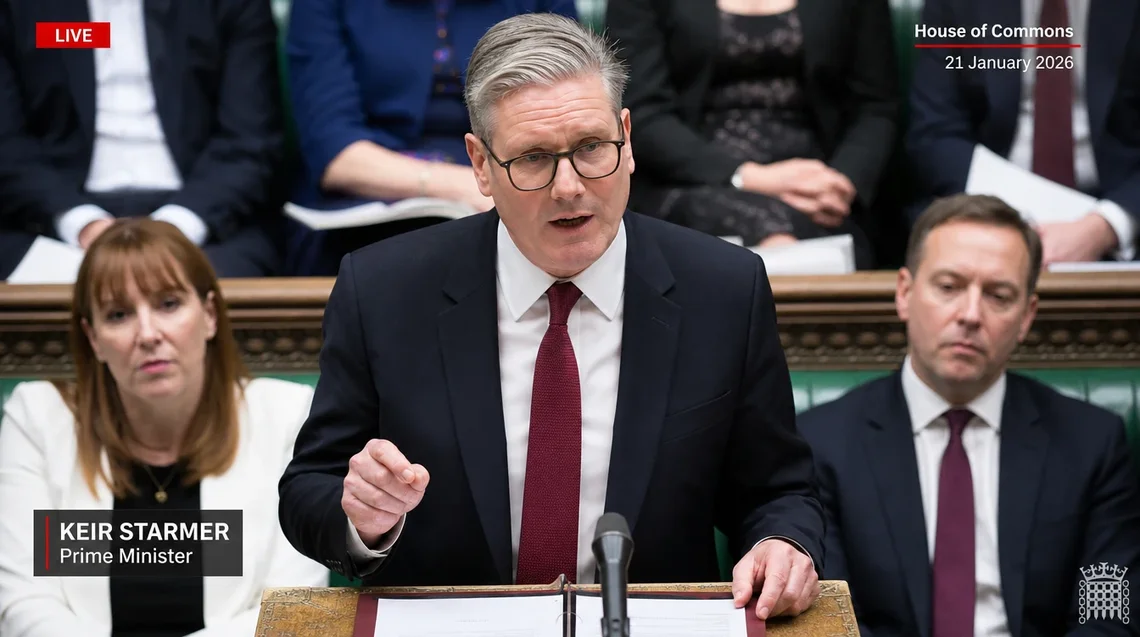
The waiting list figures have become a recurring flashpoint at Prime Minister's Questions, with Opposition leader Kemi Badenoch repeatedly challenging Starmer to explain why patient waits have not fallen despite the government's funding commitments. Starmer has responded by attributing the depth of the current crisis to what he characterises as fourteen years of Conservative neglect and underinvestment, insisting that structural improvements to a system of this scale take time to materialise.
Cross-Party Parliamentary Pressure
A cross-party group of MPs on the Health and Social Care Select Committee has launched a formal inquiry into NHS elective recovery, calling senior NHS England officials and Department of Health civil servants to give evidence. Committee members from across the political spectrum have expressed frustration at what they describe as a gap between ministerial rhetoric on NHS reform and the lived experience of constituents unable to access timely treatment. Liberal Democrat health spokesperson Helen Morgan has been among the most vocal critics, arguing in the Commons that the government's approach lacks the structural ambition necessary to address root causes rather than symptoms of the crisis.
For further background on the administration's evolving response to this issue, see our earlier report on how Starmer pledges NHS investment as waiting lists surge, which examined the initial contours of the government's health spending strategy following the general election.
Public Opinion and Electoral Consequences
Polling data presents a stark picture for Labour strategists. Ipsos tracking data shows that public approval of the government's handling of the NHS stands at approximately 28 percent, a figure that health policy insiders describe as deeply concerning given that the NHS was one of Labour's central electoral propositions. YouGov research indicates that roughly 52 percent of voters currently identify the NHS as their primary political concern, making it the single most salient domestic issue ahead of the cost of living and economic management.
Regional Variations in Political Impact
The political consequences of the waiting list crisis are not uniform across England. Labour MPs representing constituencies in the North West, Yorkshire, and the Midlands — many of them in seats won from the Conservatives or recaptured from Reform UK — face particularly acute pressure, as those regions contain some of the NHS trusts with the longest average waiting times, according to analysis cited by the Guardian. Party strategists privately acknowledge that sustained failure to demonstrate visible progress on waiting times could erode Labour's support in precisely the demographic and geographic constituencies it most needs to retain ahead of the next general election.
Our correspondent's detailed examination of how Starmer faces fresh NHS crisis as waiting lists surge provides additional context on the internal government deliberations that shaped the current policy response, including the tensions between Treasury officials focused on fiscal discipline and health department officials pressing for accelerated capital investment.
The Role of Social Care and System Integration
Health analysts and NHS trust chief executives have been consistent in arguing that the elective waiting list cannot be addressed in isolation from the state of adult social care. High levels of so-called "bed blocking" — more formally described as delayed transfers of care — mean that medically fit patients remain occupying acute hospital beds because appropriate social care placements are unavailable, directly reducing the number of beds available for elective surgical patients. The Office for National Statistics has documented a significant increase in delayed transfers of care in recent periods, driven in large part by underfunding of local authority social care budgets and a fragmented private and voluntary sector provider market.
Government's Social Care Reform Agenda
Ministers have acknowledged that meaningful NHS recovery requires parallel progress on social care, but concrete reform proposals remain contested within government. The decision to delay implementing elements of the Dilnot-inspired social care charging cap — a policy formally legislated by the previous Conservative administration but never enacted — drew significant criticism from care sector advocates and NHS leaders, who argued it represented a missed opportunity to reduce financial barriers to care home placements. Officials said a comprehensive social care reform green paper is currently in preparation, though no publication timetable has been confirmed publicly.
Looking Ahead: Reform or Managed Decline?
Health Secretary Streeting has repeatedly signalled his intention to pursue what he terms a fundamental reform of the NHS model, moving away from what he describes as an analogue system toward one built around digital access, community-based care, and preventative health interventions. His framing, which draws on the thinking of health economist Lord Ara Darzi's independent review of NHS performance commissioned shortly after Labour took office, argues that money alone cannot solve structural problems baked into decades of NHS organisation.
For a comprehensive account of how the administration has sought to reframe the policy debate around systemic reform rather than simple funding increases, readers can consult our earlier analysis of how Starmer Pledges NHS Overhaul as Waiting Lists Surge laid out the government's longer-term strategic ambitions for the health service, alongside the political risks associated with positioning structural reform as the primary answer to an immediate patient access crisis.
Whether those ambitions can be converted into measurable reductions in waiting times within a politically meaningful timeframe remains the central unanswered question of Starmer's domestic agenda. With public patience wearing thin, NHS staff under sustained pressure, and the Opposition seeking to exploit every data point that suggests the government's promises are outrunning its delivery, the health service has become both the greatest potential vindication of Labour's governing project and its most exposed political vulnerability. Ministers are acutely aware, officials said, that voters who backed Labour in large part on the strength of its NHS commitments will not wait indefinitely for the tangible improvements they were promised.