Labour pledges NHS overhaul amid funding crisis
Starmer government unveils restructuring plan

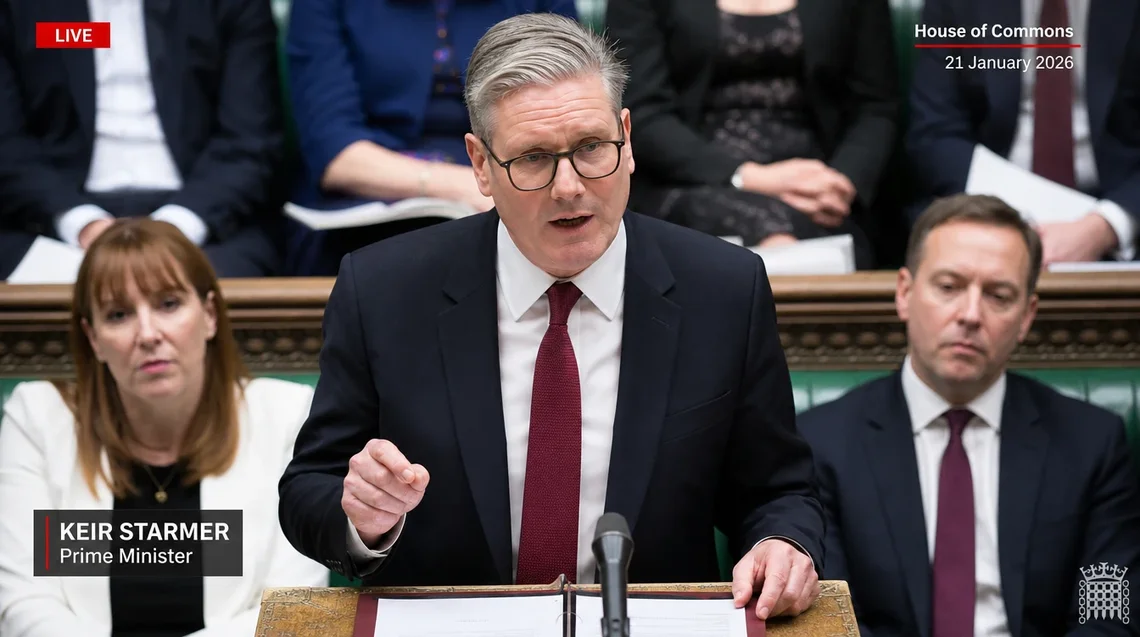
The Starmer government has unveiled a sweeping restructuring plan for the National Health Service, committing to reduce waiting lists by half within the current parliament and deploying billions in additional resource to address what ministers describe as a system in "critical structural decline." The announcement, made by Health Secretary Wes Streeting in a Commons statement, represents the most ambitious reshaping of NHS England since its foundation, officials said.
With more than 7.6 million people currently on NHS waiting lists, according to figures published by NHS England and corroborated by the Office for National Statistics, the political pressure on Labour to deliver tangible reform has intensified since the party secured its parliamentary majority. The plan draws on recommendations from the independent Darzi Review and sets binding targets across elective care, mental health provision, and primary care access.
Party Positions: Labour backs a full structural overhaul of NHS England, including the abolition of NHS England as a standalone arm's-length body and its reintegration into the Department of Health, alongside a ten-year workforce plan and new patient access guarantees. Conservatives argue the government is pursuing bureaucratic reorganisation rather than addressing frontline staffing shortfalls, warning that structural changes will distract clinical leaders during a period of acute operational pressure. Lib Dems broadly support increased NHS investment but have called for an independent patient safety commissioner and greater scrutiny of private sector involvement in any reformed delivery model, with their health spokesperson pressing ministers for clearer accountability frameworks in the Commons.
The Scale of the Crisis
Waiting Lists and System Pressure
The NHS waiting list challenge is without modern precedent in scale. Data published by NHS England show that patients waiting more than 18 weeks for elective treatment currently number in the millions, with the median wait for certain specialisms, including orthopaedics and ophthalmology, exceeding one year in several integrated care board regions. The Office for National Statistics has separately recorded a sustained rise in working-age economic inactivity linked to long-term illness, a figure ministers cite as evidence that the NHS backlog carries direct macroeconomic consequences beyond healthcare delivery.
Related Articles
Accident and emergency departments continue to record some of their worst performance figures on record. According to NHS England's published performance data, fewer than three-quarters of patients at major emergency departments are currently being seen within four hours, far below the 95 per cent constitutional standard. Officials in the Department of Health said the restructuring plan directly addresses the demand-management failures that have contributed to this deterioration.
Funding Pressures and Departmental Settlements
The Treasury settlement underpinning the overhaul has been scrutinised by independent economists and think tanks including the Health Foundation and the King's Fund, both of which have described the real-terms increase as significant but insufficient to close the productivity gap that opened during and after the pandemic period. According to government figures, the NHS resource budget is set to rise in real terms over the spending review period, with capital investment earmarked for infrastructure that officials acknowledge has been "chronically underfunded" for more than a decade.
For further context on the financial dimensions of this policy shift, see our earlier coverage: Labour pledges NHS funding boost amid waiting list crisis, which examined the Treasury negotiations that preceded this announcement.
The Structural Overhaul in Detail
Abolition of NHS England as Standalone Body
The centrepiece of the government's plan is the proposed reabsorption of NHS England — the arm's-length body that has overseen commissioning and strategic direction since the Health and Social Care Act of 2012 — back into direct ministerial control within the Department of Health and Social Care. Streeting told the House of Commons that the current architecture creates "duplication, confusion of accountability, and a buffer between democratic decision-making and clinical delivery" that the government is no longer willing to tolerate.
The move has attracted both support and criticism from NHS leaders. Some trust chief executives, speaking on background, described the change as potentially clarifying lines of accountability. Others warned that ministerial micro-management of operational decisions carries its own risks, pointing to political intervention in NHS management during previous administrations as a cautionary precedent.
Workforce and Primary Care Investment
Alongside the structural changes, the government confirmed it would proceed with an expanded ten-year workforce plan, building on commitments made prior to the election. The plan includes targets to train additional general practitioners, nurses, and allied health professionals, and contains specific provisions to address the geographic maldistribution of clinical staff, which officials said leaves rural and coastal communities disproportionately underserved.
Primary care — the first point of contact for most patients — receives particular attention in the published framework. Ministers have pledged to restore the ability of patients to see a named GP within two weeks as a standard expectation, a commitment that the British Medical Association has cautiously welcomed while noting that it will require sustained investment in GP contract reform and estate improvement.
Related background on the staffing dimensions of NHS restructuring is available in our analysis: Labour Pledges NHS Overhaul Amid Staffing Crisis.
Political Reception and Parliamentary Arithmetic
Opposition Response
Conservative health spokesperson Edward Argar responded in the Commons by accusing the government of pursuing "reorganisation for reorganisation's sake," arguing that structural changes impose transition costs on an already overstretched system and that the priority should be workforce retention rather than institutional redesign. Shadow Chancellor Jeremy Hunt, who served as Health Secretary for a record tenure under the previous government, has separately argued in media appearances that Labour is conflating administrative reform with service improvement.
The Liberal Democrats, whose seats in southern England give them a particular constituency interest in NHS performance, broadly supported increased investment but tabled a series of amendments in committee calling for enhanced patient safety oversight and independent audit of any private sector contracts issued under the reformed delivery model. Their amendments did not pass but are expected to feature in Lords scrutiny of the relevant legislation.
Labour Backbench Dynamics
Within the Parliamentary Labour Party, a small number of backbenchers representing seats with acute hospital pressures have privately pressed ministers for faster implementation timelines and more specific guarantees on hospital closures and service reconfiguration. Officials confirmed that no acute hospital closures are currently planned as part of the overhaul, though integration of some specialist services between sites is described as "clinically necessary" in the published framework document.
| Indicator | Current Figure | Target / Benchmark | Source |
|---|---|---|---|
| Total NHS waiting list (England) | 7.6 million | Reduce by 50% within parliament | NHS England / ONS |
| A&E four-hour performance (major sites) | ~73% | 95% constitutional standard | NHS England |
| Public satisfaction with NHS (net) | 24% satisfied (record low) | Majority satisfaction | Ipsos / British Social Attitudes |
| Voters citing NHS as top priority | 52% | — | YouGov (recent polling) |
| Labour lead on NHS handling | +11 points over Conservatives | — | YouGov |
| GP appointment within two weeks | 61% of patients | 90% within two weeks | NHS England / DHSC |
Public Opinion and the Electoral Stakes
Polling Landscape
The political salience of NHS reform cannot be overstated. According to YouGov polling conducted recently, 52 per cent of British adults identify the NHS as their single most important political issue, placing it ahead of the cost of living and immigration in priority rankings. Separately, Ipsos data from the British Social Attitudes survey — the long-running measure of public sentiment toward public services — recorded NHS satisfaction at a historic low, with just 24 per cent of respondents expressing satisfaction with the service overall.
Labour currently holds an eleven-point lead over the Conservatives on the question of which party is best placed to manage the NHS, according to YouGov. However, strategists within the party are aware that this lead is contingent on demonstrable progress; historical data show that governing parties which inherit public goodwill on the NHS can rapidly lose it if waiting times fail to improve within visible timeframes (Source: YouGov longitudinal tracking data).
Media and Civil Society Reaction
Reporting by the BBC and the Guardian in the days following the announcement has highlighted both the scale of the ambition and the logistical complexity of delivering structural change while simultaneously managing day-to-day system pressures. The Guardian cited NHS leaders warning of a "reorganisation fatigue" effect, noting that the service has undergone multiple structural changes over recent decades and that institutional disruption carries real costs in management capacity and staff morale.
Patient advocacy groups, including Healthwatch England, have broadly welcomed the commitment to transparency in performance reporting included within the plan, while pressing for independent oversight of whether targets are being met.
Implementation Timeline and Legislative Requirements
Parliamentary Process
The structural changes, including the reintegration of NHS England into the Department of Health, require primary legislation. A Health Service Reform Bill is expected to receive its Second Reading in the coming weeks, with government whips confident of the arithmetic given Labour's parliamentary majority. Peers in the House of Lords, where several former NHS chief executives sit as crossbenchers, are expected to subject the legislation to detailed scrutiny, particularly around accountability mechanisms and patient rights provisions.
Officials said the legislative timetable is designed to allow structural changes to take effect within eighteen months, with workforce expansion measures and primary care targets on a separate, longer delivery trajectory running to the end of the current parliament.
Risks and Independent Assessment
The Health Foundation, in an independent assessment published shortly after the Commons statement, identified three principal risks to the plan's delivery: first, that productivity improvements in elective care may not materialise at the pace required to meet the waiting list target; second, that workforce expansion is constrained by training pipeline timelines that are structural rather than political; and third, that the capital investment programme may face inflationary pressures on construction and equipment costs that reduce its real-world impact.
Ministers have said they are "clear-eyed" about these constraints and that the ten-year workforce plan is designed precisely to address pipeline limitations that no single parliamentary term can resolve unilaterally.
Broader Context and Historical Parallels
Labour's restructuring plan invites comparison with previous attempts to reform NHS governance. The 2012 Lansley reforms under the coalition government introduced the commissioning architecture that the current plan dismantles, at an estimated transition cost of several billion pounds. Critics of the current overhaul argue that another structural reorganisation risks repeating that pattern; supporters contend that the accountability failures of the arm's-length model have been sufficiently documented to justify the disruption.
For a comprehensive overview of the overarching political and policy context, readers can consult our in-depth feature: Labour Pledges Major NHS Overhaul Amid Funding Crisis. Additional background on the specific financial commitments underpinning this announcement is available in: Labour pledges £15bn NHS overhaul amid waiting list crisis, and the earlier Starmer administration pledge covered in: Starmer pledges NHS overhaul amid funding crisis.
The government's NHS overhaul now stands as the defining domestic test of the Starmer administration's first term. With waiting lists at historic highs, public satisfaction at a recorded low, and a parliamentary majority that — while substantial — is not without internal pressures, ministers face the acute challenge of managing expectations against a structural reform timeline that will not yield visible results for months, and in some areas years. Officials said the Prime Minister regards the plan as "non-negotiable" in its ambition, even as they acknowledge the operational complexity of delivery. The political and clinical verdict will ultimately rest on whether patients experience measurable change — and whether that change arrives within the electoral horizon Labour has set for itself.