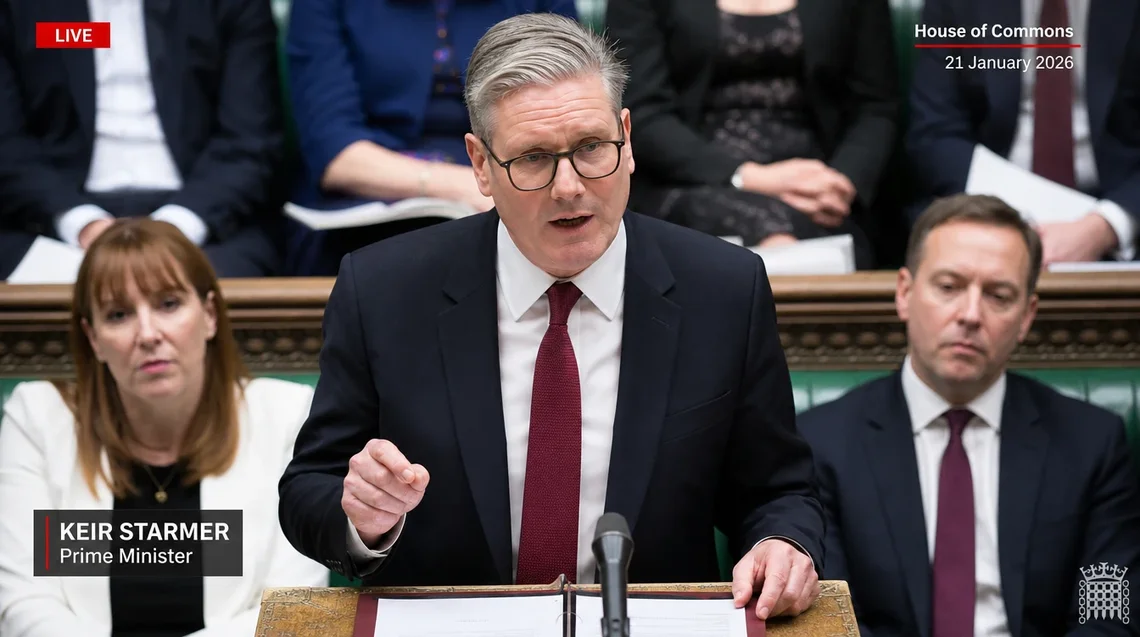
Starmer government fast-tracks NHS reform bill
Labour pushes major healthcare overhaul through Parliament

The Starmer government has fast-tracked its flagship NHS reform legislation through Parliament, with Health Secretary Wes Streeting confirming the bill cleared a critical Commons vote this week by a margin sufficient to advance to committee stage despite significant internal opposition. The sweeping overhaul represents the most ambitious restructuring of England's National Health Service in over a decade, touching workforce conditions, integrated care board governance, and the boundaries between public and private provision.
Ministers have framed the legislation as a generational opportunity to drag the health service out of what officials described as a structural crisis, pointing to record waiting lists that, according to NHS England data, currently stand at over 7.5 million cases. Opposition parties, patient groups, and a handful of Labour backbenchers have raised alarms about the pace of reform and the absence of full parliamentary scrutiny.
Party Positions: Labour — firmly backs the bill as essential to modernising the NHS and cutting waiting times, arguing structural reform must accompany increased investment; Conservatives — oppose the bill, characterising it as bureaucratic reorganisation that risks destabilising frontline services ahead of full funding settlement; Lib Dems — conditionally supportive of reform goals but have tabled amendments demanding stronger patient safeguards, independent oversight mechanisms, and more transparent consultation with NHS staff bodies.
What the Bill Contains
Integrated Care Board Restructuring
The centrepiece of the legislation is a wholesale reorganisation of Integrated Care Boards, the bodies created under the previous Conservative government that oversee NHS commissioning across regional footprints. Under the proposed changes, ICBs would be subject to direct ministerial direction in cases where they fail to meet performance thresholds, a provision critics describe as a centralisation of power that undermines the localism principle embedded in the 2022 Health and Care Act.
Related Articles
Officials said the government believes the current IBC model has produced inconsistent results across regions, with some boards overseeing areas where patient outcomes diverge sharply from the national average. The Department of Health and Social Care has cited internal performance data showing that roughly a third of ICBs are currently rated as requiring improvement on at least two key metrics. (Source: Department of Health and Social Care)
Workforce and Pay Provisions
The bill introduces a new statutory workforce planning duty, requiring NHS England to publish rolling ten-year projections for staffing needs across all clinical grades. This addresses a long-standing criticism, articulated repeatedly by the British Medical Association and the Royal College of Nursing, that successive governments have failed to plan adequately for workforce demand. The independent NHS Pay Review Body would also see its remit formally extended under the legislation, with ministers required to respond publicly to its recommendations within ninety days.
According to data from the Office for National Statistics, NHS vacancy rates across England currently stand at elevated levels relative to pre-pandemic benchmarks, with particular shortfalls in mental health, community nursing, and emergency medicine specialities. (Source: Office for National Statistics)
The Parliamentary Arithmetic
Commons Rebellion and the Vote Tally
The government secured the bill's second reading with a majority of 47, a narrower margin than Labour whips had anticipated given the size of the parliamentary majority. Fourteen Labour MPs voted against the bill on second reading, with a further twenty-two abstaining — numbers that reflect disquiet on the backbenches about both the speed of passage and specific clauses relating to private sector partnership arrangements. Full coverage of the internal opposition is available in reporting on Starmer's NHS Reform Bill Faces Commons Rebellion.
The government has indicated it will accept a limited number of amendments at committee stage, which is seen as a tactical concession designed to bring wavering MPs back into the fold before report stage. Shadow Health Secretary Edward Argar accused the government of "guillotining scrutiny" by imposing a programme motion that restricts the time available for line-by-line examination of the bill's 214 clauses.
| Metric | Figure | Source |
|---|---|---|
| Government majority on second reading | +47 | House of Commons |
| Labour MPs voting against | 14 | House of Commons |
| Labour MPs abstaining | 22 | House of Commons |
| Current NHS England waiting list (approx.) | 7.5 million | NHS England |
| Public approval of NHS reform (net) | +18% | YouGov (recent polling) |
| Voters who believe NHS needs structural change | 61% | Ipsos (recent survey) |
| ICBs rated 'requiring improvement' (two+ metrics) | ~33% | DHSC |
| Bill clauses subject to programme motion | 214 | House of Commons |
Lords Opposition and the Timetable
The government's timetable envisages royal assent before the summer recess, a schedule that would require the bill to move through the Lords in under two months. Several crossbench peers with health policy backgrounds have already signalled they intend to table wrecking amendments targeting the ministerial direction clauses, which they argue set a constitutional precedent for executive overreach in an operationally independent public body. Ministers are expected to invoke the Parliament Acts if the Lords substantially amend the legislation, though officials stopped short of confirming that position publicly.
Public Opinion and Political Context
What the Polls Show
Recent polling indicates broad public support for NHS reform in the abstract, though specific measures in the bill prove more divisive. According to a YouGov survey conducted this month, 61 per cent of respondents agreed that the NHS requires significant structural reform rather than funding increases alone — a figure the government has repeatedly cited in public messaging. (Source: YouGov)
However, an Ipsos poll published this week found that only 38 per cent of respondents trusted the current government to manage NHS reform competently, against 44 per cent who expressed scepticism. The same survey found public anxiety highest around the private sector partnership provisions, with 54 per cent agreeing that the bill could "open the door to further privatisation" — an opposition framing the government has aggressively contested. (Source: Ipsos)
The BBC's political unit noted that the government's communications strategy on the bill has shifted noticeably in recent weeks, moving away from structural language toward patient-centred messaging focused on waiting time reductions. (Source: BBC)
Labour's Strategic Rationale
The Funding Pressure Argument
Ministers have consistently argued that structural reform and additional investment must advance simultaneously, rejecting what Streeting has called the "money in, same system out" model that, the government contends, characterised Conservative health policy. The fiscal backdrop against which the bill is being debated is examined in detail in prior ZenNewsUK coverage of Starmer government unveils NHS funding plan, which traces the spending commitments announced alongside the reform agenda.
The government's position rests on a political calculation that voters will reward decisive action on the NHS over caution, particularly given that health system performance consistently ranks as one of the top two voter concerns in current polling. Internal Labour strategists, according to reports in the Guardian, believe the bill's passage before the recess would allow the party to enter the summer news cycle on the front foot after a difficult period dominated by economic data and internal party management. (Source: Guardian)
Tensions With NHS Leadership
Relations between ministers and NHS England leadership have become strained over the pace of reform, with senior NHS figures privately expressing concern that the legislative timetable does not allow adequate time for implementation planning. The ongoing friction between Whitehall and NHS England management is part of a broader pattern documented in reporting on Labour pushes NHS reform bill amid funding row, which covers the disputes over capital allocation and the reform bill's financial assumptions.
NHS Providers, the body representing NHS trusts and foundation trusts, issued a statement this week describing the bill as containing "genuinely important reforms" but calling on the government to publish a credible implementation framework before the legislation completes its Lords passage. The statement stopped short of outright opposition, a nuance that ministers characterised as broad sector endorsement.
Opposition Response
Conservative and Lib Dem Lines
The Conservative opposition has settled on a dual attack: arguing simultaneously that the bill reorganises structures rather than treating patients, and that the private sector clauses represent a stealth privatisation. Argar told the Commons that the government was "repeating every mistake of every previous reorganisation while pretending it has invented something new." The Conservatives have formally opposed the bill at every division, maintaining a unified front that contrasts with Labour's fractured backbench.
The Liberal Democrats, who hold a significant number of seats in areas with acute NHS performance problems, have adopted a more transactional stance. Health spokesperson Helen Morgan tabled a package of fifteen amendments that the party says would strengthen workforce guarantees and introduce a statutory patient voice mechanism at IBC level. Morgan indicated the Lib Dems could support the amended bill at third reading if the government accepted a meaningful subset of those changes.
Further analysis of the evolving opposition landscape and the funding dimensions of the reform debate can be found in coverage of Labour pushes NHS reform bill amid funding debate.
What Happens Next
The bill enters committee stage in the Commons next week, with a government-imposed timetable that allocates ten sitting days for clause-by-clause scrutiny. The Health and Social Care Select Committee, which published a pre-legislative scrutiny report raising concerns about the ministerial direction provisions and the workforce planning methodology, is expected to submit formal evidence to the committee. The background to the reform pressure that preceded this legislative push is set out in earlier reporting on Starmer pushes NHS reform bill amid funding pressure.
Whether the government can hold its parliamentary majority intact through report stage and Lords ping-pong will depend in part on whether the concessions offered to wavering Labour MPs prove substantive enough to secure their support at third reading. With the NHS remaining the single most politically consequential domestic policy area for this government, the stakes of getting this legislation right — or seen to get it right — extend well beyond the technical provisions of a single bill. The coming weeks of parliamentary procedure will determine whether Starmer's reform agenda becomes a lasting political asset or an early test of the limits of his authority.