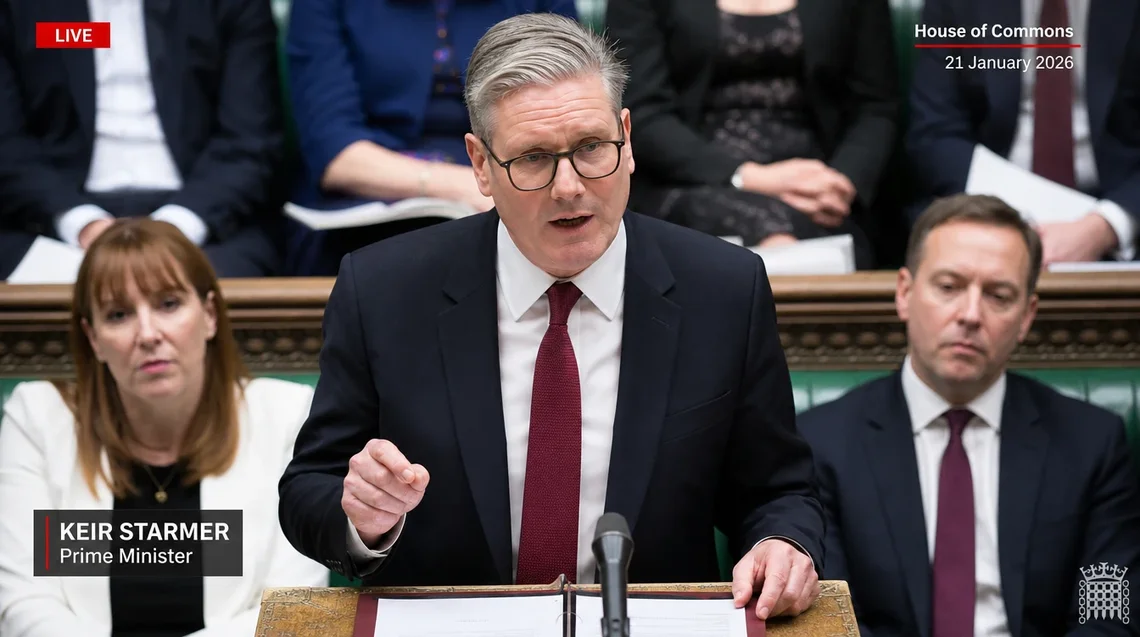
Labour pushes NHS reform as waiting lists remain stubbornly high
Starmer government seeks fresh funding approach amid healthcare crisis

More than 7.5 million people are currently waiting for NHS treatment in England, a figure that has remained stubbornly resistant to government intervention despite repeated pledges from the Starmer administration to bring waiting times down. The scale of the crisis has prompted Labour to accelerate plans for structural reform, seeking new funding mechanisms and operational overhauls that ministers insist will deliver measurable reductions in the coming months.
The government has placed NHS reform at the centre of its domestic agenda, with Health Secretary Wes Streeting outlining a series of measures intended to shift care out of hospitals and into community settings, increase the use of independent sector capacity, and renegotiate consultant contracts. Officials said the approach represents the most significant reorganisation of NHS England's operational model in over a decade, though critics across the political spectrum have questioned whether the pace of change is sufficient to address what the Guardian has described as a systemic staffing and infrastructure deficit.
Party Positions: Labour supports increased NHS investment combined with structural reform, shifting care to community settings and expanding independent sector contracts to cut waiting times. Conservatives argue that Labour has failed to deliver on its NHS promises, pointing to waiting list figures that have not materially improved since the general election, and advocate for greater fiscal discipline before committing additional funds. Lib Dems have called for a dedicated NHS and social care funding settlement, including a cross-party commission, warning that short-term fixes will not address the underlying workforce and infrastructure crises.
The Scale of the Waiting List Crisis
Data published by NHS England show the referral-to-treatment waiting list in England currently encompasses millions of incomplete pathways, with a significant proportion of patients waiting longer than the 18-week statutory target. The Office for National Statistics has recorded declining public satisfaction with NHS services, with confidence in waiting times hitting historically low levels in recent surveys. The figures represent both a political and operational emergency for a government that came to power with explicit commitments to reduce waiting lists as one of its five central missions.
Related Articles
Regional Disparities
Analysis cited by NHS England indicates that waiting time pressures are not uniformly distributed. Trusts in the Midlands and parts of the North West are reporting some of the longest delays for elective procedures, including orthopaedic surgery and diagnostic imaging. Officials said integrated care boards in those regions have been instructed to submit recovery plans, with central oversight teams deployed to underperforming trusts. The disparity has renewed calls from regional mayors and devolved health bodies for greater local control over commissioning decisions.
Diagnostic Backlogs
Beyond elective waiting lists, diagnostic backlogs remain a significant concern. According to NHS England's own performance data, millions of patients are currently waiting for diagnostic tests including MRI scans, CT imaging, and endoscopies. The government's community diagnostic centre programme, which was initiated under the previous administration and has been continued by Labour, has expanded capacity at over 160 sites across England, though health economists cited by the BBC have cautioned that supply-side expansion alone will not clear the backlog without parallel demand management strategies.
Labour's Reform Agenda
The Streeting reform programme rests on three broad pillars: moving from an analogue to a digital NHS, shifting from a hospital-centric to a neighbourhood health model, and transitioning from a reactive to a preventative service. Officials said the ambition is to reduce pressure on acute settings by intervening earlier in care pathways, a model that health economists broadly support in principle but note requires sustained multi-year investment to deliver results.
Independent Sector Capacity
One of the more politically contentious elements of the government's approach involves significantly expanding the use of independent sector treatment centres to clear the surgical backlog. Ministers have indicated they are prepared to commission additional capacity from private providers on a scale that some Labour backbenchers have described as uncomfortable, according to reporting by the Guardian. The Health Secretary has argued that ideological opposition to independent provision is an obstacle to patient care, a position that has generated tension within the parliamentary Labour Party.
Workforce and Contract Reform
Pay and contract negotiations with medical staff remain a live issue. The government reached settlements with junior doctors and consultants following a prolonged period of industrial action, but officials acknowledged that workforce shortages in nursing, general practice, and mental health services continue to constrain capacity. According to NHS England's workforce data, the health service in England currently employs record numbers of staff in absolute terms, but vacancy rates in key clinical specialties remain elevated. The government has committed to publishing a refreshed workforce plan that accounts for projected demand over the next decade.
Funding Mechanisms Under Review
The Chancellor has indicated that additional NHS funding commitments will be tied to demonstrated productivity improvements, a condition that some NHS trust leaders have described as operationally difficult to deliver given inherited infrastructure deficits. According to figures cited by the Institute for Fiscal Studies, NHS productivity remains below pre-pandemic levels on several key measures, though the methodology for calculating healthcare productivity is itself contested among health economists.
Ministers are also examining the potential for reforming how NHS payment systems operate, moving away from a pure activity-based model toward outcome-based commissioning in specific care pathways. Officials said pilots are currently underway in several integrated care systems, with findings expected to inform broader national policy. The approach draws on models tested in other European healthcare systems, according to analysis published by the King's Fund and cited by the BBC.
| Indicator | Current Figure | Target | Source |
|---|---|---|---|
| Total RTT waiting list (England) | 7.5 million+ pathways | Reduce to pre-pandemic levels | NHS England |
| Patients waiting 18+ weeks | Approx. 40% of list | 92% treated within 18 weeks | NHS England |
| Diagnostic waiting list | 1.5 million+ tests outstanding | No patient to wait 6+ weeks | NHS England |
| Public satisfaction with NHS waiting times | Historically low — approx. 24% satisfied | N/A | Ipsos / British Social Attitudes |
| Labour NHS approval rating | Net negative among key demographics | N/A | YouGov polling |
| NHS workforce — total headcount | Record high in absolute terms | Vacancy rate reduction target set | NHS England Workforce Data |
The Political Arithmetic
NHS performance has consistently ranked as the top concern among British voters in polling conducted by YouGov and Ipsos throughout the current parliamentary term. The government's inability to demonstrate rapid improvement risks eroding one of the central arguments Labour made during the general election campaign — that it was the party of the NHS. Internal party research, referenced in reporting by the Guardian, suggests that voter patience on health service delivery is finite, with many Labour-held marginal seats in English towns containing high concentrations of voters directly affected by long waits.
Opposition Pressure
The Conservatives under Kemi Badenoch have sought to exploit the government's difficulties, arguing that Labour has had sufficient time and resources to demonstrate progress but has instead presided over a health service in continued decline. Shadow Health Secretary Edward Argar has called for a full parliamentary inquiry into NHS productivity, a request the government has so far resisted. The Liberal Democrats, whose electoral success was substantially built on NHS-related campaigning in rural and suburban constituencies, have continued to press for a formal cross-party commission on long-term health and social care funding — a proposal that has attracted support from some independent experts but which the government has not formally endorsed.
For further context on the government's evolving position, see earlier reporting on how Labour pledges NHS overhaul as waiting lists remain high, and analysis of the specific commitments made in the early weeks of the administration in the piece examining how Starmer pledges NHS reform as waiting lists remain high. The trajectory of the waiting list challenge is also explored in detail in reporting on how Labour targets NHS waiting lists in major reform push.
Social Care: The Unresolved Question
Any serious analysis of NHS waiting list pressures cannot be separated from the chronic underfunding of adult social care, which drives delayed discharges from hospital and consumes acute capacity that could otherwise be directed at elective procedures. Officials said the government is developing a longer-term social care funding settlement, though details have not yet been published and no firm legislative timetable has been confirmed. The absence of a fully costed social care plan has drawn criticism from Age UK, the King's Fund, and the Nuffield Trust, all of whom have argued that NHS reform will have limited impact without a parallel and adequately funded social care system.
Delayed Discharges
According to NHS England operational data, tens of thousands of hospital bed days are lost each month to patients who are medically fit for discharge but cannot be moved into appropriate social care or community settings. The Office for National Statistics has linked delayed discharge rates to broader measures of NHS throughput, suggesting that improving social care capacity could have a proportionally significant impact on elective waiting list reduction — potentially more significant, per unit of investment, than additional surgical capacity alone.
Outlook and Assessment
Independent health policy analysts, including those at the Health Foundation and the Nuffield Trust, have broadly welcomed the government's direction of travel while cautioning that the scale and speed of reform required to materially reduce waiting lists within a single parliamentary term is extremely challenging. The BBC's health correspondent has noted that previous governments have also set waiting list reduction targets and failed to meet them, a pattern that reflects the structural complexity of NHS reform as much as any individual administration's political will.
The government faces a narrow window in which demonstrable progress must be visible to voters before the political costs of NHS underperformance begin to compound. Ministers have staked significant political capital on health service improvement, and the coming months will determine whether the structural reforms being pursued represent a genuine inflection point or another chapter in a long sequence of ambitious pledges that the NHS's underlying constraints have ultimately absorbed. For further reading on the development of Labour's health policy commitments, earlier coverage examining how Labour pushes NHS reform as waiting lists remain elevated and the foundational policy prospectus outlined in analysis of how Labour Pledges NHS Reform as Waiting Lists Remain Critical provide important background to the current policy environment.