Starmer's NHS reforms face fresh opposition
Labour pushes funding plan amid backbench concerns

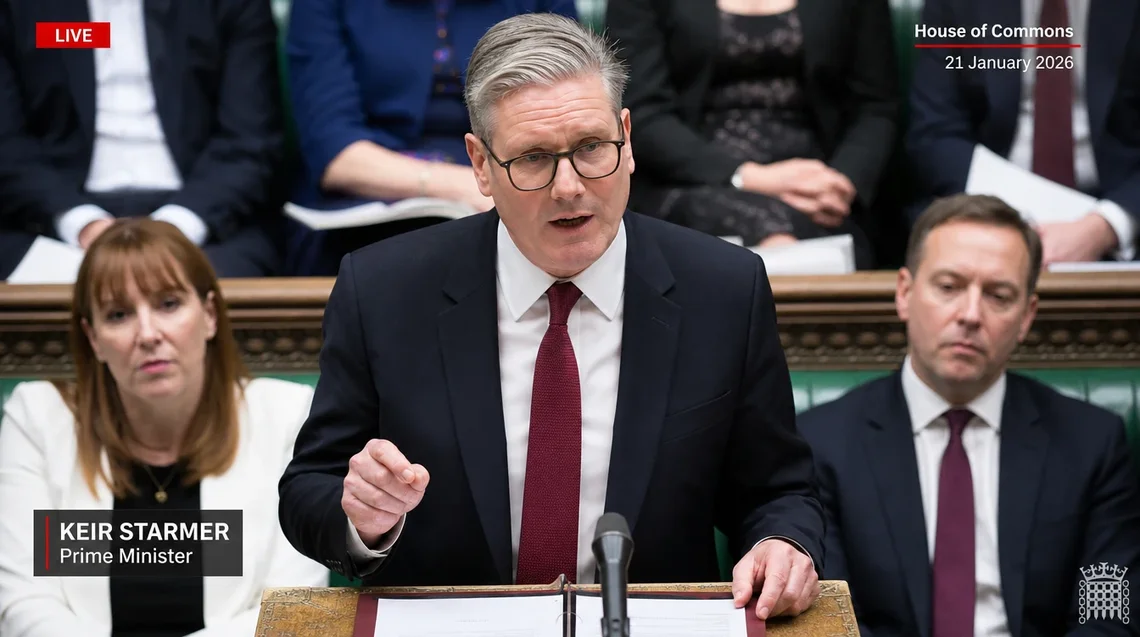
Sir Keir Starmer's flagship NHS reform programme is facing mounting internal opposition, with a growing number of Labour backbenchers expressing serious reservations about the government's funding model and the pace of structural change. The resistance threatens to complicate the Prime Minister's central domestic policy offer ahead of what officials describe as a critical period for the health service.
Multiple sources within the Parliamentary Labour Party have indicated that unease is spreading beyond the traditional soft-left factions, with MPs representing marginal seats voicing particular concern about whether the proposed reforms will deliver visible improvements before the next general election. The debate exposes a fundamental tension at the heart of the government's health strategy: the gap between long-term structural ambitions and the immediate, tangible results voters are demanding.
Party Positions: Labour supports a phased funding increase tied to productivity reforms and a shift toward community-based care, arguing that structural change is necessary before additional investment yields results. Conservatives have accused the government of using reform rhetoric to mask inadequate funding commitments, calling for a fully costed plan with independent oversight. Lib Dems are pressing for an emergency capital injection into primary care and mental health services, arguing that waiting lists cannot be reduced without immediate resource allocation.
The Scale of Backbench Dissent
The opposition within Labour's own ranks has crystallised around several specific objections: the timeline for reducing waiting lists, the proposed restructuring of integrated care boards, and the government's insistence on tying new funding to measurable efficiency gains before it is released. For many MPs, this conditionality feels politically risky in constituencies where NHS waiting times remain a dominant voter concern.
Related Articles
Marginal Seat Anxiety
MPs representing constituencies where Labour made gains at the last general election have been among the most vocal in private meetings of the Parliamentary Labour Party. According to sources familiar with the discussions, several members have warned ministers that constituents are not experiencing the improvements promised during the election campaign. Polling conducted by YouGov recently found that public satisfaction with NHS performance remains at historically low levels, with a majority of respondents saying they do not believe the government's reforms will reduce their personal waiting time within a realistic timeframe. (Source: YouGov)
The issue of Starmer's NHS overhaul faces fresh resistance has been documented extensively, but the current wave of internal dissent represents a qualitative shift from earlier criticisms, which were largely confined to the party's left wing and external trade union pressure.
The Role of Select Committees
The Health and Social Care Select Committee has requested detailed written evidence from NHS England and the Department of Health and Social Care regarding the financial modelling underpinning the reform programme. Committee members from across the House have described existing projections as insufficiently transparent, and there are growing calls for the Office for Budget Responsibility to be given a formal role in scrutinising NHS spending commitments. (Source: Office for National Statistics)
The Funding Dispute at the Heart of Reform
The government's position rests on a phased approach: structural reform first, followed by conditional funding releases tied to productivity benchmarks. Health Secretary Wes Streeting has repeatedly argued that pouring money into an unreformed system would repeat the mistakes of previous administrations. However, this logic is being directly challenged by NHS trust leaders, clinical staff representatives, and now a significant bloc of government MPs.
Productivity Benchmarks Under Scrutiny
Officials have declined to publish the full methodology behind the productivity targets that will govern funding release, a decision that has drawn criticism from health economists and opposition parties alike. The British Medical Association and several royal colleges have argued that the benchmarks fail to account for the complexity of post-pandemic patient acuity, meaning that trusts are being held to standards that do not reflect operational reality on the ground.
The question of costs has been examined in detail previously, and readers seeking a broader context on the financial pressures involved will find relevant analysis in coverage of how Starmer's NHS overhaul faces fresh scrutiny over costs, which outlined early Treasury resistance to unconditional health spending increases.
| Metric | Current Figure | Government Target | Independent Estimate |
|---|---|---|---|
| NHS Waiting List (approx.) | 7.5 million patients | Reduce by 40% within parliament | Reduction of 20-25% considered realistic (Source: Ipsos) |
| GP Appointment Wait (avg.) | 18 days | Under 10 days within two years | 12-14 days with current funding trajectory |
| Public confidence in NHS reform plan | 31% confident | N/A | (Source: YouGov) |
| Labour backbenchers publicly expressing concern | Estimated 35-45 MPs | N/A | (Source: Guardian) |
| Planned NHS capital investment increase | Baseline spending | +£3.1bn over parliament | NHS Confederation estimates £6bn required |
Union Pressure Compounds Parliamentary Problems
The internal parliamentary difficulties are occurring simultaneously with sustained pressure from public sector trade unions, several of which have indicated that they are prepared to ballot members over aspects of the reform agenda they regard as threatening to existing terms and conditions. UNISON and the Royal College of Nursing have both submitted formal representations to the Department of Health expressing concern about workforce implications.
Staff Deployment and the Integrated Care Question
Central to union concerns is the proposed restructuring of integrated care systems, which the government argues will enable more efficient deployment of clinical staff across primary, community and secondary care settings. Union officials have characterised this as a mechanism for flexibility provisions that could undermine nationally agreed pay and conditions frameworks. The broader context of this labour dispute and its implications for the reform programme is set out in earlier reporting on how Starmer's NHS overhaul faces fresh opposition from unions, which detailed the breakdown in formal consultation between government and major health unions.
According to the BBC, at least three major NHS trusts in the Midlands and North West have raised formal concerns with NHS England about their capacity to implement the proposed integrated care restructuring within the stated timeframe without additional transitional funding. (Source: BBC)
The Opposition Response
The Conservatives have sought to exploit the government's difficulties, with Shadow Health Secretary Edward Argar repeatedly calling for a full independent review of the reform programme's financial underpinnings. The opposition has tabled a series of parliamentary questions demanding disclosure of the Treasury correspondence relating to NHS spending decisions, and has signalled its intention to force a Commons debate on the matter before the summer recess.
The Liberal Democrats, meanwhile, have focused their criticism on the mental health and primary care components of the reform package, arguing that these areas are being systematically underfunded relative to the acute sector. Health spokesperson Helen Morgan has called the government's approach "structurally incoherent," arguing that a shift toward community care cannot succeed without upfront investment in the community infrastructure that does not yet exist at the required scale.
A Political Opportunity for the Opposition
Analysts at the Institute for Government have noted that the combination of backbench Labour unease and union friction gives opposition parties an unusually strong platform on an issue where the Conservatives remain deeply distrusted by voters following their tenure in government. The political calculus is complicated, however, by the fact that Conservative credibility on NHS funding is severely compromised by the record of the previous administration, a factor that limits the resonance of their attacks even when the substantive criticisms carry weight.
Government Response and the Path Forward
Downing Street has moved to reassure Labour MPs privately, with the Chief Whip's office understood to have scheduled a series of briefings with backbenchers from vulnerable seats. Health ministers have also accelerated engagement with the chair of the NHS England board, seeking to present a more compelling public narrative around early reform wins including new surgical hubs, expanded diagnostic capacity, and a piloted neighbourhood health model in several urban areas.
Officials said the Prime Minister remains personally committed to the reform agenda and regards it as foundational to the government's second-term electoral positioning. However, the pace at which tangible improvements materialise will determine whether the political coalition behind the reforms holds. As previously documented, Starmer's NHS overhaul faces fresh funding pressure from multiple directions simultaneously, constraining the government's room for manoeuvre at precisely the moment when decisive action is most needed.
The Long-Term Structural Argument
Supporters of the government's approach argue that the political discomfort of the current moment is the unavoidable cost of genuine reform, and that previous governments — of both parties — failed the NHS precisely because they prioritised short-term announcements over structural change. According to Ipsos research, the public broadly supports reform in principle, but this abstract support has not translated into tolerance for deteriorating personal experiences of the service in the interim period. (Source: Ipsos)
The broader trajectory of the reform programme and the cumulative pressure it faces from parliament, the unions, professional bodies and the public has been a recurring theme in political coverage this parliament. The full dimensions of these pressures are examined across a body of reporting including analysis of how Starmer's NHS Overhaul Faces Fresh Pressure from converging political and financial forces, which remains essential background reading for understanding the current juncture.
Conclusion: A Defining Test for Starmer's Domestic Agenda
The NHS reform programme represents the clearest test yet of whether Keir Starmer's government can sustain a difficult long-term policy position in the face of intense short-term political pressure. The arithmetic in the House of Commons currently favours the government, but arithmetic alone does not determine political momentum. If the backbench unease hardens into organised opposition, or if the next round of waiting list statistics fails to show meaningful progress, ministers will face intensifying pressure to revise both the substance and the presentation of a reform agenda on which the government has staked considerable political capital. For now, the whips are holding the line — but the margin for error is narrowing with each passing parliamentary session.