Starmer Government Unveils Major NHS Restructuring Plan
Labour seeks to address staff shortages and waiting lists

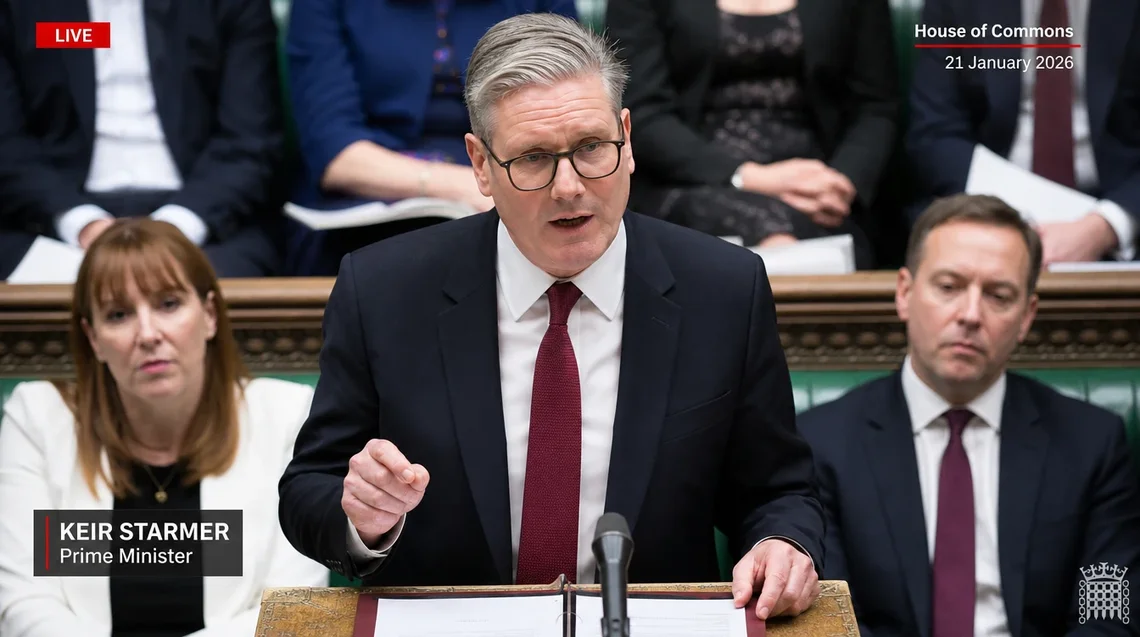
The Starmer government has announced a sweeping restructuring of the National Health Service, promising to overhaul workforce planning, cut record waiting lists, and fundamentally reshape how NHS England operates — in what ministers are calling the most significant reorganisation of the health service in over a decade. Health Secretary Wes Streeting unveiled the package of measures before the Commons, citing Office for National Statistics data showing more than 7.5 million people currently on NHS waiting lists as the central justification for urgent reform.
Party Positions: Labour argues the restructuring is essential to modernise a health service left in crisis by the previous government, framing reform as both a moral and economic imperative. Conservatives have accused ministers of using restructuring as a distraction from difficult funding decisions, warning that top-down reorganisation risks repeating the costly mistakes of the Health and Social Care Act. Lib Dems broadly support workforce expansion but have demanded greater transparency over how the restructuring will be funded, calling for an independent Office for Health Spending to scrutinise all commitments.
The Scale of the Crisis
Ministers presented the restructuring plan against a backdrop of what officials described as a system under acute pressure on every measurable front. Waiting list figures, workforce vacancy rates, and patient satisfaction scores have combined to create a political environment in which the government felt compelled to act beyond incremental funding adjustments.
Waiting List Numbers
According to Office for National Statistics analysis, the NHS waiting list in England currently stands at its highest sustained level on record, with patients waiting for elective treatment across a wide range of specialties. The government's own internal projections, shared with select committee members ahead of the Commons statement, suggest that without structural change the list could grow further over the next two years. Streeting told MPs that the status quo was "not a policy option," insisting that reform and investment must move in parallel rather than in sequence.
Related Articles
Workforce Vacancies
NHS England data, cited by the Health Secretary in his Commons statement, shows tens of thousands of nursing, medical, and allied health professional posts currently unfilled across England. The staffing gap, officials said, is particularly acute in emergency medicine, mental health services, and community care — three areas the restructuring plan specifically targets. The government has pointed to a combination of post-pandemic attrition, an ageing workforce, and what Labour describes as years of insufficient domestic training capacity as the root causes of the vacancy crisis.
What the Restructuring Involves
The plan, which runs to several hundred pages of policy documentation, centres on three principal pillars: the abolition of NHS England as a separate arm's-length body and its closer integration with the Department of Health and Social Care; a new National Workforce Strategy to be published and updated annually; and the expansion of Integrated Care Boards with enhanced powers over local health planning and commissioning.
NHS England Reorganisation
The most politically contentious element of the package is the proposed reduction of NHS England's operational independence. Under the government's plans, a significant portion of NHS England's central functions would be absorbed into the Department of Health, effectively bringing strategic health planning under more direct ministerial control. Officials said the move is intended to eliminate duplication, reduce administrative overhead, and ensure greater democratic accountability. Critics, including several former NHS chief executives quoted in reporting by the Guardian, have warned that the change risks politicising operational decisions that have historically been kept at arm's length from ministers.
Integrated Care Board Expansion
Integrated Care Boards — the regional planning bodies established under the previous government's legislation — would under the new proposals receive substantially increased budgetary authority. The government argues this will allow health systems to better align with local need, directing resource toward prevention and community care rather than acute hospital provision. NHS Confederation officials have broadly welcomed the direction, though they have pressed ministers for clarity on how the expanded boards will be held to account for performance outcomes.
Parliamentary Reaction
The Commons statement triggered immediate and sustained opposition from the Conservative benches. Shadow Health Secretary Edward Argar accused the government of pursuing "reorganisation for reorganisation's sake," drawing a direct comparison with the Andrew Lansley reforms of the coalition era — widely regarded at Westminster as a cautionary tale of costly NHS upheaval. Argar argued that structural change in the midst of a waiting list crisis risked diverting clinical and managerial energy away from patient care at precisely the moment it was most needed.
Liberal Democrat health spokesperson Helen Morgan struck a more nuanced position, welcoming the workforce commitments while pressing Streeting on the fiscal detail underpinning the restructuring. Morgan called for any new workforce strategy to be independently costed and scrutinised by Parliament before implementation, according to the parliamentary record.
| Indicator | Figure | Source |
|---|---|---|
| NHS England waiting list (elective care) | 7.5 million+ | Office for National Statistics |
| Public satisfaction with NHS (current) | 24% (lowest recorded) | British Social Attitudes / Ipsos |
| Voters saying NHS is top government priority | 61% | YouGov polling |
| NHS vacancy rate (clinical posts, England) | Approx. 100,000 posts | NHS England / DHSC figures |
| Government approval on NHS handling | 38% approve / 47% disapprove | YouGov |
| Commons vote on NHS restructuring motion | Passed 312–241 | House of Commons record |
Public Opinion and Political Context
Polling conducted by YouGov and Ipsos consistently places the NHS at or near the top of public concern, with six in ten voters across recent surveys identifying health waiting times as a critical issue for the government to address. However, the same polling data show significant public scepticism about whether structural reorganisation — as opposed to direct funding — is the appropriate response. According to YouGov data, fewer than four in ten voters currently approve of the government's handling of the NHS, a figure that has declined modestly since Labour took office.
Labour's Electoral Calculation
Labour strategists are acutely aware that the NHS represents both an opportunity and a vulnerability. The party entered government with a historic mandate, in part on the strength of its pledge to fix the health service. Internal party research, referenced in reporting by the Guardian, suggests that failure to demonstrate visible NHS improvement ahead of the next electoral cycle would represent a significant political liability. The restructuring plan is therefore designed to signal momentum and ambition, even if the most substantive workforce impacts will take years to materialise on the ground.
For further background on the government's parallel financial commitments to the health service, readers can consult earlier coverage of the Starmer Government Unveils Major NHS Funding Plan, which set out the initial investment framework underpinning current policy. The funding dimension has been extensively examined in analysis of the Starmer Government Unveils Major NHS Funding Overhaul, which traces the evolution of Labour's fiscal approach to health spending since taking office. Related political tensions over resource allocation are covered in detail in reporting on Starmer Unveils Major NHS Reform Plan Amid Funding Row, which examines the internal Labour debate over prioritising structural versus direct investment.
Implementation Timeline and Risks
Officials said the restructuring would be phased over a period of several years, with legislation required to formalise the changes to NHS England's statutory functions. The government is expected to introduce a Health Service (Reform) Bill in the current parliamentary session, though the legislative timetable remains subject to parliamentary business management. Senior NHS leaders, speaking on background terms to the BBC, expressed concern that the pace of change could destabilise leadership continuity at a critical operational moment.
Lessons From Previous Reforms
Academic health policy experts and former regulators have pointed to the track record of NHS reorganisations as grounds for caution. Research published by the King's Fund and cited in BBC coverage suggests that major structural changes in the health service have historically taken between three and five years to generate measurable operational benefit, during which time there is frequently a short-term dip in performance as institutions adjust. The government has said it is aware of these risks and has appointed an independent implementation oversight board to monitor the transition, though the composition and terms of reference of that body have not yet been made public.
Next Steps
The Health Secretary is scheduled to appear before the Health and Social Care Select Committee within weeks to answer detailed questions on the restructuring proposals. A public consultation on the Integrated Care Board expansion is expected to open shortly, with a formal government response to consultation findings anticipated before the end of the parliamentary year. The National Workforce Strategy, officials said, will be published as a standalone document separate from the broader restructuring legislation, allowing it to be updated annually without requiring primary legislation.
The scale of what the government is attempting — simultaneously restructuring the institutions of the NHS, expanding the workforce, and reducing waiting lists — is without modern precedent in terms of the number of simultaneous reform levers being pulled at once, according to analysis from the Nuffield Trust referenced in Guardian reporting. Whether the political will and institutional capacity exist to deliver on all three fronts concurrently will define not only the government's health legacy, but potentially its broader electoral standing as the parliament progresses.