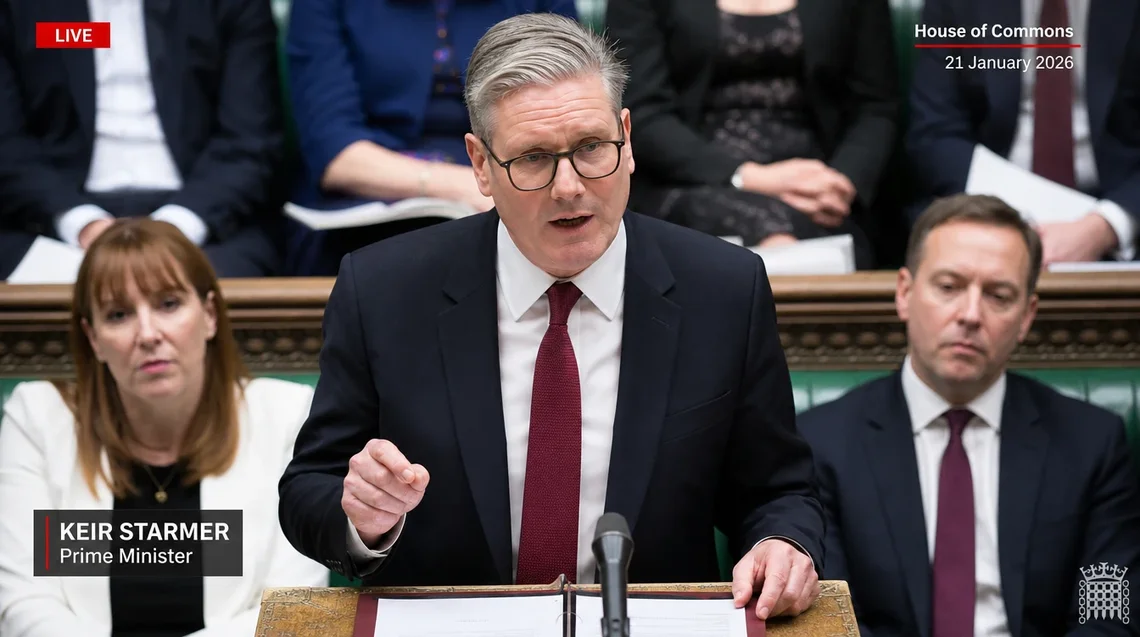
Labour pushes NHS reform bill amid funding row
Starmer government seeks to overhaul healthcare system

The Starmer government is pressing ahead with sweeping NHS reform legislation despite an intensifying row over healthcare funding, with ministers insisting the overhaul is essential to reducing waiting lists that currently stand at more than 7.5 million in England, according to NHS England figures. The Health and Social Care Reform Bill, which cleared its second reading in the Commons this week, represents the most significant restructuring of the health service in over a decade, but it has drawn sharp criticism from opposition parties and healthcare unions who argue the funding envelope remains wholly inadequate for the scale of ambition involved.
The Bill's Core Provisions
The legislation sets out a framework for integrating primary and secondary care services under streamlined regional health authorities, replacing the existing integrated care board structure introduced under the previous Conservative government. Ministers say the changes are designed to eliminate bureaucratic duplication and redirect resources toward frontline patient care, with Health Secretary Wes Streeting describing the current system as "structurally unfit" for the demands placed upon it, according to Hansard parliamentary records.
Structural Changes to NHS England
Among the most contentious provisions is a proposal to reduce the number of NHS England's senior administrative tiers, a move the government says will save hundreds of millions of pounds annually that can be reinvested in clinical services. Officials said the reorganisation would affect thousands of administrative roles, though the precise redundancy figures remain subject to workforce consultation processes currently underway. The British Medical Association has expressed concern that reorganisation costs historically exceed projected savings in NHS restructuring exercises, a warning echoed by the Health Foundation think-tank in analysis published ahead of the bill's second reading.
Workforce and Retention Measures
The bill also contains provisions intended to address the chronic workforce crisis that has seen tens of thousands of nursing and medical vacancies persist across NHS trusts. These include new statutory duties on NHS employers regarding flexible working arrangements and a framework for international recruitment that seeks to comply with World Health Organisation ethical guidelines on healthcare worker migration. Critics, however, note that the legislation contains no binding pay commitments, and NHS trade unions have signalled continued industrial unrest remains a possibility unless substantive pay negotiations accompany the structural reforms.
Related Articles
Party Positions: Labour argues the reform bill is essential to modernise the NHS, cut waiting times and deliver on its central electoral mandate on health, insisting structural change must accompany increased investment. Conservatives oppose the legislation, describing it as a costly top-down reorganisation reminiscent of the Andrew Lansley reforms they themselves later acknowledged as disruptive, and argue the government should focus spending on frontline services rather than management restructuring. Lib Dems have offered qualified support for reform in principle but are pushing for a series of amendments including stronger mental health provisions, greater transparency on private sector involvement in NHS contracts, and a statutory commitment to publishing annual workforce gap reports.
The Funding Dispute
Running parallel to the legislative debate is a deepening argument over whether the Treasury has committed sufficient resources to make reform viable. Health economists at the King's Fund have estimated that reversing the deterioration in NHS performance over the medium term requires sustained real-terms spending growth of at least 3.5 percent annually, a figure significantly above what current multi-year settlement figures imply, according to analysis circulated to MPs ahead of the bill's committee stage.
Treasury Constraints and Departmental Tensions
Reports published by the Guardian and subsequently corroborated by the BBC have described persistent tension between the Department of Health and Social Care and HM Treasury over the precise parameters of the NHS budget. According to those reports, Streeting has sought additional capital investment commitments beyond those announced in the last spending review, arguing that the physical infrastructure of the NHS — including crumbling hospital estates and outdated diagnostic equipment — represents a bottleneck that administrative reform alone cannot remove. Treasury sources, speaking anonymously to multiple outlets, are said to have pushed back against what they characterise as an open-ended commitment with insufficient productivity conditionality attached.
Public polling data underscores the political stakes. According to YouGov surveys conducted recently, the NHS consistently ranks as the single most important issue for British voters, with dissatisfaction with current NHS performance at historically elevated levels. The government is acutely aware that its credibility on health policy is central to its electoral coalition, officials said.
| Indicator | Figure | Source |
|---|---|---|
| NHS England waiting list (approx.) | 7.5 million patients | NHS England |
| Commons second reading majority | Approx. 70 seats (est.) | Hansard / Parliamentary Record |
| Voters citing NHS as top issue | 58% | YouGov (recent polling) |
| NHS workforce vacancies (England) | Approx. 112,000 | NHS Digital / ONS |
| Estimated annual admin savings (govt. projection) | £500m+ | DHSC |
| Required real-terms annual spend growth (est.) | 3.5% | King's Fund |
| Public satisfaction with NHS | 24% (near record low) | Ipsos / British Social Attitudes |
Parliamentary Arithmetic and Opposition Tactics
With Labour's substantial Commons majority, the bill is widely expected to pass its remaining legislative stages, though the committee process is anticipated to be bruising. Conservative health spokespersons have tabled a series of wrecking amendments designed to force votes on the private finance provisions within the bill, seeking to exploit Labour backbench unease about any expansion of the role of private providers in NHS service delivery.
Backbench Concerns Within Labour
A number of Labour MPs representing constituencies with strong trade union affiliations have privately raised concerns about the pace and scope of the workforce consultation provisions, according to reporting by the Guardian. There is particular sensitivity around provisions that critics argue could facilitate outsourcing of certain NHS services to independent sector treatment centres, though government ministers have strongly disputed that interpretation of the bill's text. The scale of the Labour majority means rebellion would need to be substantial to threaten the legislation's passage, but ministers are understood to be working to reassure wavering backbenchers ahead of the committee stage votes, officials said.
The Lib Dems, meanwhile, are pursuing a constructive opposition strategy, using their amended standing in the new Parliament to push for substantive changes rather than outright opposition. Spokesperson for health Ed Davey has repeatedly linked the NHS debate to broader questions of social care funding, arguing the two cannot be meaningfully separated — a position that commands cross-party sympathy even if it finds no legislative expression in the current bill. For context on how legislative obstruction plays out in comparable anglophone democracies, the dynamics bear some resemblance to the procedural battles seen when Senate Republicans blocked a major reform bill in Washington, or the earlier episode in which Senate Democrats blocked the Trump immigration bill — in both cases, minority parties used procedural leverage to extract concessions or delay passage of flagship legislation, a pattern now visible in Westminster's own committee rooms.
Public Opinion and Political Context
Polling by Ipsos conducted recently places public trust in Labour on NHS issues at a modest positive rating, though satisfaction figures have slipped slightly since the election as waiting list reductions have proved slower to materialise than some voters anticipated. (Source: Ipsos) The Office for National Statistics has separately published data showing that health-related economic inactivity — workers leaving the labour market due to long-term illness — remains near record highs, adding a macroeconomic dimension to what is often discussed purely as a public service debate. (Source: Office for National Statistics)
The BBC's political unit has noted that the government's broader narrative links NHS reform explicitly to its growth agenda, with Downing Street sources arguing that a healthier working-age population is a prerequisite for the productivity improvements the Treasury's fiscal plans depend upon. Whether that argument lands with voters watching waiting rooms remain crowded and ambulance response times fall short of targets is the central political question the legislation must answer.
The background to the current push is covered in detail in reporting on how Starmer pledged an NHS overhaul as waiting lists continued to grow, a commitment now being translated — with considerable friction — into statute.
What Comes Next
The bill enters its committee stage in the coming weeks, with clause-by-clause scrutiny expected to extend well into the parliamentary term. Ministers have indicated they will resist amendments that they believe fundamentally alter the structural architecture of the legislation, though they have signalled openness to technical changes on data-sharing provisions and the governance composition of the new regional health authorities.
Implementation Timeline and Risks
Officials said the government intends to begin phased implementation of the new regional authority structures within eighteen months of royal assent, a timeline that health management experts have described as ambitious given the complexity of the workforce transfer arrangements involved. The National Audit Office is expected to publish a preparedness review ahead of the report stage, which will give opposition parties additional ammunition if the findings are critical of implementation planning. Patient advocacy groups, including those representing people on long-term waiting lists, have broadly welcomed the reform ambition while urging the government not to allow structural reorganisation to distract clinical staff from immediate patient care pressures — a warning that echoes every major NHS reform exercise of the past three decades.
The political and policy trajectory of this legislation will serve as one of the defining tests of the Starmer government's first full parliamentary term. With the NHS at the apex of voter concern, the consequences of either botched implementation or insufficient funding are ones that Downing Street strategists are under no illusions about. Whether the bill ultimately delivers shorter waiting times and a more sustainable health service, or becomes another chapter in the long history of NHS reorganisations that promised more than they delivered, will depend in large part on whether the funding dispute between health ministers and the Treasury is resolved in the months ahead.