Starmer Charts Course on NHS Reform as Waiting Lists Persist
Labour government unveils fresh funding strategy for health service

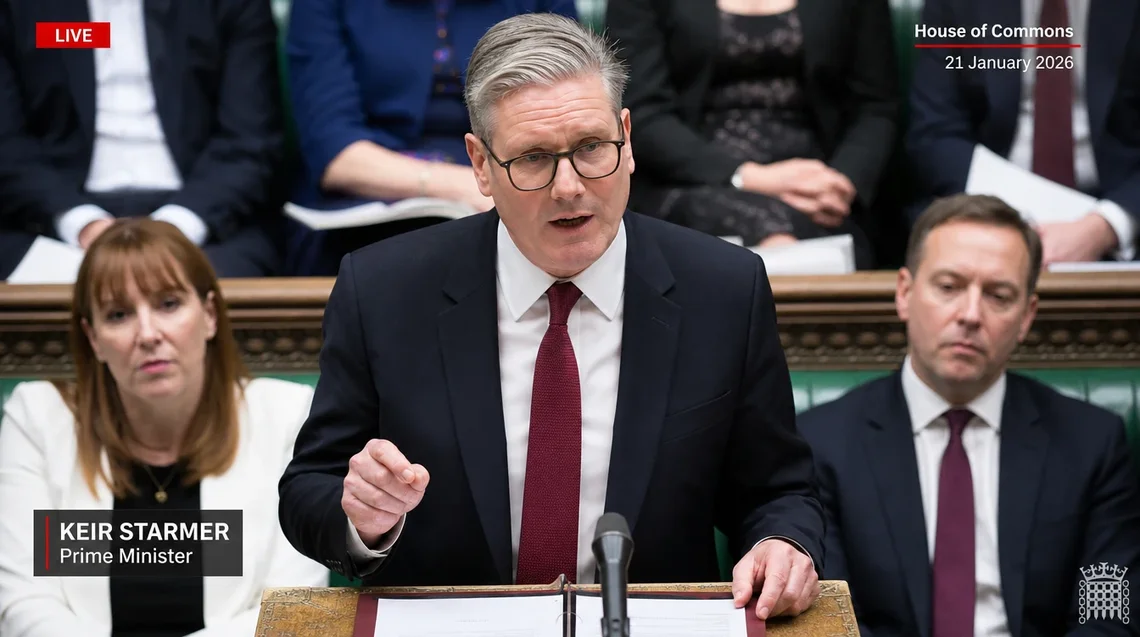
Prime Minister Keir Starmer has set out a sweeping new funding strategy for the National Health Service, vowing to bring down waiting lists that currently stand at historically elevated levels and represent what ministers describe as the defining domestic policy challenge facing the Labour government. The announcement, made before a packed House of Commons, comes as official figures confirm that millions of patients in England remain on waiting lists for elective treatment, placing sustained pressure on Downing Street to deliver measurable improvements ahead of the next general election.
Party Positions: Labour argues that sustained investment combined with structural reform — including expanded community health hubs and a renewed workforce recruitment drive — is the only credible path to reducing waiting times and modernising a health service under acute strain. Conservatives maintain that Labour's spending commitments are fiscally irresponsible, pointing to what they describe as a lack of detailed productivity targets and warning that additional funding alone, without meaningful efficiency reform, risks repeating past failures. Lib Dems support increased NHS capital investment but have urged the government to go further on mental health provision and rural healthcare access, arguing that current proposals leave significant gaps in community-level care.
The Scale of the Challenge
Any serious accounting of the NHS crisis must begin with the numbers. According to data published by NHS England, the waiting list for elective care in England has remained stubbornly large in recent months, with some estimates placing the total number of patients awaiting treatment well above seven million. The Office for National Statistics has separately documented the knock-on effects of prolonged waiting times on workforce participation and economic productivity, lending an economic dimension to what is often framed purely as a health policy debate.
Regional Disparities
The burden of waiting times is not evenly distributed. Analysis cited by the Guardian shows that patients in parts of the North of England and coastal communities face significantly longer average waits than those in London and the South East, a disparity that ministers have acknowledged represents a structural inequity requiring targeted intervention rather than blanket national policy. Labour's strategy document specifically references "levelling up access" as a core principle, though critics note that similar language was deployed by previous administrations without translating into durable change.
Related Articles
Emergency Department Pressures
Separate from the elective backlog, accident and emergency departments have continued to record sustained pressure on performance metrics. NHS figures show that a significant proportion of patients attending A&E departments are not seen within the four-hour target window that has historically served as the key benchmark for emergency care performance. Health Secretary Wes Streeting, speaking alongside Starmer at the announcement, attributed the situation in part to what he described as years of underinvestment in social care, arguing that bed-blocking downstream from inadequate community provision is as much a driver of A&E strain as any failure within hospitals themselves.
Labour's Funding Strategy: The Detail
The government's plan centres on a multi-year capital commitment to the NHS, with funds directed toward diagnostic infrastructure, workforce expansion, and the creation of community health hubs designed to shift routine care out of hospital settings and into local environments. Officials said the strategy was developed in consultation with NHS England and integrated care boards, with the intention of aligning central funding priorities with the specific needs of regional health economies.
Workforce Recruitment and Retention
A dedicated workforce chapter within the strategy document addresses what many health economists regard as the single largest structural constraint on NHS capacity: the shortage of clinical staff. The plan commits to expanding medical school places, accelerating international recruitment within ethical frameworks agreed with source countries, and introducing a revised pay progression model intended to reduce the high attrition rates among nursing staff that have characterised the service in recent years. According to the BBC, union leaders gave a cautiously positive initial response, though representatives from the British Medical Association indicated they would scrutinise the detail of any pay offer before offering endorsement.
For deeper background on the trajectory of these commitments, readers can consult earlier reporting on how Starmer pledges NHS reform as waiting lists persist, which traced the origins of the current policy framework within Labour's first months in office.
Political Reaction at Westminster
The government's announcement was met with predictable conflict across the chamber. Conservative shadow health secretary Edward Argar challenged ministers to set out specific, measurable waiting list targets with defined timelines, arguing that the strategy as presented amounted to a repackaging of existing commitments rather than genuinely new policy. He cited Treasury figures, according to his office, suggesting that the capital envelope announced falls short of what independent health think tanks have identified as necessary to clear the backlog within any politically meaningful timeframe.
Liberal Democrat health spokesperson Helen Morgan welcomed elements of the announcement but used the debate to press the government on mental health waiting times, which she described as an equally serious crisis receiving insufficient attention relative to the political salience of physical health waiting lists. YouGov polling cited during the Commons debate showed that voters consistently rank the NHS among the top two issues of concern, making the political stakes of the government's performance on health unusually high even by Westminster standards.
Parliamentary Vote Arithmetic
| Party | Commons Seats | Position on NHS Funding Motion | Estimated Vote Share on Health (Ipsos) |
|---|---|---|---|
| Labour | 412 | For | 38% |
| Conservative | 121 | Against | 24% |
| Liberal Democrats | 72 | Abstained / Conditional Support | 14% |
| SNP | 9 | Abstained | N/A (Scotland only) |
| Reform UK | 5 | Against | 11% |
(Source: Ipsos, Office for National Statistics, House of Commons Library)
Structural Reform: Beyond the Funding Headline
Beyond the capital commitments, the strategy contains proposals that health policy specialists have described as more structurally ambitious than anything attempted under previous administrations. The plan envisages a significant expansion of the "neighbourhood health" model, under which multidisciplinary teams — combining GPs, pharmacists, physiotherapists, and social care workers — operate from shared community facilities, reducing the dependence on acute hospital settings for conditions that can be managed closer to patients' homes.
Officials said the neighbourhood health expansion would be phased, beginning in areas identified by integrated care boards as having the highest levels of deprivation and the lowest current access to primary care. The Guardian has reported that pilots of similar models in parts of the Midlands produced measurable reductions in A&E attendances over a sustained period, though health economists have cautioned against drawing overly optimistic conclusions from small-scale pilots when projecting effects at national scale.
Digital Infrastructure Investment
A section of the strategy document dedicated to technology commits funding toward expanding digital patient record systems and reducing the persistent interoperability failures that mean clinical information frequently cannot be shared efficiently between NHS providers. According to the BBC, the government has engaged with technology suppliers about accelerating the rollout of integrated care records, though no binding procurement timeline was announced as part of the current package. Analysts have noted that previous NHS technology programmes have faced well-documented delays and cost overruns, and the absence of specific delivery milestones drew comment from opposition benches.
The evolution of the government's position on health system architecture is documented in related coverage examining how Starmer Charts Course on NHS Waiting Lists, while the policy context preceding the current announcement is set out in analysis of how Starmer pledges NHS overhaul as waiting lists persist.
Public Opinion and Electoral Calculus
The political calculation underlying the announcement is not difficult to read. Ipsos tracking data show that satisfaction with the NHS, while historically resilient, has declined significantly in recent years, with the proportion of respondents describing themselves as dissatisfied with the health service reaching levels not previously recorded since regular measurement of the metric began. For a Labour government whose electoral identity has historically been bound up with the founding and defence of the NHS, those figures carry particular weight.
YouGov polling conducted recently for a national newspaper found that a majority of respondents believe the government is not moving fast enough to address waiting lists, even though a plurality credit Labour rather than the Conservatives with greater credibility on health policy in general. That combination — trust in Labour's intentions coupled with impatience over pace — defines the political environment in which the strategy has been launched.
Ministers are acutely aware that voters tend to evaluate NHS performance on the basis of personal or family experience rather than aggregate statistics. A patient who has waited eighteen months for an orthopaedic appointment is unlikely to be reassured by announcements of funding commitments that officials say will deliver results over a multi-year trajectory. The government's task, senior advisers privately acknowledge, is to demonstrate early, tangible improvements while managing expectations about the timeline for systemic change.
What Happens Next
The strategy will now move to a consultation phase involving integrated care boards, NHS trusts, clinical commissioning groups, and patient representative organisations. Officials said the government intends to publish a detailed implementation plan within the coming months, with quarterly reporting against a defined set of performance indicators to be laid before Parliament. Opposition parties have indicated they will use those reporting moments as opportunities to hold ministers to account, ensuring that the debate over NHS performance will remain a central feature of the parliamentary calendar for the foreseeable future.
For context on the record-level pressures that preceded the current strategy, the full background is available in coverage detailing how Starmer Pledges NHS Reform as Waiting Lists Hit Record.
What remains clear is that the government has staked significant political capital on its ability to deliver a visible improvement in NHS performance. The funding strategy represents the most comprehensive health policy intervention of Starmer's premiership to date, and its success or failure will shape not only the government's domestic reputation but the broader argument Labour seeks to make about the relationship between public investment, structural reform, and the renewal of Britain's most cherished public institution. Whether the scale of ambition matches the scale of the problem is a question that the coming months — and the waiting lists themselves — will ultimately answer.