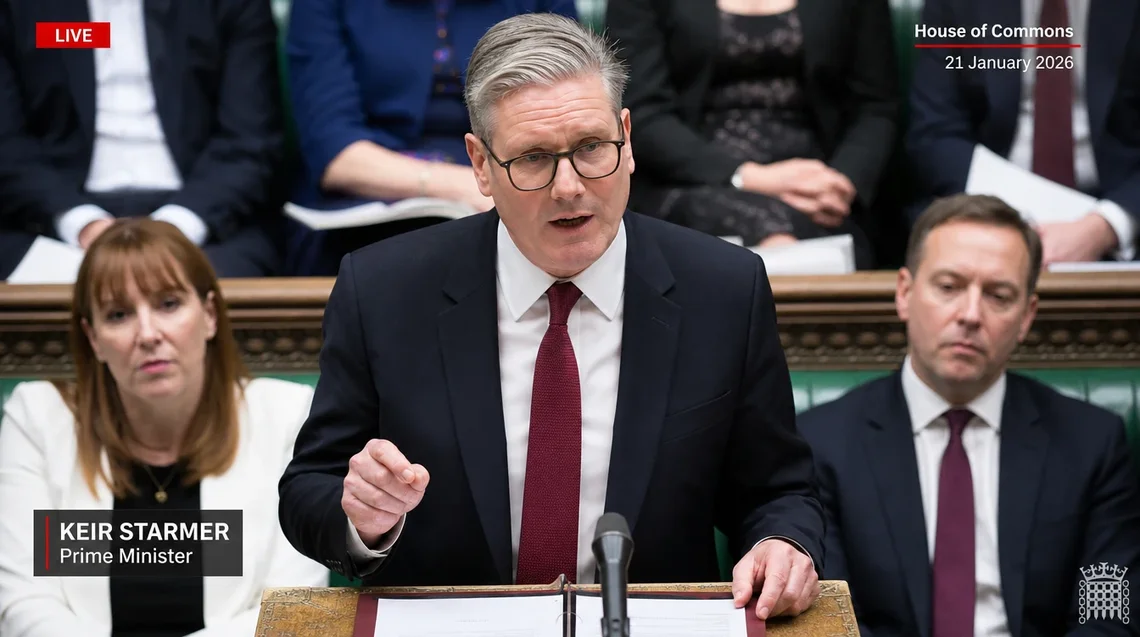
Starmer Faces NHS Pressure as Health Spending Row Deepens
Labour government defends funding plan amid staff shortages

Sir Keir Starmer's government is facing intensifying cross-party pressure over its handling of National Health Service funding, as new data indicate that staff shortages across NHS England are worsening and waiting list figures remain stubbornly high despite Labour's pledges to reform the health service. The row deepened this week after senior health union officials and opposition spokespeople demanded greater transparency over how the government intends to finance its long-term NHS workforce plan.
With public satisfaction in the NHS at historically low levels, according to polling published by Ipsos, the political stakes for Downing Street could hardly be higher. Health Secretary Wes Streeting has repeatedly insisted that the government's approach — combining targeted investment with structural reform — represents the only credible path to sustainability, but critics across the political spectrum are questioning whether the funding envelope announced so far is sufficient to meet the scale of the challenge.
Party Positions: Labour argues that its combination of NHS reform and targeted new investment, funded partly through efficiencies and partly through borrowing, is the only fiscally responsible route to clearing waiting lists and stabilising staffing. Conservatives contend that Labour inherited a funded workforce plan and has since failed to honour its commitments, accusing the government of using the NHS as cover for broader tax increases. Lib Dems are calling for a dedicated NHS and social care funding settlement, backed by a specific ring-fenced levy, and have tabled parliamentary motions demanding a cross-party commission on long-term health financing.
The Scale of the Staffing Crisis
Official figures published by NHS England show that the health service currently carries tens of thousands of vacancies across clinical and non-clinical roles, with the shortfall most acute in nursing, general practice, and mental health services. The Office for National Statistics has confirmed that workforce inactivity linked to long-term illness remains elevated across the working-age population, a trend that both increases demand on the NHS and simultaneously reduces the pool of potential recruits.
Related Articles
Nursing and GP Shortfalls
According to NHS workforce data, the vacancy rate in nursing has remained persistently high despite recruitment campaigns launched under the previous administration. General practice is under particular strain, with patient-to-GP ratios having risen sharply in recent years, according to figures cited by the British Medical Association. Health unions, including the Royal College of Nursing, have warned that without a credible retention strategy backed by meaningful pay awards, the attrition rate among experienced staff will continue to undermine any new recruitment drive. Officials at the Department of Health and Social Care said the government remains committed to delivering on its NHS Long Term Workforce Plan obligations, but declined to provide a revised timeline for meeting specific staffing targets.
Mental Health Services Under Pressure
Mental health trusts are reporting some of the most severe vacancy rates in the entire system, with community mental health teams in several regions operating well below establishment levels, according to NHS England data reviewed by health correspondents. The BBC has reported that in some areas, patients referred for talking therapies are waiting more than a year for their first appointment. Charities including Mind and the Mental Health Foundation have called on the government to ring-fence mental health spending increases, arguing that the service has historically been raided to fill deficits elsewhere in the NHS budget.
Labour's Funding Defence
Ministers have pushed back firmly against suggestions that the government has underfunded the NHS in its first budget, pointing to a real-terms increase in the health settlement announced by Chancellor Rachel Reeves. The Treasury insists that the NHS received one of the most significant single-year spending boosts in recent memory, though independent analysts at the Health Foundation and the Institute for Fiscal Studies have cautioned that the headline figure overstates the resource available for frontline services once account is taken of pay deals already committed and inflationary pressures running through NHS supply chains.
Efficiency Savings and Their Limits
A central plank of Labour's NHS strategy involves delivering substantial efficiency savings through better procurement, reduced agency staff usage, and the expansion of community-based care to reduce expensive hospital admissions. The government has set NHS England a target of identifying several billion pounds in productivity improvements, a goal that health economists and NHS trust leaders have described as ambitious. The Guardian has reported that some NHS chief executives privately regard the efficiency targets as unachievable within the stated timeframe without cuts to services that would be politically and clinically unacceptable. Officials said the government is working closely with NHS England to identify realistic savings without compromising patient safety.
Opposition Attacks Intensify
The Conservative opposition has sought to frame the current difficulties as a direct consequence of decisions made by the Starmer government rather than the cumulative result of years of underinvestment. Shadow Health Secretary Edward Argar has argued in the Commons that Labour is using NHS funding debates as a smokescreen for its broader tax and spend agenda, accusing the government of failing to publish a credible workforce plan update since taking office. The Conservatives point to polling conducted by YouGov suggesting that public confidence in Labour's ability to manage the NHS has declined since the general election, with a growing proportion of respondents expressing doubt that waiting lists will be meaningfully reduced within this parliament.
Liberal Democrat Proposals
The Liberal Democrats have taken a different approach, focusing their attacks on the social care dimension of the NHS funding crisis and arguing that any serious attempt to relieve pressure on hospitals must be accompanied by a properly funded social care system capable of supporting timely discharge. Lib Dem health spokeswoman Helen Morgan has tabled a series of parliamentary questions on delayed discharges, with the answers revealing that thousands of hospital beds remain occupied by patients who are clinically ready to leave but cannot be discharged due to the absence of adequate care packages in the community. (Source: House of Commons Written Answers)
| Indicator | Figure | Source | Period |
|---|---|---|---|
| NHS England total vacancies (all roles) | Approx. 100,000+ | NHS England Workforce Statistics | Recently published |
| Public satisfaction with NHS (very/fairly satisfied) | Below 25% | Ipsos / British Social Attitudes | Most recent survey |
| Patients waiting 18+ weeks for treatment | Over 7 million | NHS England Referral to Treatment Data | Current figures |
| Labour approval on NHS management (net) | Negative | YouGov tracker | Recent polling |
| Commons votes on NHS funding motions (govt majority) | Government retained majority | Hansard / House of Commons | Current session |
| Real-terms NHS budget increase (announced) | Approx. 3.1% real-terms | HM Treasury / Office for Budget Responsibility | Current spending review |
Waiting Lists: The Political Flashpoint
No single metric has proven more politically toxic for the government than the NHS waiting list figure. Labour came to power with an explicit commitment to bring waiting times down, a promise that defined a significant portion of its general election campaign messaging. The persistence of a list running into the millions has given the opposition a ready-made line of attack and generated sustained media scrutiny. For background on how this pressure has developed over time, see our earlier reporting on how Starmer faces pressure as NHS waiting lists swell, which traced the trajectory of the waiting list debate through the early months of this government.
Government's 18-Week Target
The government has restated its commitment to meeting the NHS constitutional standard of treating patients within 18 weeks of referral, a target that has not been met consistently across England for several years. Ministers have declined to set a specific date by which they expect to return to routine compliance with this standard, citing the need to be honest with the public about the scale of the inherited backlog. The Health Secretary told the Commons Health and Social Care Committee that meeting the target would require sustained investment, workforce growth, and the use of independent sector capacity — all of which are currently being pursued, officials said. Further detail on the government's approach to this specific challenge can be found in our analysis of how Starmer faces pressure over NHS waiting list targets.
Structural Reform Alongside Funding
Beyond the immediate funding dispute, the government has signalled its intention to pursue deeper structural reform of how the NHS operates, shifting care from hospitals into community settings and making greater use of technology and preventive medicine. Health Secretary Streeting has been publicly committed to what he describes as making the NHS a "neighbourhood health service", a slogan that has attracted both admiration and scepticism from within the health policy community. Analysts at the King's Fund have noted that the shift toward community care, while clinically desirable, requires upfront investment before it generates savings — a timing mismatch that creates real fiscal and political difficulty for the government in the short term.
Independent Sector Contracts
The government has expanded the use of independent sector treatment centres to carry out routine procedures and reduce the backlog, a policy that has drawn criticism from some within the Labour movement who oppose increased private sector involvement in NHS delivery. Officials said the approach is pragmatic and time-limited, focused on clearing the backlog rather than representing a structural shift toward privatisation. Trade unions representing NHS workers have expressed concern that independent sector expansion could undermine terms and conditions for NHS staff if not properly regulated. The broader context of the government's overhaul agenda is examined in our coverage of Starmer's NHS Overhaul Faces New Pressure on Waiting Times.
Political Outlook
The NHS funding row shows no sign of abating in the near term. With the next spending review expected to set multi-year departmental budgets, health advocates and opposition politicians alike are pressing the government to use that moment to commit to a long-term, ring-fenced health and social care settlement rather than a series of one-year allocations that make workforce and capital planning difficult. The political calculus for Downing Street is complicated by the need to balance NHS demands against commitments to fiscal rules that limit borrowing and rule out certain tax increases. As pressure mounts on multiple fronts, those following the intersection of tax policy and health spending will want to track our earlier coverage of how Starmer Faces NHS Pressure as Labour Weighs Tax Rise continues to shape internal government debate.
For Starmer personally, the NHS remains the defining domestic policy test of his premiership. His government's credibility rests in large part on demonstrating measurable progress on waiting times and staffing — two metrics that are currently moving in the wrong direction. Whether the combination of targeted investment, structural reform, and independent sector capacity proves sufficient to turn the tide will determine not only the political fortunes of this government, but the future shape of one of the country's most fundamental public institutions. (Source: Office for National Statistics; YouGov; Ipsos; BBC; The Guardian)