Starmer Government Unveils NHS Reform Plan Amid Funding Debate
Labour pushes structural changes as health service faces ongoing pressures
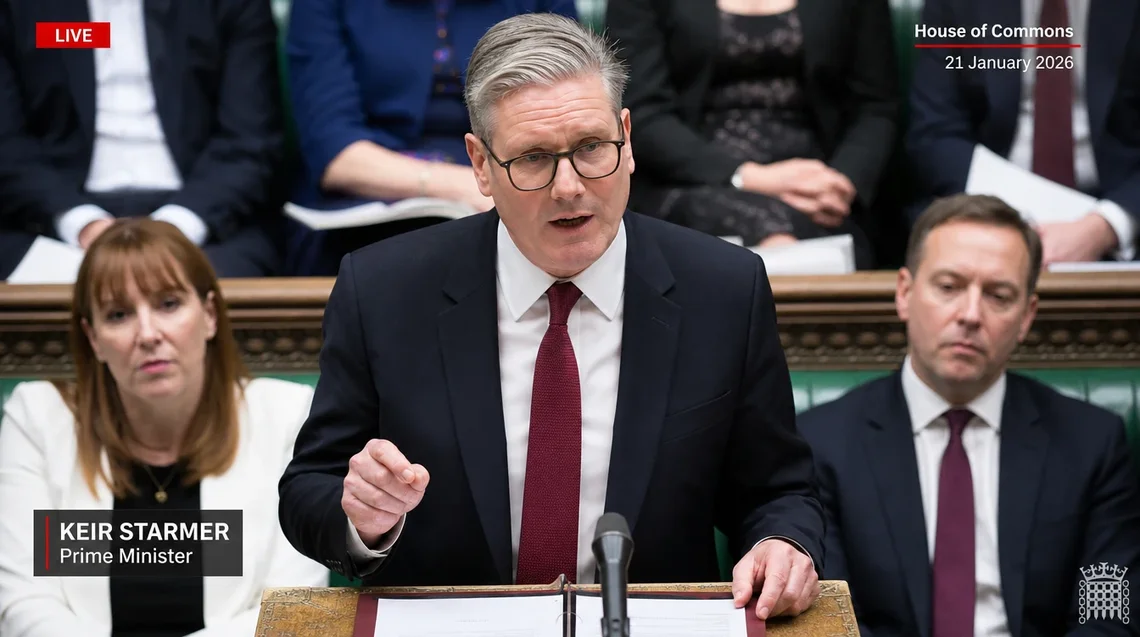
The Starmer government has set out a sweeping programme of structural reform for the National Health Service, coupling proposed organisational changes with a renewed push for additional funding as the health service continues to face record waiting lists, workforce shortages and sustained pressure on accident and emergency departments. Health Secretary Wes Streeting confirmed the package of measures in a Commons statement, framing the plan as the most significant reorganisation of NHS England's operating architecture in more than a decade. The announcement has immediately reignited divisions at Westminster over how best to stabilise — and ultimately transform — a health system that polling consistently identifies as the public's foremost political concern.
What the Reform Package Contains
At the core of the government's proposals is a restructuring of NHS England, the arm's-length body responsible for commissioning and overseeing health services across the country. Ministers have indicated their intention to bring greater central accountability to bear on the organisation, reducing layers of management and realigning NHS England's functions more closely with the Department of Health and Social Care. Officials said the move is designed to eliminate duplication, speed up decision-making and ensure that resources flow more directly to frontline services.
Integrated Care Boards and Primary Care
The reform plan also touches on the network of Integrated Care Boards (ICBs) established under the previous government's Health and Care Act. Under the new framework, officials said ICBs will face greater scrutiny over their spending allocations and will be required to demonstrate measurable outcomes in primary care access within agreed timeframes. The government has pointed to data showing that more than seven million people currently sit on NHS waiting lists, a figure that has drawn sustained criticism from opposition benches and patient advocacy groups alike (Source: NHS England).
Ministers have additionally signalled an intention to expand the role of community pharmacies and paramedical practitioners in delivering routine care, reducing the burden on general practitioners who, according to workforce data, are already operating under significant capacity constraints (Source: Office for National Statistics).
Related Articles
Digital Infrastructure Investment
Alongside the structural changes, the government has committed to accelerating investment in NHS digital infrastructure, including electronic patient records systems that remain fragmented across hospital trusts. Officials said the aim is to achieve interoperability between systems currently running incompatible platforms, a problem that health analysts have long identified as a drag on clinical efficiency. The precise capital allocation for the digital strand of the plan has not yet been confirmed, with the Treasury understood to be in ongoing discussions with the Department of Health ahead of the forthcoming spending review.
Party Positions: Labour supports structural reform of NHS England alongside targeted funding increases, arguing that management inefficiency must be addressed before additional money can deliver full value; Conservatives have challenged the government to publish detailed costings, warning against top-down reorganisation they say has historically disrupted frontline services, while defending their own record on NHS capital investment; Lib Dems are calling for an immediate and ring-fenced funding settlement for mental health services and primary care, arguing that structural changes alone will not reduce waiting lists within the current Parliament.
The Funding Debate at Westminster
The structural proposals cannot be separated from the parallel argument over how much money the NHS requires. Government figures have pointed to a real-terms increase in the health budget as evidence of Labour's commitment to the service, but opposition parties and independent health economists have questioned whether the headline figures translate into sufficient growth once inflation and demographic demand are factored in.
Treasury Constraints and Spending Review Pressures
According to analysis published ahead of the spending review period, the NHS in England faces a potential funding gap running into several billion pounds if productivity does not improve at a pace consistent with demographic projections (Source: Institute for Fiscal Studies). Chancellor Rachel Reeves has declined to pre-commit to specific health spending totals before the review concludes, a position that has frustrated some Labour backbenchers who argue that workforce recruitment — particularly in nursing and general practice — cannot wait for a lengthy departmental process.
The government has also faced questions about the sustainability of the social care funding model, with official projections indicating that an ageing population will place exponentially greater demands on both NHS acute services and local authority care budgets. Officials said a separate consultation on adult social care integration will run in parallel with the NHS reform process, though critics have argued the two strands should be addressed simultaneously rather than sequentially. Readers following the broader funding trajectory may find relevant context in earlier coverage of the Starmer Government's major NHS funding overhaul, which set out the fiscal baseline from which the current reform plan proceeds.
Public Opinion and Political Context
Polling data underscores the political significance of the moment. According to YouGov, the NHS consistently ranks as the single most important issue facing the country among British adults, with satisfaction levels for the health service currently at some of their lowest recorded points. A separate Ipsos survey found that a majority of respondents believed the government had not yet done enough to address waiting times, even as they expressed support for the principle of NHS reform when framed around improved efficiency rather than privatisation.
| Metric | Figure | Source |
|---|---|---|
| NHS waiting list (England) | 7.4 million pathways | NHS England |
| Public satisfaction with NHS | 24% (lowest recorded) | British Social Attitudes / Ipsos |
| Adults ranking NHS as top issue | 52% | YouGov |
| GP appointments delivered per week | approx. 1.4 million | NHS Digital / ONS |
| NHS England annual budget (current) | £167 billion (approx.) | HM Treasury / DHSC |
| Projected funding gap (next 5 years) | Up to £37 billion | Institute for Fiscal Studies |
Labour's Electoral Calculation
For the Starmer administration, the political calculus is clear. Labour won power in part on an implicit compact with the electorate over public services, and the NHS sits at the heart of that contract. Internal party polling, referenced in reporting by the Guardian, has suggested that failure to demonstrate visible progress on waiting lists before the midpoint of the Parliament could erode the government's core electoral coalition, particularly among older voters and those in suburban seats where NHS access is a daily lived concern (Source: The Guardian).
The Prime Minister's office has been careful to frame the reform agenda not as an ideological project but as a managerial necessity — a distinction Streeting has reinforced in multiple broadcast appearances. The BBC reported that No. 10 is particularly keen to avoid the perception that structural reorganisation is being used as a substitute for funding, a charge that dogged previous administrations' health reforms (Source: BBC).
Opposition Reactions
The Conservative response has centred on fiscal credibility. Shadow Health Secretary Edward Argar argued in a Commons response that the government's reform package lacks detailed costings and risks repeating what the party characterises as Labour's historical tendency toward top-down NHS reorganisation that disrupts clinical staff without delivering patient benefit. The Tories have also sought to defend elements of their own legacy, pointing to the Elective Recovery Plan and investments made during the post-pandemic period.
Liberal Democrat Position
The Liberal Democrats have staked out a distinctive position, welcoming elements of the structural review while arguing that it does not go far enough on mental health provision and rural primary care access. The party's health spokesperson has called for a dedicated mental health budget line to be protected from any efficiency savings generated by the wider reorganisation, a demand that has found some sympathy among Labour backbenchers representing constituencies with significant rural health deserts.
For those tracking the evolution of government thinking on this file, earlier reporting on the Starmer NHS reform plan amid the funding row provides useful context on the internal debates that preceded the current announcement, while analysis of the Starmer funding boost pledge charts how ministerial language around financial commitments has shifted over recent months.
What Happens Next
The government's timetable envisages primary legislation on the NHS England restructuring being introduced in the current parliamentary session, with secondary legislation covering ICB accountability frameworks to follow. Officials said a formal workforce strategy — long demanded by royal colleges representing doctors and nurses — will be published alongside the spending review settlement, though they declined to confirm whether it will include binding recruitment targets.
Stakeholder Response
Initial reaction from NHS Confederation, which represents health service leaders, was cautious rather than hostile. The body acknowledged the need for structural clarity but warned that any reorganisation must be accompanied by adequate transitional funding to prevent the disruption seen during previous reforms from impeding day-to-day patient care. The British Medical Association indicated it would engage with the consultation process while reserving judgment on the final legislative text.
Patient campaign groups have broadly welcomed the acknowledgment that the current system requires fundamental change, but several have reiterated that structural efficiency gains, however significant, cannot substitute for the direct investment in clinical capacity that they argue the waiting list crisis demands. The government's NHS funding plan will continue to face scrutiny in the weeks ahead as the spending review process moves toward its conclusion and Parliament begins formal examination of the reform legislation.
With the NHS debate now firmly re-established as the dominant fault line in British domestic politics, the coming parliamentary months will test whether the Starmer government can translate a coherent reform narrative into measurable outcomes — and whether the funding settlement that underpins it will prove sufficient to meet the scale of the challenge that decades of deferred investment and rising demand have combined to produce.