Starmer Pledges NHS Funding Boost Amid Staff Shortages
Labour government announces £3bn investment plan

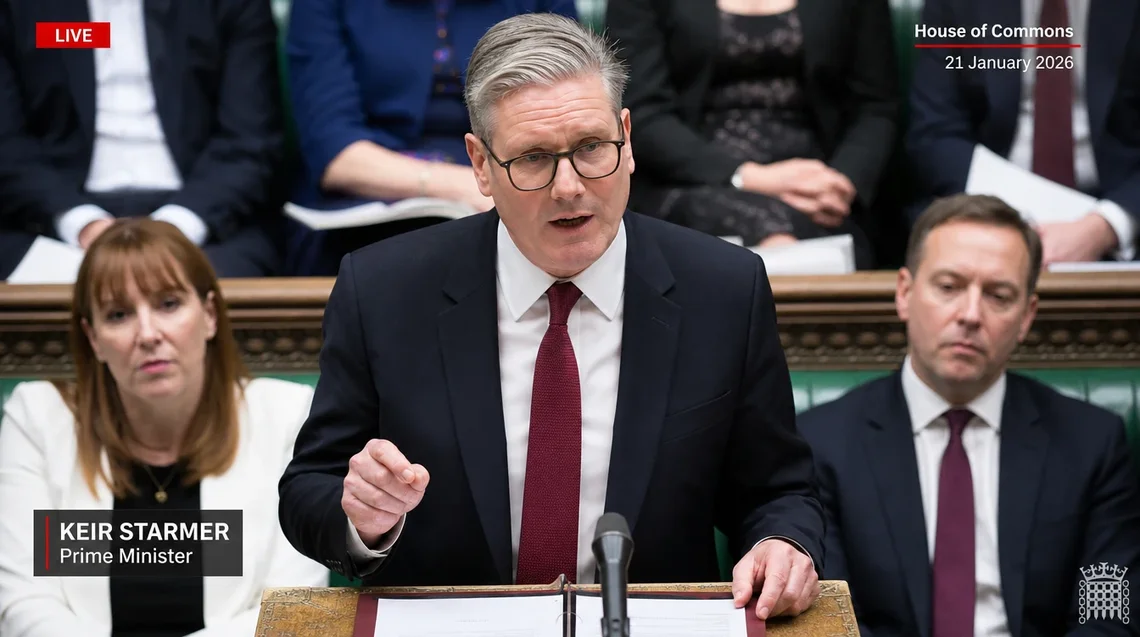
Prime Minister Keir Starmer has announced a £3 billion investment package for the National Health Service, framing the pledge as a direct response to what government officials describe as a systemic staffing crisis that has left NHS waiting lists at near-record levels. The announcement, made in a statement to the House of Commons, represents one of the most significant single health spending commitments by the Labour administration since taking office.
The funding, which officials said will be distributed across primary care, mental health services, and emergency departments, comes as pressure mounts on the government to deliver on its central election promise of cutting waiting times and stabilising a health service that successive administrations have struggled to reform. According to the Office for National Statistics, the NHS currently faces a workforce gap running into the tens of thousands of unfilled posts across England alone.
Party Positions: Labour says the £3bn investment is a necessary corrective to years of underfunding and will prioritise frontline staffing and infrastructure; Conservatives argue the announcement lacks structural reform and risks repeating the cycle of cash injections without accountability; Lib Dems broadly welcome additional investment but are calling for a specific ringfenced mental health budget and greater transparency over how funds will be allocated regionally.
The Scale of the Staffing Crisis
The backdrop to the announcement is a workforce picture that NHS leaders and independent analysts have described as the most acute in the health service's history. Data published by NHS England show tens of thousands of vacancies across nursing, GP, and specialist consultant roles, with rural and coastal areas disproportionately affected. The Guardian has reported that some hospital trusts are operating with nursing vacancy rates above twenty per cent, forcing reliance on expensive agency staff that consumes budget intended for patient care.
Related Articles
Vacancy Rates and Regional Disparities
Officials at the Department of Health and Social Care said the funding allocation will include a specific workforce incentive scheme designed to attract newly qualified nurses and doctors to underserved regions. According to figures cited in the Commons statement, the government intends to fund the training of an additional number of healthcare professionals over the current parliament, though precise cohort figures are subject to ongoing negotiations with NHS England and the devolved administrations. The BBC has noted that previous workforce expansion pledges have frequently fallen short of their targets once the pipeline of qualified candidates is factored in against retirement rates among existing staff.
Mental Health Services Under Particular Strain
Within the broader staffing picture, mental health services have been identified by health economists and frontline unions as facing particular pressure. Waiting times for community mental health referrals have lengthened considerably in recent periods, with the Royal College of Psychiatrists warning in public statements that the current trajectory is unsustainable without structural investment. Officials said a portion of the £3bn envelope is specifically designated for community mental health infrastructure, though the precise breakdown between capital and revenue spending had not been finalised at time of publication.
Government's Rationale and Political Context
Starmer's announcement arrives at a politically charged moment. The Prime Minister is under pressure from both opposition benches and elements of his own parliamentary party to demonstrate tangible progress on the public services agenda that defined Labour's election campaign. Polling data from YouGov and Ipsos consistently show the NHS remains the highest-priority issue for the British public, a factor that Downing Street officials are acutely aware of when managing the government's communications calendar.
For further context on Labour's evolving position on health investment, see coverage of how Labour pledges new NHS funding push amid staff shortages has developed as a recurring legislative theme across the current parliamentary session.
Opposition Response
The Conservative Party, now in opposition, responded through its health spokesman by arguing that the announcement represents a familiar Labour pattern of injecting cash without the structural reforms necessary to improve productivity. Shadow Health Secretary spokespeople said the party would scrutinise closely whether the funding represented genuinely new money or a repackaging of previously announced commitments — a line of attack that has gained traction in previous spending announcements from the Treasury. The Liberal Democrats, meanwhile, said they welcomed investment in principle but demanded an independent review body be established to monitor delivery against stated targets.
Polling Landscape and Public Opinion
Public trust in the government's management of the NHS remains a critical variable in the political calculus. According to YouGov polling published recently, a majority of respondents said they believed the NHS needed both more funding and fundamental reform — a nuanced position that creates both opportunity and risk for the government's messaging strategy. Ipsos data similarly indicates that while voters credit Labour with stronger intentions on public services, satisfaction with actual NHS performance has not yet shown material improvement since the change of government. (Source: YouGov; Source: Ipsos)
| Metric | Current Position | Government Target | Source |
|---|---|---|---|
| NHS England Workforce Vacancies | Tens of thousands unfilled posts | Significant reduction over parliament | NHS England / ONS |
| Public prioritisation of NHS as top issue | Consistently highest-ranked concern | N/A | YouGov / Ipsos |
| New Investment Announced | £3bn package | Distributed across primary care, mental health, A&E | Department of Health |
| Voters supporting both more funding AND reform | Majority in recent polling | N/A | YouGov |
| Agency staffing cost pressure | Significant proportion of trust budgets | Reduction through permanent recruitment drive | NHS England / The Guardian |
What the £3bn Will Fund
Government officials said the investment will be structured in three broad streams: capital investment in diagnostics and infrastructure, a workforce recruitment and retention fund, and a technology modernisation programme intended to reduce administrative burden on clinical staff. The latter element, officials noted, responds directly to long-standing complaints from frontline workers that excessive paperwork and outdated IT systems consume hours that should be spent on patient care.
Technology and Digitalisation Component
The digital modernisation strand of the package has attracted interest from health policy analysts who argue it represents the most potentially transformative element of the announcement. According to briefings provided to the health select committee, the government intends to accelerate the rollout of electronic patient records across all NHS trusts in England, a project that has been repeatedly delayed under previous administrations. Officials said full interoperability between GP systems and hospital records remains a stated objective, though the timeline for delivery is subject to procurement and implementation constraints that independent experts have previously flagged as underestimated.
Readers seeking background on the broader structural reform debate that contextualises this spending decision can find relevant analysis in reporting on Starmer pledges NHS funding boost amid reform debate, as well as the government's stated long-term strategy outlined in coverage of Starmer pledges NHS funding boost amid reform push.
Devolved Administrations and Barnett Consequentials
The announcement raises questions about consequential funding for devolved health systems in Scotland, Wales, and Northern Ireland. Under the Barnett formula, a proportion of new English health spending generates additional allocations to the devolved governments, though the precise sums depend on how the Treasury categorises the expenditure. Officials confirmed that Treasury discussions with the devolved administrations were ongoing and that full consequential figures would be published alongside the relevant supplementary estimates. (Source: Office for National Statistics)
Scotland and Wales: Different Priorities
In Scotland, where health is fully devolved to Holyrood, the Scottish Government has indicated it will set its own priorities for any additional consequential funding rather than mirror Westminster's allocation model. The Welsh Government has similarly stated it will assess the consequentials against its own health board restructuring programme, which is at a different stage of implementation than NHS England's reform agenda. Northern Ireland's position remains contingent on the functioning of the Executive and its own budget settlement discussions with the Treasury.
Parliamentary Scrutiny and Next Steps
The announcement will face detailed scrutiny from the Health and Social Care Select Committee, which has indicated it intends to call senior Department of Health officials to give evidence on the funding distribution methodology. Opposition MPs on the committee are expected to press for clarity on whether the £3bn figure includes previously announced capital commitments or represents genuinely additional Treasury allocation — a distinction that has complicated the interpretation of previous health spending announcements across multiple administrations.
For the trajectory of this story from earlier in the parliamentary cycle, see related reporting on Starmer pledges NHS overhaul amid staff shortages, which documents the evolution of the government's approach before the specific investment figure was confirmed.
The Health Secretary is expected to provide further detail on the phasing and accountability mechanisms attached to the £3bn package when she appears before the committee in the coming weeks. Officials said a formal implementation framework, including measurable milestones for workforce expansion and waiting time reduction, would be published ahead of that appearance. Whether the announcement marks a turning point in the government's management of the health brief or another instalment in a long cycle of pledges and delayed delivery will ultimately be judged against outcomes that, by the nature of NHS reform, will take years to fully materialise. What is clear from current polling and political intelligence is that the government believes it has little room for error on an issue that voters regard as the defining test of Labour's fitness to govern. (Source: YouGov; Source: Ipsos; Source: Office for National Statistics)