Starmer pledges NHS overhaul as waiting lists grow
Labour government announces major funding boost for health service

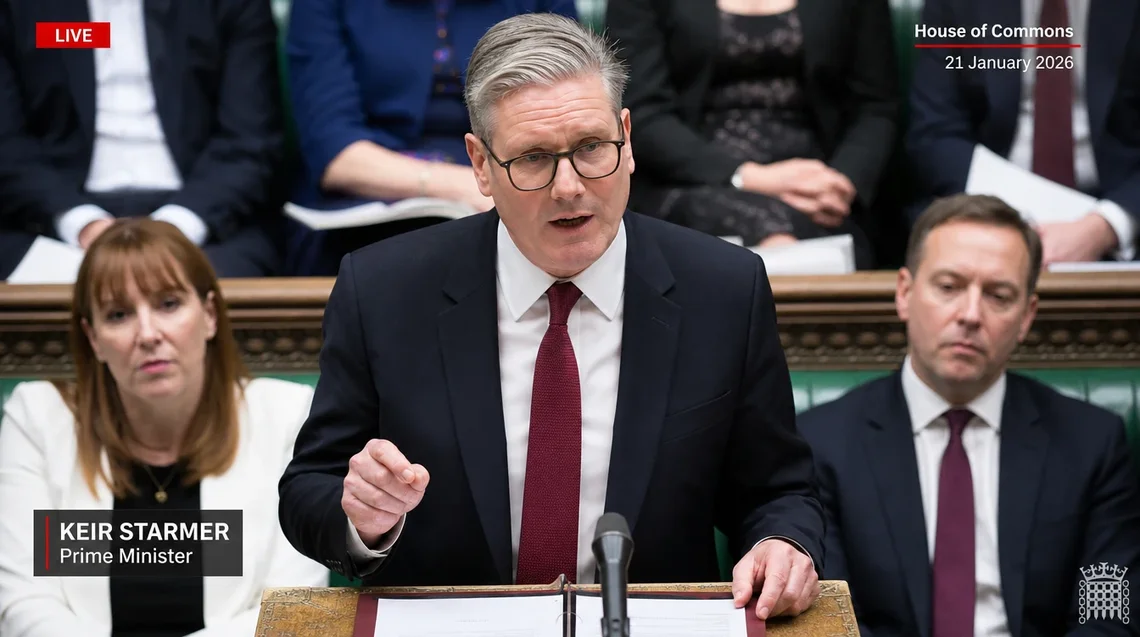
Sir Keir Starmer has announced a sweeping overhaul of the National Health Service, backed by a significant injection of public funding, as official figures reveal NHS waiting lists in England remain at near-record levels with more than 7.5 million patients awaiting treatment. The announcement, made from Downing Street, represents the Labour government's most ambitious domestic policy commitment since taking office and sets the stage for a prolonged parliamentary battle over health reform financing.
The pledge comes amid mounting pressure on the government to translate its election mandate on public services into tangible results, with independent polling and cross-party criticism intensifying in recent weeks over the pace of NHS recovery. Ministers insist the package, which combines capital investment with structural reform, will cut waiting times within the current Parliament — a promise that analysts and opposition figures are already scrutinising closely.
Party Positions: Labour supports a major state-led funding increase for the NHS combined with structural reforms, including a shift toward community and preventative care, and pledges to reduce waiting lists as a flagship domestic priority. Conservatives argue the government is repeating the cycle of cash injections without meaningful reform, warning that without productivity conditions attached to new spending, waiting lists will not fall sustainably. Lib Dems broadly welcome increased NHS investment but are pressing the government to go further on mental health provision and rural GP access, calling current proposals insufficient given the depth of the crisis in primary care.
The Scale of the Crisis
Any assessment of the government's ambitions must begin with the scale of the problem it has inherited. NHS England data show that the waiting list for elective treatment has remained stubbornly elevated, with millions of patients waiting longer than the 18-week statutory target. Emergency department performance figures similarly show sustained pressure, with significant proportions of patients waiting beyond four hours in accident and emergency settings across England.
Related Articles
Record Waits Across Specialties
The pressure is not confined to a single area of medicine. Orthopaedics, ophthalmology, cardiology and gastroenterology are among the specialties with the longest backlogs, according to NHS England performance data. Patients requiring hip replacements and cataract surgery account for a disproportionate share of those waiting beyond a year for treatment. The picture is particularly acute in regions outside London, where workforce gaps and aging infrastructure compound the challenge, health service analysts have noted.
As reported previously on ZenNewsUK, NHS waiting lists hit record high as GP shortages worsen, a trend that has continued to shape the political and clinical environment in which this announcement arrives. The government is therefore under no illusion about the baseline it is working from.
Primary Care Under Pressure
General practice remains the gateway through which most patients access specialist NHS care, and the state of that gateway is central to understanding the waiting list problem. GP numbers have failed to keep pace with population growth and demographic demand, leaving millions of patients struggling to secure timely appointments. The downstream effect, officials acknowledge, is increased pressure on emergency departments and delayed diagnosis — adding to the elective backlog rather than relieving it.
A recent analysis published by the Office for National Statistics highlighted widening regional disparities in access to primary care, with rural and coastal communities among the worst served. The government's reform package includes specific commitments around GP recruitment and retention, though critics have questioned whether the financial incentives on offer are sufficient to reverse what amounts to a decade-long structural decline in the general practice workforce. (Source: Office for National Statistics)
What the Government Is Proposing
At the heart of the Prime Minister's announcement is a multi-year capital and revenue settlement for the NHS that ministers describe as the most significant since the service's post-pandemic recovery period. The package is understood to include direct investment in surgical hubs designed to process high volumes of elective procedures, alongside expanded diagnostic capacity through community diagnostic centres — a model piloted under the previous administration but which Labour has pledged to scale significantly.
Shifting Care Out of Hospitals
A central plank of the reform programme is a structural shift in how care is delivered. Ministers argue that too much NHS activity is concentrated in acute hospital settings, which are among the most expensive and least efficient environments for treating conditions that could be managed in community or primary care. The government's plan involves redirecting a portion of new funding toward community health teams, district nursing, and expanded mental health liaison services.
For further context on the mental health dimension of these pressures, ZenNewsUK has previously reported on how the mental health crisis strains the NHS as waiting lists hit record levels, a factor ministers say is embedded within their reform strategy rather than treated as a separate policy silo.
The approach broadly mirrors recommendations from NHS England's own long-term workforce plan and the independently chaired review of community services, though health policy academics have noted that similar commitments made by previous governments produced limited results without sustained implementation infrastructure and ring-fenced funding streams. (Source: BBC)
Technology and Productivity
The government has also placed significant emphasis on technology as a driver of NHS productivity. Investment in electronic patient records interoperability, artificial intelligence-assisted diagnostic tools, and digital outpatient appointment systems forms a discrete strand of the package. Officials said the aim is to reduce administrative friction within the NHS, allowing clinical staff to spend more time on direct patient care.
Productivity, rather than headcount alone, has become the defining battleground in the debate over NHS reform. Treasury analysis, cited by officials during the Downing Street briefing, argues that the NHS has significant untapped capacity that better management systems and digital infrastructure could unlock — without necessarily requiring equivalent increases in staffing costs. Sceptics, including senior clinicians and health economists, have argued publicly that such projections require cautious scrutiny given the variable outcomes of previous NHS technology programmes. (Source: The Guardian)
Parliamentary and Political Dynamics
The announcement has already generated significant parliamentary activity. Labour backbenchers representing constituencies with the most acute waiting list pressures have broadly welcomed the package, with several Members of Parliament describing it as long overdue. However, a handful of Labour MPs representing areas with particular concerns about mental health service provision have privately indicated they will press ministers for stronger commitments before the associated reform legislation reaches its committee stage.
Opposition Response
The Conservatives moved swiftly to challenge the government's framing, with the shadow health secretary arguing at the despatch box that Labour's record since taking office demonstrates a pattern of announcements without delivery. The opposition has pointed to continuing waiting list figures and recent NHS performance data as evidence that the government's early health policies have not yet translated into improvements for patients.
The parliamentary backdrop to this debate is explored in detail in ZenNewsUK's coverage of how Labour pushes the NHS reform bill amid a funding row, which sets out the competing financial and ideological fault lines shaping the legislation's progress through Westminster. The Liberal Democrats, meanwhile, have tabled a series of amendments focused specifically on rural health access and mental health waiting times, issues on which they calculate they can maintain cross-party pressure on the government throughout the legislative process.
Public Opinion and Polling Context
Understanding the political weight of NHS policy requires an examination of where public opinion currently stands. Polling conducted by YouGov and Ipsos in recent months has consistently shown the NHS ranked among the top two or three concerns for voters across England, Wales and Scotland, irrespective of party affiliation. Labour strategists regard the issue as both an electoral asset — given the party's historic association with founding the health service — and a significant vulnerability should waiting lists fail to fall during this Parliament. (Source: YouGov) (Source: Ipsos)
| Indicator | Figure | Source |
|---|---|---|
| Patients on NHS elective waiting list (England) | Approx. 7.5 million | NHS England |
| Patients waiting over 18 weeks | Over 3 million | NHS England |
| Voters ranking NHS as top concern | 61% | YouGov |
| Public satisfaction with NHS (net score) | Negative territory | Ipsos / King's Fund |
| Labour government approval on NHS handling | 38% approve / 44% disapprove | YouGov |
| GPs per 100,000 population change (decade) | Declined by approx. 7% | Office for National Statistics |
The Mental Health Dimension
Notably absent from earlier iterations of NHS waiting list policy, mental health has been pushed to the foreground of the current package in ways that health campaigners have cautiously welcomed. The government has committed to specific waiting time targets for Child and Adolescent Mental Health Services as well as adult community mental health teams — areas where waiting times have reached levels described by NHS leaders as clinically unsustainable.
A Separate But Connected Crisis
Mental health demand has grown substantially in the wake of the pandemic period and subsequent cost-of-living pressures, generating a distinct strain on NHS capacity that interacts directly with physical health waiting lists. Patients experiencing mental health crises who are not supported in community settings frequently present at emergency departments, consuming acute resources and adding to overall system pressure. ZenNewsUK has reported extensively on this phenomenon, including in coverage examining how UK mental health services face record waiting times at virtually every level of provision.
Officials said the government regards integrated physical and mental health care as a prerequisite for sustainable NHS recovery, not an optional supplement. The degree to which this integration is funded and operationalised — rather than simply described in policy documents — will be the measure by which health advocates judge this particular commitment over the months ahead.
Delivery, Accountability and What Comes Next
The history of NHS reform announcements in British politics is littered with pledges that did not survive contact with implementation. The government is aware of this and has sought to pre-empt criticism by establishing a new NHS delivery unit within the Department of Health and Social Care, modelled loosely on the Prime Minister's Delivery Unit that operated during the Blair administration and is credited with driving down waiting lists in the early part of the century.
Officials said the unit will publish quarterly progress data against specific waiting list milestones, creating a public accountability framework designed to prevent the kind of target drift that allowed waiting lists to grow under successive administrations. Independent health economists interviewed by The Guardian and the BBC have welcomed the accountability architecture in principle while noting that genuine reform at this scale requires sustained political will across multiple spending reviews, not just a single announcement. (Source: BBC) (Source: The Guardian)
With the NHS Reform Bill set to face detailed parliamentary scrutiny in the coming weeks and public expectation running high, the government has staked considerable political capital on a promise that is measurable, visible and deeply personal to millions of patients across the country. Whether the funding package, structural changes and accountability mechanisms announced by the Prime Minister prove sufficient to bend the curve on waiting lists will define a central chapter of this Labour government's domestic record — and the pressure to deliver is already acute.