Starmer pledges NHS reform amid mounting winter pressure
Labour government outlines funding strategy for healthcare system

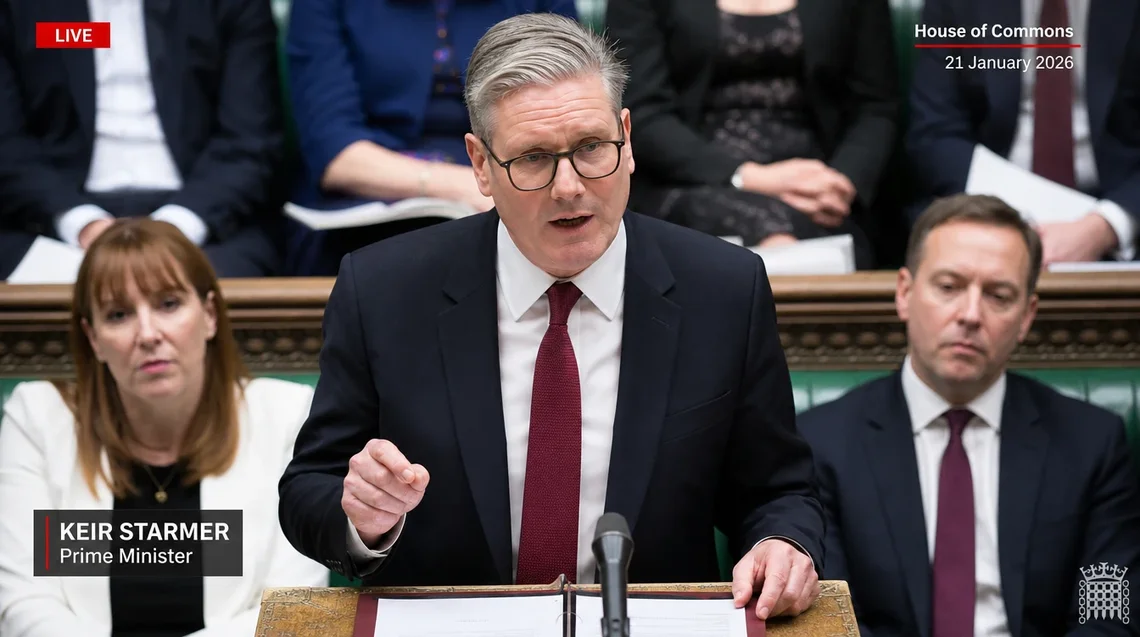
Prime Minister Keir Starmer has outlined a sweeping programme of NHS reform backed by a significant new funding commitment, as the health service faces acute winter pressures including record ambulance waiting times, overstretched emergency departments and a growing backlog of elective procedures that officials acknowledge remains one of the most pressing domestic challenges facing the government. The announcement positions Labour's NHS strategy as the centrepiece of its domestic agenda, though critics from both the Conservative benches and within the medical profession have questioned whether the funding envelope is sufficient to deliver the structural change ministers are promising.
The Government's Reform Agenda
Downing Street confirmed that the NHS reform package centres on three pillars: accelerating the reduction of waiting lists through expanded diagnostic capacity, shifting more care out of hospital settings and into community-based services, and overhauling the management structures of NHS England to reduce administrative duplication. Health Secretary Wes Streeting has repeatedly argued that the NHS requires not just more money but a fundamental change in how it delivers care, a position that has generated both support and unease across the health sector.
Waiting List Targets
NHS England data show the elective care backlog remains at historically elevated levels, with millions of patients currently waiting for treatment. The government has set a target to eliminate waits of longer than 18 weeks for the majority of patients within a defined timeframe, a commitment that officials say will require sustained capital investment in diagnostic hubs and surgical centres operating beyond traditional Monday-to-Friday hours. According to figures cited by the Department of Health and Social Care, expanded weekend operating capacity alone could deliver hundreds of thousands of additional procedures annually. For further context on the trajectory of waiting list policy, see earlier reporting on Starmer pledges NHS reform as waiting lists persist.
Community Care Shift
A central strand of the reform plan involves redirecting resources toward primary and community care, with ministers arguing that too many patients currently end up in accident and emergency departments for conditions that could be managed closer to home. NHS England has been instructed to develop neighbourhood health teams as the operational unit for this community-focused model, drawing together GPs, district nurses, mental health practitioners and social care workers under integrated local structures. Critics have noted that similar proposals have appeared in NHS long-term plans under previous administrations, raising questions about implementation rather than intent.
Related Articles
Party Positions: Labour argues the NHS requires simultaneous investment and structural reform, with the Health Secretary emphasising a shift from hospital-centred to community-based care and a reduction in management costs. Conservatives contend the government's funding plans are insufficiently detailed, with shadow health secretary Ed Argar arguing Labour inherited a system already on a recovery trajectory and risks destabilising reform programmes already under way. Lib Dems have broadly welcomed investment commitments but are pressing the government on social care integration, dental access and mental health waiting times, with party health spokesperson Helen Morgan calling for a fully costed social care plan to accompany the NHS package.
Funding Commitments and the Spending Debate
The government has pointed to the most recent Budget settlement as evidence of serious financial commitment to the health service, with NHS England receiving one of the largest cash increases in its history in real terms. However, health economists and think tanks including the Health Foundation and the Nuffield Trust have cautioned that a significant proportion of new funding will be absorbed by pay deals negotiated to end industrial action, inflationary cost pressures on procurement and energy, and the ongoing cost of agency and locum staffing across NHS trusts.
Workforce Pressures
Staffing remains a structural constraint on the government's reform ambitions. NHS England's own workforce data show tens of thousands of nursing and medical vacancies currently registered across trusts in England, a figure that has modestly declined from its peak but continues to represent a material drag on service capacity. The government's NHS Long Term Workforce Plan, published previously, committed to expanding domestic training places for doctors and nurses while reducing reliance on international recruitment — though health unions have argued the timescales involved mean the pipeline will not deliver significant relief for several years. According to reporting by the BBC and the Guardian, frontline staff morale and retention remain persistent concerns despite the resolution of formal disputes.
Winter Pressures and Political Accountability
The immediate political context for Starmer's reform announcements is a winter period characterised by intense pressure on urgent and emergency care pathways. NHS England operational data, regularly published during the winter period, show sustained levels of category two ambulance response times exceeding national targets, alongside high proportions of patients waiting beyond four hours in emergency departments — a metric that has become a shorthand indicator of system stress across media and parliamentary commentary.
Accountability Mechanisms
Ministers have faced sustained questioning at the despatch box about the gap between reform commitments and current system performance. Opposition MPs have tabled a series of written questions seeking clarity on how the government will measure progress against its waiting list and community care targets, and whether failure to meet milestones will trigger additional funding releases or structural interventions. Starmer has indicated that NHS England will face greater accountability to ministers under the reformed governance arrangements, a move that some NHS leaders have privately described as a shift toward greater political direction of operational decisions. The broader trajectory of the reform legislative agenda is tracked in our coverage of Starmer pushes NHS reform bill amid funding pressure.
Public and Parliamentary Opinion
Polling data reflect the political salience of NHS performance. YouGov surveys conducted this year consistently show the NHS ranking as the top or second-highest concern among British adults when asked to identify the most important issues facing the country, ahead of cost of living and immigration in a number of recent fieldwork rounds (Source: YouGov). Ipsos data similarly show public satisfaction with the NHS at historically depressed levels, with dissatisfaction scores elevated compared with the long-run average tracked in the British Social Attitudes series (Source: Ipsos).
| Metric | Current Position | Target / Benchmark | Source |
|---|---|---|---|
| NHS satisfaction (public) | Historically low — net dissatisfaction recorded | Long-run average: net positive satisfaction | Ipsos / British Social Attitudes |
| NHS as top public concern | Ranked #1 or #2 in recent polling | — | YouGov |
| Elective waiting list (England) | Millions currently waiting; above pre-pandemic baseline | Eliminate 18-week+ waits for majority of patients | NHS England / DHSC |
| Category 2 ambulance response | Frequently exceeding 30-minute national standard | 18-minute average response time | NHS England operational data |
| A&E 4-hour performance | Below 80% in sustained winter periods | 95% standard (historic target) | NHS England |
| NHS workforce vacancies | Tens of thousands registered across trusts | Significant reduction via Long Term Workforce Plan | NHS England workforce data |
Parliamentary Dynamics
Within the Commons, Labour's large majority provides the government with a comfortable legislative arithmetic for passing NHS-related legislation, though a number of backbench MPs representing constituencies with particularly stressed local trusts have signalled they will scrutinise the reform package closely. The Health and Social Care Select Committee has announced it will conduct a formal inquiry into the government's NHS reform plans, with oral evidence sessions expected to hear from NHS England executives, royal colleges, patient groups and health economists. Office for National Statistics mortality and health outcome data are expected to form a significant part of the evidential base for that inquiry (Source: Office for National Statistics).
Opposition Response and Expert Analysis
The Conservative front bench has sought to draw a distinction between structural reform — which shadow ministers say they broadly support in principle — and the adequacy of the government's funding and delivery plans. Ed Argar, the shadow health secretary, has argued in Commons exchanges that the government risks conflating additional spending with genuine reform, pointing to examples from NHS history where large cash injections failed to deliver commensurate productivity improvements. This line of attack broadly mirrors a critique advanced by a number of independent health economists, who have noted that NHS productivity metrics, as tracked in Office for National Statistics output statistics, have not returned to pre-pandemic levels despite successive funding increases (Source: Office for National Statistics).
Think Tank Perspectives
The Health Foundation has published analysis arguing that the government's reform trajectory is broadly correct in its diagnosis — that the NHS model requires a genuine shift toward prevention and community care — but that the pace of change is constrained by capital spending limits, workforce shortages and the political difficulty of managing hospital reconfiguration decisions that affect local communities and their elected representatives. The King's Fund has separately noted that social care, which sits alongside but largely separate from NHS funding streams, remains a significant unresolved pressure on the wider health and care system, with local authority social care budgets under sustained strain. The funding dimensions of the reform debate are examined further in our analysis of Starmer pledges NHS funding boost amid reform debate.
Looking Ahead
Ministers have indicated that further reform announcements are planned in the coming months, including updates to the NHS long-term plan and a formal response to the independent review of NHS England's governance and structure commissioned earlier this year. Whether the government's combination of new funding and structural change can translate into measurable improvements in patient experience before the next general election represents one of the most consequential tests of Labour's domestic credibility. As the Guardian has reported, Starmer has personally tied his political reputation to NHS performance, making the health service a defining battleground for his administration (Source: Guardian).
The full political and legislative context of this evolving story is documented across ZenNewsUK's ongoing Westminster coverage, including our reports on Starmer pledges major NHS reform after winter crisis and the longer-term pattern of commitments tracked in our piece on Starmer pledges NHS reform as waiting lists remain high. With winter operational pressures continuing and parliamentary scrutiny intensifying, the government's capacity to demonstrate tangible progress on both waiting times and system reform will define how its health agenda is judged by voters and by the health sector itself in the months ahead.