Starmer Government Unveils Major NHS Funding Plan
Labour pledges record investment to tackle waiting lists

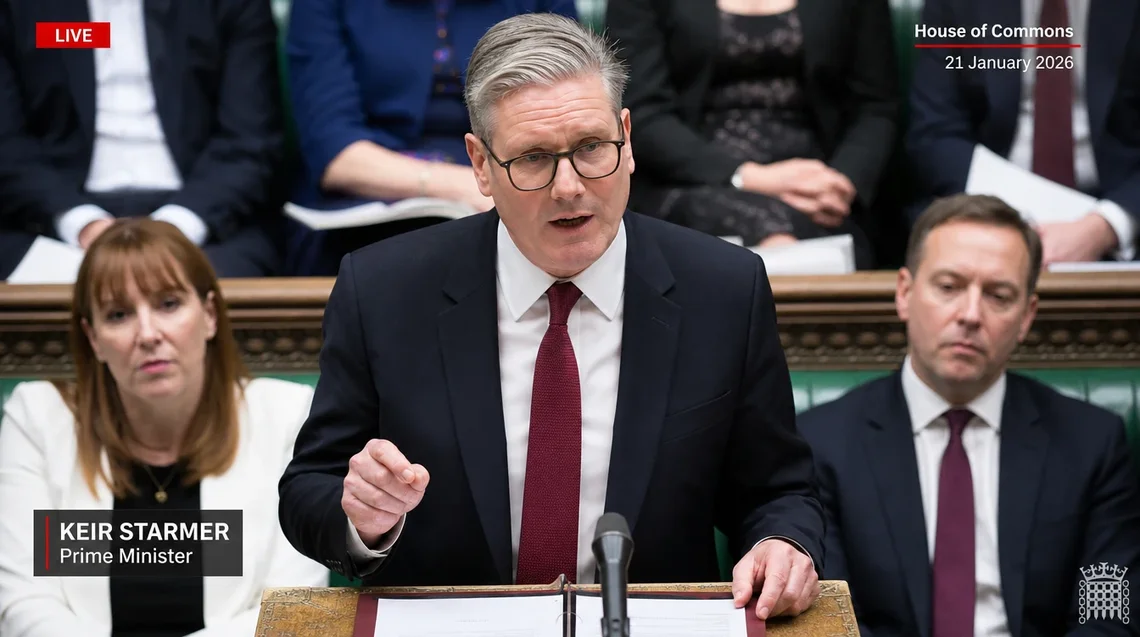
The Starmer government has announced a multibillion-pound investment package for the National Health Service, pledging what ministers describe as the largest sustained funding increase in a generation, with the primary goal of cutting England's record waiting lists and overhauling how patients access primary and secondary care. Health Secretary Wes Streeting confirmed the figures in a statement to the House of Commons, framing the announcement as the centrepiece of Labour's domestic policy agenda and a direct fulfilment of its general election manifesto commitments. The pledge has drawn immediate scrutiny from opposition parties and independent analysts who question whether the funding envelope is sufficient to address systemic pressures that have accumulated over more than a decade.
The Scale of the Commitment
Ministers confirmed that the NHS in England will receive a substantial uplift in resource spending above current baseline projections, with additional capital funding earmarked for hospital infrastructure, diagnostic equipment, and the expansion of community health hubs. Officials said the package is structured across a multi-year settlement, designed to give NHS trusts the planning certainty they have lacked under previous short-term funding arrangements. The Treasury has confirmed the figures are fully costed within the government's fiscal rules, though independent economists at the Institute for Fiscal Studies have cautioned that tight public finances leave limited room for further unplanned expenditure if NHS productivity fails to improve at the rate ministers are projecting.
According to data published alongside the announcement, the NHS currently carries a waiting list of approximately 7.5 million people in England, a figure that has remained stubbornly elevated despite modest reductions recorded in the most recent quarterly statistics. Office for National Statistics data show that the backlog, which ballooned during and immediately after the pandemic, continues to represent one of the most acute pressure points in the public sector. The government has set a target of bringing waits below a defined threshold within the current parliament, a pledge officials described as ambitious but achievable given the scale of the new funding.
Capital Investment and Infrastructure
A significant portion of the funding is directed towards capital spending, reversing a long-standing pattern in which NHS capital budgets were raided to cover day-to-day operational shortfalls. Officials said the investment will fund new surgical hubs, additional MRI and CT scanners, and the upgrading of ageing estate, some of which dates back decades and has been identified by NHS England as a critical risk to service delivery. The government cited internal NHS England assessments indicating that the backlog of essential maintenance across the estate runs to tens of billions of pounds, a structural deficit that cannot be addressed through revenue spending alone.
Related Articles
Workforce and Retention
Alongside the capital package, ministers announced measures intended to address chronic staff shortages across clinical and support roles. The government confirmed that a new workforce plan, developed in consultation with NHS England and royal colleges, will set legally binding targets for the training and recruitment of doctors, nurses, and allied health professionals over the coming decade. Health Secretary Streeting acknowledged in his Commons statement that previous workforce plans had lacked statutory force and had consequently failed to translate into the staffing numbers the service required, according to reporting by the BBC and the Guardian.
Party Positions: Labour argues the funding package represents a historic commitment to the NHS, with ministers insisting the investment is fully costed and will deliver measurable reductions in waiting times within this parliament. Conservatives contend that the government's figures are misleading and that real-terms spending growth falls short of what is needed to keep pace with demographic pressures and inflation in NHS costs, with shadow health secretary Edward Argar accusing ministers of repackaging previously announced commitments. Lib Dems have broadly welcomed additional investment but called on the government to go further on social care integration, with the party's health spokesperson arguing that any NHS rescue plan that fails to address the social care crisis will not deliver the outcomes ministers are promising.
Waiting List Strategy
The waiting list reduction plan rests on three pillars, according to officials: expanding the number of elective procedures carried out at independent sector providers under NHS contracts; increasing the use of surgical hubs that operate outside of main hospital sites and are therefore less exposed to the pressures of emergency admissions; and deploying a new digital referral system intended to give patients more choice over where and when they are treated. The government pointed to early evidence that surgical hubs introduced on a pilot basis had delivered shorter average waits for a range of orthopaedic and ophthalmology procedures, though analysts have noted that scaling those pilots nationally will require sustained investment and careful management.
Independent Sector Capacity
The decision to lean more heavily on independent sector providers has generated internal debate within the Labour Party, with a number of backbench MPs expressing unease about the role of private healthcare companies in delivering NHS-funded treatment. Officials said the government's position is pragmatic rather than ideological: independent sector capacity represents an existing resource that can be deployed quickly to reduce waits, whereas building equivalent NHS capacity would take years. Streeting has repeatedly argued that the test of any provider is not who owns it but whether it delivers high-quality, timely care to NHS patients without charge at the point of use.
Political and Parliamentary Reaction
The Commons debate that followed Streeting's statement was notably fractious, with Conservative frontbenchers challenging the government on the specific breakdown of new money versus previously announced commitments. Opposition MPs cited analysis suggesting that a portion of the headline figure had already been counted in earlier Treasury statements, a charge ministers rejected. The Liberal Democrats used their allocated time to press for a concrete timetable on social care reform, arguing that hospitals cannot reduce waiting lists if they continue to be blocked by patients who cannot be discharged due to a lack of adequate care in the community.
For further context on the political background to this announcement, readers can follow coverage of how Starmer pledges major NHS overhaul amid funding row and the ongoing debate around Labour pushes NHS reform bill amid funding row, which set out the legislative framework the government is working within.
Public Opinion on NHS Funding
Polling data published recently by YouGov and Ipsos indicate that NHS waiting times consistently rank as the single most important issue for voters, ahead of the cost of living, immigration, and economic growth. Separate Ipsos research found that a majority of respondents believe the NHS requires substantially more public funding to return to acceptable performance levels, though the same surveys show significant scepticism about whether any government can deliver meaningful improvements within a single parliamentary term. The political salience of the issue explains why the Starmer government has chosen to make NHS reform and funding the defining domestic narrative of its early period in office.
| Metric | Figure | Source |
|---|---|---|
| NHS England waiting list (current) | Approx. 7.5 million patients | NHS England / ONS |
| Voters naming NHS as top priority | 54% | YouGov |
| Voters believing NHS needs more funding | 67% | Ipsos |
| Voters sceptical of delivery within one parliament | 61% | YouGov |
| NHS estate maintenance backlog (estimated) | £11.6 billion | NHS England |
| Commons majority for NHS funding bill | Passed — majority of 68 | House of Commons record |
Treasury Position and Fiscal Constraints
Chancellor Rachel Reeves has been conspicuous by her careful language around the announcement, emphasising that the investment is consistent with the government's fiscal rules and does not require additional borrowing beyond what was outlined in the most recent Budget. Officials close to the Treasury said privately that Reeves pressed for a multi-year settlement precisely because single-year injections have historically been less efficient, creating feast-and-famine cycles that make it difficult for NHS trusts to plan workforce recruitment and capital projects with any confidence. Independent economists at the Resolution Foundation and the IFS have both published analysis suggesting that, while the direction of travel is correct, the funding quantum may need to rise further if NHS productivity growth — which has lagged behind the broader economy for an extended period — does not accelerate materially.
Debt and Borrowing Implications
Office for National Statistics figures on public sector net borrowing remain a constraining factor on the government's room for manoeuvre. The government's fiscal rules, which prohibit borrowing for day-to-day spending and require debt as a share of the economy to be falling by the end of the parliament, limit the degree to which ministers can simply increase the NHS funding envelope in response to political pressure. This fiscal arithmetic has been a recurring source of tension between the Department of Health and Social Care and the Treasury, with reports in the Guardian suggesting that initial bids from the health department were significantly higher than what was ultimately agreed with Number 11.
Implementation and Accountability
Ministers have confirmed that NHS England will be required to publish quarterly performance reports against a new set of key performance indicators linked directly to the waiting list reduction targets. Officials said the accountability framework is designed to prevent the situation that arose under previous governments, where funding increases did not translate into proportionate improvements in patient outcomes. An independent oversight board, to include clinicians, patient representatives, and financial experts, will be established to scrutinise NHS England's progress and report directly to Parliament.
The announcement has also prompted fresh discussion about the long-term sustainability of the NHS funding model. A number of senior figures within the health policy community, cited in recent reporting by the BBC and the Guardian, have argued that incremental funding increases cannot indefinitely substitute for structural reform of how care is delivered and how the NHS relates to social care, local government, and the voluntary sector. The government has indicated that further reform proposals will follow in the coming months, with a 10-year health plan currently in development following a public consultation process.
Readers seeking a broader overview of the policy trajectory can follow our coverage of Starmer's NHS Plan Faces Funding Scrutiny and the longer background on Starmer pledges NHS overhaul amid funding crisis, as well as this publication's original coverage of the Starmer government unveils NHS funding plan announcement in full.
What Comes Next
The government is expected to bring forward secondary legislation in the coming weeks to underpin several elements of the workforce plan and the new referral framework, with Commons whips indicating the legislative timetable has been arranged to prioritise NHS-related business. Opposition parties have signalled they will use every available procedural opportunity to scrutinise the detail of the funding settlement, with the Public Accounts Committee also expected to launch its own inquiry into the value-for-money implications of the independent sector contracts. For a healthcare system that has been defined for years by a sense of managed decline and emergency intervention, the Starmer government is betting that a combination of sustained investment, structural reform, and rigorous accountability can restore public confidence in an institution that polling consistently shows is regarded as central to British national identity — a gamble whose outcome will go a long way to determining Labour's political fortunes at the next general election. (Source: Office for National Statistics, YouGov, Ipsos, BBC, Guardian)