Starmer faces pressure as NHS waiting lists swell
Labour pledges new funding amid health service crisis

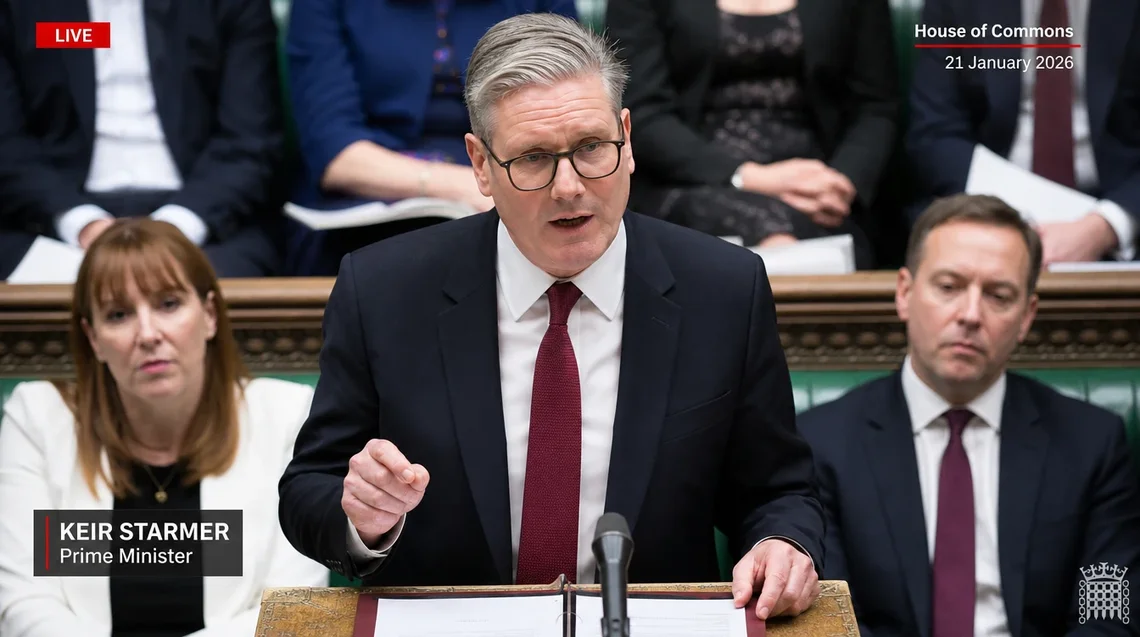
Britain's National Health Service waiting lists have swelled to near-record levels, heaping fresh political pressure on Prime Minister Keir Starmer as his government scrambles to demonstrate credible progress on what has become the defining domestic challenge of his premiership. With more than seven million patients currently on NHS waiting lists in England, Labour's pledge to fix the health service is being tested against a stark and worsening reality.
The figures, drawn from NHS England data and scrutinised by the Office for National Statistics, paint a picture of a system under severe strain. Referral-to-treatment waiting times remain persistently high, with hundreds of thousands of patients waiting more than a year for care in some specialties. The political fallout has been swift, drawing condemnation from opposition benches, intensified scrutiny from health campaigners, and a series of emergency government announcements that critics say amount to crisis management rather than strategic reform.
Party Positions: Labour has pledged an additional injection of NHS funding alongside structural reforms including expanded weekend elective care and recruitment drives for clinical staff, insisting the crisis is a direct inheritance from fourteen years of Conservative government. Conservatives argue Labour's spending commitments are unfunded and that the government has failed to produce a credible workforce plan, accusing ministers of political grandstanding. Lib Dems are calling for a legally binding waiting time guarantee and an independent commissioner to oversee NHS recovery, with leader Sir Ed Davey making NHS reform the centrepiece of his party's domestic policy agenda.
The Scale of the Crisis
NHS England data reviewed by health correspondents show the referral-to-treatment waiting list currently stands at approximately 7.4 million open pathways, a figure that represents a significant proportion of the English population awaiting some form of consultant-led treatment. While the overall total has edged down marginally from its peak in recent months, performance against the 18-week standard — under which patients should begin treatment within 18 weeks of referral — remains well below the 92 per cent constitutional target that the NHS has not consistently met since before the pandemic.
Related Articles
Long-Wait Patients
Among the most politically sensitive metrics are those concerning patients waiting more than 52 weeks and more than 104 weeks. According to NHS England, tens of thousands of patients are still enduring waits of over a year for treatment, with orthopaedics, ophthalmology, and gynaecology among the worst-affected specialties. The persistence of these long waits despite government pressure has fuelled accusations that headline announcements have not translated into meaningful throughput improvements on the ground.
Regional Disparities
Analysis from the Health Foundation and cited by the BBC shows pronounced regional disparities in waiting time performance, with some integrated care systems in the North of England and parts of the Midlands recording significantly worse outcomes than those in London and the South East. Officials said these disparities reflect longstanding structural inequalities in NHS capacity, workforce distribution, and estate quality that a single funding injection is unlikely to resolve without accompanying systemic reform.
Labour's Funding Pledge and Reform Agenda
Facing mounting pressure in Parliament and the media, Health Secretary Wes Streeting has outlined a package of measures intended to drive down waiting times. The government has pointed to additional capital investment in surgical hubs, extended operating hours across weekends and bank holidays, and an accelerated programme of community diagnostic centres as evidence of tangible action. Ministers have also cited early data suggesting a modest increase in elective activity as proof the plan is beginning to work.
For context on the government's broader structural ambitions, see our earlier reporting on how Starmer pledges NHS overhaul as waiting lists grow, which detailed the original framework of commitments made when Labour entered government.
Workforce and Capacity Questions
However, health economists and NHS leaders have cautioned that capital investment alone cannot resolve a waiting list crisis fundamentally driven by workforce shortages. NHS England figures indicate thousands of unfilled clinical vacancies across the medical and nursing workforce, a problem that officials said cannot be solved within a single parliamentary term without radical changes to training pipelines and overseas recruitment. The government has promised a long-term NHS workforce plan but critics, including the British Medical Association, say the details remain insufficient given the scale of the challenge.
Independent Sector Capacity
One element of the Labour strategy that has drawn internal party controversy is the continued and expanded use of independent sector providers to clear NHS backlogs. Streeting has defended the approach as pragmatic, arguing that patients on waiting lists do not care whether their treatment is delivered in an NHS facility or a private one provided it is free at the point of use. Left-wing backbenchers have pushed back, raising concerns about the long-term implications for NHS capacity and workforce retention if private providers draw clinical staff away from the public sector.
Conservative and Opposition Attacks
The Conservatives have seized on the waiting list data as evidence of what they describe as Labour's failure to deliver on its central electoral promise. Shadow Health Secretary Edward Argar has repeatedly challenged Streeting at the despatch box, arguing that the government inherited a system in which waiting lists were already falling and has overseen a stalling or reversal of that progress. The Conservative attack line centres on what they characterise as Labour's unwillingness to make structural decisions — including on productivity, management reform, and clinical workforce flexibility — that could drive faster improvement.
The Liberal Democrats have pursued a different line of attack, focusing on the human cost of delays rather than the macroeconomic arguments. According to Ipsos polling cited by the Guardian, public concern about NHS waiting times consistently ranks as one of the top two or three political issues for voters, ahead of the cost of living in several recent surveys. The Lib Dems have used that polling to argue that neither Labour nor the Conservatives have presented a sufficiently serious or fully costed plan to meet public expectations.
| Indicator | Figure | Source |
|---|---|---|
| Total NHS waiting list (England, open pathways) | ~7.4 million | NHS England |
| Patients waiting over 52 weeks | ~290,000 | NHS England |
| 18-week RTT target compliance | Below 92% constitutional standard | NHS England / ONS |
| Voters citing NHS as top concern | 57% | Ipsos (recent survey) |
| Net satisfaction with NHS handling of waiting lists (Labour govt) | -34 (net negative) | YouGov tracker |
| NHS unfilled clinical vacancies (England) | ~112,000 | Office for National Statistics |
Parliamentary Pressure and Internal Labour Tensions
Inside Westminster, the waiting list crisis is generating friction not just between government and opposition but within the Labour parliamentary party itself. A number of backbenchers representing constituencies with large older populations or significant health deprivation have written to Streeting requesting urgent briefings on regional performance data. Officials said no formal rebellion is currently anticipated, but the volume of correspondence from Labour MPs reflects genuine anxiety in the parliamentary party about the political trajectory of the issue.
Select Committee Scrutiny
The Health and Social Care Select Committee has launched a formal inquiry into NHS performance and waiting list management, with sessions scheduled to hear from NHS England chief executive Amanda Pritchard, Treasury officials, and independent health economists. The Guardian has reported that committee members are likely to press ministers on the gap between headline funding announcements and measurable outcomes in waiting time statistics. The inquiry is expected to report before the end of the current parliamentary session.
The broader political context of this scrutiny is explored in detail in our coverage of Starmer's NHS Overhaul Faces New Pressure on Waiting Times, which tracks how parliamentary and public pressure has evolved since the government's initial reform commitments.
What the Data Show About Public Confidence
YouGov tracker data show a consistent pattern of net negative public sentiment toward the government's handling of NHS waiting lists, with the most recent readings indicating that dissatisfaction has deepened rather than eased despite the government's communications efforts. According to Ipsos research, satisfaction with the NHS overall — a metric that has declined substantially over the past several years — has not shown a statistically significant recovery since Labour entered government, a finding ministers have attributed to the lag between policy action and measurable service improvement.
The BBC's health correspondent has reported that focus group research conducted for NHS England found patients are increasingly frustrated not only by the length of waits but by a perceived lack of transparency about expected timescales and the availability of alternatives. Officials said NHS England is piloting new patient communication tools intended to address this, but acknowledged that rollout would take time.
The Electoral Calculus
For Starmer personally, the NHS issue carries particular electoral weight. Labour fought the last general election on a platform in which NHS recovery featured prominently, and the party's internal analysis — referenced by the BBC and the Guardian — indicates that performance on health is among the issues most likely to influence voter switching at the next election. If waiting lists are not demonstrably lower by the time the electoral cycle reaches its critical phase, the political cost could be severe. That vulnerability has informed the pace and volume of government announcements on health, even when critics argue the substance has not matched the rhetoric.
Readers following this story may also wish to consult our earlier coverage: Starmer faces pressure over NHS waiting list targets and Starmer faces NHS crisis as waiting lists hit new peak, both of which provide important context for the trajectory of this developing political story.
Outlook: Can Labour Deliver?
The central question for observers of British politics is whether the combination of additional funding, structural reform, and independent sector capacity can generate sufficient momentum to bring waiting lists to a level that the public and the medical profession regard as acceptable before the political window closes. Health economists consulted by the Guardian have been cautious, noting that historical evidence suggests waiting list reduction programmes tend to be slower and more expensive than governments project, particularly when workforce constraints limit the system's ability to absorb new investment in productive activity.
Officials close to Streeting said the Health Secretary remains confident that the trajectory is moving in the right direction, and pointed to month-on-month increases in elective activity as evidence of an operational system beginning to respond to government pressure. Whether that confidence is vindicated will depend not only on NHS performance data over the coming months but on the government's ability to sustain public support during what is shaping up to be a prolonged and politically costly process of reform. For Starmer, the NHS remains simultaneously his greatest political liability and the issue on which his government has staked its reputation most visibly — a high-risk position with no easy or rapid resolution in sight.