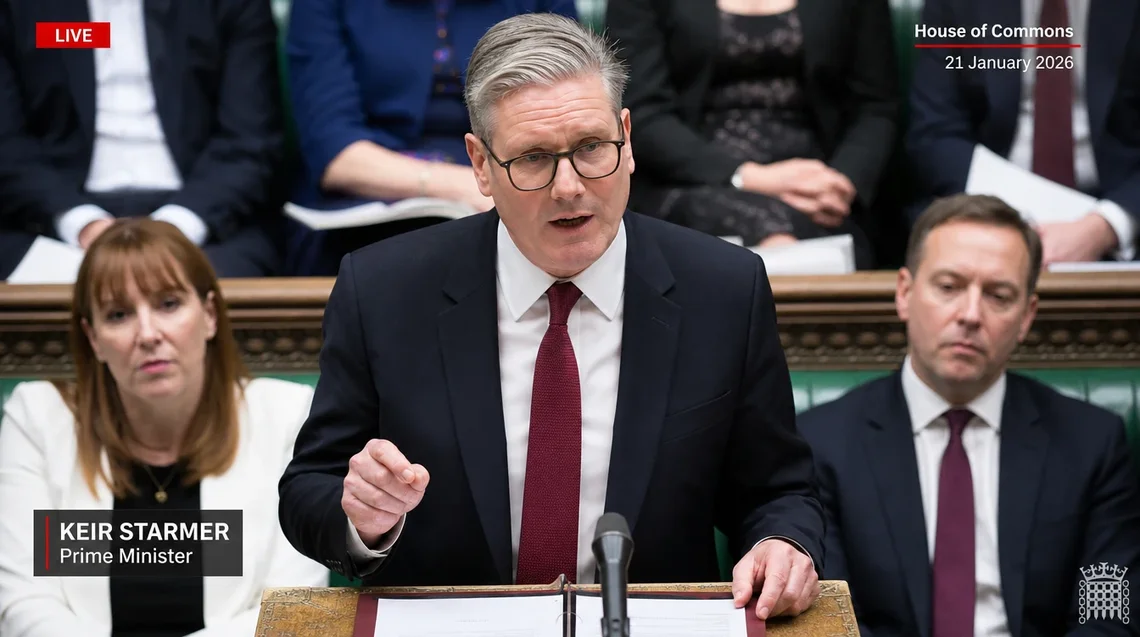
Starmer Pledges NHS Reform as Waiting Lists Hit New Peak
Labour government faces pressure to deliver healthcare promises

NHS waiting lists in England have reached a new peak, with more than 7.6 million people currently on the record, placing acute pressure on Prime Minister Keir Starmer to translate Labour's flagship healthcare promises into measurable results. The figures, released by NHS England and corroborated by data from the Office for National Statistics, represent the most significant domestic policy test the Labour government has faced since taking office.
Starmer has responded with a series of reform commitments, including a pledge to reduce waiting times, expand community diagnostic centres, and overhaul NHS productivity through a combination of technology investment and workforce expansion. Whether those pledges can be converted into outcomes at the pace the public demands remains, according to analysts and opposition critics alike, the central question of this Parliament.
Party Positions: Labour has committed to cutting NHS waiting lists within the current Parliament, pledging additional investment in community diagnostics and a reformed workforce strategy backed by the NHS Long Term Workforce Plan. Conservatives argue Labour has inherited a challenging but stabilising system and accuse the government of overstating the crisis for political capital while offering no credible short-term delivery timeline. Lib Dems are calling for an emergency dental and GP access package, warning that waiting list figures obscure a deeper primary care crisis that surgical targets alone will not resolve.
The Scale of the Crisis
NHS England data published recently show the elective care waiting list has surpassed 7.6 million, a record for England, with more than 300,000 patients having waited longer than a year for treatment. The figures have been widely reported by the BBC and the Guardian, and health policy analysts have described the situation as structurally entrenched rather than a product of any single administrative failure.
Related Articles
Referral-to-Treatment Times
The standard referral-to-treatment target requires 92 per cent of patients to be seen within 18 weeks. NHS England data show that target has not been met consistently in recent years, and the current rate sits well below that threshold. Median waiting times for elective procedures have lengthened, with orthopaedics, ophthalmology and gastroenterology among the specialties bearing the heaviest backlog burden. (Source: NHS England)
The Office for National Statistics has separately noted that long-term sickness absence, much of it attributed to conditions that benefit from elective treatment, remains elevated in the working-age population, creating a compounding economic consequence to the health system strain. (Source: Office for National Statistics)
Regional Disparities
The backlog is not evenly distributed. Integrated Care Boards in the Midlands and parts of the North West are recording significantly above-average waiting times compared with London and the South East, according to NHS regional performance data. Health policy researchers have pointed to workforce distribution, estate condition and legacy commissioning decisions as contributing factors to those disparities.
Starmer's Reform Agenda
The Prime Minister outlined the government's reform direction in a speech at a London hospital, framing NHS renewal as the centrepiece of Labour's domestic programme. Starmer described the waiting list crisis as "a direct consequence of years of underinvestment and structural drift" and said the government would pursue reform on three parallel tracks: productivity, prevention, and primary care expansion.
Health Secretary Wes Streeting has been the principal voice of the reform agenda in Parliament, insisting that the government's approach goes beyond funding increases to include a fundamental renegotiation of how NHS services are delivered, including a push toward more services being conducted in community and neighbourhood health settings rather than acute hospital environments.
Technology and Productivity Investment
Central to the government's NHS strategy is a commitment to digitise patient records more comprehensively, automate administrative processes, and deploy artificial intelligence tools for diagnostics. Officials said the investment in technology is intended to release clinical time currently absorbed by administrative burden, though the timeline for measurable productivity gains from those investments remains a subject of internal government debate.
Industry bodies and NHS trust leaders have broadly welcomed the direction of travel, though several chief executives of major trusts have cautioned, in remarks reported by the Guardian, that technology investment without sufficient workforce to operate reformed pathways risks becoming a partial solution at best. (Source: The Guardian)
Workforce Expansion Plans
The government has confirmed it will proceed with training expansion targets set out in the NHS Long Term Workforce Plan, including significant increases in medical school places and nursing training routes. Officials said delivery of those targets is dependent on Health Education England successor bodies maintaining pipeline capacity, and that the full workforce benefit of current training investment will not be felt for several years.
For coverage of earlier reform commitments made before the current Parliament, see Starmer pledges NHS reform as waiting lists persist, which sets out the foundational policy positions Labour adopted before entering government.
Opposition Response and Parliamentary Scrutiny
The Conservatives have focused their parliamentary attacks on what shadow health secretary Edward Argar has described as a gap between Labour's rhetoric on NHS reform and any demonstrable short-term impact on waiting lists. In exchanges at the despatch box, Conservative frontbenchers have argued that the government's own internal projections show waiting lists will not fall materially before the midpoint of this Parliament.
The Liberal Democrats, under health spokesperson Daisy Cooper, have widened the critique to primary care access, arguing in the Commons that millions of patients cannot secure GP appointments within a clinically acceptable timeframe, and that the government's emphasis on elective waiting lists understates the extent of access failure in general practice.
Select Committee Findings
The Health and Social Care Select Committee has published an interim report examining NHS productivity, concluding that headline waiting list figures, while important, do not fully capture the quality of care patients are receiving during extended waits, including deterioration in condition and emergency presentations that might have been avoided with timely elective treatment. The committee called on the government to publish a comprehensive delivery plan with quarterly milestones against which progress can be assessed. (Source: House of Commons Health and Social Care Select Committee)
For detailed reporting on earlier stages of the NHS overhaul debate, Starmer pledges NHS overhaul as waiting lists grow provides essential context on the policy development timeline and internal Labour positioning prior to the current reform announcements.
Public Opinion and Political Pressure
Polling consistently identifies the NHS as the single most important issue for the British public, and the Labour government's approval ratings are closely correlated with perceptions of healthcare performance. A YouGov survey conducted recently found that 68 per cent of respondents rated NHS waiting times as either a "serious" or "very serious" problem, while only 24 per cent expressed confidence that the government's current plans would deliver meaningful improvement within this Parliament. (Source: YouGov)
An Ipsos poll published around the same period found the public more forgiving of the inherited nature of the problem, with a majority saying they held the previous Conservative government primarily responsible for the current state of waiting lists, though that attribution of blame was declining over time as Labour's tenure extended. (Source: Ipsos)
| Indicator | Current Figure | Previous Period | Source |
|---|---|---|---|
| Total elective waiting list (England) | 7.6 million+ | 7.4 million | NHS England |
| Waiting more than 52 weeks | 300,000+ | 270,000 | NHS England |
| 18-week target compliance rate | Below 62% | Below 65% | NHS England |
| Public rating NHS waits as "serious/very serious" | 68% | 63% | YouGov |
| Confidence in govt plans to improve waits | 24% | 29% | YouGov |
| Blame attributed to previous government | 54% | 61% | Ipsos |
Funding and Fiscal Constraints
The government has signalled that additional NHS funding will be prioritised in the next spending review, though Treasury sources have been careful to avoid specifying exact figures ahead of a formal announcement. Health economists have warned that the scale of reform being described by ministers requires sustained real-terms increases in NHS capital and revenue spending over multiple years, and that any fiscal tightening would directly compromise delivery timelines.
NHS Productivity Gap
The Office for National Statistics has published analysis showing NHS productivity remains below pre-pandemic levels when measured against inputs and outputs, a finding that has been cited extensively by both government ministers seeking to justify reform and opposition politicians arguing the government is managing decline rather than delivering transformation. (Source: Office for National Statistics) The productivity gap is estimated to represent hundreds of thousands of additional procedures that could, in principle, be delivered annually if outputs returned to and exceeded prior performance levels.
Officials said the government views closing the productivity gap as the single largest lever available to reduce waiting lists without proportional increases in spending, a position broadly endorsed by NHS Confederation analysis, though union leaders representing NHS staff have cautioned against productivity narratives that place responsibility on clinical staff rather than systemic and infrastructural factors.
Outlook and Delivery Milestones
Ministers have declined to publish a specific numerical target for waiting list reduction with an attached deadline, a position that has drawn criticism from the Health and Social Care Select Committee and from health policy think tanks including the King's Fund and the Health Foundation. Officials maintain that setting headline targets risks distorting clinical prioritisation, a lesson drawn from historic experience with waiting time targets that, evidence suggests, created perverse incentives in some NHS trusts.
The coming months are likely to be critical in determining whether the government's reform programme takes on credible operational form. The forthcoming NHS England operational planning round will be the first real test of whether trust-level delivery plans align with ministerial ambitions, and the results of that process are expected to generate significant parliamentary and media scrutiny.
For context on how the government's current commitments compare to reform language used in the earlier stages of Labour's NHS policy development, see Starmer pledges NHS reform as waiting lists remain high and Starmer Pledges NHS Overhaul as Waiting Lists Surge, both of which document the evolution of Labour's healthcare positioning ahead of and immediately following the general election.
With waiting lists at a record high and public confidence in the government's delivery capacity showing early signs of erosion, the NHS reform agenda has moved from a political commitment to a political imperative. The space between those two conditions is where governments are most frequently judged, and where the Starmer administration's claim to a competent, reforming centre-left mandate will ultimately stand or fall.