Starmer Pledges New NHS Funding Push Amid Winter Crisis
Labour government announces £3bn investment plan for health service

Prime Minister Sir Keir Starmer has announced a £3 billion investment package for the National Health Service, describing the funding as an urgent response to what government officials characterise as a deepening winter crisis gripping hospitals across England. The announcement, made from Downing Street, positions the Labour government's NHS strategy at the centre of its domestic agenda as waiting lists remain at historically elevated levels and emergency departments face sustained pressure.
The Treasury confirmed the investment would be drawn from existing departmental allocations alongside newly identified fiscal headroom, with Health Secretary Wes Streeting tasked with overseeing distribution across NHS trusts in England. Officials said the package is intended to address immediate operational pressures while laying groundwork for longer-term structural reform of a service that treats millions of patients annually.
Party Positions: Labour backs the £3bn investment as essential emergency relief for the NHS, framing it as redressing years of underfunding under the previous Conservative administration. Conservatives have questioned the source of the funding, arguing the government is recycling previously announced spending commitments and that the announcement lacks credibility without a detailed delivery plan. Lib Dems welcome additional NHS investment but have called for an independent review of hospital staffing levels to accompany any funding package, warning that money alone will not resolve systemic workforce shortages.
The Scale of the Winter Crisis
England's NHS entered the current winter period facing conditions that senior health leaders described as among the most challenging in recent memory. Data published by NHS England showed ambulance response times, A&E four-hour waiting targets, and elective surgery backlogs all remained significantly below pre-pandemic benchmarks. The overall waiting list for elective treatment stood above seven million patients, a figure that has become a focal point of political debate at Westminster.
Related Articles
Emergency Department Pressures
Figures compiled by NHS England and analysed by health economists at the Health Foundation indicate that major emergency departments are consistently failing to meet the government's target of treating 95 percent of patients within four hours. Currently, performance sits closer to 70 percent at peak periods, according to officials familiar with the data. Hospital trusts in the Midlands and North West have reportedly been among those experiencing the most acute strain, with some declaring internal critical incidents during periods of particularly high demand (Source: NHS England).
Officials said the £3bn package would direct a portion of funds specifically toward winter surge capacity, including additional beds, agency staffing support, and funding for social care discharge schemes designed to free up hospital beds occupied by patients medically fit to leave.
Ambulance Performance and Response Times
Category One ambulance calls — the most life-threatening emergencies — are currently being answered within the target time in the majority of cases, but Category Two responses, covering serious conditions such as suspected strokes and heart attacks, have remained above the 18-minute response target for an extended period. The Office for National Statistics has separately documented elevated excess mortality figures during recent winter periods, a metric health analysts argue is partly linked to delayed emergency response and hospital access (Source: Office for National Statistics).
What the £3 Billion Package Contains
Downing Street released a breakdown of the investment, indicating it would be allocated across several distinct workstreams rather than distributed as a single block grant to NHS England. Officials emphasised the structured nature of the package, arguing it reflected lessons from previous emergency funding rounds that critics said produced limited measurable improvement.
Workforce and Staffing Investment
Approximately £900 million of the total is earmarked for workforce-related spending, covering recruitment incentives for nurses and allied health professionals, retention bonuses in high-pressure specialities, and funding for overseas recruitment pipelines. The NHS workforce plan, published previously by NHS England, identified a shortfall of tens of thousands of nursing and medical staff over the coming decade, a gap that health economists argue cannot be closed by investment alone without parallel improvements to training capacity and workplace conditions.
For further context on how workforce pressures intersect with broader funding questions, see earlier reporting on Starmer pledges NHS funding boost amid staffing crisis, which examined how staff shortages have compounded the service's financial difficulties.
Capital and Infrastructure Spending
A further £1.1 billion has been designated for capital investment, directed at diagnostic equipment upgrades, hospital estate maintenance, and the expansion of community diagnostic centres — a programme that the previous government initiated and that the current administration has pledged to continue and accelerate. Officials said the diagnostic centre rollout was a particular priority, as earlier diagnosis of conditions including cancer is expected to reduce costly late-stage treatment demand (Source: Department of Health and Social Care).
Political Reaction at Westminster
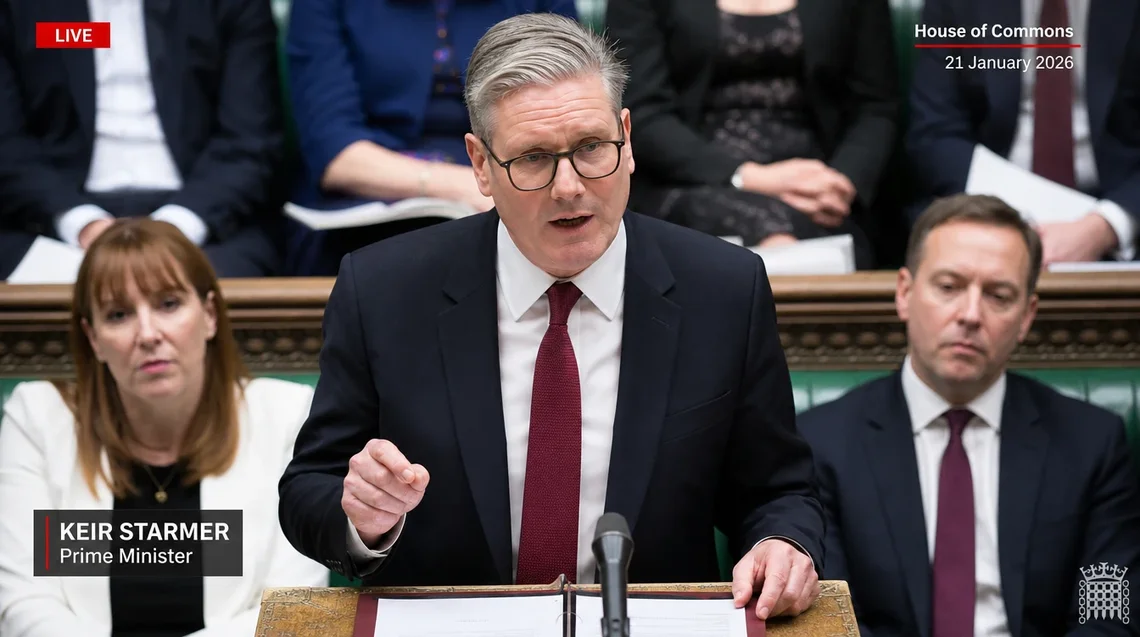
The announcement generated immediate and sharply divergent responses across the chamber. During Prime Minister's Questions, Starmer defended the package against Opposition claims that it amounted to recycled spending, arguing that no previous government had deployed comparable resources under equivalent winter pressure conditions. Conservative leader Kemi Badenoch challenged the Prime Minister to identify the precise new money within the package, a line of questioning that was met with sustained noise from both benches.
Analysis of the political context surrounding this announcement connects directly to earlier coverage examining Starmer pledges NHS funding boost amid winter crisis, which tracked the trajectory of NHS funding commitments from the general election campaign through to the first months of the Labour government.
Liberal Democrat Position
Liberal Democrat health spokesperson Helen Morgan said the party would support measures that directed genuine new money to frontline services but reiterated calls for an independent workforce commissioner with statutory powers to audit staffing levels and report annually to Parliament. The Lib Dems have consistently argued that funding announcements without accountability mechanisms have historically failed to translate into patient-facing improvements (Source: Liberal Democrat Parliamentary Party).
Public Opinion and Polling Evidence
Public satisfaction with the NHS, long one of the most closely watched indicators in British political polling, has continued to track at levels that officials in both parties describe as a matter of serious concern. Survey data collected by Ipsos for its monthly political monitor showed NHS performance ranking as the top issue for voters, ahead of the cost of living and immigration, for the fourth consecutive month (Source: Ipsos). A separate YouGov survey conducted recently found that a majority of respondents believed the government should prioritise NHS spending even if it meant reduced investment in other public services (Source: YouGov).
| Metric | Current Position | Target | Source |
|---|---|---|---|
| Elective waiting list (England) | 7.2 million patients | Below 5 million | NHS England |
| A&E four-hour performance | ~70% at peak periods | 95% | NHS England |
| Category Two ambulance response | Above 18-minute average | 18 minutes | NHS England |
| New government NHS investment | £3 billion announced | — | HM Treasury |
| Voters ranking NHS as top issue | Majority (four months running) | — | Ipsos |
| NHS workforce shortfall (projected) | Tens of thousands | — | NHS England Workforce Plan |
Structural Reform Versus Emergency Relief
Health policy analysts and NHS trust leaders have broadly welcomed the immediate funding injection while raising questions about whether it addresses the structural conditions that created the crisis. The Nuffield Trust and the King's Fund — two of the most widely cited independent health think tanks — have both published recent analysis arguing that the NHS requires not only sustained revenue investment but wholesale reform of how primary care, mental health services, and social care interact with hospital provision.
Streeting has signalled he is prepared to pursue reform alongside funding, a dual approach that has generated considerable internal debate within the Labour movement, where some trade unions representing NHS workers have expressed caution about structural changes they fear could open pathways to further private sector involvement in service delivery. The Health Secretary has consistently denied that reform is a precursor to privatisation, describing the existing model as unsustainable without significant redesign (Source: BBC News).
Readers seeking a broader account of the reform dimension of this debate can consult earlier ZenNewsUK coverage of Starmer pledges NHS overhaul amid funding crisis, which examined the tension between emergency relief measures and longer-term systemic change, as well as analysis of Starmer Pledges NHS Funding Boost Amid Reform Push, which explored how funding and reform commitments are being presented as mutually reinforcing priorities.
The Social Care Question
Senior NHS figures and independent analysts have repeatedly stressed that hospital flow problems — the inability to discharge medically fit patients quickly — are substantially driven by inadequate social care capacity rather than acute hospital underfunding alone. The £3bn package includes a discharge support fund of approximately £300 million directed at local authorities, though council leaders have indicated this falls short of what would be required to meaningfully increase care home capacity or home care packages in their areas (Source: Local Government Association).
The Guardian has reported that some council leaders have written to the Health Secretary warning that without a longer-term social care funding settlement, short-term NHS investment will continue to be absorbed by delayed transfers of care rather than driving improvements in treatment access (Source: The Guardian).
What Comes Next
Officials said Streeting would appear before the Health Select Committee in the coming weeks to provide a detailed breakdown of how the £3bn would be allocated, with scrutiny expected to focus on the timeline for measurable improvements and the accountability framework governing NHS trusts receiving the additional funds. The government has committed to publishing quarterly performance data against a new set of winter metrics, a move that opposition health spokespeople cautiously welcomed while reserving judgment on whether the targets set are sufficiently ambitious.
For a broader account of how successive NHS funding commitments have played out in practice, and how the current government's approach compares to its predecessors, see the ZenNewsUK analysis piece on Starmer Pledges Major NHS Reform After Winter Crisis.
The immediate test for the Starmer government will be whether the investment produces visible improvements in A&E performance and ambulance response times before the current winter period concludes. Senior health officials acknowledged privately that the timeline between funding announcement and operational impact is rarely immediate, given the logistical complexity of deploying additional capacity across a system of more than two hundred NHS trust organisations. The political stakes are correspondingly high: for a party that placed NHS recovery at the heart of its election mandate, the gap between announcement and delivery will be scrutinised closely by voters, opposition parties, and health sector stakeholders alike.