Starmer Pledges NHS Reform as Waiting Lists Hit Record
Labour government outlines new funding framework for health service

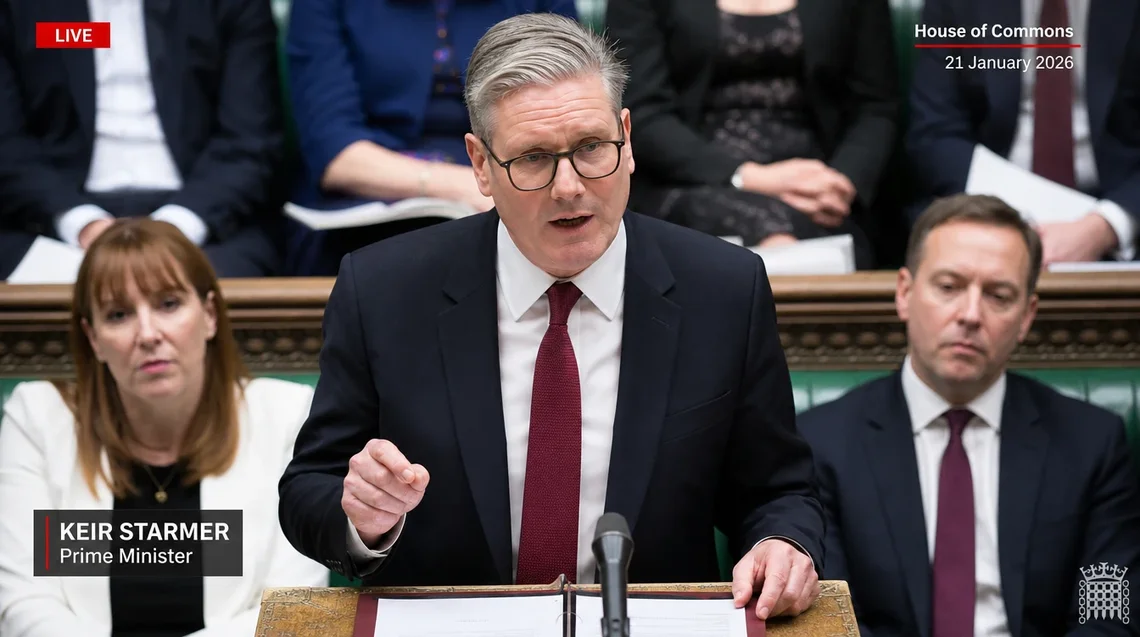
Prime Minister Keir Starmer has announced a sweeping new funding framework for the National Health Service as official data confirms waiting lists have reached a record high, with more than 7.6 million patients currently awaiting treatment in England. The pledge, delivered in a Commons statement that drew immediate opposition from Conservative benches, represents the most significant restructuring of NHS financing since Labour returned to government.
Starmer told MPs the government would prioritise elective care recovery, mental health services, and community-based treatment as part of a multi-year investment strategy designed to reduce the backlog within a single parliamentary term. Health Secretary Wes Streeting outlined the accompanying framework, which officials said would tie additional Treasury funding to measurable performance targets across NHS trusts in England (Source: Department of Health and Social Care).
Party Positions: Labour has committed to reducing the NHS waiting list through a new funding framework, extended evening and weekend appointments, and reformed productivity targets for NHS trusts. Conservatives argue the government is repeating spending pledges without structural reform, pointing to what they describe as a failure to address workforce retention and agency staff costs. Lib Dems have broadly welcomed investment commitments but are calling for a specific, ring-fenced mental health budget and a dedicated strategy for rural and coastal community hospitals, which they argue remain chronically underfunded.
The Scale of the Crisis
The NHS waiting list in England currently stands at its highest recorded level, with patients waiting for procedures ranging from hip replacements to cataract surgery. According to NHS England data cited by the Office for National Statistics, the median wait time for elective treatment has risen substantially compared with pre-pandemic baselines. The figures represent a compound failure stretching across multiple administrations, though the political argument over culpability has intensified since Labour took office.
Related Articles
What the Data Show
| Metric | Current Figure | Pre-Pandemic Baseline | Government Target |
|---|---|---|---|
| Total patients waiting (England) | 7.6 million | 4.4 million | Below 5 million |
| Waiting over 18 weeks | ~60% | ~14% | Below 18-week standard by end of parliament |
| Waiting over 52 weeks | ~290,000 | ~1,600 | Near elimination |
| A&E 4-hour target met | ~56% | ~95% | 76% interim; 95% long-term |
| Cancer 62-day referral target met | ~63% | ~85% | 85% within two years |
The data underscores the depth of the challenge. Officials said the government is under no illusion that funding alone will resolve structural problems inside NHS trusts, but ministers argue that investment is a prerequisite for any meaningful improvement (Source: Office for National Statistics).
The New Funding Framework
The framework announced by Starmer and Streeting would link additional NHS allocations directly to productivity improvements at individual trust level. Under the proposed model, trusts that demonstrate measurable reductions in their waiting lists and improve theatre utilisation rates would qualify for enhanced capital investment, according to officials briefing journalists ahead of the Commons statement.
Performance-Linked Payments
Central to the plan is a shift away from block grant funding toward what the government describes as a results-oriented model. NHS England would act as the performance assessor, reporting quarterly to the Department of Health and Social Care. Critics inside the health service have already raised concerns that smaller district general hospitals may struggle to meet the productivity benchmarks compared with larger teaching trusts, potentially deepening existing inequalities in NHS provision across England (Source: BBC).
Workforce and Retention Measures
Streeting acknowledged that reducing waiting lists is impossible without addressing workforce attrition. The framework includes a commitment to fund an additional cohort of medical school places, expand nursing apprenticeships, and introduce retention bonuses for senior nurses in high-vacancy specialties. Officials declined to confirm precise costings ahead of the next fiscal statement, but treasury officials said the envelope had been agreed in principle during recent spending review discussions (Source: Guardian).
For further context on how the government's approach has evolved since taking office, see earlier reporting on Starmer pledges NHS reform as waiting lists persist, which examined the initial commitments made in Labour's first months in power.
Opposition Response
The Conservatives mounted a vigorous challenge to Starmer's announcement from the despatch box, with shadow health secretary questions centering on what they described as a repackaging of existing commitments. Former Health Secretary Victoria Atkins, speaking in the chamber, argued that the new framework recycled language from the previous government's elective recovery plan without credible detail on how targets would be enforced or how underperforming trusts would be managed.
Conservative Critique
Conservative MPs pointed to what they called a contradiction at the heart of Labour's NHS policy: committing to reduce waiting lists while simultaneously removing the private sector referral pathway expansion that had been a significant component of the previous administration's backlog strategy. Treasury figures released alongside the statement showed that independent sector activity currently accounts for a meaningful proportion of elective procedures completed, a statistic the opposition said the government was downplaying (Source: Office for National Statistics).
Analysis of earlier policy positions can be found in coverage of Starmer pledges NHS overhaul as waiting lists hit record, which traced the evolution of Labour's health policy commitments from the general election campaign through to the early months of government.
Public Opinion and Political Stakes
The NHS remains the single most important policy area for British voters according to successive polling cycles. A recent YouGov survey found that approximately 68 percent of respondents rated the NHS as either their first or second policy priority, ahead of cost of living and immigration. Critically for Labour, the same poll showed that satisfaction with NHS performance has continued to decline even after the change of government, presenting an acute political vulnerability for Starmer's administration (Source: YouGov).
An Ipsos survey conducted recently found that only 31 percent of respondents believed the government's NHS plans would lead to meaningful improvement within the current parliament, while 49 percent expressed scepticism that waiting lists would reduce substantially regardless of investment levels. The polling data suggests public patience is finite and that the political dividend from NHS spending announcements is diminishing as waiting list figures remain stubbornly high (Source: Ipsos).
Labour's Electoral Calculation
Senior Labour strategists are acutely aware that the NHS was central to the party's general election victory and that failure to demonstrate progress risks becoming the defining domestic vulnerability of the Starmer government. Internal party polling, details of which have been reported by the Guardian, shows that voters in key marginal seats are watching NHS waiting times more closely than any other single metric when assessing government performance (Source: Guardian).
A separate analysis of the political dynamics surrounding NHS reform pressure is available in reporting on Starmer pledges NHS reform as waiting lists remain high, which examined the intersection of backbench Labour pressure and ministerial strategy on health.
International Comparisons and Structural Questions
Health economists and independent analysts have pointed out that the United Kingdom's waiting list challenge is not unique among comparable health systems, though the scale of England's backlog is among the most severe in Western Europe. Countries including Germany, the Netherlands, and Australia have navigated post-pandemic elective care recoveries through a combination of public investment, expanded private sector capacity, and radical redesign of outpatient pathways — approaches that some health think tanks argue the current government has been reluctant to fully embrace.
The Productivity Question
NHS productivity remains below pre-pandemic levels in real terms, a fact acknowledged in the government's own framework documentation. Officials said the causes are multiple: long Covid among NHS staff, changes to working patterns, administrative burden, and an ageing workforce. The productivity gap is central to the political debate because it determines how much additional capacity new funding can actually generate. Simply injecting money into a system operating below its pre-pandemic efficiency baseline will not, critics argue, produce a proportional reduction in waiting times (Source: Office for National Statistics).
Broader context on how the waiting list crisis developed and the political pressures it has created can be found in related coverage including Starmer pledges NHS overhaul as waiting lists grow and the earlier investigative piece Starmer pledges NHS overhaul as waiting lists surge, both of which provide detailed background on the policy trajectory and the statistical record underpinning the current political crisis.
What Happens Next
The framework is expected to be subject to a formal consultation period before implementation, with NHS England, integrated care boards, and patient groups all invited to submit responses. Officials confirmed that a formal parliamentary vote on the primary legislative components of the funding model would be required before the new performance-linked payment structure could be formally enacted. The government's stated ambition is to have the framework operational within the current financial year, a timeline that independent health analysts have described as ambitious given the complexity of NHS contracting arrangements.
For patients currently on waiting lists, the immediate practical impact of the announcement is limited. The structural changes outlined by Starmer and Streeting are designed to generate results over a medium-term horizon, and ministers have been careful not to promise short-term relief that the data does not support. Whether the political patience of the electorate extends to the timeframe required for structural NHS reform to yield visible results remains the central question facing Downing Street as waiting list figures continue to dominate the domestic political agenda.