Starmer Pledges NHS Overhaul Amid Staff Shortages
Labour government unveils comprehensive reform plan

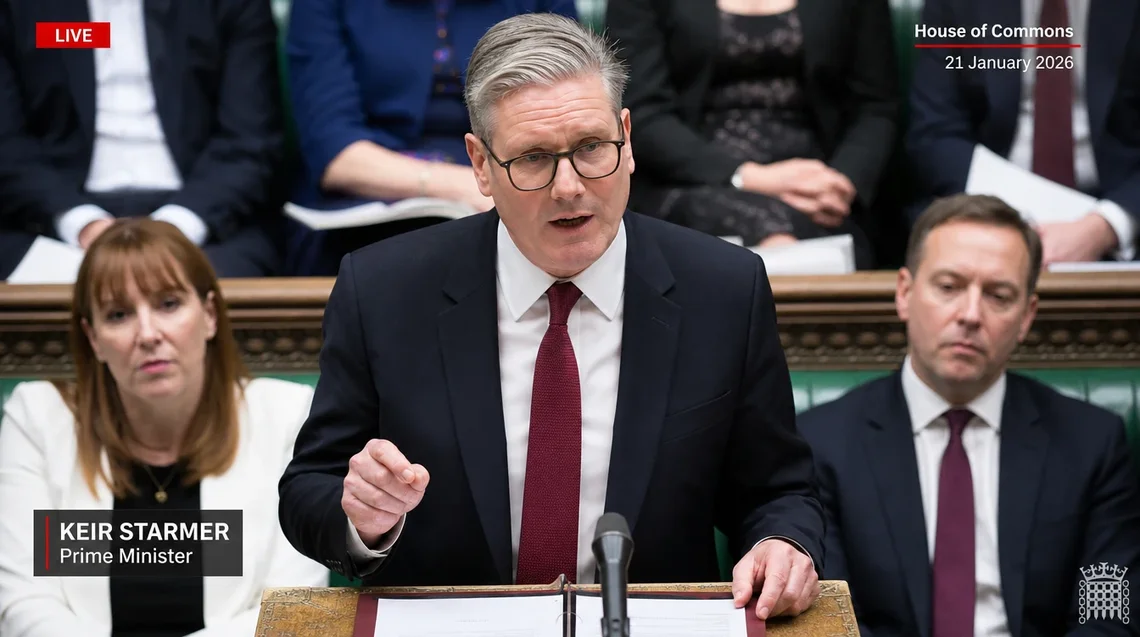
Prime Minister Sir Keir Starmer has announced a sweeping overhaul of the National Health Service, committing the Labour government to a multi-year reform programme aimed at tackling chronic staff shortages, record waiting lists, and crumbling infrastructure that officials say has pushed the health service to its operational limits. The plan, described by Downing Street as the most significant restructuring of the NHS in a generation, includes expanded training pipelines, reformed pay structures, and a renewed drive to retain clinical staff currently leaving the profession in significant numbers.
Speaking at a Downing Street press conference, Starmer framed the announcement as a moral obligation, according to reports from the BBC and the Guardian, arguing that the current state of the NHS represents a fundamental failure of public trust. Health Secretary Wes Streeting stood alongside the Prime Minister as officials outlined the broad contours of the package, though full legislative detail is expected to follow in forthcoming parliamentary sessions.
Party Positions: Labour has pledged to increase NHS staffing levels, reform GP access, and reduce waiting lists through a combination of new investment and structural changes to how the service is managed and funded. Conservatives argue that Labour's reform plan lacks credible financing and warn that top-down reorganisation risks repeating the disruption caused by previous restructuring exercises. Lib Dems have called for cross-party cooperation on NHS reform, supporting workforce expansion proposals but pressing the government to go further on mental health provision and rural healthcare access.
The Scale of the Crisis
The backdrop to Starmer's announcement is a health service under measurable and sustained pressure. Data from the Office for National Statistics indicate that the NHS workforce has faced increasing attrition, with significant numbers of nursing and medical staff choosing to leave or reduce hours in recent years. Vacancy rates across NHS trusts in England have remained persistently elevated, creating systemic gaps in both primary and secondary care settings.
Related Articles
Waiting List Figures
According to NHS England figures cited by the Guardian, the number of people waiting for elective treatment currently stands at historically high levels, with millions of patients awaiting procedures that would have been considered routine before the disruptions of recent years. The government's own analysis, officials said, shows that without structural intervention, waiting times in several key specialisms are projected to worsen further over the coming decade. For further background on how the waiting list crisis has developed, see our earlier coverage: Starmer pledges NHS overhaul as waiting lists grow.
Staff Retention and Morale
A survey published by the NHS Staff Council, cited by the BBC, found that a substantial proportion of clinical staff reported feeling undervalued, with pay, working conditions, and management culture identified as the primary drivers of dissatisfaction. The government's reform plan explicitly addresses retention as a priority, with officials indicating that new contractual frameworks and flexible working arrangements will form part of the package. The issue of workforce morale has been covered extensively in political circles; readers can also refer to our related report: Starmer Pledges NHS Overhaul Amid Staffing Crisis.
Core Elements of the Reform Plan
Officials outlined several headline commitments forming the backbone of the overhaul. These include a significant expansion of medical school places, a new international recruitment strategy with ethical sourcing protocols, and investment in community-based care designed to reduce pressure on hospital emergency departments. The government also signalled that it intends to reform the relationship between NHS England and integrated care systems, with a view to devolving more operational decision-making to regional level.
Training and Workforce Pipeline
Central to the plan is a commitment to training substantially more doctors, nurses, and allied health professionals domestically. Officials said the government has identified the current training pipeline as structurally inadequate relative to projected demand. New funding arrangements for Health Education England's successor bodies are expected to be confirmed in the forthcoming spending review, according to Whitehall sources cited by the Guardian. The government has also indicated it will review the financial barriers facing trainee healthcare professionals, including the impact of student debt on career choices.
Political Reaction at Westminster
The announcement drew an immediate and sharply critical response from the official Opposition. Conservative health spokespeople argued that the plan is long on aspiration and short on specifics, questioning how the government intends to fund expanded training places and improved pay structures simultaneously without additional borrowing or cuts elsewhere in the public sector. Shadow Health Secretary Edward Argar, speaking in the Commons, said the plan echoed previous reorganisation efforts that consumed management time and resources without delivering measurable improvements in patient outcomes, according to parliamentary reports cited by the BBC.
The Liberal Democrats offered a more qualified response, welcoming workforce commitments while urging the government to publish a fully costed breakdown of the reform programme. The party's health spokesperson called specifically for greater focus on mental health services, which, they argued, remain underfunded relative to the scale of demand currently recorded across England and Wales.
Parliamentary Arithmetic
With Labour holding a substantial Commons majority, the government is not expected to face significant legislative obstacles in passing the primary legislation required to implement structural elements of the plan. However, officials acknowledge that reform at this scale will require sustained cooperation from NHS trusts, trade unions, and professional bodies — cooperation that cannot be legislated for and must be negotiated. The Royal College of Nursing and the British Medical Association have both signalled cautious support for the direction of travel, while reserving judgement on specific details, according to the Guardian.
| Indicator | Current Figure | Source |
|---|---|---|
| NHS elective waiting list (England) | Approx. 7.5 million patients | NHS England / Office for National Statistics |
| Public satisfaction with NHS (overall) | 24% satisfied — record low | British Social Attitudes Survey (NatCen) |
| Voters who trust Labour most on NHS | 38% | YouGov polling |
| Voters who trust Conservatives most on NHS | 19% | YouGov polling |
| NHS vacancy rate (clinical posts, England) | Approx. 112,000 posts unfilled | NHS Digital / Office for National Statistics |
| Share of NHS staff considering leaving profession | 36% | Ipsos / NHS Staff Survey |
| Commons vote majority for Labour NHS legislation (projected) | Expected 100+ seat majority | House of Commons Library |
Public Opinion and Electoral Context
Polling data from YouGov and Ipsos consistently show that the NHS remains the single most important issue for British voters across almost all demographic groups, with the health service ranked above the economy, immigration, and cost of living in multiple recent surveys. For Labour, this creates both an opportunity and a risk: the party has historically held a commanding lead on NHS trust, but that advantage narrows when governments are seen to have been in office for a sustained period without delivering visible improvement.
Labour's Strategic Calculation
Political analysts cited by the Guardian suggest the Starmer government is acutely aware that NHS performance will be central to its electoral reputation by the time of the next general election. The timing of this reform announcement — relatively early in the parliamentary term — is seen by Westminster observers as a deliberate effort to establish a narrative of action before the government becomes associated with ongoing deterioration in NHS performance. Ipsos data show that voter patience on public services tends to erode significantly once a government passes the two-year mark without tangible improvements. For a broader view of how funding disputes have shaped this reform agenda, see: Starmer pledges major NHS overhaul amid funding row.
Implementation Challenges and Timeline
Officials and independent analysts have identified implementation as the central challenge facing the government's reform agenda. Previous NHS reorganisations — including the 2012 Health and Social Care Act — are widely cited as cautionary examples of how structural reform can absorb enormous managerial capacity and generate institutional uncertainty that harms frontline service delivery in the short to medium term. The government has indicated it is aware of this risk and intends to phase reform in a way that minimises operational disruption.
Regional Variation and Integrated Care Systems
One of the more technically complex elements of the reform plan concerns the relationship between NHS England and the network of integrated care systems established across the country. Officials said the government intends to give integrated care boards greater autonomy over workforce deployment and service configuration, while retaining central oversight of financial controls and performance standards. Critics, including some within the Labour movement, have warned that devolution without adequate resourcing risks creating a two-tier system in which better-funded regions outperform areas with historically lower tax bases and greater health deprivation. These concerns have been flagged in parliamentary committee evidence sessions, according to the BBC.
The government has committed to publishing a full implementation roadmap within the next several months, officials said, including measurable milestones against which progress will be assessed. Independent health policy organisations, including the King's Fund and the Health Foundation, have called for those milestones to be tied to publicly audited reporting mechanisms to ensure accountability beyond ministerial statements. Whether the ambition of this reform programme translates into material improvement for patients will ultimately be judged not at Downing Street press conferences, but in GP waiting rooms, hospital corridors, and emergency departments across England — and the political consequences of that judgement will define Labour's legacy on the issue that matters most to British voters. For continuing coverage of how this agenda is developing, see also: Starmer Pledges NHS Overhaul as Waiting Lists Surge.