Starmer Faces Pressure Over NHS Funding Shortfall
Labour government defends healthcare investment amid winter crisis warnings

Sir Keir Starmer's government is facing mounting pressure over what opposition parties and health sector leaders describe as a significant funding shortfall in NHS England, with senior clinicians warning that the health service is ill-prepared for another winter surge in demand. The crisis warnings come as fresh polling data indicates declining public confidence in Labour's ability to manage Britain's most politically sensitive public institution.
Health Secretary Wes Streeting has insisted that the government remains committed to its reform agenda and that record investment is being directed into front-line services, but critics across Westminster argue that announcements have outpaced deliverable funding. The row has intensified scrutiny of Labour's broader fiscal strategy at a time when the government is already navigating difficult trade-offs across public spending.
Party Positions: Labour insists its NHS investment plan represents the largest real-terms increase in health funding in recent memory and that structural reform through the Darzi review framework will deliver efficiency gains alongside new money. Conservatives argue the government has failed to convert budget commitments into tangible service improvements, pointing to continued deterioration in ambulance response times and A&E waits. Lib Dems are calling for an independent NHS funding commission, warning that neither major party has produced a credible long-term financial settlement for the health service.
The Scale of the Funding Gap
Independent health finance analysts and NHS trust leaders have repeatedly flagged that the gap between what the service requires to maintain current performance levels and what has been committed in the government's spending plans runs into several billion pounds annually. The Institute for Fiscal Studies has noted that NHS England faces compounding pressures from workforce costs, pharmaceutical procurement, and legacy infrastructure deficits that were not fully addressed in the most recent Budget statement.
Related Articles
Workforce Costs Drive the Shortfall
A significant portion of the funding pressure originates from the pay review body settlements awarded to NHS staff following years of industrial action. While the government accepted the recommended pay awards — a decision widely welcomed by unions — the additional cost was only partially funded from central reserves, with a portion passed to individual trusts to absorb. Trust finance directors across England have warned in submissions to NHS England that this structural underfunding of pay awards is forcing difficult choices between maintaining staffing levels and meeting other operational commitments, according to reporting by the Guardian.
Office for National Statistics data on public sector pay trends confirm that healthcare worker earnings have risen at rates above the broader public sector average over the current period, placing additional strain on budgets that were constructed on earlier, lower projections (Source: Office for National Statistics).
Capital Investment and Infrastructure
Separate from revenue pressures, the NHS faces a substantial maintenance backlog across its estate. Figures cited in parliamentary testimony indicate the backlog of critical infrastructure repairs across NHS trusts in England runs to tens of billions of pounds. The New Hospital Programme, which has faced repeated revision and delay across successive governments, has not yet provided the capital injection at the scale or pace that health economists say is required to modernise facilities and reduce long-term operational inefficiency.
Winter Crisis Warnings From Clinicians
Senior figures within the NHS, including representatives of the Royal College of Emergency Medicine, have issued stark warnings about the health service's capacity to cope with seasonal demand pressures. Emergency departments reported record attendances in recent months, and ambulance handover delays at hospital sites have persisted at levels that clinical bodies describe as unsafe.
A&E Performance and Waiting Times
NHS England's own published performance statistics show that the four-hour A&E waiting time standard — under which 95 percent of patients should be seen, treated, admitted, or discharged within four hours — has not been met nationally for an extended period. The current operational standard has been de facto revised downward, with performance benchmarks reset in ways that critics argue obscure the true extent of the deterioration in emergency care. For readers tracking the evolution of this issue, earlier reporting by ZenNewsUK on Starmer's NHS Overhaul Faces New Pressure on Waiting Times outlined the political dynamics around waiting time targets in detail.
The British Medical Association has separately raised concerns about GP capacity feeding into emergency pressures, arguing that inadequate community and primary care resourcing is displacing demand into hospitals at significant cost both financially and in terms of patient outcomes.
Political Pressure at Westminster
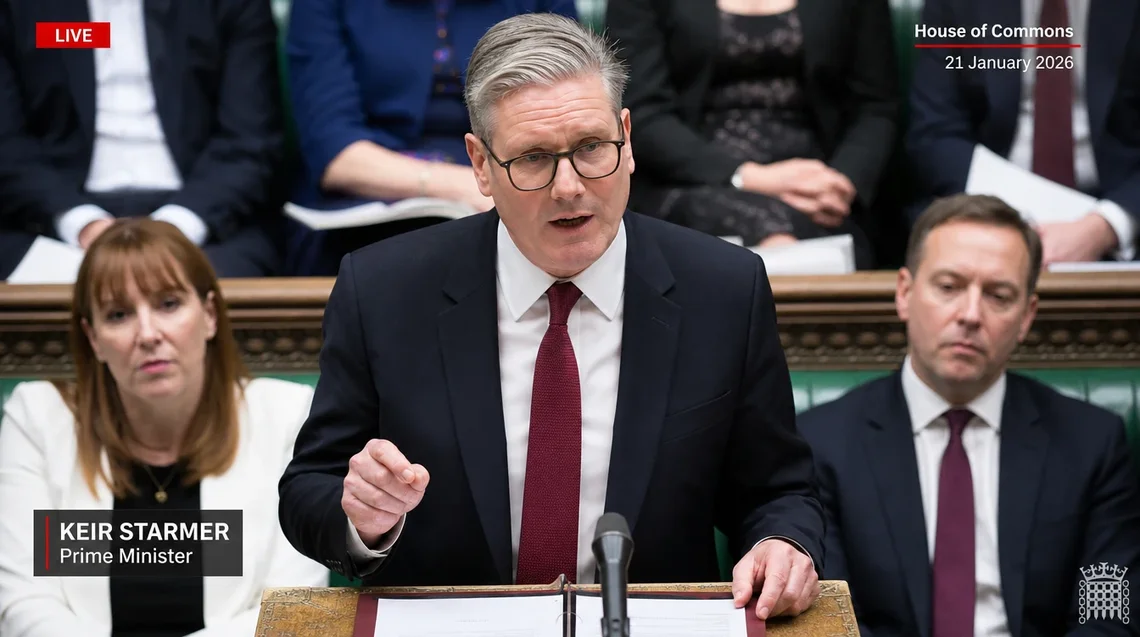
At Prime Minister's Questions and in Health Questions sessions in the Commons, opposition frontbenchers have pressed ministers repeatedly on the gap between stated ambitions and measurable outcomes. Conservative health spokesperson Edward Argar has cited specific trust-level data to challenge ministers' claims of progress, while the Liberal Democrats' health team has sought to use the issue to build on their performance in constituencies with high concentrations of older voters who depend disproportionately on NHS services.
Labour's Internal Debate
Within Labour's own parliamentary party, a number of backbench MPs representing urban constituencies with high levels of NHS dependency have privately expressed concern to whips about the political vulnerability created by the gap between campaign commitments and the current state of services, according to sources familiar with parliamentary discussions. Several members of the Health Select Committee have indicated they intend to pursue a formal inquiry into NHS financial sustainability, which would place ministers in the position of defending their record under formal parliamentary scrutiny.
The political sensitivity of the NHS funding debate is heightened by the context in which Labour fought and won the general election — the party made NHS reform and investment a centrepiece of its campaign, and polling conducted since the election has shown public expectations running ahead of what the government believes is deliverable within its fiscal rules, officials have indicated.
Public Opinion and Polling Data
Polling by YouGov and Ipsos has consistently identified the NHS as the issue British voters regard as most important, and recent tracker data shows a deterioration in Labour's net satisfaction scores on health policy since the government took office (Source: YouGov; Source: Ipsos). The shift is particularly pronounced among older voters and those in suburban and rural areas, demographic groups that proved critical to Labour's electoral coalition.
| Indicator | Figure | Source |
|---|---|---|
| Voters rating NHS as top national priority | 58% | YouGov tracker (recent wave) |
| Net approval: Labour handling of NHS | -11 points | Ipsos Issues Index |
| A&E four-hour standard compliance (England) | Below 70% | NHS England published data |
| NHS infrastructure maintenance backlog | Est. £11.6bn+ | NHS England capital reporting |
| GP appointments delivered per week (England) | Approx. 1.4 million | Office for National Statistics |
| Commons votes on NHS budget motions (current Parliament) | Government majority sustained on all occasions | Hansard parliamentary record |
The Government's Defence
Downing Street and the Department of Health and Social Care have pushed back vigorously against the framing of a systemic funding crisis, pointing to commitments made in the autumn Budget as evidence of serious financial commitment to the health service. Officials said the government inherited a service in a worse condition than public finances had disclosed, and that the reform programme being pursued by the Health Secretary is designed to generate efficiency savings that will compound over time alongside new investment.
Streeting's Reform Agenda
Health Secretary Wes Streeting has publicly acknowledged that more money alone will not fix the NHS, a position that has generated some friction with trade unions and elements of the Labour left who argue the service primarily needs additional resources rather than structural reform. Streeting has continued to press ahead with a shift of care from hospitals to community settings, a policy direction informed by the independent review led by Lord Darzi, which documented systemic inefficiencies in how care is currently delivered.
The BBC has reported extensively on the tensions between the reform agenda and workforce stakeholders, with NHS unions warning that any restructuring must be accompanied by genuine investment rather than used as cover for cost reduction (Source: BBC).
For a broader assessment of the financial questions surrounding the government's health strategy, the earlier ZenNewsUK investigation into Starmer's NHS plan faces funding shortfall criticism provides essential context on how these pressures developed, while analysis of Starmer's NHS Plan Faces Funding Scrutiny examines the parliamentary dimension in detail. Earlier coverage tracing the origins of the current debate can be found in reporting on Starmer faces pressure over NHS waiting list targets.
Outlook: A Critical Winter Ahead
With seasonal pressures expected to intensify in the coming months, the political and operational stakes for the government are high. NHS England has activated its winter preparedness protocols and surge capacity plans, but health system analysts warn that structural underfunding cannot be mitigated by operational planning alone. The coming weeks of parliamentary scrutiny, combined with real-time NHS performance data entering the public domain, will test ministers' narrative that the health service is on a credible trajectory toward improvement.
The government's position is complicated further by the fact that the fiscal rules to which the Chancellor has committed leave limited room for emergency supplementary funding without either tax increases or further borrowing. For Labour, the NHS has historically been both a political strength and an electoral vulnerability — the party's fate in the next general election may depend in no small part on whether it can demonstrate measurable progress on health outcomes before voters are next asked to pass judgment. As ZenNewsUK's earlier examination of Starmer's NHS overhaul faces funding scrutiny documented, the pressure on ministers to close the gap between promise and delivery has rarely been more acute.