Starmer's NHS overhaul faces fresh funding pressure
Labour seeks new revenue amid waiting list concerns

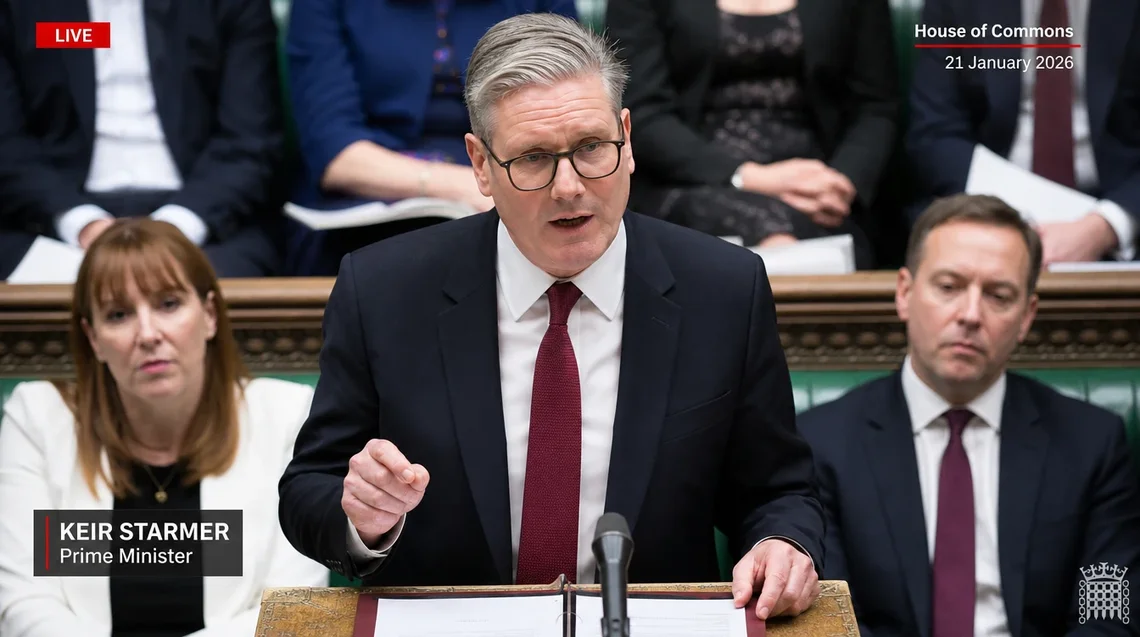
The government is facing intensifying pressure to identify new funding streams for its flagship National Health Service overhaul, as official data show NHS waiting lists remain stubbornly high and Treasury officials resist calls for further borrowing to plug a growing financial gap. Sir Keir Starmer's administration has staked significant political capital on reforming the health service, but critics across the political spectrum warn that ambition without adequate resourcing risks repeating the failures of previous reform programmes.
Party Positions: Labour backs structural NHS reform and increased investment funded through efficiency savings and targeted taxation, arguing the health service requires fundamental redesign rather than incremental spending increases. Conservatives contend that Labour's approach amounts to costly reorganisation that will distract frontline staff and burden taxpayers, calling instead for productivity reforms within the existing framework. Lib Dems support additional NHS investment but have demanded greater transparency over how any new revenue measures will be distributed, with particular emphasis on mental health services and rural healthcare provision.
The Scale of the Funding Challenge
Official figures published recently by NHS England confirm that more than 7.5 million people are currently on waiting lists for elective treatment, a figure that has proved resistant to government intervention despite repeated pledges to bring numbers down. The Office for National Statistics has separately highlighted that NHS productivity remains below pre-pandemic levels, complicating Treasury assessments of how much additional output can realistically be achieved without new capital investment. (Source: Office for National Statistics)
Treasury Resistance and Spending Review Pressures
Senior government officials have acknowledged privately that the current spending envelope agreed at the last Budget does not fully accommodate the pace of reform the Health Secretary has outlined in public statements. According to sources familiar with the discussions, Chancellor Rachel Reeves has made clear that any additional NHS allocations would need to be offset elsewhere in departmental budgets, a constraint that has created visible tension inside Cabinet. The Institute for Fiscal Studies has warned that real-terms health spending growth may fall short of what is needed to meet the government's own waiting list targets within the parliamentary term, according to analysis cited by the Guardian. (Source: Guardian)
Related Articles
For context on how the current pressure relates to earlier debates about financial sustainability, readers can explore Starmer Faces Pressure Over NHS Funding Shortfall, which traced the origins of the current fiscal squeeze through successive rounds of NHS settlement negotiations.
Revenue Options Under Consideration
Downing Street has not confirmed which revenue-raising options are actively under review, but policy specialists and former Treasury advisers have publicly identified several mechanisms that could plausibly be deployed. These include adjustments to employer National Insurance contributions specifically ringfenced for health spending, an expansion of charges for some non-emergency services, and reforms to the existing social care precept levied by local authorities.
National Insurance and Hypothecated Revenue
The idea of hypothecating a portion of National Insurance receipts directly to an NHS fund has attracted renewed academic interest following similar arrangements introduced in other comparable health systems. However, Treasury officials have historically resisted hypothecation on the grounds that it reduces fiscal flexibility and can lock in spending commitments that prove difficult to unwind when economic conditions change. According to the BBC, senior ministers have not ruled the option out in private briefings, though no formal proposal has been brought before Cabinet. (Source: BBC)
Private Sector Contributions and Partnership Models
The government's reform blueprint, outlined by Health Secretary Wes Streeting in parliamentary statements, places considerable emphasis on expanding the role of independent sector providers in delivering NHS-funded care. Officials have argued this approach can bring in additional capacity without requiring equivalent increases in public expenditure. Critics, including a number of Labour backbenchers, have questioned whether such arrangements would in practice generate net savings or instead divert resources to profit margins while clinical risk remains with the public sector. Trade union opposition to this element of the programme has been significant, a dynamic explored in detail in our earlier reporting on Starmer's NHS overhaul faces fresh opposition from unions.
Polling and Public Opinion
Public confidence in the government's handling of the NHS has shown signs of softening in recent months, according to survey data published by YouGov and Ipsos. A YouGov poll conducted recently found that fewer than four in ten respondents believed the government had a credible plan for reducing waiting times, while a majority expressed concern that any new taxes introduced to fund health spending would not be transparently directed to frontline services. (Source: YouGov) (Source: Ipsos)
| Metric | Figure | Source |
|---|---|---|
| NHS elective waiting list | 7.5 million patients | NHS England |
| NHS productivity vs pre-pandemic baseline | Below 2019 levels | Office for National Statistics |
| Public confidence in government NHS plan | Under 40% believe plan credible | YouGov |
| Respondents concerned new taxes won't reach frontline | Majority (over 50%) | YouGov |
| Real-terms health spending growth (projected shortfall) | At risk of missing targets | Institute for Fiscal Studies |
| MPs voting for NHS reform programme (second reading) | Government majority sustained | House of Commons records |
Voter Priorities and Political Risk
Ipsos data indicate that the NHS consistently ranks as the single most important issue for voters intending to support Labour at the next general election, creating a dual political risk: the government faces criticism if it raises taxes to fund the health service, but faces potentially greater electoral damage if waiting lists fail to fall. According to analysis published recently by the Guardian, internal Labour strategists are acutely aware that the party's 2024 electoral coalition was built in part on an implicit promise of NHS restoration, making visible progress on waiting times a near-term political necessity rather than a medium-term ambition. (Source: Guardian)
Parliamentary Dynamics
Opposition parties have seized on the funding uncertainty to mount sustained scrutiny in the Commons. Shadow Health Secretary Edward Argar has repeatedly pressed ministers at the despatch box to confirm what specific financial guarantees underpin the reform timetable, describing the government's position as "a masterclass in managed vagueness." The Liberal Democrats, meanwhile, have tabled written questions seeking disclosure of Treasury correspondence on NHS budget projections, with the party's health spokesperson arguing that the public deserves sight of the full fiscal picture before any new revenue measures are announced.
Backbench Labour Concerns
The government's majority in the Commons remains sufficient to carry reform legislation, but a cluster of Labour backbenchers representing seats with acute waiting list pressures have indicated they will demand detailed impact assessments before supporting any measures that rely substantially on private sector delivery mechanisms. Officials said the Health Secretary held a series of private meetings with concerned MPs recently, seeking to reassure them that the reform programme does not represent a structural shift toward privatisation. The outcome of those discussions is understood to have been mixed, with some members publicly withholding full endorsement of the government's timetable.
The intersection of political resistance and structural reform challenges is a theme examined at length in Starmer's NHS overhaul faces fresh resistance, which maps the evolving coalition of opposition the government now confronts from within its own parliamentary party as well as from the opposition benches.
The Waiting Times Question
Central to the funding debate is a specific commitment made by ministers to reduce waiting times to a maximum of 18 weeks from referral to treatment for the vast majority of patients. NHS England data show this target is currently being missed for a substantial proportion of specialties, with orthopaedics, ophthalmology, and gastroenterology recording some of the longest median waits. Officials have pointed to a planned expansion of surgical hubs and evening and weekend operating lists as the primary mechanisms for accelerating throughput, but health economists note that workforce constraints represent a binding limit on how quickly additional capacity can be utilised regardless of capital investment.
Workforce as a Binding Constraint
The NHS Long Term Workforce Plan, published under the previous administration and retained in broadly similar form by the current government, projects significant increases in the number of trained clinicians over the coming decade. However, policy specialists have noted that the training pipeline means shortfalls in consultant and nursing numbers are unlikely to ease substantially within the current parliament, limiting the operational benefit of any near-term funding increase. According to the BBC, the Health Secretary has acknowledged this constraint publicly while arguing that reform of skill-mix and the expanded use of nurse practitioners and physician associates can partially offset shortfalls in traditional medical staffing. (Source: BBC)
Further background on how waiting time pressures are shaping the political debate around reform can be found in Starmer's NHS Overhaul Faces New Pressure on Waiting Times, and the broader questions of financial accountability in the programme are addressed in Starmer's NHS overhaul faces funding scrutiny.
Outlook
With the Comprehensive Spending Review approaching and Treasury decisions on departmental settlements expected to crystallise in the coming months, the window for the government to establish a credible funding architecture for its NHS reform programme is narrowing. Officials said planning assumptions are being revised continuously as new NHS performance data are published, and that the Health Secretary intends to set out a more detailed financial prospectus for the reform programme ahead of the next parliamentary recess. Whether that prospectus will satisfy the combined pressures of Treasury orthodoxy, backbench scrutiny, trade union concern, and public expectation of visible progress on waiting lists remains the defining unanswered question at the centre of the government's domestic agenda. Absent a credible answer, senior figures in the health policy community warn, the political costs of the NHS reform programme may begin to outweigh its electoral benefits well before the next scheduled general election.