Starmer's NHS Overhaul Faces New Funding Pressure
Labour pledges £10bn boost as waiting lists remain stubbornly high

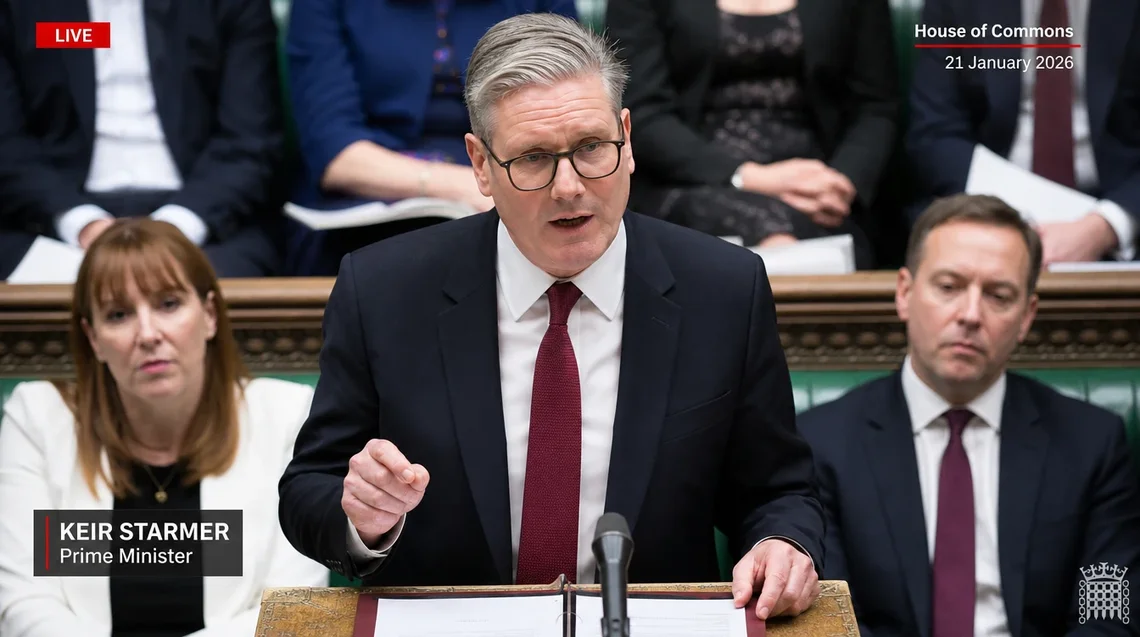
The government's flagship NHS reform programme is under intensifying financial pressure, with Labour committing to a £10 billion funding increase even as official data show waiting lists across England remain stubbornly above seven million patients. Prime Minister Keir Starmer has staked a significant portion of his domestic credibility on turning around the health service, but critics across the political spectrum are questioning whether the pledged investment will prove sufficient to meet the scale of the challenge.
The renewed scrutiny comes as the Starmer's NHS overhaul faces fresh funding pressure from multiple directions — including from within Labour's own parliamentary benches — with health economists warning that structural reform, not simply additional cash injections, will be required to achieve sustainable reductions in waiting times.
Party Positions: Labour has committed to a £10 billion NHS investment package, with a focus on expanding community care capacity, reducing waiting lists and recruiting additional clinical staff. Conservatives have argued the funding pledge is uncosted and insufficiently targeted, calling instead for greater private sector involvement and productivity reforms inside NHS trusts. Lib Dems have broadly welcomed increased NHS investment but are demanding ring-fenced mental health funding and a transparent, independently audited delivery plan to ensure accountability for every pound of new spending.
The Scale of the Waiting List Crisis
The NHS waiting list in England currently stands at more than seven million cases, a figure that has proved remarkably resistant to government intervention despite significant political capital being expended on the issue since Labour took office. According to NHS England data, the proportion of patients waiting beyond the eighteen-week referral-to-treatment standard remains well above levels considered clinically acceptable before the pandemic period.
Related Articles
Regional Disparities
The burden is not evenly distributed. Office for National Statistics analysis indicates that waiting times are significantly longer in parts of the north of England and coastal communities compared with London and the south-east, raising concerns about a two-tier experience for patients depending on where they live. Health policy analysts have noted that the £10 billion pledge, while substantial in headline terms, may disproportionately benefit areas with stronger existing infrastructure rather than those where need is greatest (Source: Office for National Statistics).
The Guardian has reported that NHS trust leaders in some of the most deprived regions of the country have privately expressed concern that centrally driven reform plans may not adequately account for local workforce shortages, which cannot be solved through capital investment alone.
Elective Care Backlog
The elective care backlog — procedures delayed or deferred during and after the pandemic — remains the single largest component of the waiting list problem. Government officials have said that expanding surgical hubs and increasing weekend operating capacity are central planks of the recovery strategy, with the £10 billion envelope intended to fund both capital equipment and additional staff hours. Independent health economists have cautioned, however, that even optimistic modelling suggests the list will not return to pre-pandemic levels within the current parliament without a step change in productivity across NHS trusts.
Labour's Funding Commitment Under Scrutiny
The £10 billion figure has been presented by ministers as the largest sustained real-terms increase in NHS spending in recent years. Treasury officials have confirmed the package is spread across multiple financial years, meaning the annual uplift is considerably more modest than the headline number implies. Opposition parties and some independent analysts have highlighted this distinction as central to their critique of the government's communications strategy.
Questions Over Additionality
A key point of contention is the degree to which the new money represents genuinely additional spending rather than a repackaging of commitments already factored into NHS baseline budgets. According to sources familiar with Treasury negotiations, a portion of the funding envelope had already been earmarked in departmental spending reviews conducted prior to the current government's formal announcement. Health Select Committee members have indicated they intend to seek clarification from ministers on the precise breakdown of new versus pre-existing commitments (Source: BBC).
For further context on the evolving financial debate, the Starmer's NHS overhaul faces funding scrutiny across Whitehall as the Office for Budget Responsibility prepares its next assessment of departmental spending projections.
Parliamentary and Political Dynamics
The government's health reform agenda has generated an unusually complex parliamentary picture. While Labour commands a substantial Commons majority, a cohort of backbench MPs representing constituencies with acute waiting list pressures has begun to publicly signal impatience with the pace of improvement, placing indirect pressure on Health Secretary Wes Streeting to accelerate visible delivery.
| Metric | Current Figure | Previous Benchmark | Source |
|---|---|---|---|
| Total NHS waiting list (England) | 7.1 million cases | 4.4 million (pre-pandemic) | NHS England |
| Patients waiting over 18 weeks | Approx. 40% | Target: below 8% | NHS England / ONS |
| Public satisfaction with NHS | 24% satisfied | 60% (decade ago) | Ipsos / BSA Survey |
| Voter priority: NHS as top issue | 68% rank it top three | 54% (pre-election polling) | YouGov |
| Government NHS approval rating | 31% approve handling | — | YouGov |
Conservative Opposition Strategy
The Conservatives have sought to reframe the debate around productivity rather than funding levels, with shadow health spokespeople arguing that the NHS receives comparable or greater per-capita investment than several European health systems while delivering inferior outcomes on key metrics including cancer survival rates and emergency care waiting times. The opposition has called for independent productivity audits of all NHS trusts as a precondition for further public investment, a position that places it at odds with both Labour and the Liberal Democrats on the structural reform question.
As the Starmer faces pressure over NHS funding shortfall narrative has gathered pace in Westminster, Conservative strategists are understood to believe the issue represents one of their strongest lines of attack ahead of any future electoral cycle, given that public satisfaction with the health service remains at historically depressed levels (Source: Ipsos).
Public Opinion and Electoral Implications
The political salience of the NHS as an electoral issue has rarely been higher. YouGov polling consistently places health among the top three voter concerns, and the combination of personal experience of long waiting times with sustained media coverage has made the issue a daily feature of political discourse. The government is acutely aware that its electoral coalition — assembled on an implicit promise to restore public services — will be difficult to maintain if tangible improvements in NHS performance are not visible before the next general election (Source: YouGov).
Trust and Credibility Gap
Public trust in government promises on the NHS has been eroded by years of pledges that failed to translate into measurable improvements in patient experience, according to Ipsos survey data. The current administration faces what health policy specialists describe as a credibility gap: the scale of the investment announcement needs to be matched by visible, near-term improvements in access and outcomes if it is to shift public perception. Officials within the Department of Health and Social Care have acknowledged privately that the communications challenge is as significant as the operational one (Source: Ipsos).
Detailed background on how public expectations are shaping the political response is available through coverage of how Starmer's NHS Overhaul Faces New Pressure on Waiting Times from both opposition parties and patient advocacy groups.
Workforce: The Central Constraint
Across the expert and official community, there is broad consensus that workforce capacity represents the most significant structural constraint on NHS performance. The government's long-term workforce plan, inherited and revised from its predecessor, projects the need for tens of thousands of additional clinical staff over the coming decade, but analysts note that training pipelines cannot be accelerated quickly enough to address the immediate waiting list challenge without substantial reliance on overseas recruitment — a politically sensitive area given the broader immigration debate.
Staff Retention and Industrial Relations
Retention of existing NHS staff presents an equally pressing challenge. Data from NHS England indicate that vacancy rates remain elevated across nursing, allied health professions and medical staffing, with burnout and pay dissatisfaction cited as primary drivers of attrition. The government concluded pay settlements with the major health unions following prolonged industrial disputes inherited from the previous administration, but officials have said that workforce morale and retention figures have yet to show the recovery ministers had hoped the settlements would catalyse.
The Road Ahead for Reform
Ministers have indicated that the next phase of NHS reform will focus on shifting care from expensive acute hospital settings into community and primary care environments — a structural ambition that has been articulated by successive governments without being fully realised. The £10 billion package is intended in part to fund the infrastructure required for this transition, including expanded GP capacity, community diagnostic centres and enhanced mental health provision.
Whether the funding commitment will prove sufficient, and whether the structural reforms can be delivered at the pace the government's political timetable demands, remains the central question hanging over what is already the most politically consequential domestic policy programme of the Starmer administration. As previous reporting has noted, the full contours of the challenge are visible through analysis of how Starmer's NHS Overhaul Faces Fresh Pressure from stakeholders ranging from patient groups to professional medical bodies.
The coming months will provide the first meaningful test of whether the government's investment and reform strategy can begin to shift the metrics that matter most to the public: shorter waits, better access, and a health service that feels, in the daily experience of millions of patients, as though it is moving in the right direction rather than standing still.