Starmer Signals Major NHS Overhaul Amid Budget Pressures
Labour government faces mounting calls for healthcare reform

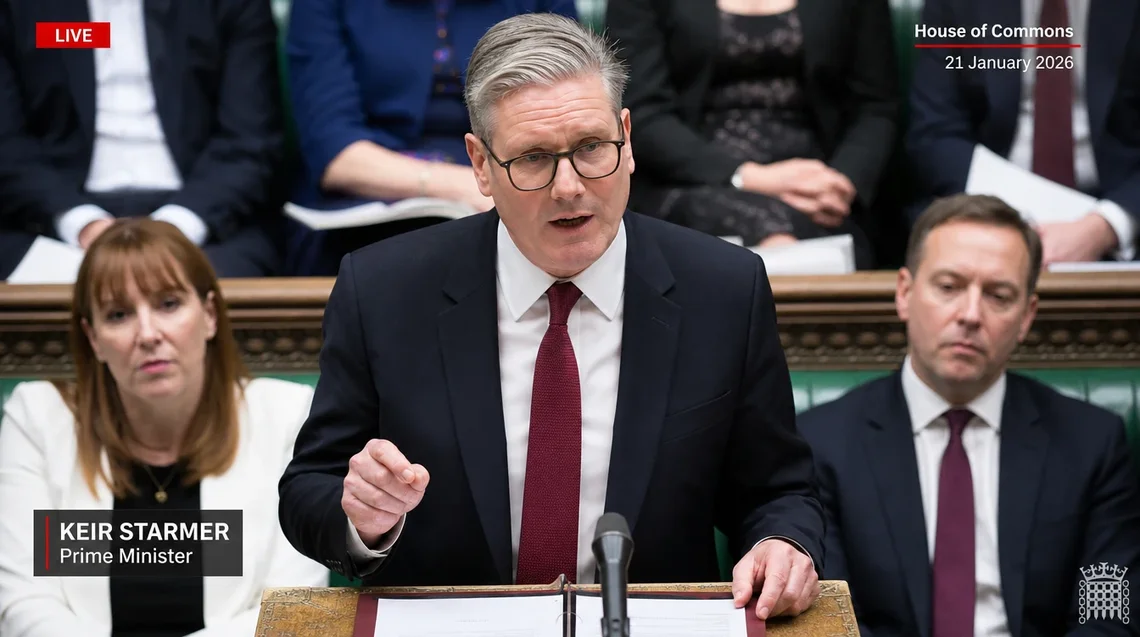
Prime Minister Keir Starmer has signalled the most ambitious restructuring of the National Health Service in a generation, as his government confronts a confluence of record waiting lists, acute staffing shortages, and a fiscal environment that has left Treasury officials with little room for straightforward spending increases. With NHS England currently treating more than 7.5 million patients on elective waiting lists, according to NHS England data, the pressure on Downing Street to act has become politically unsustainable.
The signals from Number 10 come as independent health economists and senior clinicians have warned that incremental reform will no longer suffice. Officials said the government is considering a package of structural changes that would touch workforce deployment, hospital commissioning, and the relationship between primary and secondary care — changes that, if implemented in full, would represent a fundamental reorientation of how the health service operates and how it is funded.
Party Positions: Labour has committed to reducing NHS waiting lists as a central first-term pledge, prioritising neighbourhood health centres and reforming the commissioning structure inherited from previous governments. Conservatives have argued that structural reorganisation risks repeating costly mistakes of the past and have called instead for targeted investment in existing trusts without further top-down reorganisation. Lib Dems have backed increased capital spending on GP surgeries and mental health services, urging cross-party cooperation on a long-term NHS workforce plan independent of political cycles.
The Scale of the Challenge
Any analysis of the government's position must begin with the raw numbers, which by any measure are severe. NHS waiting lists have grown substantially over recent years, driven by the residual impact of the pandemic, chronic underinvestment in capital infrastructure, and a staffing crisis that has seen thousands of experienced clinicians leave the profession or reduce their hours. According to the Office for National Statistics, health-related economic inactivity among working-age adults remains elevated, creating a feedback loop in which workforce shortages in healthcare contribute to broader labour market problems.
Related Articles
Waiting Times and Patient Impact
Data published by NHS England show that the proportion of patients waiting longer than 18 weeks for elective treatment has remained persistently above the statutory target. Referral-to-treatment performance, once a flagship measure of NHS efficiency, has not been met consistently at a national level for several years. Patients in some specialties — orthopaedics, ophthalmology, and certain areas of cancer care — face waits that clinicians describe as clinically harmful. The Guardian has reported extensively on the human cost of delayed treatment, citing individual cases in which diagnostic delays have resulted in conditions becoming significantly harder and more expensive to treat.
The Financial Constraints
The fiscal backdrop complicates every policy option available to the Starmer administration. Chancellor Rachel Reeves has repeatedly stated that departmental spending will be subject to rigorous review, and health, despite its ring-fenced status, is not immune to efficiency demands. The Office for Budget Responsibility has previously flagged long-term healthcare costs as among the most significant pressures on public finances over the coming decades (Source: Office for Budget Responsibility). Against this backdrop, officials said the government has been exploring models that deliver reform through restructuring rather than through headline spending increases alone.
What the Overhaul Could Mean in Practice
Briefings from government officials and health department insiders have pointed to several overlapping strands of reform. The most significant would involve a substantial shift in care delivery toward community and primary settings, reducing reliance on acute hospital trusts for conditions that can be managed closer to patients' homes. This aligns with the direction of travel signalled in the government's early health strategy documents, which referenced neighbourhood health teams as a structural priority.
Workforce Reform and Deployment
Central to the overhaul is a recognition that the NHS cannot simply hire its way out of its current difficulties, given both the cost involved and the time required to train clinical staff. Officials said the government is examining how existing staff can be deployed more flexibly across organisational boundaries, including expanded roles for nurses, paramedics, and allied health professionals. The BBC has reported that senior NHS figures have broadly welcomed the direction of travel on workforce flexibility, though trade unions have indicated that pay parity and working conditions must be addressed before any new deployment model can be agreed.
For further context on the government's evolving approach to NHS staffing, see Starmer Pledges Major NHS Overhaul Amid Staff Crisis, which details earlier commitments on workforce planning made by the prime minister.
Political Pressure and the Opposition Response
The announcement of reform signals, even without full policy detail, has generated an immediate political response from across Westminster. The Conservative opposition, now led by Kemi Badenoch, has moved to characterise Labour's plans as another costly top-down reorganisation reminiscent of the Health and Social Care Act of the previous decade — a reorganisation widely acknowledged to have consumed management bandwidth and financial resources without delivering commensurate clinical gains.
Shadow Health Secretary Edward Argar has accused the government of deploying the language of transformation to obscure what he described as a failure to deliver on the specific waiting list reduction targets Labour set out before the general election. Argar's critique reflects a Conservative strategy of holding the government to its own measurable commitments, a tactic that has gained traction given that several headline targets remain unmet.
Liberal Democrat and Cross-Bench Pressure
The Liberal Democrats, who performed strongly in the general election on a platform that included significant NHS commitments, have used their expanded parliamentary presence to push for greater transparency in how reform plans will be financed. Health spokesperson Helen Morgan has called for an independent assessment of NHS capital requirements to be published before any structural reorganisation proceeds, arguing that reorganisation without adequate capital investment has historically produced poor outcomes (Source: BBC). The party has also called for social care reform to be addressed in parallel, warning that hospital discharge delays linked to the absence of adequate social care provision cannot be solved by NHS restructuring alone.
Public Opinion and Political Context
Polling data consistently show the NHS as the issue on which the public places greatest trust in Labour, but also as the issue on which expectations are highest and patience shortest. A YouGov survey conducted recently found that a significant majority of respondents believed NHS performance had not improved since the general election, while an Ipsos poll indicated that healthcare remained the top domestic priority for British voters across all age groups (Source: YouGov; Source: Ipsos). The political risk for Downing Street is that signalling reform without delivering visible improvement in patient experience could erode one of Labour's most durable electoral advantages.
| Indicator | Current Position | Target / Benchmark | Source |
|---|---|---|---|
| Elective waiting list (England) | Approx. 7.5 million patients | Pre-pandemic levels (approx. 4.5 million) | NHS England |
| 18-week referral-to-treatment compliance | Below statutory 92% target | 92% of patients within 18 weeks | NHS England |
| Public trust: NHS as top issue | Ranked No.1 domestic priority | N/A | Ipsos |
| Voters satisfied with NHS performance since election | Minority — majority dissatisfied | N/A | YouGov |
| Health-related economic inactivity | Elevated above pre-pandemic baseline | Pre-pandemic baseline | Office for National Statistics |
| Long-term NHS cost pressure | Flagged as major fiscal risk | Sustainable within fiscal rules | Office for Budget Responsibility |
The Funding Question
Perhaps the most consequential unresolved question in the government's reform agenda is how it will be paid for. While officials have been careful to frame the overhaul in terms of structural efficiency rather than net new spending, health economists have been equally careful to note that transformation programmes carry their own costs. Shifting care into community settings requires investment in premises, digital infrastructure, and staff retraining before savings can be realised — a timeline that sits uncomfortably with the government's near-term fiscal constraints.
Budget Implications and Treasury Dynamics
Sources familiar with Treasury thinking have indicated that the Chancellor is broadly supportive of reform as a mechanism for controlling long-term health expenditure growth, but that she has been resistant to any commitments that would require significant upfront capital spending outside the existing budget envelope. The tension between the health department's appetite for transformation and the Treasury's insistence on fiscal discipline has been a recurring theme in internal discussions, according to reporting by the Guardian (Source: The Guardian). This dynamic is not unique to the current government, but the scale of the reform being contemplated means the funding question cannot be deferred indefinitely.
For a detailed breakdown of the government's funding commitments, readers can consult our earlier coverage: Starmer Government Unveils Major NHS Funding Overhaul, which examines the specific financial pledges made by the health secretary alongside the broader budget settlement.
What Comes Next
The government is expected to publish a more detailed health reform prospectus in the coming weeks, with officials said to be working toward a document that sets out structural changes, workforce commitments, and a funding framework that can withstand independent scrutiny. The process of moving from political signals to concrete policy will be watched closely by NHS trusts, trade unions, patient groups, and opposition parties, all of whom have distinct and not always compatible interests in the outcome.
The early signs are that the government intends to press ahead with reform regardless of the political turbulence it may generate. Starmer's instinct, as observed across multiple policy domains since taking office, has been to treat structural change as a prerequisite for long-term improvement rather than a risk to be managed. Whether that instinct translates into durable improvement in patient outcomes — and whether it does so quickly enough to satisfy a public whose patience with NHS underperformance has been tested severely — will be among the defining political questions of this parliament.
Earlier reporting tracked the evolution of the prime minister's thinking on this issue: Starmer signals NHS overhaul as waiting lists hit record documented the moment at which waiting list data forced the issue to the top of the domestic agenda, while Starmer pledges major NHS overhaul amid funding crisis examined how the fiscal dimension of reform first entered the public debate. The trajectory from signal to commitment to delivery will determine whether Labour's most fundamental electoral promise is ultimately kept.